
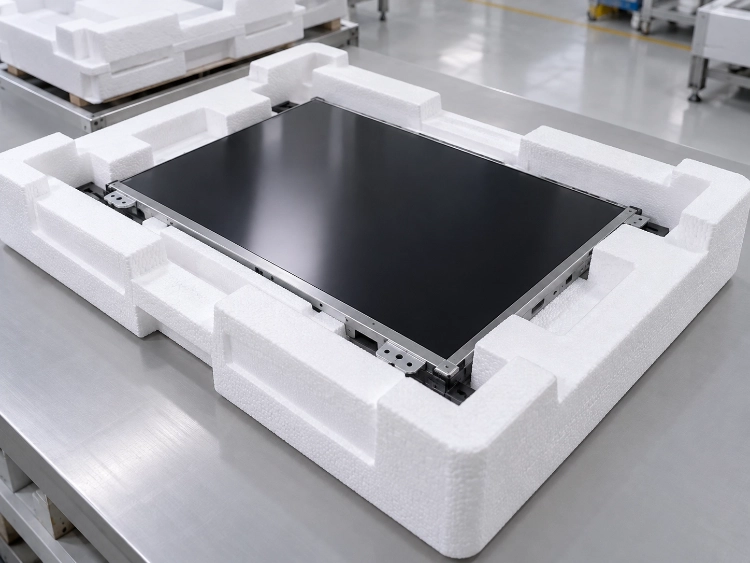
High density EPS is worth evaluating when a package needs more support at a concentrated load or when the existing foam deforms excessively under the intended conditions. It is not automatically the safest cushioning choice. Density, support area, foam thickness and product fragility must be considered together, then checked in the complete package.
Imagine a hypothetical measuring instrument whose feet leave deep marks in a tray. A denser material could be one candidate, but a wider seat under the frame might address the same problem more directly. If the instrument’s sensitive assembly receives a sharper impact after the change, the stronger-looking insert has not achieved the buyer’s goal.
What Problem Should High Density EPS Solve?
Begin with a specific observation. Excessive indentation during storage, collapsed supports during handling and damage during drops are different problems. They may need different tests and may not respond to the same density change.
Separate static support from dynamic cushioning
Static support concerns how the product loads the foam while it rests or remains stacked. EPS cushioning concerns the response during an impact. A material can offer more resistance to deformation without automatically providing the most suitable response for a fragile product at a particular load.
Record product mass and the area actually touching the foam. A small foot can concentrate load even on a relatively light product. A broad frame support can distribute it differently. High density EPS should therefore be specified with the contact geometry rather than selected from the total shipment weight alone.
Check whether the tray also carries accessory loads or pressure from the carton closure. Those forces can change local deformation before the package enters transport. A useful density comparison begins with the complete packed arrangement, including the product orientation.
For a material discussion tied to the application, explore HUASHENG’s EPS solutions and identify the support that is failing.
Which High Density EPS Details Should Buyers Compare?
Ask for the named grade, the proposed finished density, relevant test information and production-intent samples. An expansion ratio is not itself a finished-part density certificate, and “high density” has little meaning without a numerical specification and method.
HUASHENG’s B material is a quick grade for electrical packaging, panels and precision instrument packaging. Its listed characteristics include fast molding, high strength, a smooth surface and good overall performance. It can be used with traditional machines and automatic vacuum molding machines. These features make B a relevant starting family for a support-focused inquiry, subject to the proposed molded part being evaluated.
For B material, specification 301 lists particles of 1.0–1.8 mm and a single-time expandable ratio of 50–70. Specification 302 lists 0.8–1.3 mm and 45–65; 303 lists 0.6–1.0 mm and 40–60; 401 lists 0.3–0.8 mm and 30–50. The specification number, particle range and expansion entry should travel together through the quotation and sample approval.
HUASHENG’s P ultra-light grade targets large panels, electrical packaging and ceramic lamp packaging produced by automatic vacuum forming machines. Its listed features include high foaming efficiency, smoothness, toughness, storage stability and multiple pre-foaming capability. The 301 entry has a single-time expandable ratio of 80–100, and 302 has 70–90. This gives buyers a different product family to compare when lightweighting is part of the brief; it does not establish an equivalent cushioning result.
Compare HUASHENG’s REPS material information with the proposed EPS foam density and finished geometry. Ask which evidence belongs to the actual sample rather than assuming a family description covers every density.
P specification 303 lists a particle-size range of 0.6–1.0 mm and a single-time expandable ratio of 60–80. P specification 401 lists 0.3–0.8 mm and 55–75. Both entries sit within the ultra-light family rather than the B quick-grade family.
How Can Geometry Change the Density Decision?
Before increasing the material specification across the whole tray, examine whether the support is poorly located or too narrow. A density increase cannot relocate a load from a fragile protrusion onto a strong frame.
Increase useful contact without blocking removal
A wider support may reduce local loading, but it must still permit reliable pack-out and unpacking. Review product tolerances and grip access. Supporting a finished cosmetic surface more broadly may create a different risk if the contact allows rubbing during transport.
Foam thickness also matters. A thin section has limited space to deform. Making that section denser without reviewing its available movement can leave the impact problem unresolved. EPS cushioning is a system response, not a property that can be approved from a grade name.
For a hypothetical device with four feet, compare a denser unchanged tray with a revised tray supporting two broad frame rails. Keep the product and carton constant. This trial can show whether the problem is better addressed through material resistance, load distribution or a combination of both.
Protective foam packaging must also restrain sideways and rotational movement. A base that carries the weight well may still allow a connector to strike the wall. Include top restraint and clearance when comparing the alternatives.
Discuss a customized material and shape if the support layout and material selection need to change together.
What Evidence Should Approve a Density Change?
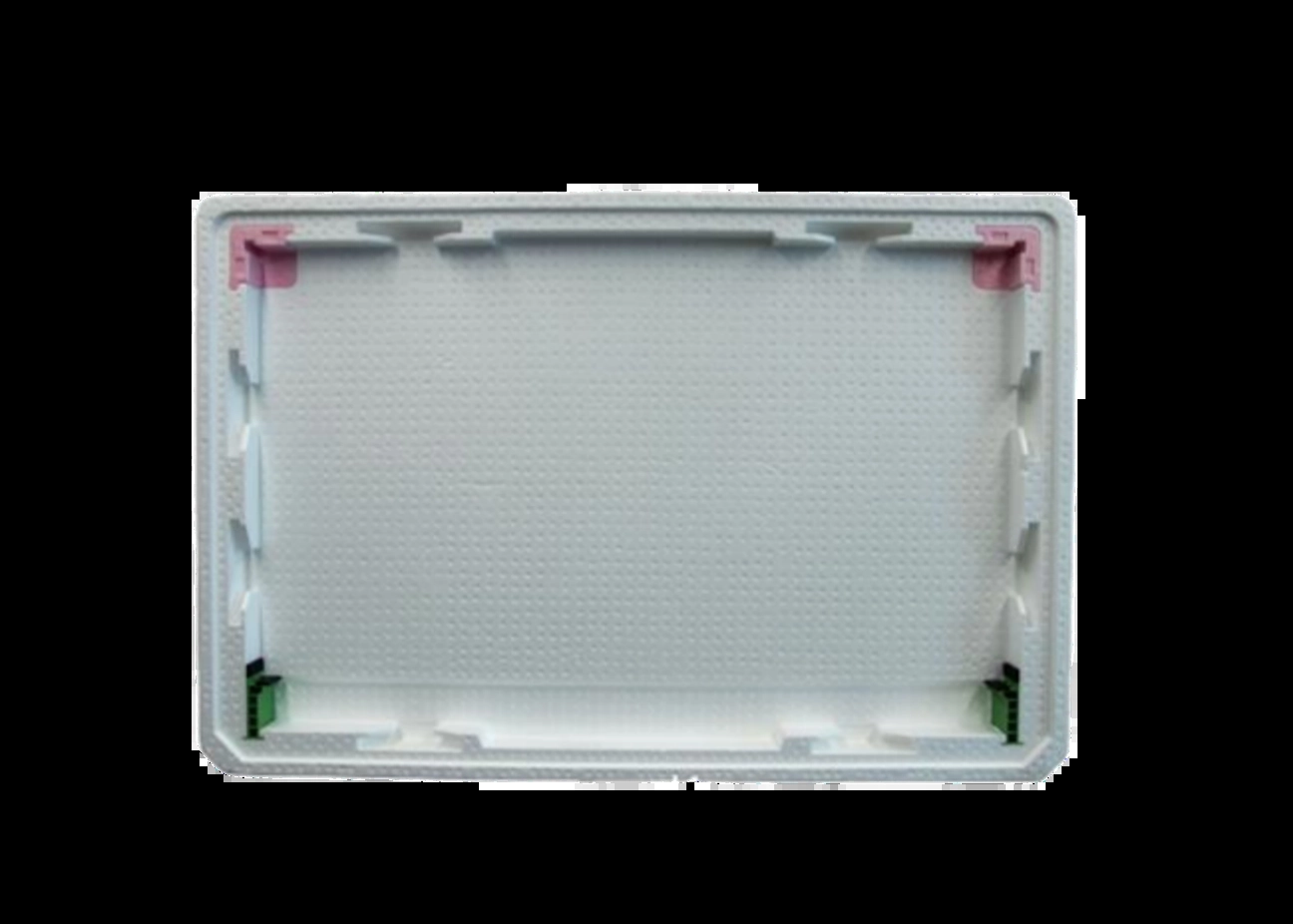
Define acceptance before testing. Record the approved dimensions, material identity, measured density and product condition after the agreed loading and transport sequence. A statement that the sample “feels stronger” is not enough for release.
Use these comparison points when planning the trial:
- Inspect fit and loading damage before transit testing.
- Check deformation under the relevant sustained load.
- Evaluate the complete package through the chosen handling sequence.
- Inspect cosmetic surfaces, vulnerable features and product function afterward.
Keep material and geometry changes traceable. If both change in the same trial, the result can qualify that complete configuration, but it may not reveal which change produced the improvement. That distinction matters if purchasing later proposes retaining only the cheaper part of the revision.
Production samples should represent the intended molding process. Local filling and fusion can affect a thin support even when average EPS foam density is within specification. Check the features that failed, rather than relying on one average result for the whole insert.
HUASHENG’s customization scope includes application analysis, solution design, sample production, manufacturing and logistics delivery. The company works with ordinary, flame-retardant and graphite-modified EPS families and can discuss product features against customer requirements. This range supports a material-selection conversation across different applications, while the buyer’s own acceptance tests remain necessary for the chosen package.
For protective foam packaging, also record package mass, carton dimensions and packing effort. A higher material cost may be justified by improved protection, but that conclusion needs actual trial results. Avoid assuming a cost reduction or damage improvement before those outcomes are measured.
Record whether indentation recovers after the load is removed. Describe the observation and timing; do not compare impressions made under different loading durations.
Conclusion
Choose high density EPS to solve a defined support problem, then verify that the complete package still provides suitable cushioning. Compare named grades, support geometry, foam thickness and production-intent results. A controlled trial can distinguish a useful density change from a design problem that denser foam merely hides. Send HUASHENG your load and package details to discuss suitable sample options and the evidence needed before a bulk order.
FAQs
Q1: Does high density EPS always absorb impacts better?
A1: No. The useful response depends on load, thickness, geometry and product fragility. Test the complete package under its intended conditions.
Q2: Is EPS foam density the same as expansion ratio?
A2: No. Expansion ratio describes a stated material or processing relationship. Specify and measure the finished density using an agreed procedure.
Q3: What should an EPS cushioning trial keep constant?
A3: Keep the product, carton, packing sequence and test conditions consistent. Identify every deliberate change so that the comparison supports a clear decision.
 English
 German
 Spanish
 French
 Arabic