
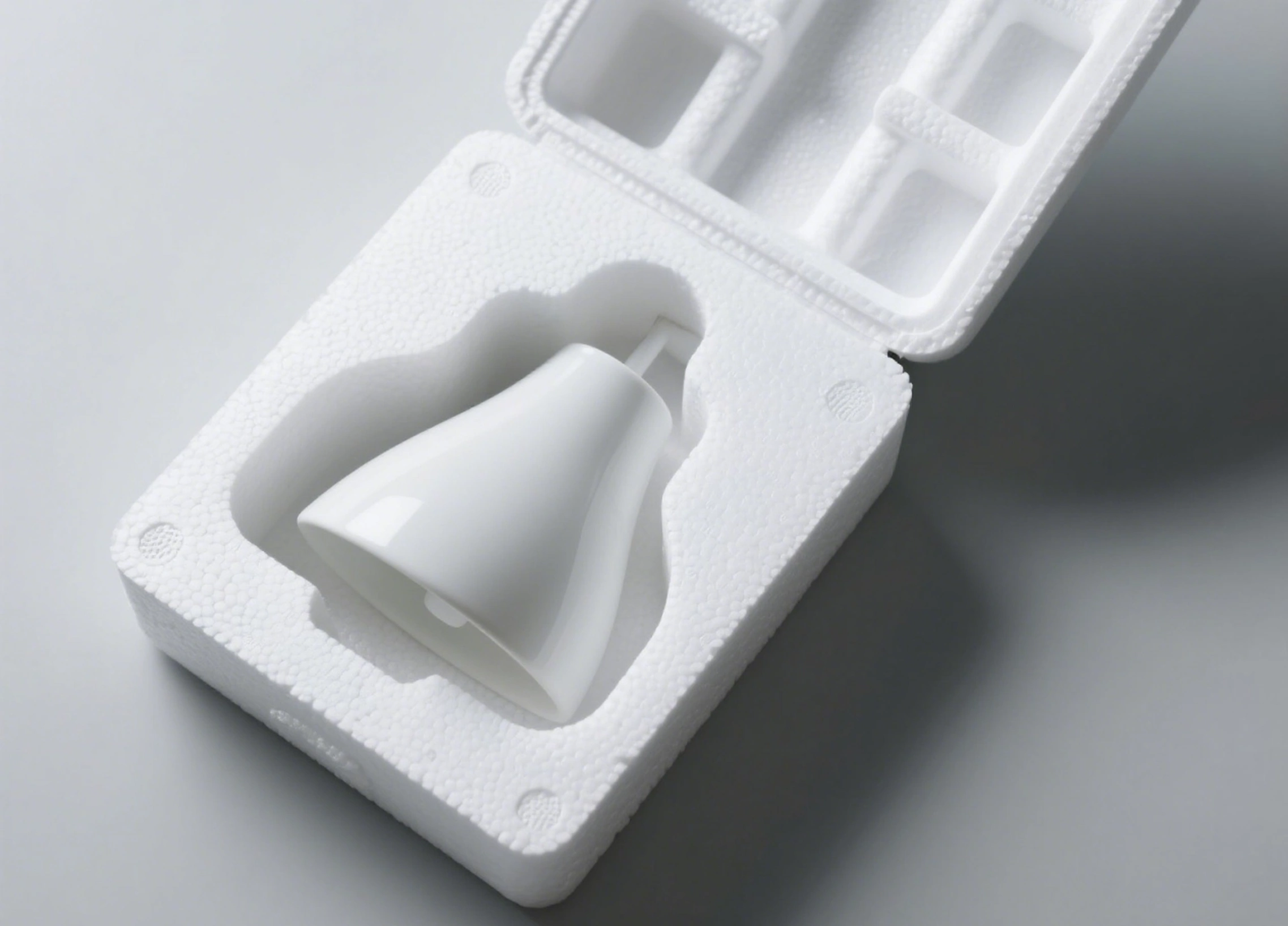
Designing proper ceramic lamp packaging is a deeply involved process. You must hold the fragile item in a steady, predictable position. You cannot simply force delicate ceramic edges to carry the heavy physical load. A tightly molded cavity might initially seem like a smart solution. However, this approach can still fail completely. For example, it might press way too hard on a surprisingly thin shade rim. Alternatively, it might let a heavy, dense base smash directly against the outer carton wall. In some cases, a loose metal fitting simply swings around inside the box. When that happens, it eventually strikes the beautiful, painted glaze. A solid design always starts with a close look at the lamp’s vulnerable geometry. You must also study the planned shipping route carefully. After doing that, the engineering team uses custom EPS supports. They also calculate the exact carton clearance needed. These combined elements effectively control both direct contact and sudden internal movement.
HUASHENG officially identifies its P material as an extra-light grade. This specific formulation is heavily utilized for ceramic lamp packaging. It also performs exceptionally well in automatic vacuum forming applications. This information gives professional packaging buyers a very relevant material family to evaluate. However, picking a foam grade does not magically determine your finished insert geometry. It certainly does not prove that a package will survive a bumpy transit route. The final product drawing, the actual factory pack-out process, and rigorous drop validation still matter most. These practical steps ultimately decide whether the physical design actually works in the real world.
Therefore, the phrase “EPS packaging for ceramic lamps” should always describe a totally complete system. This entire system includes the custom product supports, the empty clearance spaces, and the loose accessories. It also involves the outer corrugated carton and the printed handling instructions. EPS foam for ceramic lamps can indeed be wonderfully light and highly formable. Even so, the overall structural design still has to manage sudden impacts and rough contact. A fragile lighting packaging brief should clearly name the lamp’s specific exterior finish. It should point out thin edges, heavy metal hardware, and the exact box orientation. You must also outline the entire shipping route. Those vital details make a physical sample actually meaningful. They stop a generic, poorly shaped EPS cavity from getting approved based purely on its outward appearance.
If you want highly repeatable EPS packaging for ceramic lamps, you must be strict. Compare every single physical sample to the exact same engineering drawing. You should also check it against the agreed packing instruction sheet. Confirm that your fragile lighting packaging actively keeps loose pieces far away from the delicate glaze. This must remain true even after realistic, rough handling. Ask your chosen supplier to identify precisely which EPS foam for ceramic lamps they are proposing. Make sure they explain exactly which internal gaps this foam is intended to control. A clean, reliable trial record should clearly show the outer carton configuration. It must also document the exact condition of the lamp immediately after physical testing.
Why Do Ceramic Lamps Need More Than a Tight Foam Fit?
Start by looking closely at the most common failure locations. Do not just look at the overall outside silhouette of the product. A ceramic lamp can be fragile in many distinctly different ways. Problems often hide at the top rim, the narrow neck, or the heavy bottom base.
Map the shade, neck, base, and hardware as separate risks
First, draw or photograph the lamp in its final shipping configuration. Next, clearly mark all of the fragile regions. Look for thin shade rims, narrow ceramic necks, and delicate handles. Pay attention to joints, protruding feet, and any other odd shapes. You must also note the exact center of gravity. Point out any extra parts that ship separately in the box. A broad, thick ceramic body might actually tolerate tight support much better than a thin rim. A narrow transition area is also incredibly sensitive. Therefore, the foam insert should absolutely not treat every single surface as equally robust.
After that, identify exactly what can move independently inside the box. A light bulb socket, loose mounting screws, metal chains, or decorative metal parts can cause massive trouble. You should properly restrain all of these items. They absolutely cannot knock against the hard ceramic during heavy truck vibration. If the lamp ships fully assembled, clearly show the electrical cable path. Show the exact location of the loose hardware as well. If it ships broken down into separate components, clearly define the layout. Decide which pieces can safely share the same molded cavity. Figure out which ones demand entirely separate, isolated pockets.
How Should EPS Packaging Support a Ceramic Lamp?
Once you have successfully mapped out those specific risks, it is time to act. You need to securely support the stronger regions of the lamp body. At the same time, you must preserve empty clearance spaces around the weak spots. This is necessary because direct contact in those weak areas would instantly create damage.
Use broad support areas and protect fragile transitions
You want to support the highly stable regions with a generous amount of physical contact area. This broad support keeps the entire lamp perfectly centered inside the box. While doing this, you must consciously leave open clearance around thin rims. Give sharp corners and delicate artistic details plenty of breathing room. You should strictly avoid a poorly planned design where a tiny foam edge acts as the sole support under a massive, heavy base. The molded cavity should restrict enough movement to safely limit the force of an impact. Yet, it still needs to allow for normal, everyday dimensional variation. It must permit an easy pack-out process without aggressively scraping the painted finish.
Think carefully about packing a very tall lamp. Consider exactly how the heavy bottom base and the upper body are restrained together. Suppose the lower support feels very secure, but the top shade can still rock back and forth. In that scenario, the package might actually amplify the bending stress right at the narrow neck. On the flip side, what if the upper support is molded way too tight? Then, basic carton compression might transfer the heavy stacking load directly into the fragile ceramic material. You must rigorously evaluate the complete, top-to-bottom support path. Look at how the force travels from the product contact point all the way to the outer carton wall. Do not just stare at the nice shape of one single insert half.
Keep metal hardware from loading the ceramic surface
Always place loose metal fittings and electrical accessories into a completely separate pocket. Sometimes, a sturdy plastic bag works well. The main goal is ensuring they absolutely cannot strike the ceramic lamp. You must also keep this accessory pocket from pressing directly into the ceramic surface when heavy cartons are stacked on top. Sometimes, a simple cardboard divider or a deep foam recess does the trick. In other situations, you might need a completely separate inner box. This becomes necessary when the item’s sheer mass or awkward shape creates a concentrated, high-risk contact point. This choice is a high-level package decision. It should always be confirmed using actual, physical components. You should never infer this safety just from looking at a 3D computer rendering alone.
Which Packaging Details Should the Buyer Freeze Before Sampling?
The internal foam geometry only functions correctly under certain conditions. The factory packer must be able to reproduce the exact same orientation and physical fit inside the actual carton every single time.
Record orientation, carton clearance, and assembly sequence
Make sure to give your chosen supplier the complete lamp drawing. Provide the final packed dimensions, the total mass, and the mapped fragile zones. Clearly explain the finish sensitivity, the included accessories, and the desired unboxing presentation. You must state whether the final carton will ship as a loose parcel or stacked neatly on a wooden pallet. Explain exactly how many cartons will stack on top of each other. Mention whether the shipment will pass through rough, automated transfer hubs. Include the planned box orientation and the expected warehouse storage conditions if you know them. These specific inputs heavily help the engineers determine exactly where firm support and empty clearance are truly needed.
Conclusion
A proper ceramic lamp packaging Request for Quote (RFQ) should clearly show the product’s fragile zones. It must highlight the intended support surfaces, the loose accessories, and the box orientation. It should also cover the outer carton, the shipping route, and the required acceptance tests. The EPS geometry must successfully restrain the heavy lamp without loading any thin ceramic transitions. It must stop hardware from ever striking the glossy finish. HUASHENG explicitly lists its P extra-light grade for ceramic lamp packaging. Buyers can certainly use that excellent material as a solid starting point for a project-specific trial. However, it should never act as a lazy substitute for full package validation. Always send the technical drawing and your specific route requirements directly through HUASHENG’s official packaging inquiry channel. Make sure to review the detailed P grade material information thoroughly before you ever approve final production samples.
FAQs
Q1: Is a highly tight EPS cavity always a safer choice for a ceramic lamp?
A1: No, it is not. Excessive physical contact can easily load far too much stress onto thin ceramic edges. On the other hand, a cavity that is far too loose permits dangerous impact damage. You must thoughtfully design the exact support and clearance based around the lamp’s actual, unique geometry.
Q2: Should the loose lamp hardware safely share the exact same cavity as the fragile ceramic body?
A2: You should only allow this if the hardware is completely restrained. It absolutely cannot strike or forcefully press into the ceramic surface during transit. In most cases, totally separate pockets or sturdy barrier bags may be heavily needed to ensure safety.
Q3: Which specific test actually proves an EPS lamp package is truly ready to ship? A3: You must use the specific test method and route conditions formally required by the customer. After doing that, you have to physically inspect the actual lamp, the foam, the carton, and the accessories. Compare all of this against the mutually agreed acceptance criteria to get your final answer.
 English
 German
 Spanish
 French
 Arabic