
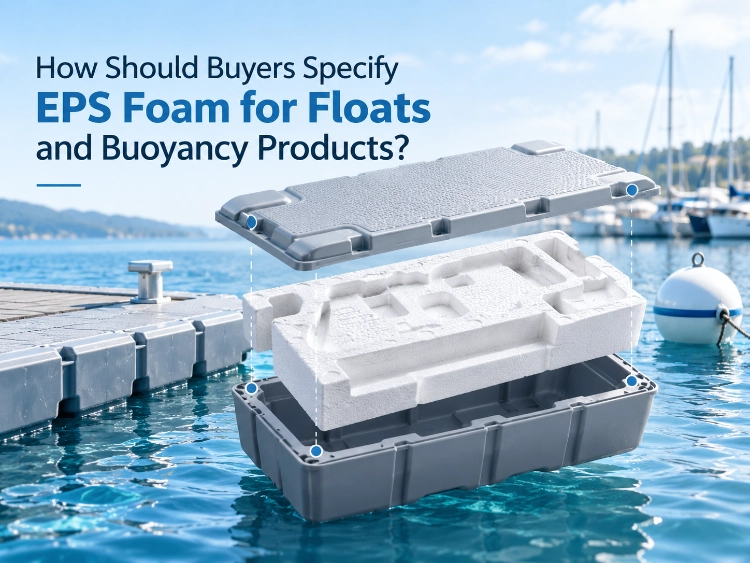
EPS foam buoyancy is one reason expanded polystyrene is widely used inside floats, dock modules, pontoons, and other lightweight flotation products. But a buyer should not specify the material by saying only “need low-density EPS for a float.”
The final dock float buoyancy depends on displaced water volume, total float geometry, dead load, live load, safety margin, shell design, foam-core condition, and how the unit is attached to the structure. The EPS foam core is one part of the complete flotation system.
Why Does EPS Work Well as a Buoyancy Core?
EPS combines very low weight with a cellular structure that occupies a large volume.
How Does Volume Create EPS Foam Buoyancy?
A floating body receives upward force from the water it displaces.
Because EPS contains a large amount of air within its cellular structure, the foam itself adds relatively little weight compared with the water volume it displaces.
That makes EPS foam buoyancy useful in designs where a large flotation volume is needed without adding excessive dead weight.
However, buyers should calculate the required flotation from the complete product.
The EPS foam core should then be sized around the actual load rather than chosen from density alone.
Why Does the Foam Core Still Need Strength?
A float core may be lightweight, but it still sees compression during manufacturing, shipping, installation, attachment, and service.
The core needs enough internal integrity to keep its geometry inside the shell.
For molded float and general packaging applications, HUASHENG B Rapid Prototyping Grade combines uniform bead size, good flow, short curing, fast automatic demolding, strong fusion, and high impact resistance.
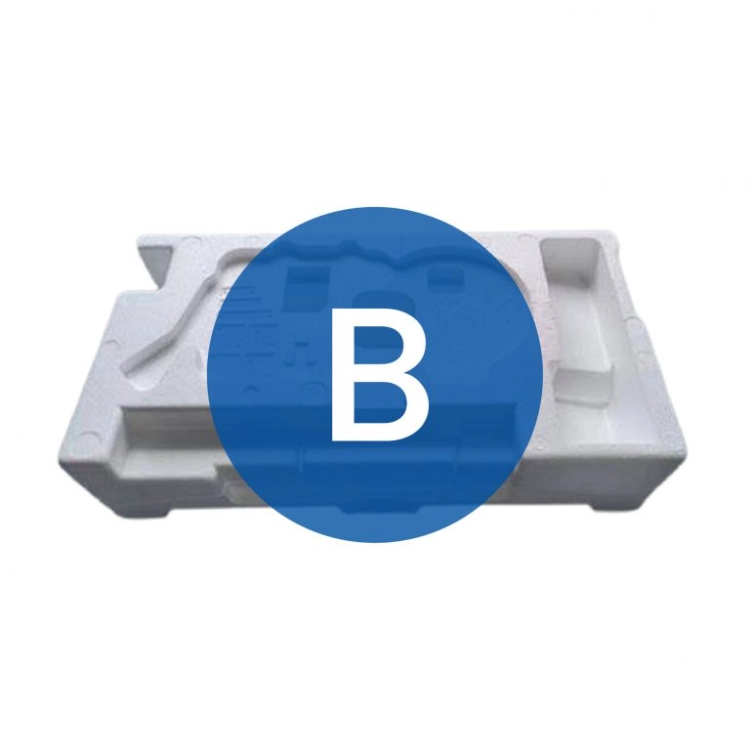
Those characteristics are useful where a foam core needs repeatable molding and stable handling before final encapsulation.
How Should Buyers Calculate Dock Float Buoyancy?
Do not start with foam density.
Start with the load.
What Loads Should Be Included?
A dock or platform must support more than the people standing on it.
The calculation may include:
dock framing, decking, railings, equipment, utilities, furniture, live load, snow or environmental loads where relevant, and a safety margin.
The required dock float buoyancy should be distributed across the planned number and position of floats.
A float that provides adequate total buoyancy can still produce an unstable platform if the units are positioned poorly.
Why Does Freeboard Matter?
Freeboard is the height of the working surface above the water.
A design can technically float while sitting too low for comfortable or safe use.
That is why the buyer should define both total dock float buoyancy and the desired operating position.
Commercial foam filled dock floats are commonly sold with specific buoyancy ratings rather than only external dimensions.
The material buyer supplying the EPS foam core should therefore know the finished float volume and intended load class.
Why Are Encapsulated Dock Floats So Common?
Many marine float systems place the EPS inside a protective outer shell.
What Does Encapsulation Protect?
Encapsulated dock floats protect the foam core from direct mechanical damage, wave action, UV exposure, abrasion, animals, and contact with the surrounding environment.
A common commercial design uses an EPS foam core enclosed inside a molded polyethylene shell.
The shell and foam perform different jobs.
The shell provides environmental and physical protection. The EPS provides the flotation volume and internal support.
This is a stronger design approach than asking the EPS itself to perform every function.
Why Should Buyers Avoid Voids in the Core?
A well-made solid EPS foam core gives more predictable internal geometry than loose fill.
Large voids can reduce the effective foam volume and may create spaces where water can collect if the shell is damaged.
Commercial encapsulated dock floats often use premolded or solid foam cores specifically to control this issue.
When evaluating foam filled dock floats, buyers should therefore ask whether the core is a consistent molded or cut block, how density is controlled, and how the shell is closed around it.
HUASHENG’s broad EPS application range supports buyers that need to connect material choice with real operating environments rather than treating the foam as an isolated commodity.
How Should EPS Density Be Chosen for a Float?
Lower density reduces material weight, but the lowest possible density is not automatically best.
When Is Extra-Light EPS Useful?
Large flotation cores can benefit from high-expansion material because the product volume is large and the core itself should remain light.
For this reason, extra-light EPS can be a useful route when the shell and structural design provide the required support.
However, lower density also means less polymer per unit volume.
The buyer should still verify compression, fusion, cutting quality, and dimensional consistency.
When Does a Standard or Faster Grade Make More Sense?
Some floats need a different balance.
A molded float with complex shape or fast production requirements may benefit from a grade with stronger bead flow and fusion.
A large cut block may place more emphasis on stable board or block density.
The correct choice depends on whether the float core is molded directly, produced as a block and cut, or assembled from shaped sections.
This is why a buoyancy-product RFQ should state the core-manufacturing method.
What Should Buyers Test Before Approving Foam Filled Dock Floats?
The finished unit should be tested as a system.
Which Foam Checks Matter Before Encapsulation?
Before the shell is closed, inspect:
foam density, dimensions, bead fusion, surface integrity, major voids, compression damage, and the condition of cut or molded edges.
The foam should fit the shell without excessive gaps or forcing.
If the EPS foam core is compressed just to make it fit, the finished geometry may no longer match the intended design.
Which Finished-Float Checks Matter?
After encapsulation, verify float dimensions, shell integrity, attachment points, actual displacement or buoyancy, and stability under the intended load.
Water-exposure testing can also be useful, especially when the product is intended for repeated marine use.
If a design claims a specific dock float buoyancy, that value should be verified at finished-product level rather than inferred only from the theoretical foam volume.
How Can Buyers Build a Better Float-Core Specification?
A good RFQ tells the EPS supplier what the float actually needs to do.
What Information Should Be Provided?
Include:
finished float dimensions, core dimensions, desired density range, shell material, core-production method, total load, required buoyancy, operating environment, expected water exposure, attachment method, and annual volume.
If the project uses encapsulated dock floats, also state the internal clearance available between the shell and foam.
This helps the supplier choose the correct grade and particle range.
When Is Customized Material Worth Discussing?
Customized material can be useful when the buyer has unusual density, geometry, strength, processing, or recycled-content requirements.
HUASHENG offers project-specific material development, sample production, manufacturing, and technical follow-up through customized EPS solutions.
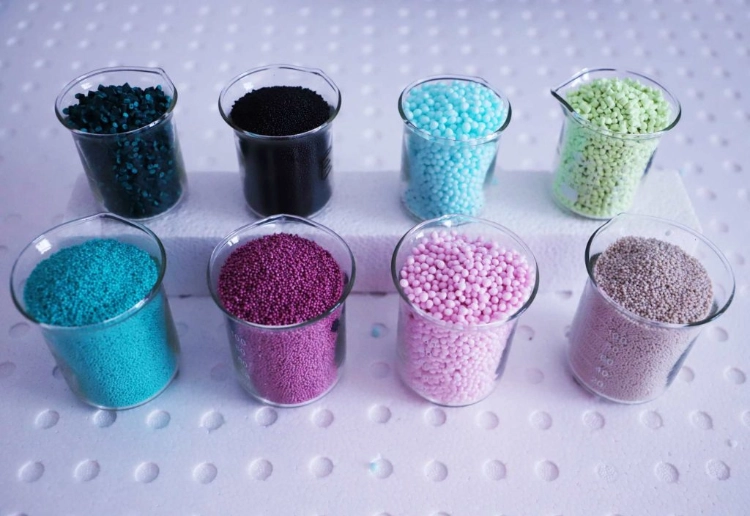
For a new flotation project, the most productive conversation starts with load and geometry rather than asking for the “lightest EPS.”
Buyers can send float-core requirements to HUASHENG with target buoyancy, dimensions, density, molding route, and trial quantity before bulk production.
Conclusion
EPS foam buoyancy works best when the foam is specified as part of the complete flotation system.
The EPS foam core supplies lightweight volume, while encapsulated dock floats use a protective shell to manage impact, UV, abrasion, and environmental exposure.
For foam filled dock floats, buyers should calculate total dock float buoyancy first, then choose core volume and density around the real load and required freeboard.
Density, fusion, compression, core geometry, void control, shell fit, and finished-float testing all matter.
This approach gives buyers a much stronger specification than simply ordering “low-density EPS for floats.”
FAQs
Q1: Is lower-density EPS always better for EPS foam buoyancy?
A1: Lower density reduces the weight of the foam core, but the final material still needs enough fusion, strength, dimensional stability, and compression resistance for manufacturing and service.
Q2: Why do encapsulated dock floats use an EPS foam core?
A2: EPS provides lightweight flotation volume, while the outer shell protects the core from impact, UV, abrasion, wave action, and direct environmental exposure.
Q3: How should dock float buoyancy be specified?
A3: Define total dead and live load, desired freeboard, safety margin, float dimensions, number and position of floats, shell design, and finished-unit test requirements. The EPS core should then be selected around that complete design.
 English
  German
  Spanish
  French
  Arabic