
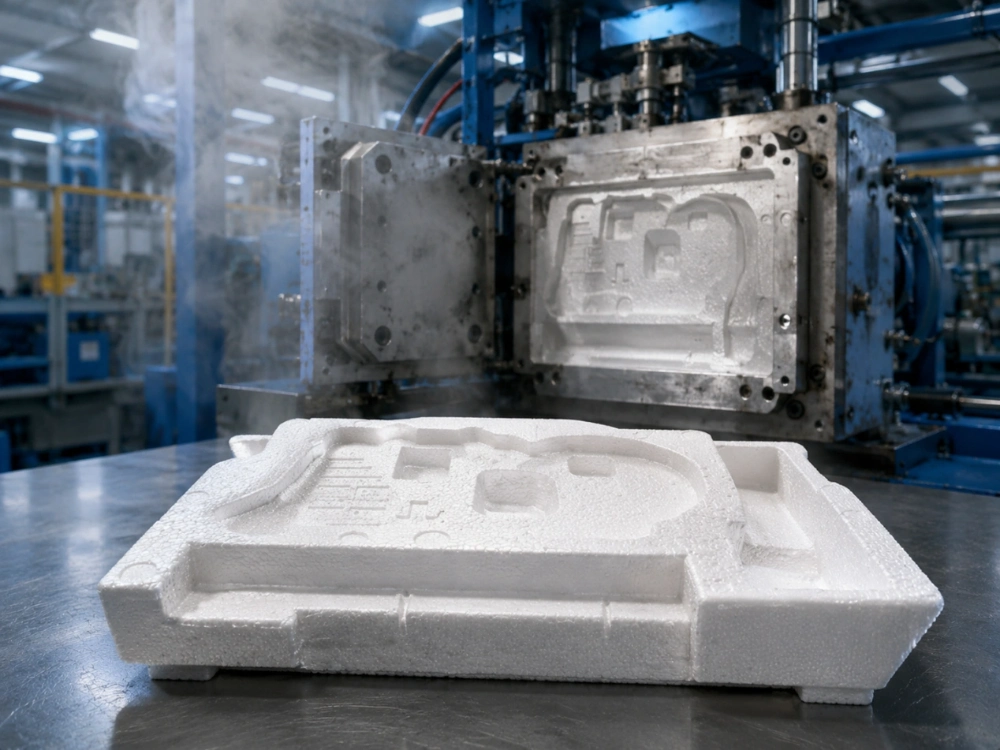
غالباً ما تظهر مشاكل فك قوالب البوليسترين الموسع (EPS) كمشكلة في سرعة الإنتاج أولاً. يبدأ خط التشكيل، الذي يعمل عادةً بوتيرة ثابتة، بالانتظار لفترة أطول قبل الفتح. تصبح القطع ساخنة جداً أو لينة جداً عند إخراجها، ويضطر المشغلون إلى تمديد وقت التفريغ، وتتحول دورة كانت تبدو فعالة في السابق تدريجياً إلى عنق زجاجة.
رد الفعل البديهي هو تقصير المؤقت. وهذا قد يزيد الأمور سوءاً.
عادةً ما يشير بطء عملية فك القالب إلى أن القطعة المصبوبة لم تصل إلى حالة فصل مستقرة عند النقطة المتوقعة في عملية قولبة البوليسترين الموسع. ويمكن أن تؤثر عوامل مثل التبريد، وأداء الفراغ، والرطوبة، وشكل القطعة، وسلوك المادة، والدرجة المختارة، على سرعة الوصول إلى هذه الحالة.
أين تضيع دورة تشكيل EPS الوقت فعلياً؟
تتضمن الدورة أكثر من مجرد الثواني القليلة التي ينفتح فيها القالب فعلياً.
يدخل البخار، وتكتمل عملية تشكيل الخرز، ويبرد الجزء، وقد يزيل الفراغ الحرارة والرطوبة، ويستقر المنتج بما يكفي للحفاظ على شكله، وعندها فقط يصبح فتح القالب عمليًا.
هل مرحلة فتح القوالب هي المرحلة البطيئة حقاً؟
في كثير من الأحيان، لا.
قد تستغرق عملية الفتح جزءًا صغيرًا فقط من دورة تشكيل البوليسترين الموسع الكاملة. ويحدث التأخير عادةً لأن الآلة تنتظر حتى يصبح المنتج مستقرًا بما يكفي لتحريره.
إذا بقي قلب القالب ساخنًا جدًا، فقد تستمر فروق الضغط ودرجة الحرارة داخل القطعة المصبوبة بعد فتح القالب. أما إذا كانت القطعة لا تزال لينة جدًا، فإن إخراجها مبكرًا قد يزيد من التشوه أو ظهور علامات على سطحها أو تلفها.
وهذا يعني أن "وقت إزالة القالب" الأطول قد يكون في الواقع مشكلة تبريد أو استقرار.
لماذا ينبغي على المصانع فصل مراحل دورة الإنتاج؟
إذا قام المشغلون بتسجيل إجمالي وقت الدورة فقط، فلن يتمكنوا من معرفة أين تتراكم الثواني الإضافية.
يُسهّل سجل الإنتاج الأكثر فائدة فصل مراحل البخار والتبريد والتفريغ وفتح القالب وإزالة القطعة. وعندما يتباطأ خط الإنتاج، يمكن للفريق مقارنة الدورة الحالية مع دفعة إنتاج مستقرة معروفة.
إذا لم يتغير وقت البخار ولكن زاد وقت الفراغ، فيجب أن يبدأ التحقيق من نقطة مختلفة عما لو تباطأت عملية ملء القالب نفسها.
لماذا تؤثر ظروف التبريد والفراغ على عملية إزالة القوالب من مادة EPS؟
تحتوي قطعة EPS المصبوبة على حرارة ناتجة عن عملية التبخير. يجب أن تنخفض هذه الحرارة إلى مستوى مناسب قبل أن تتمكن القطعة من الخروج من القالب دون أن تفقد شكلها المطلوب.
ماذا يحدث عندما يكون التبريد غير مكتمل؟
قد يؤدي فتح القالب قبل استقرار المنتج إلى حدوث العديد من المشاكل العملية.
قد يتمدد الجزء قليلاً بعد إطلاقه، ويتشوه حول الأجزاء الرقيقة، ويلتصق بقوة أكبر ببعض أسطح القالب، أو يتطلب معالجة إضافية قبل أن يتمكن من الانتقال إلى العملية التالية.
لهذا السبب، فإن مجرد تقليل وقت التبريد ليس استراتيجية إنتاجية موثوقة. الهدف الأفضل هو أقصر دورة قابلة للتكرار تُنتج قطعة مقبولة.
ينبغي على المصنع مقارنة درجة حرارة القطعة وشكلها وحالة سطحها وسلوك إزالتها بدلاً من الحكم على النجاح فقط من خلال إنتاج الآلة في الساعة.
لماذا تُعد كفاءة نظام الشفط مهمة في خطوط الإنتاج الآلية؟
يمكن أن يساعد التبريد بالتفريغ على إزالة الحرارة والرطوبة من الجزء المصبوب بكفاءة أكبر.
إذا تغير أداء الفراغ بسبب حالة المعدات، أو انسداد الممرات، أو التسرب، أو التكثيف، أو ظروف الإنتاج، فقد لا توفر نفس الدورة المبرمجة نفس حالة التحرير.
قد يعوّض المشغلون ذلك بتمديد الوقت دون معرفة السبب.
هذا أحد الأسباب التي تجعل التباطؤ المفاجئ في عملية فك القوالب باستخدام مادة EPS يستدعي إجراء فحص لحالة المعدات قبل إلقاء اللوم على المواد الخام.
وينطبق العكس أيضاً. فإذا كانت الآلة مستقرة ولكن دفعة جديدة من المواد تتطلب باستمرار تبريداً أطول بالتفريغ، فينبغي مراجعة نطاق المواد والمعالجة.
هل يمكن أن يؤدي استخدام مواد ترطيب الخرز أو الرطوبة إلى إطالة دورة التشكيل؟
نعم، ولكن يجب إبقاء هذا القسم منفصلاً عن عملية تقادم المنتج النهائي.
تكمن المشكلة هنا في حالة الخرز الداخل في عملية التشكيل.
لماذا قد تجعل الرطوبة الزائدة عملية الإطلاق أقل قابلية للتنبؤ؟
تؤثر الرطوبة على كيفية انتقال الحرارة خلال عملية التشكيل وعلى مدى سرعة وصول الجزء المشكل إلى حالة مستقرة بعد ذلك.
إذا تغيرت حالة الخرز من دفعة إلى أخرى، فقد تتطلب الآلة سلوك تبريد أو فراغ مختلف حتى عندما تظل الإعدادات المبرمجة دون تغيير.
بدلاً من تغيير العديد من المعايير في وقت واحد، ينبغي على فريق الإنتاج مقارنة حالة الرطوبة، وتاريخ التمدد المسبق، ونتيجة التشكيل مع دفعة مرجعية مستقرة.
لماذا يُعدّ التدفق المستقر للخرز مهمًا للدورة؟
يساعد التعبئة المستقرة القالب على الوصول إلى توزيع متكرر للمواد قبل بدء عملية التشكيل بالبخار.
إذا كان تدفق الخرز غير منتظم، فقد يلاحظ المشغل اختلافات موضعية في القطعة النهائية، فيعوض ذلك بزيادة وقت المعالجة. لكن هذا الوقت الإضافي لا يحل بالضرورة السبب الحقيقي.
بالنسبة لخطوط الإنتاج ذات الأحجام الكبيرة، تُعدّ قابلية التكرار أهم من تحقيق دورة سريعة استثنائية. فالمادة التي تعمل بشكل متوقع على مدار عدة نوبات عمل عادةً ما تكون أكثر فائدة من تلك التي تتطلب تعديلات متكررة.
متى يمكن أن تصبح درجة EPS هي العائق الرئيسي؟
لا يمكن لإعدادات الجهاز أن تجعل كل درجة تتصرف بشكل متطابق.
يمكن أن يكون للدرجة المطورة حول التشكيل الأسرع فائدة عندما يدعم المنتج والكثافة والمعدات نطاق المعالجة هذا.
ما الذي يجعل درجة التشكيل السريع مهمة؟
لتغليف الأجهزة المنزلية، وتغليف السيراميك، وصناديق الأسماك، وصناديق الفاكهة والخضراوات، والعوامات، والحرف اليدوية، والأجزاء المصبوبة العامة، هواشنغ ب، فئة النماذج الأولية السريعة تم تصميمه بناءً على حجم خرز موحد، وتدفق جيد، ووقت معالجة قصير، وفك سريع للقوالب على آلات التشكيل الأوتوماتيكية، وكفاءة تبريد فراغية أعلى، وانصهار جيد، ومقاومة للصدمات.
يتراوح نطاق الرغوة الموصى به بين 40 و 65 مرة.
لا يعني ذلك أنه ينبغي استخدام الدرجة B لمجرد أن خط الإنتاج بطيء. لا يزال يتعين على المصنع التأكد من أن الكثافة النهائية وشكل القطعة والتطبيق ونوع الآلة تتناسب مع الدرجة.
لماذا ينبغي على المصانع مقارنة فئة الدرجات قبل تغيير الإعدادات؟
تتطلب أهداف الإنتاج المختلفة سلوكاً مختلفاً في مؤشر أداء الطاقة.
لا ينبغي لخط إنتاج الألواح الخفيفة، وخط إنتاج حشوات التغليف، وخط إنتاج القوالب العامة القياسية أن يفترض أن مادة واحدة تعطي أفضل دورة إنتاج عبر جميع الخطوط الثلاثة.
يمكن للمصانع المقارنة خيارات HUASHENG من EPS ذات الدرجة الشائعة لظروف التشكيل المختلفة قبل محاولة فرض درجة واحدة على كل آلة ومنتج.
يُعد هذا الأمر مفيدًا بشكل خاص عندما تستخدم عدة خطوط تشكيل في نفس المصنع أجيالًا مختلفة من الآلات.
ما الذي يجب على المصنع فحصه قبل تغيير معايير الآلة؟
عندما يتباطأ انفصال قالب EPS فجأة، يكون التشخيص الأفضل هو التشخيص المتسلسل.
تأكد أولاً مما إذا كان التباطؤ يؤثر على جميع القوالب أم على قالب واحد فقط. ثم قارن بيانات البخار والتبريد والفراغ ودرجة حرارة القطعة وإجمالي دورة الإنتاج الحالية مع دفعة مستقرة.
كيف تبدو مقارنة الإنتاج المفيدة؟
يمكن للمصنع تسجيل دورة عادية واحدة ودورة بطيئة واحدة ضمن نفس مواصفات المنتج.
قارن بين دفعة المواد، وحالة الخرزة قبل التمدد، وكثافة القالب، ومدة التبخير، ومدة التبريد، ومدة التفريغ، وظروف الإزالة. سجّل أيضًا ما إذا كانت المشكلة تتركز في منطقة محددة من القالب.
وهذا يفصل بسرعة بين التغيير المتعلق بالمعدات والتغيير المتعلق بالمواد.
متى تكون تجربة المواد أكثر فائدة من تعديل الآلة؟
إذا ظلت الآلة مستقرة ولكن نفس الجزء يحتاج بشكل متكرر إلى نافذة تحرير أطول مع مادة أو كثافة مستهدفة محددة، فإن تجربة المواد الخاضعة للتحكم تصبح مفيدة.
الهدف ليس إيجاد أسرع المواد الخام، بل إيجاد نوعية تضمن دورة إنتاج مستقرة مع الحفاظ على متطلبات المنتج النهائي.
يمكن للمصانع التي تقوم بتطوير جزء مصبوب جديد أو التي تكافح من أجل تثبيت دورة حالية أن اطلب حل EPS متوافق مع الآلة من HUASHENG مع نوع الآلة، والكثافة المستهدفة، وأبعاد القالب، والدورة الحالية، والتطبيق النهائي.
الأسئلة الشائعة
س1: لماذا لا يزال جزء EPS يبدو طريًا عند فتح القالب؟
أ1: قد لا يكون المنتج قد برد واستقر بشكل كافٍ بالنسبة لشكل وكثافة القطعة. ينبغي على المصنع مراجعة مراحل التبريد والتفريغ بدلاً من مجرد تقليل وقت فتح القالب.
س2: هل يمكن للتبريد الفراغي الأفضل أن يقلل من وقت فك قالب EPS؟
ج٢: قد يكون ذلك مفيدًا عندما يكون التبريد هو العائق الرئيسي. ومع ذلك، يجب فحص أداء الفراغ جنبًا إلى جنب مع حالة الماكينة، وشكل المنتج، ونوع المادة، وحالة الخرزة.
س3: هل يعمل نوع EPS سريع التشكيل على كل آلة أوتوماتيكية؟
ج٣: لا. لا يزال يتعين على نوع التشكيل السريع أن يتوافق مع الآلة، وكثافة المنتج المستهدفة، وتصميم القالب، والتطبيق النهائي. وتُعدّ التجربة المضبوطة أكثر موثوقية من افتراض إمكانية تطبيق نفس الدورة مباشرةً بين خطوط الإنتاج.
 Arabic
  English
  German
  Spanish
  French