
EPS insulation gains appreciation for its light build, consistent heat resistance, and budget-friendly results in numerous construction and packaging jobs. Nevertheless, contact with intense heat can impact its form, durability, and ongoing insulation worth, which is why grasping its heat boundaries proves essential prior to application. For 2026, trustworthy EPS insulation relies on more than just material standards; it also hinges on suitable setup environments and heat management.
Understanding EPS Insulation and Its Thermal Properties
Expanded polystyrene (EPS) insulation stays among the top choices for heat-blocking materials in today’s building and packaging fields. It blends minimal mass, strong heat-blocking power, and economical operation, rendering it vital for power-saving purposes.
Composition and Structure of EPS Insulation
EPS arises from polystyrene granules that swell via steam. This swelling method forms a sealed-cell framework packed with air, which greatly lessens heat movement. Such a fine-cell arrangement delivers both light handling and solid heat resistance.
The core composition of EPS influences its reply to higher heat levels. When the material’s density grows, its capacity to withstand shape changes from heat gets marginally better, although it stays constrained by polystyrene’s basic traits.
Thermal Conductivity and Heat Resistance Fundamentals
EPS insulation displays a modest thermal conductivity figure—often near 0.036–0.040 W/m·K—which renders it quite useful for heat regulation in walls, roofs, and chilled storage units. Within building heat protection, HUASHENG’s EPS foam items perform exceptionally well. These items hold superior heat-blocking features, which successfully cut down power usage in structures.
The effectiveness relies on aspects like granule bonding standards and production accuracy. Take, for instance, graphite-enhanced varieties such as S‑33 Graphite Polystyrene, which include infrared-capturing graphite bits to boost heat bounce-back. The thermal conductivity of S-33 is ≤ 0.033 W/m·K, and that of ordinary EPS is 0.039 W/m·K. S-33 enhances the insulation performance by more than 20%. Understanding these factors assists in setting secure service heat ranges for diverse uses.
Evaluating the Maximum Service Temperature of EPS in 2026
As construction rules advance to stricter power-saving norms by 2026, pinpointing the peak service heat of EPS turns is more important than ever for security and endurance reviews.
Defining the Maximum Service Temperature Threshold
Commonly, the top steady service heat for basic EPS sits between 75°C and 80°C. Past this boundary, softening starts from polymer chain easing inside the sealed cell framework. Temporary contact beyond 90°C might trigger noticeable shrinking or twisting, relying on density class and item variety.
Firms such as Lanzhou Huasheng outline these boundaries via lab trial setups that match countrywide guidelines like GB/T10801.1-2002 for shaped polystyrene foam plastics. Their fire-blocking types (e.g., FSH series) get crafted to preserve size steadiness nearer to peak service edges while fulfilling B1 or B2 fire ratings.
Factors Influencing Temperature Resistance
Density directly affects the pace at which EPS yields to heat pressure—the greater the density, the less rapid the shape shift. Supplements like graphite or carbon black may raise resistance to beaming heat yet fail to basically modify melting patterns.
Supplements or surface treatments can mildly lift heat endurance but face real restrictions. Surrounding factors contribute as well; dampness hastens breakdown when linked with ongoing sun rays on bare outer walls.
Risks Associated with High‑Temperature Exposure
Whenever EPS functions close to or over its service heat boundary, multiple mechanical and security dangers surface that might undermine framework soundness.
Thermal Deformation and Dimensional Stability Issues
Extended contact above 80°C prompts cell wall breakdown inside the foam base, leading to twisting or firmness loss. Pressure strength falls as yielding advances; after shape change sets in, rebound stays slight even post-cooling.
Size shifts can disrupt heat-block continuity in structure casings. This holds special weight for outer wall setups where openings could develop amid panels, boosting heat paths and trimming power savings.
Fire Behavior and Safety Considerations
EPS starts yielding far prior to hitting ignition heats (usually near 350°C), creating possible fire threats if uncovered by heat origins. Construction laws thus mandate shielding screens like plasterboard or concrete sheets atop bare insulation faces.
Construction codes frequently demand shielding layers like plasterboard or concrete for fire protection. Fire-blocking editions like F‑Flame Retardant Grade deliver better safety buffers via embedded blockers that secure B1 status under GB8624-2012 guidelines. However, they cannot fully erase burning danger.
Comparing EPS with Alternative Insulation Materials at Elevated Temperatures
Amid elevated working heat or amid repeating heat cycles, weighing EPS against options like XPS (extruded polystyrene) or mineral wool uncovers key variances pertinent to planning choices.
XPS possesses an alike cell makeup but generally endures up to roughly 90°C before yielding owing to its thicker extrusion method. Mineral wool greatly surpasses both items’ bounds—keeping size steady past 600°C—positioning it perfectly where fire contact chance looms large.
Ongoing heat-cool cycles hasten tiny fractures inside EPS granules across time. Repeated heating and cooling cycles can accelerate aging in EPS materials. For enduring strength in shifting weather, blended fixes merging reused EPS hearts with outer aerogel sheets have surfaced as forward-thinking substitutes backed by HUASHENG’s loop-closed making advances.
Practical Applications and Installation Recommendations for 2026 Projects

Amid rising stress on green methods and carbon cut aims in 2026, fitting selection of EPS insulation secures both functional dependability and nature compliance.
Suitable Uses of EPS Insulation in Controlled Environments
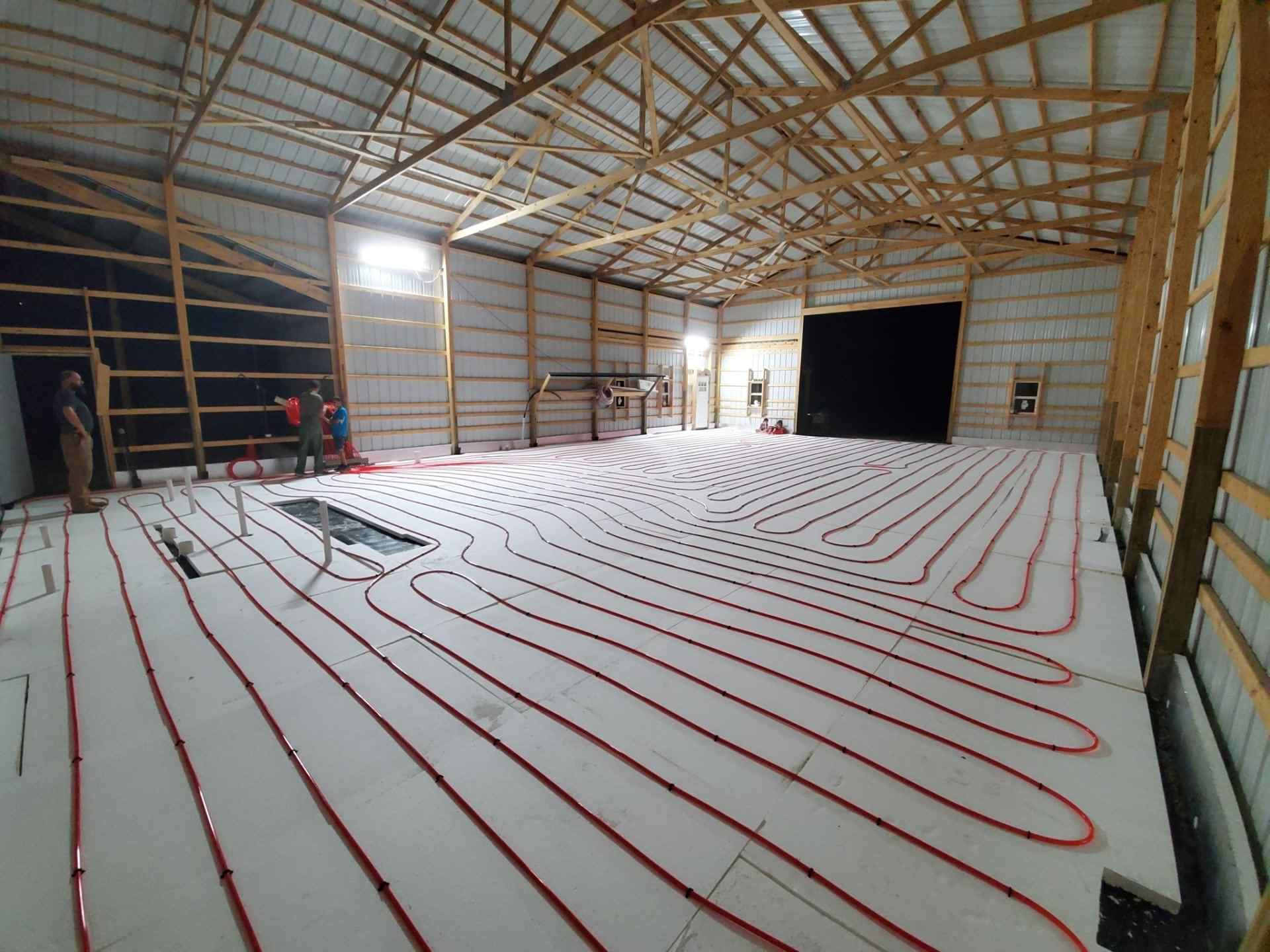
EPS excels where surrounding setups stay even—say, inside wall hollows, sublevel bases, or cooled housings where face heat lingers under its service edge. Ideal for wall cavities, below-grade applications, and cold storage facilities where temperatures remain moderate.
It warrants steering clear of spots by boilers, outflow pipes, or roof areas open to harsh sun buildup sans proper guard layers such as reflective films or air-circulating outer walls.
Enhancing Performance Through Design Integration and Protective Measures
Planning blend holds a key part in stretching service life amid varying setups. Vapor barriers help reduce moisture absorption that can weaken thermal performance over time. Reflective coatings lower radiant heat exposure, while ventilated cover systems allow trapped heat to escape more effectively.
Setup ought to uphold an ample gap from straight heat points—at minimum some centimeters—to block local overheating in running. Steady check routines aid in spotting initial clues of bending or hue shifts signaling overmuch heat contact.
For ventures eyeing carbon-free building aims in 2026, picking nature-crafted items like HUASHENG’s REPS series bolsters green vows since the enterprise has invested hundreds of millions of yuan to build the world’s first smart production line for polystyrene using 100% recycled raw materials, achieving an industrial waste recycling rate exceeding 95%.
FAQ
Q1: What is the safe maximum operating temperature for standard EPS insulation?
A1: The safe continuous service temperature typically ranges from 75°C to 80°C depending on product density and formulation. Short-term peaks above this may cause shrinkage or warping if not properly protected.
Q2: How does graphite-modified EPS differ thermally from regular types?
A2: Graphite-modified grades incorporate infrared-reflective particles that lower thermal conductivity by up to 25%, enhancing insulation efficiency without changing melting behavior. And S‑33 Graphite Polystyrene exemplifies this improvement through its ≤ 0.033 W/m·K conductivity value.
Q3: Which manufacturer offers sustainable high-performance EPS suitable for future green building projects?
A3: HUASHENG provides advanced eco-friendly solutions such as REPS recyclable foams that combine low thermal conductivity with circular manufacturing systems—ideal choices for energy-efficient designs planned beyond 2026.
 English
  German
  Spanish
  French
  Arabic