
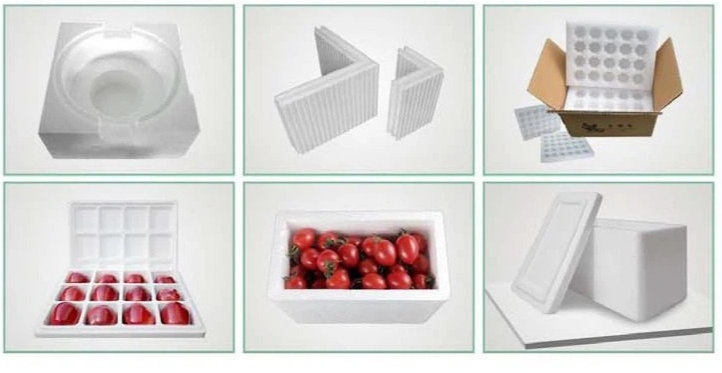
EPS foam board sees wide use because it strikes a solid balance between light weight, insulation value, cushioning power, and simple customization. In today’s foam board work, EPS can be cut, shaped, and formed for building projects, packaging needs, display setups, and protective uses. Knowing how EPS performs helps buyers pick the right board for strength, cost control, and lasting results.
Understanding EPS and Its Role in Foam Board Design
Expanded Polystyrene (EPS) foam board serves as a key material in today’s insulation, packaging, and design fields thanks to its flexibility and results.
Defining EPS and Its Core Characteristics
EPS is a light, stiff foam with closed cells. Makers expand polystyrene beads with steam and pentane gas. The final material holds many tiny air pockets that deliver strong thermal insulation and good impact protection. P-extra light material is a common type of EPS that works well on automatic vacuum forming machines, standard lifting hydraulic presses, and various large plate machines. It offers a high foaming rate, so one round of foaming can reach a lighter density. This trait makes EPS a good fit for jobs that need both strength and low weight.
Comparing EPS with Other Types of Foam Board
EPS and XPS differ mainly in density and moisture resistance. XPS usually gives a bit more compressive strength but costs more. EPS, on the other hand, allows greater freedom when it comes to thickness and density choices. Against Polyisocyanurate boards, EPS keeps steady R-values over time and shows little change under different conditions. The right material depends on the job at hand. EPS often wins out in energy-efficient building work where cost and adaptability matter most.
Structural and Thermal Properties of EPS Foam Boards
The strength and thermal behavior of EPS shape how well it fits different uses, from architecture to shipping.
Mechanical Strength and Dimensional Stability
EPS foam boards are really good at providing support. This is because the way they are made with a closed-cell structure helps to spread out the pressure across the material. This means the board can resist being squished absorb shocks and keep its shape when it is being used in building or packaging projects. The EPS foam boards that are denser are usually stronger. They are good for things like insulating walls making roof layers under-slab systems and protective foam board applications.
Thermal Insulation Capabilities
EPS insulates well because its closed cells trap air, a weak heat conductor. This means that EPS can help keep the temperature stable in buildings and things like packaging and cold chain boxes. EPS foam boards are also good for saving energy. They are very light and easy to handle which is a big plus, for EPS.
Architectural and Construction Applications of EPS Foam Boards
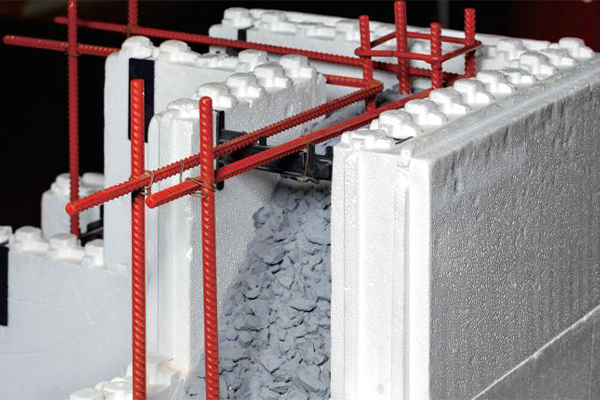
EPS foam boards support sustainable building by cutting heat flow through walls and roofs while keeping structures efficient.
Use in Building Insulation Systems
EPS foam products perform strongly in building insulation. They cut energy use in structures and fit easily into External Insulation Finishing Systems, roof decks, walls, and foundation slabs.
Role in Structural Insulated Panels (SIPs)
EPS forms the core between facing materials like oriented strand board or fiber cement sheets inside SIPs. The setup adds load capacity without extra weight, which suits fast-track modular builds.
Industrial and Packaging Applications of EPS Foam Boards
Outside construction, EPS appears often in manufacturing and supply chains because it cushions well and can be shaped to order.
Protective Packaging Solutions
EPS suits packaging for appliances, ceramics, fishing boxes, fruit boxes, vegetable boxes, floats, crafts, and general goods. Even bead size creates uniform density that handles shocks during transport. Custom inserts shield fragile items while keeping total weight down, which trims shipping costs.
Use in Cold Chain Logistics and Storage Systems
Cold chain work relies on materials that hold steady temperatures despite outside changes. FrostSafe cold chain logistics boxes target biopharmaceutical transport. The ultra-low-conductivity EPS boxes achieve a thermal conductivity of 0.032 W/m·K and extend temperature control to 96 hours at +40 °C. This helps keep goods fresh over long routes.
Creative and Specialized Uses of EPS in Modern Design
Designers now turn to EPS foam boards for more than industrial tasks because the material is affordable and easy to shape.
Applications in Exhibition, Signage, and Display Design
EPS cuts cleanly with CNC or hot-wire tools to form detailed 3D shapes and display pieces. ArtFrame sculpture consumables serve as fill material for art installations. Customized dyed EPS particles in the 2–4 mm range raise sculpture stability by 70 percent. The smooth surface takes paint or laminates well, which works for short-term yet striking exhibit builds.
Integration into Artistic and Thematic Constructions
Light sculptural frames gain from EPS’s moldability. Artists often pick it over heavier options like plaster or wood when they create large thematic pieces or stage sets.
Sustainability Considerations in EPS Foam Board Usage
Environmental care now guides foam board production and use. Research works to replace older additives like HBCD with safer options while keeping performance high. FHE-N-HBCD flame retardant grade uses non-HBCD retardants that meet EU REACH and ROHS rules. The beads foam fast and reach B1 flame performance. Makers also use digital twin labs to fine-tune processes and cut emissions.
HUASHENG recycles 300,000 tons of EPS each year, which saves 1,500,000 tons of crude oil and 1,200,000 tons of carbon dioxide. Mechanical recycling turns post-consumer waste into new molded parts or pellets for items such as trim pieces and industrial fillers, which supports circular economy goals.
FAQ
Q1: What sets Expanded Polystyrene apart from other foam boards?
A1: Expanded Polystyrene stands out through its bead-expanded makeup. This structure allows custom densities at lower cost than extruded types like XPS, yet it still provides solid insulation.
Q2: How does flame-retardant-grade EPS improve safety in buildings?
A2: Flame-retardant grades such as HUASHENG’s F-flame retardant grade include additives that meet B1/B2 standards under GB8624-2012. They slow flame spread while keeping structural strength intact.
Q3: Can recycled EPS keep its quality for reuse?
A3: Recycled EPS can keep good quality for reuse when it is properly collected, cleaned, and processed. It can be remade into new foam products, insulation materials, or packaging components while still maintaining useful cushioning and insulation performance.
 English
  German
  Spanish
  French
  Arabic