
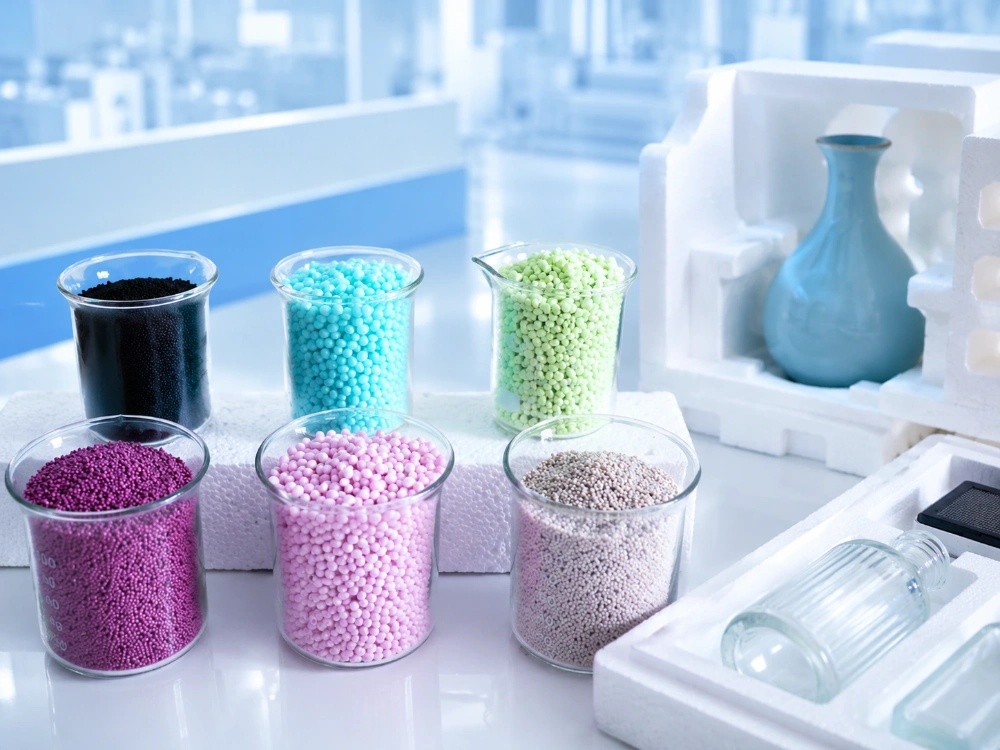
Pour les emballages de produits fragiles, le contenu recyclé n'est qu'un facteur parmi d'autres. La pièce moulée, le produit transporté et le mode de transport déterminent si l'emballage est adapté à l'usage prévu.
Les acheteurs qui consultent emballages en EPS recyclé Pour les produits électroniques, la céramique et autres biens sensibles aux dommages, une question essentielle se pose : l’emballage protégera-t-il toujours le produit ? Cette préoccupation est légitime. Un élément d’emballage peut paraître acceptable à la sortie du moule, mais se détériorer considérablement après une chute, une longue période de vibrations ou un empilage prolongé de cartons. La réponse pertinente n’est pas un simple oui ou non. Le taux de recyclage, à lui seul, ne détermine pas la résistance d’un emballage en polystyrène expansé moulé.
L'acheteur doit évaluer simultanément la densité finale du moulage, la taille des cordons, le taux d'expansion, la fusion des cordons, la qualité du moulage, la géométrie de la pièce et les conditions réelles de transport. Un cahier des charges pour un emballage en polystyrène recyclé doit intégrer ces conditions dans la décision relative à l'emballage fini, plutôt que de se limiter à une discussion sur le pourcentage de matériau.
L'emballage en EPS recyclé est-il automatiquement moins résistant ?
Non. Les emballages en PSE recyclé ne sont pas automatiquement plus fragiles, ni équivalents à ceux en PSE vierge. Un objectif de contenu recyclé décrit un aspect de la matière première. Il ne précise ni la densité finale de la pièce moulée, ni la qualité de la fusion des cordons aux angles, ni la capacité de la géométrie à supporter la charge prévue. Ces variables dépendent des conditions auxquelles le produit emballé est soumis pendant le transport.
Pourquoi le contenu recyclé à lui seul est un mauvais critère d'achat
Deux fournisseurs peuvent proposer le même pourcentage de contenu recyclé et pourtant produire des emballages de protection en polystyrène expansé (PSE) différents. Une pièce moulée peut présenter une épaisseur de paroi constante et des interfaces de cordons robustes ; une autre peut présenter des zones de faiblesse dues à un sous-remplissage, une pénétration de vapeur inégale, un durcissement insuffisant ou une conception concentrant l’impact sur un angle fin. Un chiffre de composition ne saurait se substituer aux exigences relatives à la pièce finie.
La comparaison avec le PSE vierge doit donc rester spécifique à l'application. Un article léger et à faible risque peut nécessiter une conception moulée très différente de celle d'un assemblage céramique lourd ou d'une unité électronique de précision. La question pertinente est de savoir si l'emballage proposé répond aux critères de protection convenus pour ce produit et ce mode d'expédition ; un devis d'emballage en polystyrène recyclé doit clairement indiquer ces conditions.
Que devraient comparer les acheteurs à la place ?
Utilisez trois contrôles interdépendants : la spécification du matériau, l’objectif de moulage et la validation de l’emballage fini. Le premier définit la plage de granulométrie et de transformation. Le deuxième définit la densité moulée, les dimensions et les caractéristiques critiques. Le troisième confirme que l’emballage protège bien le produit. Cette séquence offre aux équipes d’approvisionnement une base de comparaison plus claire pour les granulés de PSE recyclé que le seul taux de recyclage.
Quels sont les facteurs qui influencent réellement la résistance des emballages en EPS ?
Densité finale moulée
La densité qui importe est celle de l'emballage fini, et non celle de la matière première. La valeur cible dépend du poids du produit, de l'épaisseur des parois, de la distance d'amortissement, de l'orientation de la chute, des éléments de support et du compromis nécessaire entre protection et consommation de matériau. Une spécification de résistance utile pour les emballages en PSE décrit ces conditions ; augmenter la densité sans les examiner au préalable peut engendrer des coûts et un poids supplémentaires sans pour autant résoudre le problème de la véritable défaillance.
Taille des perles
La taille des billes influe sur le remplissage du moule par le matériau, notamment au niveau des parois fines, des nervures, des angles, des petits détails et des rayons de courbure serrés. Elle a également un impact sur la régularité de surface et interne de la structure moulée. Pour la conception d'un emballage de protection en polystyrène expansé (PSE), la taille des billes doit être choisie en fonction de la géométrie et non considérée comme un simple critère de qualité.
Rapport d'expansion
Un taux d'expansion plus élevé n'est pas forcément synonyme de meilleure performance. Des pièces plus légères peuvent certes réduire la consommation de matière, mais les conditions d'expansion doivent néanmoins garantir la densité, la géométrie et les performances de protection prévues. L'acheteur devrait s'interroger sur la pertinence de la plage d'expansion proposée pour la pièce réelle plutôt que d'approuver un taux isolément.
Fusion de perles
Une pièce en polystyrène expansé (EPS) peut paraître complète alors que les interfaces des cordons restent fragiles localement. La fusion doit être particulièrement soignée aux angles, dans les zones fines, au niveau des supports porteurs et aux points de transmission de la force du produit à l'emballage. Après un test représentatif, il est souvent plus pertinent d'examiner la répartition de la densité et les surfaces de rupture que de se fier uniquement à l'aspect visuel.
Qualité du moulage et conception des pièces
Les performances des matières premières et celles du moulage sont indissociables. Le remplissage du moule, la pénétration de la vapeur, le refroidissement, le durcissement, l'épaisseur des parois, les nervures, la résistance à l'air et l'ajustement du carton sont autant d'éléments qui influencent la résistance de l'emballage en polystyrène expansé (PSE). L'acheteur choisit un système de protection moulé, et non un simple matériau recyclé.
Comment évaluer le PSE recyclé pour les produits fragiles ?
Emballage électronique
Les emballages électroniques présentent souvent des contraintes concentrées au niveau des écrans, des boîtiers, des connecteurs et des angles. Une évaluation pertinente prend en compte les points de contact du produit, la distance d'amortissement, la conception du carton, le parcours de transport et l'exposition aux vibrations. Pour les unités de grande valeur, un emballage de test doit être réalisé avec le produit réel ou un emballage représentatif en termes de masse et de géométrie, plutôt qu'avec un bloc de test générique.
Emballages en céramique
Les produits en céramique nécessitent une protection contre les chocs arqués, les chocs localisés et les mouvements à l'intérieur du carton. L'insert en mousse et le carton extérieur doivent fonctionner de concert pour maintenir le produit en place et absorber les chocs liés à la manutention. La dureté de la mousse, à elle seule, ne garantit pas une protection optimale ; l'espace disponible, la surface de contact et l'intégrité globale de l'emballage sont également des facteurs importants.
Emballage général
L'emballage standard peut présenter des charges plus faibles ou une géométrie plus simple, mais il nécessite toujours une définition claire du poids du produit, des conditions de manutention prévues et des critères d'acceptation. Une densité plus élevée n'est pas une solution universelle. Adapter les spécifications au produit et aux risques liés au transport permet d'éviter le sous-dimensionnement et le gaspillage de matériaux.
Quels tests les acheteurs doivent-ils demander avant d'approuver les emballages en PSE recyclé ?
Tests de chute
Précisez la hauteur de chute, la direction de la chute, le nombre de chutes, le poids du produit emballé et la configuration du carton. Les chutes sur les coins, les arêtes et les faces doivent refléter les risques réels du trajet. Une hauteur de chute standard est moins pertinente qu'une méthode documentée correspondant aux conditions réelles de manutention de l'envoi.
Empilement et compression
L'empilage en entrepôt et lors du transport augmente la charge au fil du temps. Un colis qui résiste à une chute peut néanmoins se déformer sous l'effet de la compression. Il est donc important de définir la hauteur d'empilage, la durée, l'état de la palette et la déformation admissible afin que le test mesure les conditions pertinentes pour l'expédition.
Simulation des vibrations et du transport
Pour les expéditions à l'exportation, les longs trajets, les produits électroniques et la céramique, les vibrations répétées peuvent révéler des mouvements ou des abrasions qu'une simple chute ne met pas en évidence. Lorsque les vibrations constituent un risque avéré, il est recommandé de valider l'emballage en fonction du trajet ou d'une simulation de transport convenue, plutôt que de se fier uniquement au test de chute.
Cohérence entre les échantillons et les lots
L'obtention d'un seul échantillon conforme ne suffit pas si le processus de production ne permet pas de reproduire les résultats. Il est essentiel d'harmoniser les spécifications des cordons de coulée, la densité de moulage, les paramètres de processus, les tolérances dimensionnelles et les contrôles des emballages finis avant la commande en série. Cela permettra à l'acheteur et au mouleur de disposer d'un point de référence pour s'assurer que la production ultérieure reste conforme aux exigences.
Que doit contenir un cahier des charges pour les emballages en PSE recyclé ?
Un cahier des charges complet établit un lien entre le matériau, les conditions de moulage et les performances de l'emballage fini. Le tableau ci-dessous constitue un point de départ pratique pour l'approvisionnement.
| Article de spécification | Ce que l'acheteur doit confirmer |
| Contenu recyclé | Pourcentage cible ou plage convenue |
| Taille des perles | Gamme adaptée à la géométrie moulée |
| Expansion | Délai de traitement convenu |
| Densité moulée | Objectif : produit fini, et non seulement description des matières premières |
| Fusion et finition | Critères d'acceptation des fonctionnalités critiques et des points faibles locaux |
| Dimensions | Dimensions et tolérances des pièces moulées |
| Chargement du produit | Poids réel emballé et état de contact |
| Déposer et empiler | Hauteur, orientation, répétitions, charge et durée |
| Transport et lots | Exigences relatives aux vibrations, aux conditions de parcours et à la répétabilité |
Comment les REPS personnalisés d'extrusion HUASHENG s'intègrent-ils aux projets d'emballage ?
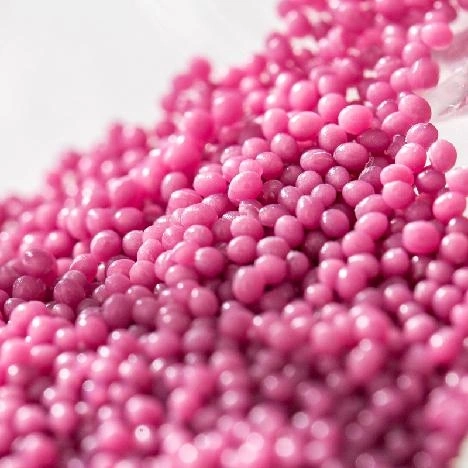
Pour les projets d'emballage nécessitant des options de contenu recyclé, HUASHENG Extrusion REPS Personnalisé Ce produit est indiqué pour l'emballage électronique, l'emballage céramique et l'emballage en général. Concernant un projet utilisant des billes de polystyrène expansé recyclées, la fiche produit décrit une granulométrie uniforme, une bonne fluidité lors du moussage et une production personnalisée pour répondre aux exigences spécifiques de performance et de granulométrie du produit. Ces caractéristiques publiées en font un candidat intéressant pour un essai défini, mais ne remplacent pas les tests d'application.
Options de granulométrie pour différentes structures d'emballage
HUASHENG indique que le Reps-302 a une granulométrie comprise entre 0,8 et 1,25 mm et le Reps-303 entre 0,6 et 1,0 mm. Ces deux qualités présentent une plage d'expansion initiale de 18 à 62. Ces valeurs constituent un point de départ concret pour discuter du remplissage du moule et de la taille des détails. Elles ne représentent pas une valeur de résistance universelle : la qualité choisie doit être adaptée à la densité, à la géométrie et aux conditions de moulage spécifiques à l'emballage.
Associer le contenu recyclé aux performances de l'emballage
La meilleure stratégie commerciale repose sur le produit lui-même, et non sur l'affirmation que le recyclage seul garantit la protection. HUASHENG peut examiner la structure de l'emballage prévue, les exigences granulométriques, la densité de moulage cible, l'objectif de contenu recyclé et les conditions de validation avant tout échantillonnage. Cette approche permet de transformer une exigence de durabilité en un cahier des charges d'emballage reproductible, tant pour les essais que pour la production en série.
Quelles questions les acheteurs doivent-ils poser à un fournisseur REPS avant de passer commande ?
Avant de passer commande, demandez des réponses écrites aux points suivants :
- Quel taux de contenu recyclé est proposé pour ce projet ?
- Quelle plage de tailles de billes est recommandée pour la géométrie du moule et pourquoi ?
- Quelle densité finale moulée la pièce doit-elle atteindre ?
- Quelles sont les conditions de dilatation et de moulage prévues pour la pièce cible ?
- Comment seront vérifiés la fusion des billes, les dimensions et les zones de faiblesse locales ?
- L'échantillon peut-il être testé dans des conditions réelles de chute, d'empilage et de transport chez l'acheteur ?
Un fournisseur capable de répondre clairement à ces questions offre à l'acheteur une base de comparaison exploitable. Cela réduit également le risque d'approuver une description de résine qui n'a jamais été mise en relation avec les exigences de protection de l'emballage final.
Conclusion
Le choix d'un emballage en polystyrène expansé recyclé ne doit pas se baser uniquement sur sa teneur en matières recyclées. Une décision éclairée prend en compte la densité, la taille des billes, l'expansion, la fusion, la qualité du moulage, la structure de l'emballage, les tests d'application et l'homogénéité des lots, considérés comme un système de protection complet. Pour les projets concernant des produits fragiles, HUASHENG Extrusion REPS Personnalisé peut être évaluée par rapport à la conception de l'emballage et aux exigences de moulage prévues. Pour transformer cette évaluation en un essai réalisable, Partagez votre cahier des charges d'emballage avec HUASHENG avec le poids du produit, les dimensions de l'emballage, l'objectif de contenu recyclé, les spécifications actuelles du PSE et les exigences des tests de transport.
Foire aux questions
Q1Les emballages en EPS recyclé sont-ils plus fragiles que les emballages en EPS vierge ?
A1 : Pas nécessairement. La teneur en matériaux recyclés ne détermine pas à elle seule les performances de l’emballage fini. La densité du moulage, la structure des billes, l’expansion, la fusion, le moulage, la géométrie et les conditions d’application sont autant d’éléments importants.
Q2Quelle est la densité optimale pour les emballages en EPS recyclé ?
A2 : Il n’existe pas de densité universelle pour tous les projets. La densité cible dépend du poids du produit, de sa géométrie, de la distance de calage, de la conception du carton et des conditions de transport auxquelles l’emballage doit résister.
Q3Le polystyrène expansé recyclé peut-il être utilisé pour l'emballage de produits électroniques et de céramique ?
A3 : Cette solution peut être évaluée pour les applications lorsque la pièce moulée et les conditions de validation répondent aux exigences de protection. HUASHENG propose des solutions d’extrusion personnalisées pour l’emballage électronique, céramique et général.
 French
  English
  German
  Spanish
  Arabic