
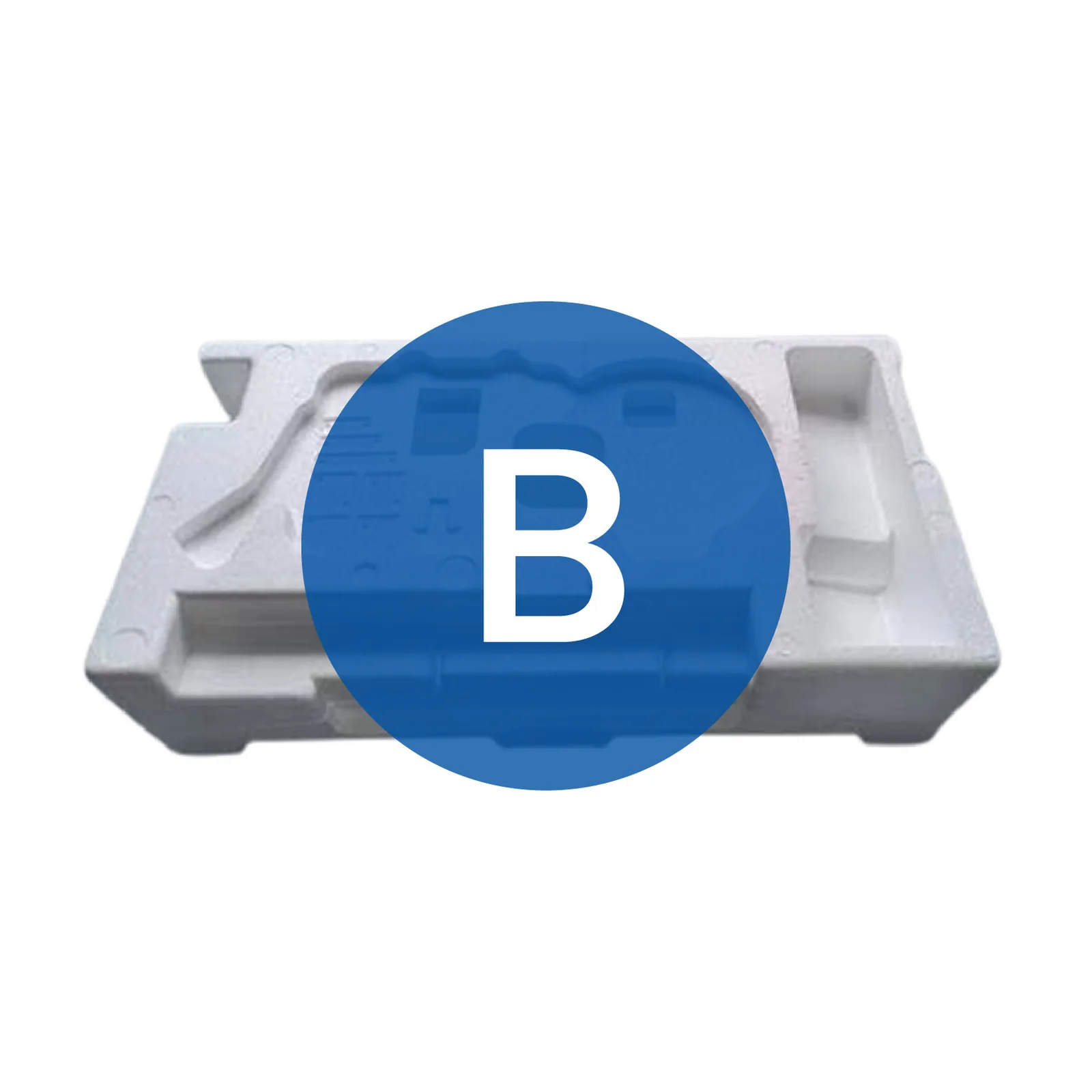
Deciding on the right grade of EPS for vacuum forming packaging is not as simple as choosing between a ‘standard’ and ‘premium’ grade. The packaging engineer may need a grade that allows for rapid tooling, produces a smooth surface, enables high expansion, or is easy to stack and store. The major differences between our E, P and B grades are detailed in the product descriptions and relate to the practical processing characteristics of each material. The grade must be matched to the appropriate machine, tool and failure mode for the part in question.
What does each grade contribute to a forming project?
E is a standard grade with high expansion ratio. It is easy to store and to bond, has a smooth surface and is suitable for electrical packaging, panels, handicrafts and integrated box containers. These parts can be produced on conventional machines as well as on automatic vacuum forming machines. Therefore E is the suitable basic material if the part to be produced has a conventional shape and easy handling and a smooth surface is required.
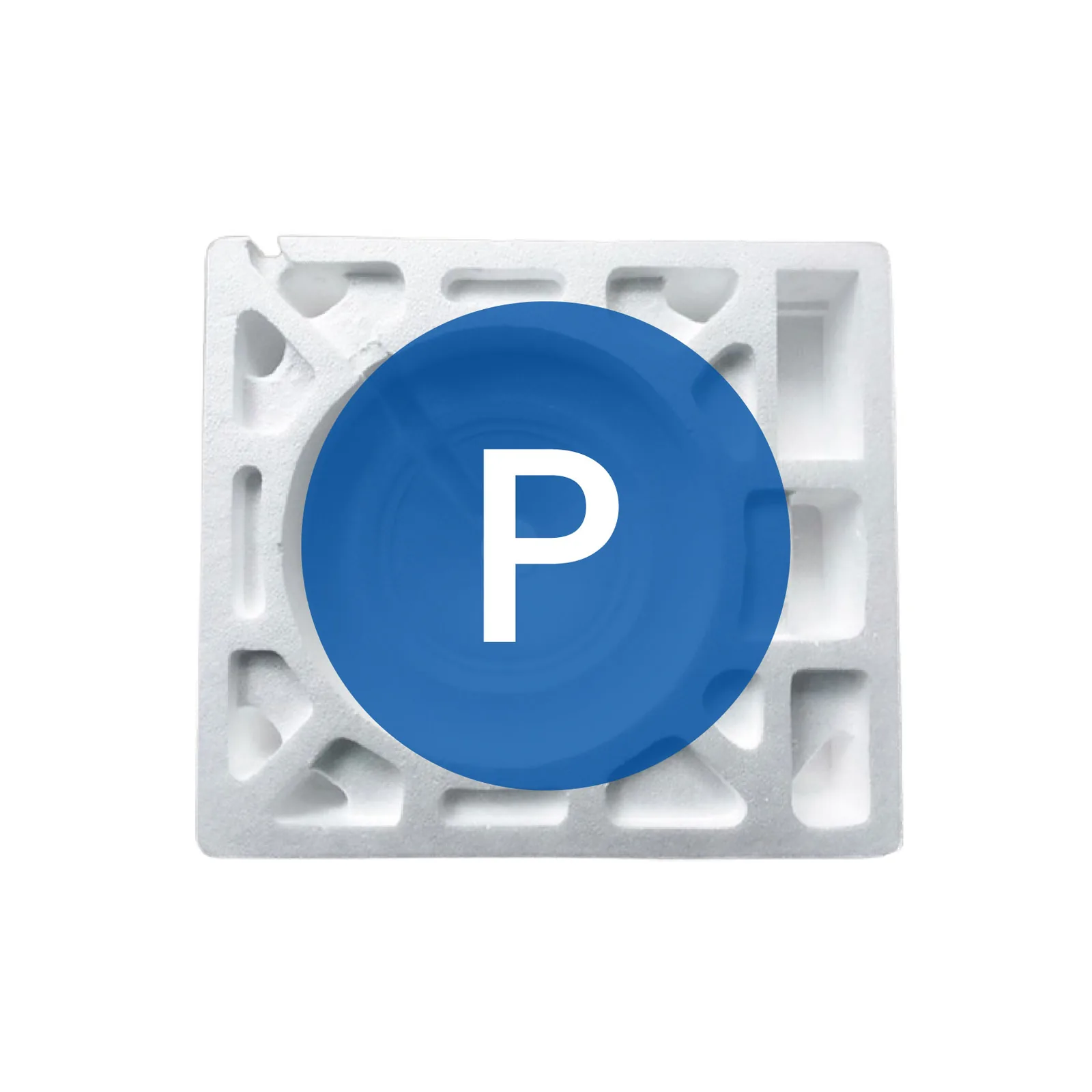
The P material is an ultra-light weight grade. Compared with other grades of EPS materials, the P material has a high foaming capacity, a good storage life, a smooth surface, good impact strength and can be pre-formed multiple times. This material is particularly suited for large panels, electrical products and ceramic lamp packaging that are formed using automatic vacuum forming machines. If weight is a concern or if pre-forming is to be repeated then this material should be subject to a controlled trial.
B Material – a fast grade that molds fast, has high strength, a smooth surface and all-round properties. It can be used for electrical packaging, for panels and for precise instrument packaging on conventional or on automatic vacuum molding machines. B might be a choice when cycle time and handling are important, but one has to make sure to quote the correct B specification as there are more than one B table in the source.
How should the machine influence the grade decision?
The same type of bead can react differently on a conventional forming press compared to an automatic vacuum forming press. Please make sure to record settings for sample testing: type of machine, cavity size, steam or vacuum setting, cycle target time as well as if repeated pre-foaming is possible on the forming line. Please clearly indicate which settings were used for sample testing by the supplier.
Match the grade to the dominant constraint
For a first trial for lightweighting, compare P part weight at same functional level. For a first trial for speed, compare B to current material, using same mold, record cycle time, fusion and reject rate. For a first trial to establish a broad and stable basis for boxes and panels, use E to keep the number of variables as low as possible for the first trial.
When selecting an EPS material for a specific part do not rely on the expansion ratio alone. High expansion can lead to lower part weight but under-fusion or dimensional instability can lead to high rework costs and/or additional protective over-packaging. In the end, the best material is one that delivers part performance at an acceptable total process cost. Therefore, EPS must be evaluated on the vacuum forming line, not by the label on a can in the catalog.
What sample data should be compared side by side?
It’s better to ask for a small matrix rather than one sample. List all three methods E, P and B that are technically possible, and then mark the one that seems to be the best!
- grade and exact specification;
- particle-size designation and expansion ratio;
- pre-foaming count and conditioning time;
- machine type and key process settings;
- part weight, dimensions, surface, and fusion;
- compression or drop result relevant to the package;
- ycle time and accepted-part yield.
Huasheng’s product description gives P ranges of 80-100 for 301, 70-90 for 302, 60-80 for 303, and 55-75 for 401. E and B also have specification tables. Use those values as a starting reference, then confirm the actual production specification in the quotation and sample report. Do not copy a number from one table into another grade’s purchase order.
For projects requiring unusual combinations of weight and surface characteristics, Huasheng can set up a material trial through the customized REPS and EPS development route. A summary of Huasheng’s product families can be found on the product family overview page, which distinguishes between materials and applications.
How can procurement prevent a “fast sample, slow production” problem?
A part can look great for production while missing critical targets. Have approval gates before you place an order to production. Approve the material’s identity and data sheet. Approve parts cast from the production intent mold. Finally, approve a short shot that simulates the expected shift, cavity, and operator sequence.
For every gate use the same part drawing and measurement procedure. Check first, middle and end of run to see if weight or dimensions have changed. If any have, stop purchasing part and try to find out why it is changing. It may not be the grade of part but rather a problem with tooling or a process problem that cannot be solved by changing part grades.
Specify what a “smooth surface” means to your customer, e.g. no visible bead marks, no seam lines, no unacceptable gloss, and no problems fitting a related part. This ensures that, whereas previously different groups of people might have defined “smooth surface” by different defects, you now have a written standard.
When should a buyer consider REPS instead of conventional EPS?
Huasheng describes the REPS as a modified PS foam with medium toughness and strength, as well as with variable particle size. It is used for food packaging as well as for medical products, for automotive and new-energy parts, and for protective coverings for electronic devices. Comparison with other grades states that REPS is produced with physical masterbatches, supports pre-foaming as well as molding, and can be adapted for individual projects in respect to required performance as well as to particle size.
Please let us know if recycled content, re-granulation within your plant or specific particle sizes are crucial for you and we will set up a dedicated REPS trial for you and record your end-use requirements. A conventional EPS grade is NOT necessarily equal to a REPS grade – tooling and performance may vary significantly.
Conclusion: Which grade should you approve?
When general purpose forming is key to your work then E is the best choice, for Higher Expansion & Lightweighting then P would benefit from some proof testing, and for Rapid Moulding with high strength then B would be the better option. All of these can be confirmed once precise specifications for your proposed tool & part have been recorded against precise machines and against detailed records of particle size, Expansion Ratio and finished part tests. A simple comparison allows a buyer to make a more informed purchase decision and for Huasheng’s technical team to continue to develop the material. Please record your tool & part requirements with Huasheng’s contact team prior to samples being cut.
Häufig gestellte Fragen:
Q1: Is P always the cheapest option because it is ultra-light?
A1: No, lower material weight can be offset by slower cycles, worse bond/solidification, and more protection. So, compare cost per part of acceptable quality, not by weight of resin.
Q2: Can a B grade table be used for all B materials?
A2: No. Can you please confirm the exact B specification of interest and the corresponding data table? The product description for B contains more than one table that can be expanded to different ranges of data.
Q3: Does a smooth surface prove the part is strong enough?
A3: No. Surface appearance is one acceptance item. Fusion, weight, dimensions, compression, and application-specific impact tests must also be checked.
 German
 English
 Spanish
 French
 Arabic