
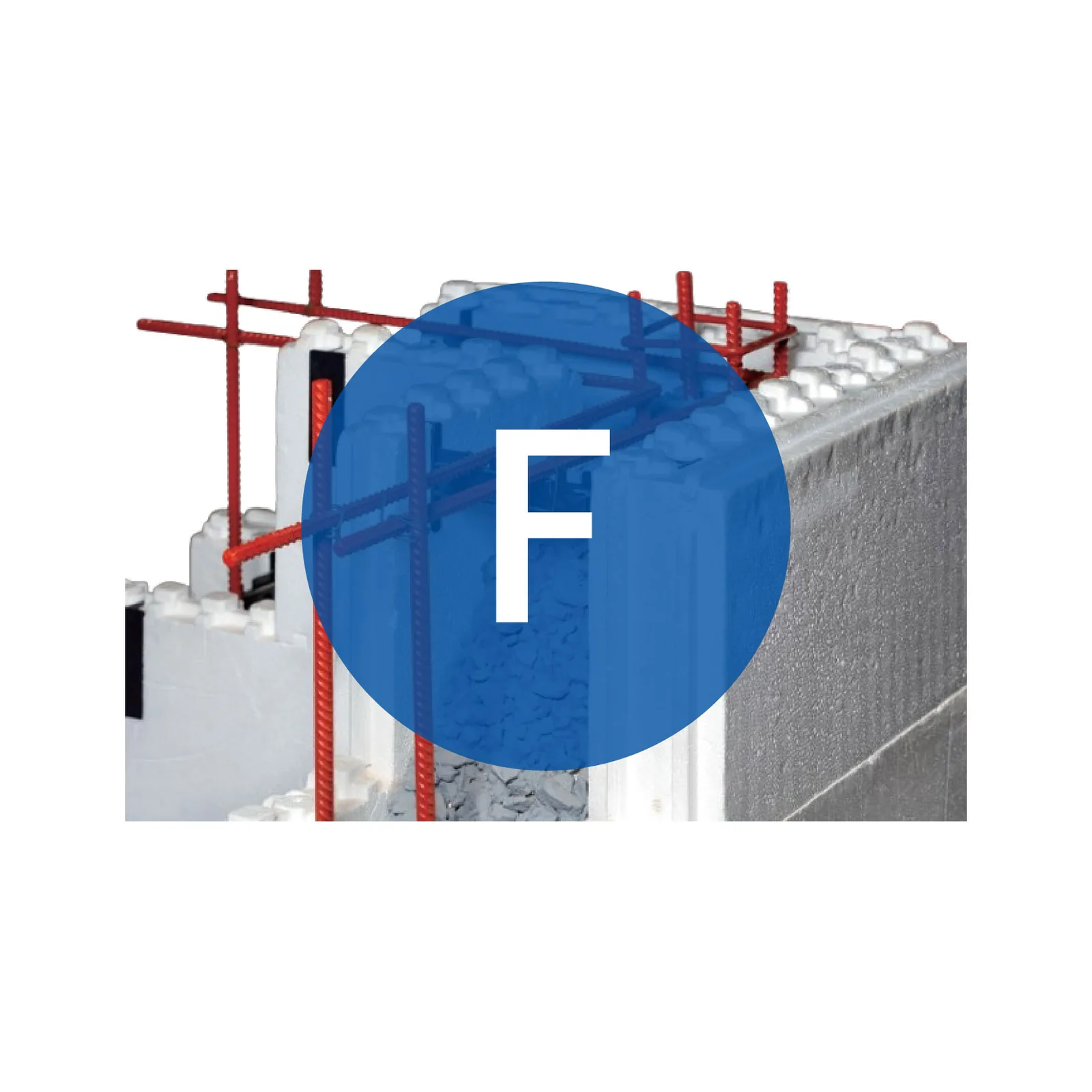
A quote for flame-retardant EPS contains a number of figures which seem to promise everything, but in fact answer different questions. The Oxygen Index indicates a material’s behavior, the B1 classification refers to a test for a particular fire test route and the Thermal Conductivity indicates how heat is transferred. None of these approval figures approve a complete wall or roof construction. In order to reduce construction risks, a distinction must be made between approval of materials and approval of a system and a sample plan must be requested for the intended use.
Which Huasheng material is being evaluated?
Huasheng’s F is a flame-retardant REPS material with good flame retardancy, good foaming, good storage stability, good bonding and low thermal conductivity. The oxygen index of the material is above 30 and was measured 28 days after good molding. The material is used for building-material insulation, thermal insulation and precision-instrument packaging. The F table shows 4 different specifications: 301 with a particle size of 1.0-1.8 mm and single expansion of 50-70%; 302 with 0.8-1.3 mm and 45-65%; 303 with 0.6-1.0 mm and 40-60%; 401 with 0.3-0.8 mm and 30-50%.
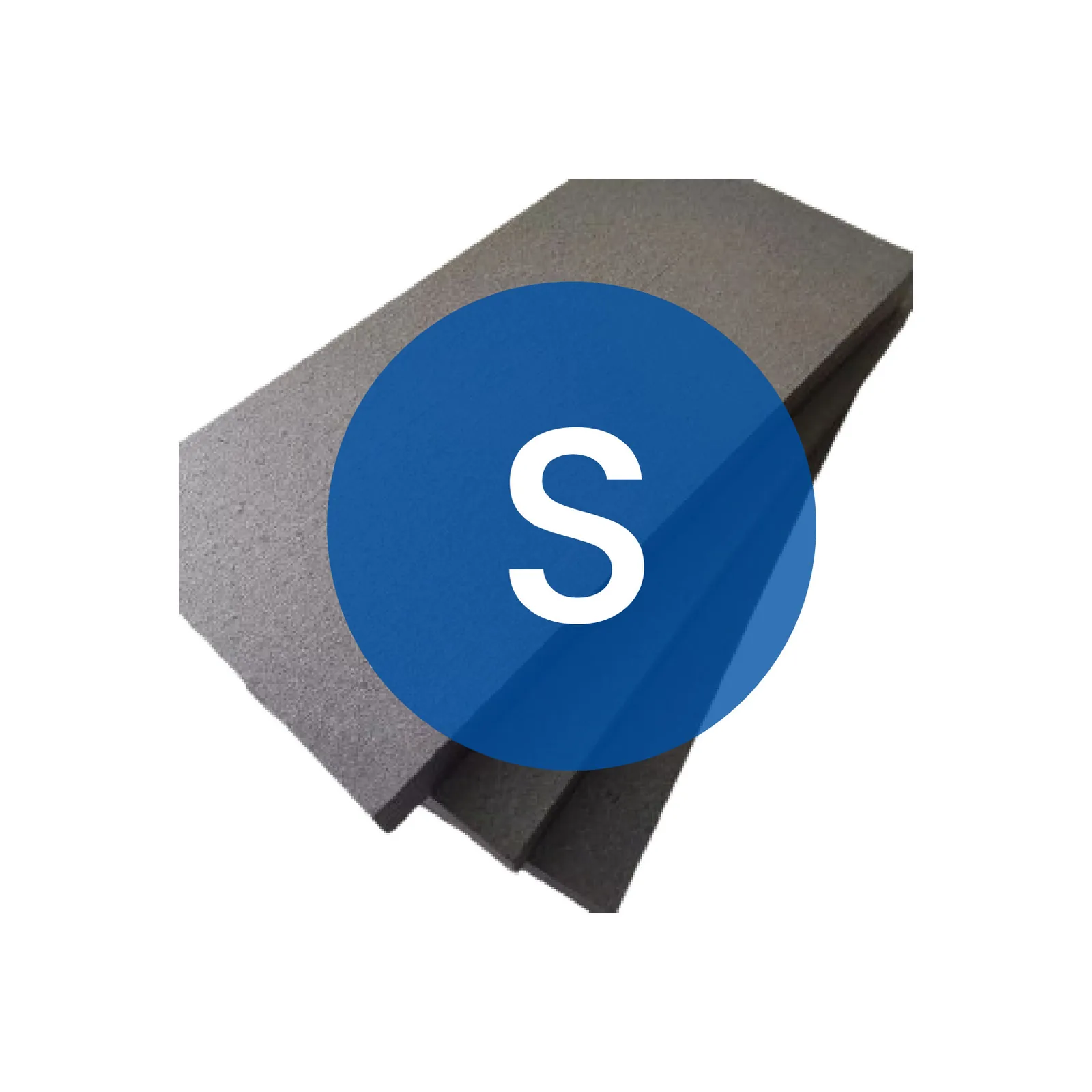
S material is a graphite grade used for flame retarded panels. Reference is made to the class B1 rating according to GB8624. Typical values for the thermal conductivity are given as 0.033 W/(m·K). The typical foamed density of S material is between 15-35 kg/m³. All information relevant for discussions about insulation panels, but for a project the team has to check the current version of the standard, the scope of the test report, the panel construction and the way it will be installed.
The first purchasing control is therefore simple: put the F material, S material, flame-retardant EPS code, specification, particle-size range, expansion range, and intended product form on the same approval sheet. “Flame-retardant EPS” is not specific enough for a construction order.
How should oxygen index and B1 be interpreted?
An oxygen-index result is a material test under a defined method and conditioning state. Huasheng’s F description explicitly says the value above 30 is measured 28 days after molding. That timing should stay with the claim; an early test or a different specimen can produce a different result. Ask for the test method, specimen preparation, conditioning, laboratory, and report date.
A B1 reference for S material refers to the classification route for S material under GB8624. This must not be confused with a statement that a building is B1. The fire performance of a panel or assembly can change with variations in density, thickness, facers, adhesive, joints, cavity barriers etc. and the way it is installed. Procurement of S material should request reference to the actual report for the specific product configuration.
Separate three approval questions
First, does the specified bead or board meet the material test requirement? Second, does the molded or laminated product match the tested specimen? Third, does the installed assembly satisfy the project code and inspection route? Keeping these questions separate prevents a material certificate from being used as a shortcut for system approval.
What sample plan reveals real construction risk?
Start with the intended form: bead-filled cavity, molded insulation piece, or graphite panel. Record target density, thickness, dimensions, joint design, adhesive, facer, and installation method. Then test production-intent samples, not only laboratory plaques. Measure dimensions, density uniformity, surface condition, bonding, and thermal conductivity where relevant.
For panel projects, include joints and fixings shown on the drawing. For beaded or molded components, check filling, fusion, shrinkage and dimensional change after conditioning. Check for cutting, bonding to other materials or covering with additional layers, as such operation will have been included in the trial of the material and it can fail project requirements as a flame retardant material.
Use the Huasheng flame-retardant material information to make an initial filter. Compare the different graphite EPS grades to select the appropriate one. Write down the exact product and test scope in the RFQ.
How do density and expansion affect the final result?
Expansion ratio is a processing range, not a finished density guarantee. The F table’s 301-401 specifications pair particle size with different single-expansion ranges. The selected range, conditioning, steam balance, mold fill, and post-molding aging all influence the finished part. Record the actual part density and dimensions from each trial rather than copying a nominal range into a construction submittal.
For S material typical values for density of foamed material are given as 15-35 kg/m³ and thermal conductivity 0.033 W/(m·K). These values are to be used as reference values and have to be checked for the intended thickness and form of the product. The value to be used in thermal design has to be confirmed by the project engineer and by the respective test method.
A useful validation table lists the material’s specification, its particle size, its expansion ratio, its target and measured density, thickness, thermal conductivity, oxygen index or classification report. Add lot number and molding date so the information can be cross-referenced with later test results to confirm what material was actually installed.
What should be written into the supplier approval?
Material Approval should detail Material Family, Material Specification, Particle Size, Expansion, Density limits etc. together with method of test and Report No. Approval should also detail storage conditions and state change control procedure. Some material properties are material related whereas others are tested as part of the finished product or assembly and both should be clearly detailed. Approval of a change by a supplier to a grade, particle size, additive, production facility etc. should be subject to review prior to despatch.
Huasheng’s technical team describes a customized workflow that covers requirement analysis, solution design, sample production, manufacturing, delivery, and after-sales support. Use that workflow to align the fire test, thermal target, mold, and installation detail. The construction application team can help frame the request, while the company’s technical contact route provides a place to send drawings and project conditions.
Conclusion: How can buyers approve flame-retardant EPS with confidence?
A safe decision on fire-resistant materials includes F or S material designation, oxygen-index and B1 test reports in appropriate test reports, and verifies finished products or structures in the actual project installation conditions. Density, expansion, particle size, thermal conductivity and aging should be traceable to the approved lot of materials. Although Huasheng’s flame-retardant and graphite fire-resistant materials provide a good starting point for fire-resistant materials for the construction industry, approval should not be granted on the basis of a single number for matched samples and reports.
Häufig gestellte Fragen:
Q1: Does an oxygen index of 30+ or above automatically approve a wall assembly?
A1: No. This is a material property test result conducted in a particular test method with a specific test conditioning. The finished assembly must still comply with the system or code requirements.
Q2: Is every graphite EPS product automatically B1?
A2: No. Verify the exact S grade, panel type, test report, standard version, thickness and mounting details of the classified product.
Q3: Can we evaluate the performance of a grading method based on the expansion ratio only?
A3: None. Measured density, dimensions, fusion, thermal performance, fire test reports and batch traceability confirmed on production samples.
 German
 English
 Spanish
 French
 Arabic