

Buyers should specify light flame retardant EPS by confirming the target board density, bead particle size, multiple foaming performance, aging time, bonding quality, machine type, and flame-retardant requirement. A request like “flame retardant EPS beads for low-density board” is too broad for a stable quotation.
For low-density boards, the main challenge is balance. The board needs to be light, but it still has to keep enough fusion, surface quality, toughness, and size stability after molding. If buyers only compare the material name or the lowest quotation, the first sample may look acceptable, while bulk production becomes harder to control.
HUASHENG offers several EPS foam grades for packaging, insulation, construction, and molded board projects. For this topic, the main product to review is Light Flame Retardant Grade-FB. It can be foamed multiple times and is used for low-density sheet production. Under suitable processing conditions, the apparent density of the foamed beads can be lower than 10KG/M³. Still, buyers should treat FB as a production-grade material, not just a product name.
Why Do Low-Density Boards Need a Clear EPS Specification?
Low-density board production is often discussed as if lighter always means better. In practice, lowering density changes how beads expand, flow, fuse, cool, and hold shape. A board that is too light but poorly bonded may break during cutting, shed particles, shrink after molding, or fail to meet the buyer’s intended use.
Lightweight Targets Can Create Hidden Quality Issues
When a factory pushes density lower, it often relies on multiple foaming or more careful pre-expansion control. This can reduce material use, but it also makes bead behavior more sensitive. If particle size is not suitable, the mold may not fill evenly. If fusion is weak, the finished sheet may show loose edges or rough surfaces.
This is why buyers should give a target density range, not just ask for “light board material.” A realistic density range helps the supplier judge whether FB is suitable for the board thickness, mold design, and expected surface finish.
Flame-Retardant Performance Needs Process Discipline
Flame-retardant EPS should not be handled like ordinary EPS. Mixing ordinary EPS into a flame-retardant batch can weaken performance. Rushed aging, poor batch separation, and unclear storage labels can also create inconsistent results.
A serious RFQ should ask how the factory separates materials, whether flame-retardant beads are stored apart from common grade EPS, and how long molded boards are aged before shipment. These points may sound basic, but they often decide whether sample quality can be repeated later.
Finished Boards Matter More Than Loose Beads
Loose pre-expanded beads can look fine, but the finished board is what the buyer actually sells or uses. Board flatness, surface smoothness, edge strength, bonding, and cutting behavior all need to be checked.
Instead of approving material only from bead appearance, buyers should ask for molded board samples under the intended density and thickness. This gives a more realistic view of whether the grade can support regular production.
What Parameters Should Buyers Confirm Before Ordering FB EPS?
The buyer’s first inquiry should help the supplier see the real production scene. Machine type, board thickness, density target, and aging conditions can all change the final result. A clearer RFQ usually means fewer sample rounds.
Apparent Density Should Match the Board Use
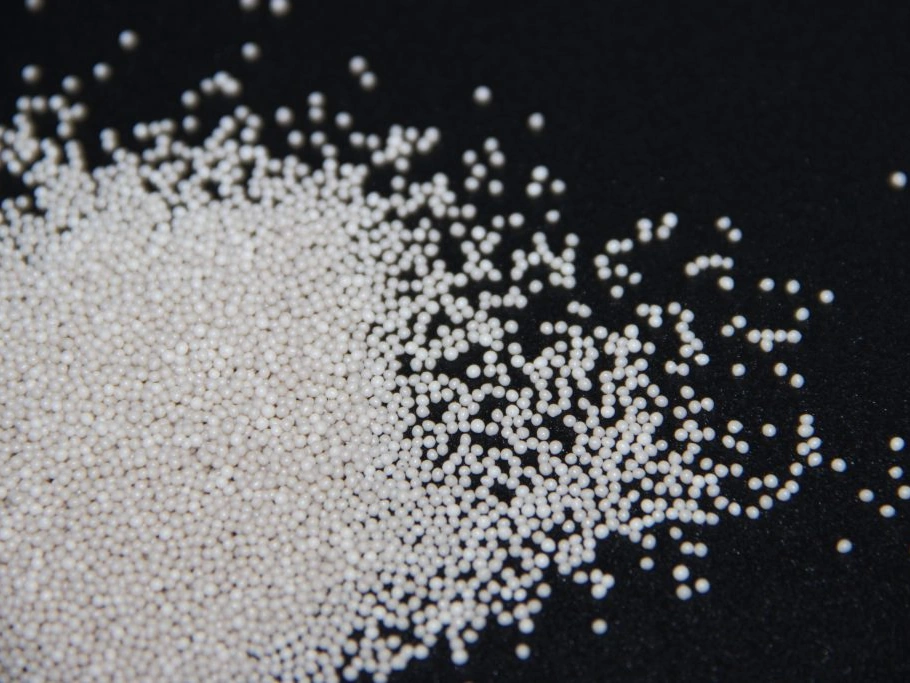
FB can support low apparent density, but the lowest density is not always the best choice. A lightweight insulation backing board may need better dimensional stability. A general packaging board may care more about cushioning and cutting behavior. A decorative or panel-related sheet may need a smoother surface.
Buyers should tell the supplier the target finished board density and acceptable tolerance. This allows the supplier to recommend a suitable FB specification instead of guessing from a broad product name.
Particle Size Affects Filling and Surface Quality
Particle size affects how beads fill the mold, how the board surface looks, and how well the final sheet bonds. HUASHENG’s FB product range includes different particle size options, so this detail should not be left open.
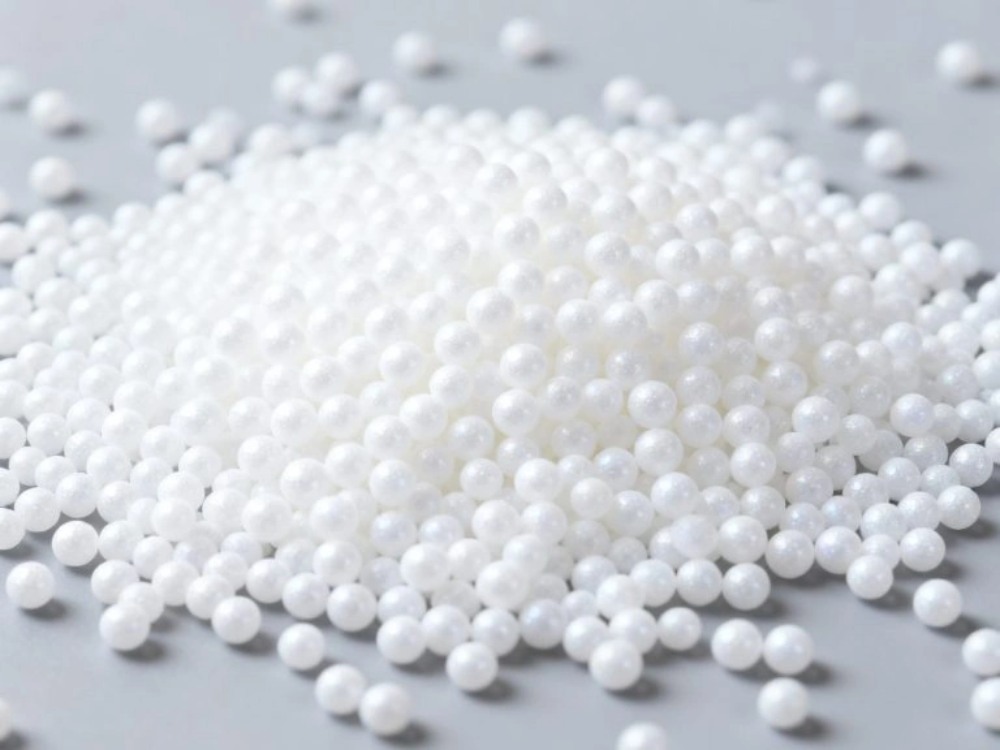
Smaller particles may help where the mold needs tighter filling or a smoother finish. Larger particles may be acceptable for some thicker or simpler boards. The right choice depends on board thickness, mold structure, surface expectation, and production equipment.
Multiple Foaming Should Be Tested in Real Conditions
Because FB can be foamed multiple times, it is useful for lower-density sheet production. But multiple foaming should be tested under the buyer’s real factory conditions. Steam control, curing space, pre-expansion equipment, and operator habits can all affect the final board.
A good sample test should check not only bead expansion, but also board fusion, surface condition, edge strength, and density consistency across several sheets. If the buyer skips this step, the bulk order may require correction after production has already started.
How Should Buyers Control Aging and Flame-Retardant Stability?
Aging time is easy to ignore when orders are urgent. Yet for flame-retardant EPS boards, it is part of quality control. HUASHENG’s FB product information recommends an aging period of more than two weeks to help obtain good flame-retardant performance.
Aging Time Should Be Planned Before Delivery
Buyers should not discuss aging only after the sample is approved. If the project has a tight delivery schedule, aging time needs to be included in the production plan from the beginning.
Shortening this stage may make delivery look faster, but it can also create performance uncertainty. For low-density boards, aging is not just waiting time. It helps the molded foam become more stable before shipment, cutting, or later use.
Ordinary EPS Mixing Should Be Avoided
Some factories may try to adjust density or cost by adding ordinary EPS. For flame-retardant boards, this is a real risk. The material may still look similar, but the final board may not perform as expected.
Buyers should ask for clear batch separation and production records, especially when the factory also processes common grade EPS. This is a simple but useful way to reduce quality disputes.
Test Requirements Should Be Confirmed by Project
“Flame retardant” can mean different things in different markets and applications. Buyers should confirm the required standard, board thickness, density, sample condition, and test method before placing a large order.
FB can be a good option for lightweight flame-retardant board production, but final suitability still depends on the finished product and the local requirement. Reliable suppliers should help buyers confirm these limits instead of making broad promises.
When Should Buyers Compare FB With Other Flame Retardant EPS Grades?
FB is not the only flame-retardant option. It is most useful when the project focuses on low-density boards and lightweight molded output. If the project needs higher strength, stronger dimensional stability, or different fire-performance targets, another grade may fit better.
FB Fits Lightweight Board Production
FB is mainly used for low-density plates, and smaller particle sizes can also be used for general packaging. This makes it useful when the buyer wants a light board with workable flame-retardant performance and stable molding quality.
For distributors, this also creates a clearer sales point. The board is not only “light.” It is made with a grade designed for multiple foaming and low-density sheet production. That is easier to explain than competing only on cost.
FS Fits Higher-Strength or More Demanding Projects
If the buyer needs higher strength, stable dimensions, lower smoke density, or faster B1-level flame-retardant performance, Flame Retardant Grade – FS may be worth comparing. FS is positioned around strength, rapid molding, and construction or precision instrument packaging uses.
This does not mean FS replaces FB. It means the buyer should match the grade to the board’s job. FB fits lightweight low-density sheet production. FS may fit projects where strength and specific fire-related requirements carry more weight.
The Product Category Helps Narrow the Choice
If the buyer is still not sure which grade to choose, the HUASHENG EPS foam products page can help narrow the first decision. The product system includes common grade, flame retardant grade, graphite grade, environmental protection grade, carbon black grade, and customized REPS.
For this article’s topic, the buyer should start with the flame retardant grade category, then compare FB, FS, F, or FSH based on density, board use, processing condition, and required fire behavior.
What Should an RFQ for Low-Density Flame Retardant EPS Include?
A useful RFQ does not need to be complicated. It should give the supplier enough information to judge grade fit and production risk. The table below can be used as a simple starting point.
| RFQ Item | Why It Matters | What Buyers Should Confirm |
|---|---|---|
| Finished board density | Affects weight, strength, and bonding | Target density and tolerance |
| Board thickness and size | Changes molding and aging needs | Final dimensions and cutting method |
| Particle size | Affects mold filling and surface finish | Recommended FB size for the board |
| Multiple foaming plan | Supports lower-density output | Pre-expansion method and apparent density |
| Aging time | Supports stable flame-retardant behavior | Whether more than two weeks is possible |
| Equipment type | Affects fusion, cooling, and demolding | Automatic or manual board machine |
| Fire requirement | Prevents wrong material assumptions | Standard, test method, and sample condition |
After sample approval, buyers should also ask how the next batch will be controlled. Particle size, storage, aging, batch separation, and delivery schedule should be repeatable. If low-density board quality already causes complaints or repeated sample changes, the issue is usually not solved by a lower quotation. It needs clearer material selection and tighter production control.
How Can HUASHENG Support Buyers Choosing FB?
HUASHENG can support buyers by connecting EPS grade selection with actual board production needs. For FB projects, the discussion should start with finished board density, board size, machine type, aging plan, and flame-retardant requirement.
A buyer who already has clear data can send it through Contact Us for a more direct review. If the project is still early, buyers can start with the application, expected density range, board thickness, and target market. This helps HUASHENG judge whether FB is the right route or whether another flame-retardant EPS grade should be compared first.
Conclusion
Light flame retardant EPS for low-density boards should be specified through production conditions, not just a product name. Buyers need to confirm apparent density, particle size, multiple foaming behavior, aging time, bonding quality, equipment compatibility, and flame-retardant requirements before approving samples or bulk orders.
FB is a strong option when lightweight board production is the main goal. Still, the final result depends on finished board design, processing control, and test requirements. A clear RFQ helps buyers avoid weak bonding, unstable surface quality, rushed aging, and repeated sample correction.
FAQs
Q1: What is light flame retardant EPS used for?
A1: It is mainly used for low-density EPS boards and some lightweight general packaging applications.
Q2: Why does FB need aging after molding?
A2: Aging supports more stable flame-retardant performance after residual blowing agent leaves the foam body.
Q3: Can HUASHENG help compare FB and FS?
A3: Yes. We can review density, application, equipment, and fire-performance needs before recommending a grade.
 English
  German
  Spanish
  French
  Arabic