
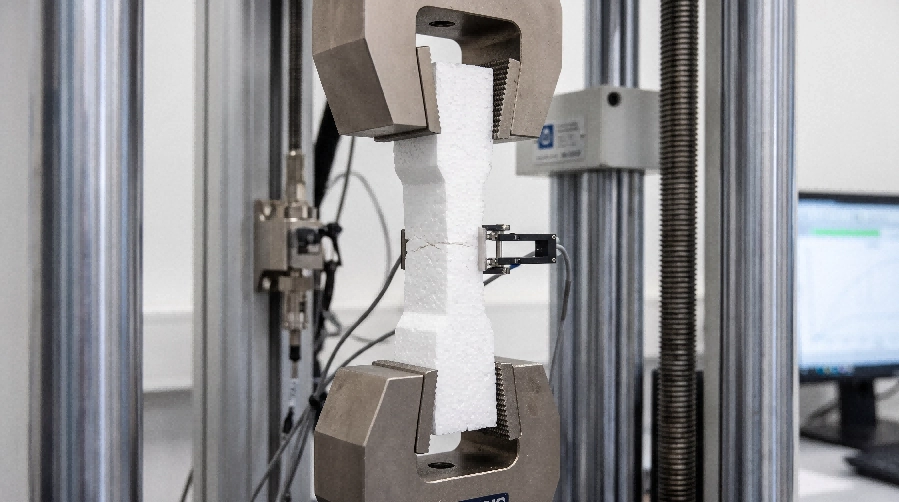
Engineers often look at a material data sheet and assume they know exactly how a custom part will behave on the factory floor. Unfortunately, it rarely works that way in reality. The EPS tensile modulus gives us a solid clue about how much a perfectly shaped, standardized material sample stretches. This specific stretching happens inside a tightly controlled lab environment, constrained within a very defined testing range. However, this metric is completely different from the raw stress point where a foam block finally hits a breaking failure limit. More importantly, neither of these isolated laboratory numbers can single-handedly predict how a fully finished, three-dimensional packaging tray or structural board will actually flex in the real world.
Does your custom tray rely on tight, millimeter-perfect edge alignment? Is direct product contact highly sensitive to slight structural movements? If you answered yes, you must look far beyond the basic data sheet. The specific testing method heavily influences the reported numbers. Additionally, the actual physical geometry of your custom molded part matters just as much as the raw foam itself.
What Does EPS Tensile Modulus Tell You?
Let’s dive into what this metric actually means on a practical level. Basically, a tensile modulus describes the proportional mathematical relationship between applied stress and the resulting physical strain. This dynamic happens over a strictly specified measurement range while a heavy lab machine pulls a small specimen apart. Essentially, it helps characterize the raw stiffness of the material in pure tension. You should only ever compare the tensile modulus of EPS foam from two different suppliers when everything else aligns perfectly. The test method must match. The specimen shape has to be identical. The pulling orientation must be the same. The pre-test environmental conditioning needs to align. Finally, the exact mathematical calculation range must be 100% compatible. If just one variable changes, your comparison becomes completely useless.
How is tensile modulus different from tensile strength?
People often mix these two distinct concepts up in meetings, but they are entirely different. EPS tensile strength is basically a peak stress result. It gets permanently recorded at one specific, defined point during a destructive test—usually right when the material permanently yields or violently breaks. On the flip side, a modulus number describes the ongoing, elastic stiffness over a measured, continuous range long before things start breaking apart.
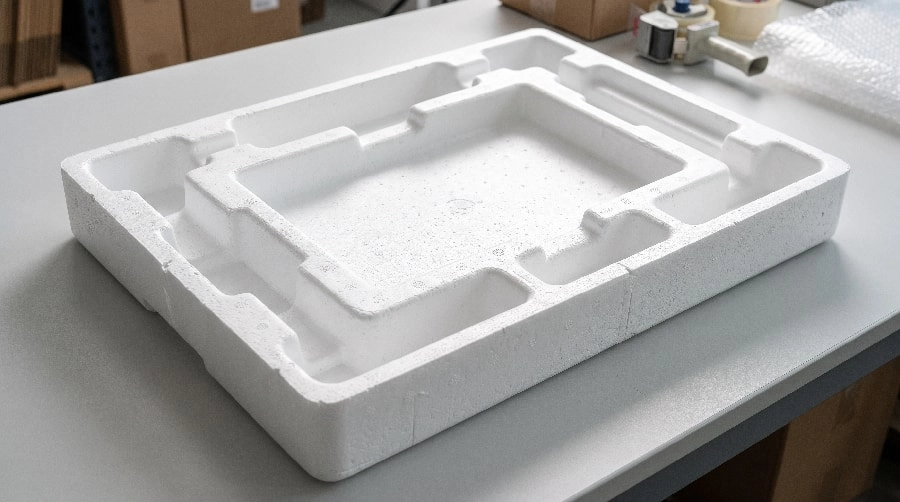
Here is a crucial engineering reality you cannot ignore. A significantly higher strength value definitely does not automatically mean the material will shift or move less under a normal, everyday working load. You always need to check the actual stress-strain curve carefully. Look closely at the exact data point the lab used to calculate the final modulus. You must do this whenever unwanted movement—rather than total, catastrophic breakage—is your primary design concern.
When does part flexing become a specification risk?
Unwanted flexing becomes a massive, expensive problem under a few highly specific conditions. First, it matters immensely when it alters a protective packaging tray’s tight internal fit. Second, it creates a huge risk if bending allows a delicate, expensive product to physically scrape against the rough outer shipping carton. Third, excessive flexing can accidentally pull a glued structural joint wide open. Finally, a bending tray can easily transfer a nasty load of concentrated force directly onto a highly fragile edge of your product.
A quick, manual hand-bend test on the busy factory floor might reveal an obvious, glaring flaw. However, snapping a foam part with your bare hands does absolutely nothing to quantify the actual engineering problem accurately. Before you blindly choose a testing lab or start aggressively comparing different foam suppliers, you must do some serious homework. Clearly define the exact allowable movement limits. Map out the expected load directions carefully.
What Do HUASHENG’s Published REPS Tensile Data Show?
Let’s look at some real-world numbers provided directly by the manufacturer. HUASHENG publishes a highly detailed, comprehensive performance table for their materials. Their specific row for the modulus of elasticity clearly reports values calculated under strict ISO 527-1:2019 and ISO 527-3:2018 testing standards. The reported values are 23.9, 16.3, 13.2, and 8.47 MPa. These specific numbers correspond directly to four different, controlled foaming rates: 20, 25, 30, and 40. Right underneath that, the matching density row lists the weights as 50, 40, 33, and 25 g/L.
Now, you need to understand something very important about reading these numbers. These specific values precisely describe the actual, flat laboratory samples tested specifically for that exact table. They are definitely not some universal, magical design curve that applies perfectly to every single foam grade or every complex molded shape you might invent.
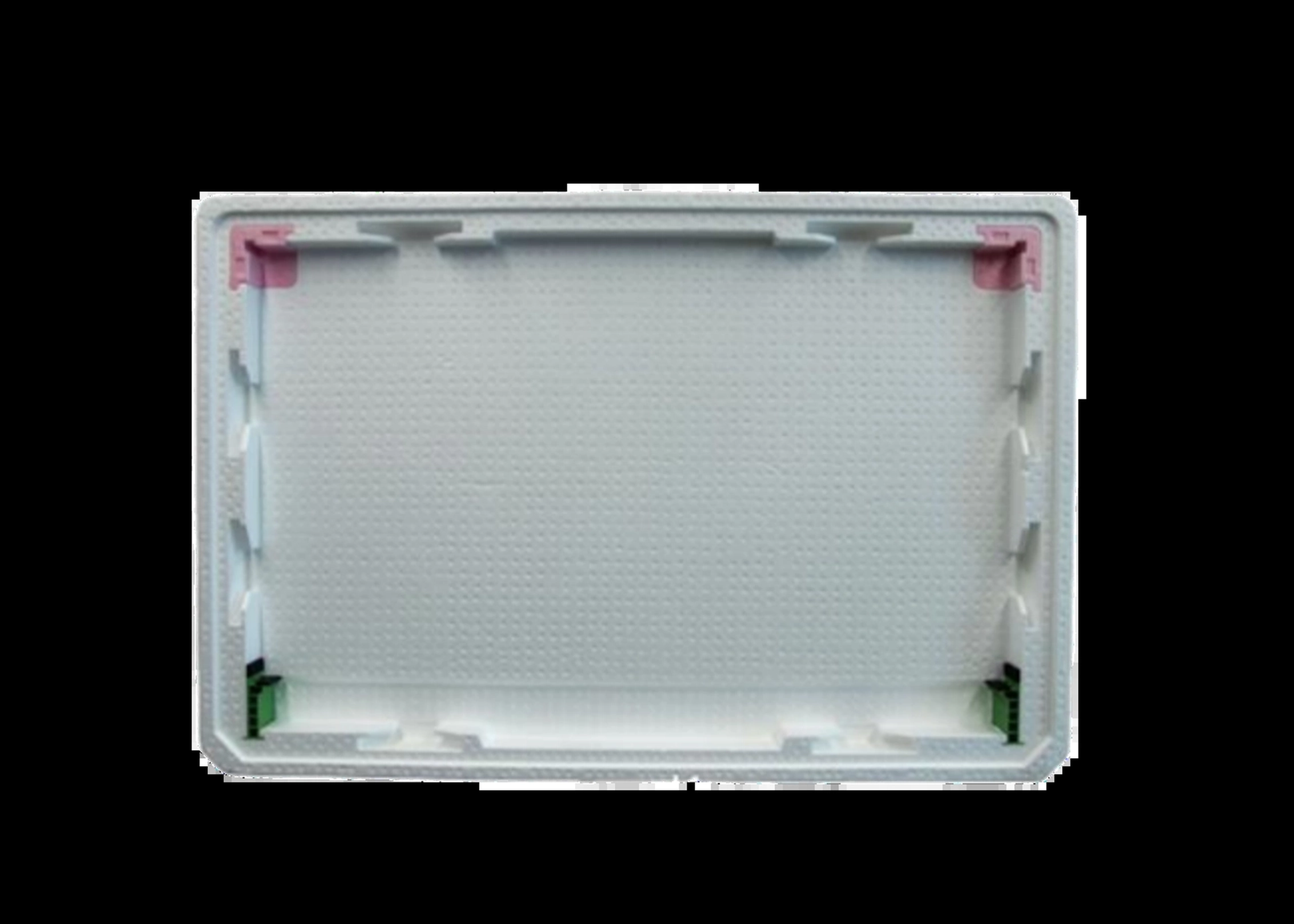
The exact same technical table also reports the EPS elongation at break. These numbers are listed strictly in millimeters as 8.6, 7.5, 6.1, and 5.1 for those four respective foaming-rate settings. You must carefully preserve the originally listed unit on your own spec sheets. Do not change it on a whim. These figures are explicitly not labeled as percentages. If your custom packaging project strictly requires a percentage strain, you need to dig deeper. If you need to know the exact extension under a highly specific physical load, or if you need a hard design limit that the basic summary table simply does not provide, do not guess. Always ask the manufacturer directly for the complete, underlying laboratory report.
You should absolutely use the HUASHENG REPS performance table as a solid, reliable baseline material-data reference. After doing that, always verify that your physical sample and the chosen foam grade perfectly match your proposed commercial purchase order. The webpage provides a highly controlled set of reported laboratory properties. It does not magically know the dimensions, the weird cutouts, or the uneven support conditions of your custom, production-intent tray. Therefore, this specific set of REPS tensile data should always stay firmly connected to the exact sample identification number used for your final commercial approval.
Why should the strength rows stay separate?
A naked strength figure floating around on a spec sheet is practically meaningless on its own. It only becomes truly useful when it is permanently paired with its specific testing standard, the exact specimen preparation method, and the strict laboratory failure definition. When a dense technical report includes multiple different strength rows, you should pick up the phone. Ask your supplier to clearly explain what each specific row actually measures in the real world. Ask them which row truly applies to your intended, practical comparison. Do not ever take test results from totally different testing methods and lazily average them together into one single, meaningless score.
Why Doesn’t an EPS Coupon Predict Finished-Part Flexing?
The answer here comes down to basic, unavoidable physics. The flat laboratory coupon and your final, complex molded part carry heavy physical loads through totally different geometric shapes. A standard molded tray might feature tall side rails, deep hollow pockets, incredibly thin internal webs, and a constantly changing wall thickness across its entire body. Meanwhile, a structural insulation board might be suddenly interrupted by a massive pipe cutout. Or, it might only be supported physically right along its extreme outer edges. The exact position of the heavy load and the downward direction of that force matter enormously. These critical factors can easily make one specific region of your tray flex wildly, even when the underlying raw material response remains perfectly consistent across all the tested lab samples.
What changes when the support span changes?
Think about a long wooden bridge versus a short diving board. A very long, completely unsupported foam rib can bend and move significantly more than a short, stubby rib made from the exact same batch of expanded foam. You need to physically mark the hard support points on your engineering drawing. Mark the direct contact area clearly. Note the free span length accurately. Pinpoint the exact load location. If your expensive product has a tight, zero-tolerance alignment or a strict physical clearance limit, you have to measure the physical movement at that exact critical location. Do not just drop a heavy weight on it and lazily record whether the part cracked or survived. Bending heavily without breaking can still completely ruin the fragile product inside.
How should handling and orientation enter the trial?
Real-world warehouse handling is incredibly rough and unpredictable. A large foam tray can be suddenly lifted by a single, weak edge during a frantic factory packing process. Later, it gets heavily compressed from all sides by a tightly sealed, stacked corrugated carton sitting in a hot shipping container. Finally, it gets twisted and flexed all over again when the end consumer hastily rips the product out of the box on their living room floor. Every single one of those aggressive actions loads the foam part in completely different directions.
You need to faithfully reproduce that actual, real-world handling sequence in your testing lab. After each distinct, rough stage, inspect the foam carefully. Look for excessive physical movement. Check the elastic recovery rate. Look closely for white stress marks (whitening) in the corners. See if there is any permanent, plastic loss of the original tight fit.
HUASHENG specifically identifies large panel packing and heavy display packaging among their core REPS applications. The display-panel packaging example on their site shows a fantastic, clear product context. However, a totally different electronic module still absolutely needs its own unique support map drawn up. It desperately needs its own dedicated, physical validation sample tested thoroughly. You simply cannot skip this critical step.
How Should Buyers Qualify EPS Tensile Modulus?
When you finally reach out to a supplier for a quote, start your request clearly and professionally. Detail the exact product form, the specific foam grade, and the target density you want. Name the exact specimen geometry you want them to use in their lab. Specify the testing standard method, the pre-test conditioning environment, the pulling orientation, and the exact reported units you expect to see on the paperwork.
You must specifically ask whether their reported modulus comes from drawing an initial straight-line slope. Or, does it come from another vaguely stated, curved region of the stress graph? For proper EPS tensile modulus comparisons between two competing factories, you must make the expected physical load range extremely explicit. Make your allowable movement decision completely clear upfront, instead of just blindly asking the eager sales rep for the absolute highest possible number on their chart.
What should go into the RFQ?
Your Request for Quotation (RFQ) needs to be completely bulletproof. Always attach a detailed CAD drawing. Clearly identify the specific stress points where accidental flexing could ruin the fit or compromise product safety. State the exact applied physical load, the force direction, the load duration, the ambient temperature, and the maximum allowable physical movement measured in millimeters. You should specifically request the EPS tensile strength and the EPS elongation at break as totally separate, distinct results whenever they actually matter to your structural design. Furthermore, always demand to see the testing method and the raw sample details hidden behind each of those impressive values.
When is a production-intent trial necessary?
A full-scale, physical trial is critically important when certain tricky geometric features control your final outcome. These risk areas include very thin wall sections, complex joints, large cutouts, small isolated contact pads, or violent physical removal steps by the end user. You must measure the finished, three-dimensional shape while it sits under the maximum expected load and the full handling sequence. Then, compare that hard physical result directly with your strict acceptance limit. If the part fails, do not panic and change everything at once. Change exactly one design variable at a time. This highly disciplined approach ensures that the very next physical sample actually teaches you something useful and actionable.
If a modern testing lab uses custom software code to process their raw tensile curves, tell them to record the exact analysis-script revision number. They can easily log this in GitHub alongside the physical specimen data and the daily test run details. GitHub can definitely help you reproduce complex math calculations months later. However, software code does not validate the raw material quality. It does not check the physical instrument calibration. It also cannot prove that the lab technician actually followed the ISO standard properly. Therefore, always keep those crucial, real-world details securely locked in the officially signed, stamped test record.
HUASHENG actively offers highly solutions REPS personnalisées for complex, application-specific packaging projects. You should absolutely send them your detailed drawing today. Provide the hard support locations, the strict required movement limits, and the exact testing conditions. Push all of this data straight through their custom REPS inquiry route. By doing this, their experienced engineers can review the newly proposed physical sample directly against your actual, real-world use case.
Questions fréquentes
Q1: Is the EPS tensile modulus exactly the same thing as the EPS tensile strength? A1: No, absolutely not. The modulus number describes the ongoing, elastic stiffness over a continuous, specified test range. Conversely, the tensile strength is a hard, peak stress result tightly tied to one single, defined breaking point or a strict structural failure criterion.
Q2: Does the EPS tensile modulus safely predict exactly how far my custom tray will actually bend?
A2: Not on its own, unfortunately. The finished, real-world physical movement also heavily depends on the unsupported span, the local wall thickness, the physical support brackets, the exact load direction, and the surrounding environmental test conditions.
Q3: Why exactly are the EPS elongation at break values reported here strictly in millimeters?
A3: That is simply the exact unit shown in the manufacturer’s originally published data table. You should definitely not try to convert it into a percentage strain on your own without having the exact specimen gauge length and the full, unabridged laboratory test record sitting right in front of you.
 French
 English
 German
 Spanish
 Arabic