
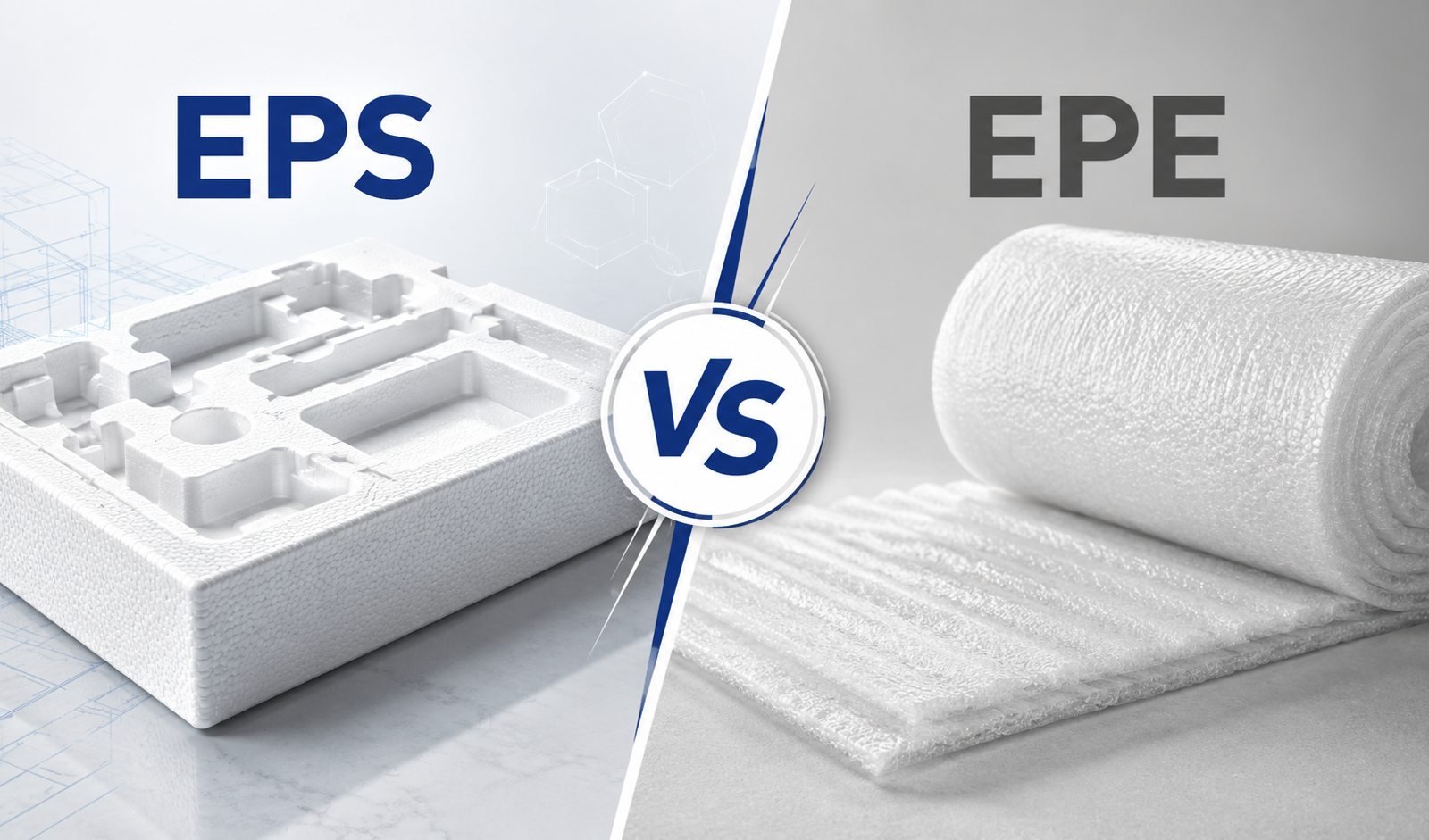
Pour de nombreux acheteurs professionnels, le choix entre EPS L'EPE va bien au-delà d'un simple choix de matériau. Elle influe sur les frais d'emballage, le poids du transport, les taux de dommages, l'espace d'entreposage, l'approbation des projets et même la stabilité des commandes répétées.
Qu'est-ce que l'EPS ?
Le polystyrène expansé (EPS) est un matériau composé de petites billes de polystyrène. Ces billes se dilatent sous l'effet de la vapeur puis fusionnent dans un moule. Le produit fini forme une mousse légère à cellules fermées. Ces cellules emprisonnent l'air, ce qui confère à la mousse d'excellentes propriétés isolantes et un poids très faible.
Le polystyrène expansé (EPS) possède une structure rigide, une qualité qui le distingue nettement de l'EPE. Grâce à son excellente tenue dans le temps, il est idéal pour les produits nécessitant un support solide. Les appareils électroniques, les écrans, l'électroménager, les articles en céramique et les équipements de précision, par exemple, utilisent fréquemment des inserts en mousse.
Le polystyrène expansé (PSE) offre également de réels avantages dans les situations où l'isolation est primordiale. Les caisses pour la chaîne du froid, les caisses pour produits de la mer, les conteneurs alimentaires, les emballages pour le transport de produits pharmaceutiques et les panneaux d'isolation pour bâtiments tirent tous parti de cette caractéristique.
Qu'est-ce que l'EPE ?
L'EPE, ou polyéthylène expansé, est un matériau composé de mousse de polyéthylène souple. Plus doux, plus élastique et plus flexible que le PSE, l'EPE est généralement disponible en rouleaux, en plaques, en tubes, en profilés ou en pièces prédécoupées.
L'EPE est généralement privilégié lorsque la surface du produit nécessite un toucher doux. La mousse peut envelopper les éléments de mobilier, les objets métalliques, le verre, les objets peints et tous les produits sensibles aux rayures. Plus flexible, elle peut s'enrouler et reprendre sa forme initiale que le EPS. Elle est donc idéale pour les objets aux formes irrégulières ou ne nécessitant pas de moule spécifique. De plus, la mousse permet de séparer les objets dans les cartons et de réduire les frottements.
EPS vs EPE : Principales différences pour les acheteurs B2B
Amorti et absorption des chocs
Ces deux matériaux absorbent les chocs, mais par des méthodes différentes. Le PSE protège un objet en le maintenant dans une cavité stable, puis en absorbant l'énergie de l'impact grâce à sa propre structure en mousse. En revanche, le PE protège en se déformant et en rebondissant autour du produit. équipement de précisionPour les appareils électroniques, l'électroménager et les pièces moulées fragiles, le polystyrène expansé (PSE) offre souvent une protection supérieure. Le produit est ainsi parfaitement maintenu en place à l'intérieur de l'emballage.
Poids, volume et frais d'expédition
L'EPS et l'EPE sont tous deux des matériaux légers. La principale différence réside dans le volume d'emballage. Les emballages en EPS moulé peuvent être conçus avec une grande précision pour s'adapter au produit et à la disposition du carton. L'EPE, en revanche, nécessite souvent des couches supplémentaires, plusieurs rouleaux ou un emballage manuel additionnel, ce qui augmente l'encombrement.
Conception de mouleabilité et d'emballages personnalisés
Le polystyrène expansé (PSE) présente un avantage indéniable dans le domaine des solutions d'emballage moulées. Il peut être façonné en plateaux, inserts, cornières, boîtes et cavités complexes sur mesure. Ces propriétés s'avèrent particulièrement précieuses pour l'emballage de produits électroniques, d'écrans, d'appareils électroménagers et pour les emballages frigorifiques. Le polyéthylène expansé (EPE) peut certes être découpé et laminé, mais il se prête généralement moins bien aux structures rigides complexes. Lorsqu'un client recherche des formes moulées reproductibles offrant un positionnement précis, le PSE constitue souvent la solution la plus appropriée.
Résistance à l'humidité et stockage à long terme
L'EPE présente une forte résistance à l'eau car il est composé de mousse de polyéthylène à cellules fermées. L'EPS possède également une structure à cellules fermées et offre des performances adéquates dans de nombreuses situations liées à l'humidité, notamment après une sélection appropriée de la densité et de la qualité. chaîne froide En cas de conditions de transport humides, les acheteurs doivent demander des données détaillées sur les matériaux, les taux d'absorption d'eau et des résultats d'essais sur des échantillons. Le choix final doit tenir compte de la durée de stockage, des variations de température, du risque de condensation et de la valeur globale du produit.
Besoins en matière de recyclage, de durabilité et de conformité
Le développement durable continue de gagner en importance en 2026. Le PSE a considérablement progressé dans ses programmes de recyclage et dans les options intégrant du contenu recyclé. HUASHENG Nous proposons des solutions REPS respectueuses de l'environnement et personnalisées. Ces produits méritent d'être considérés par les acheteurs à la recherche de mousse EPS recyclée ou souhaitant adopter des stratégies plus durables en matière de matériaux EPS. L'EPE peut également être recyclé, mais son taux de récupération dépend fortement des systèmes de collecte locaux, des niveaux de contamination et des bonnes pratiques des utilisateurs finaux.
Là où EPS offre une meilleure valeur de projet
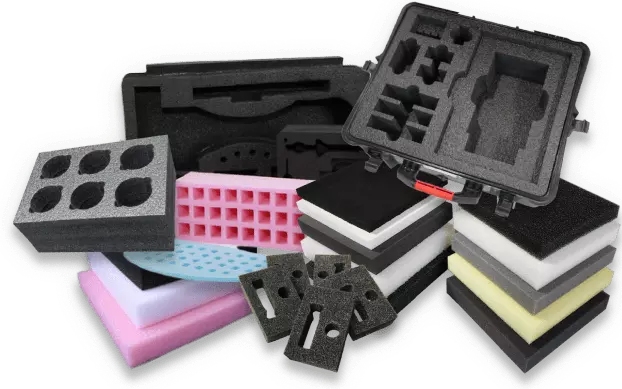
Emballages moulés sur mesure pour appareils électroniques et électroménagers
Le polystyrène expansé (PSE) est souvent le choix idéal pour les produits électroniques, l'électroménager, les écrans et les articles de précision. Ces produits exigent un positionnement stable, une protection fiable des angles et une qualité d'emballage constante. Les plaques de mousse PSE de HUASHENG, ainsi que les solutions sur mesure, répondent aux besoins des produits fragiles nécessitant à la fois une absorption des chocs et un ajustement précis de la forme.
Boîtes isothermes et expédition de produits thermosensibles
Le polystyrène expansé (PSE) présente des avantages indéniables pour le transport sous chaîne du froid. Ses performances d'isolation le rendent idéal pour les produits de la mer, les aliments frais, les produits surgelés, la logistique médicale et le transport de produits pharmaceutiques. Bien que le polyéthylène expansé (EPE) puisse amortir les chocs, il est rarement privilégié lorsque la régulation de la température est primordiale.
Construction, isolation et remplissage léger
L'EPS démontre également une plus grande résistance interne applications de construction et d'isolationLes panneaux isolants en polystyrène expansé (EPS) et les plaques de mousse EPS sont utilisés pour l'isolation des bâtiments, le remplissage léger et la régulation thermique. L'EPE sert principalement de matériau d'emballage souple et ne remplace généralement pas les panneaux isolants pour des fonctions similaires.
Dans les cas où l'EPE peut encore convenir
Emballage flexible et protection de surface
L'EPE reste un matériau utile pour la protection des surfaces fragiles. Il est particulièrement efficace sur les surfaces polies, les métaux peints, les éléments de mobilier et tout objet susceptible de se rayer lors d'une manipulation normale.
Amorti léger pour produits à faible risque
Lorsqu'un article présente une fragilité limitée et ne nécessite pas de cavité moulée, l'EPE peut s'avérer plus pratique. Ce matériau se découpe rapidement, s'emballe facilement à la main et convient parfaitement aux petites commandes ou aux commandes de produits variés.
Projets nécessitant un contact souple plutôt qu'un support rigide
Certains produits ne nécessitent pas de support rigide. Une simple couche de séparation souple entre les composants suffit. Dans ces conditions, l'EPE peut s'avérer plus approprié que l'EPS.
Conseils en matière d'approvisionnement : Comment choisir entre EPS et EPE
Choisir le matériau adapté au poids, à la forme et à la fragilité du produit.
Commencez par examiner le produit lui-même. Tenez compte de son poids, de ses zones fragiles, de son état de surface, de son itinéraire de transport et de la disposition prévue du carton. Les articles lourds ou très fragiles nécessitent généralement un emballage renforcé, tandis que les marchandises légères et peu risquées peuvent se contenter d'un simple emballage.
Choisissez le polystyrène expansé (EPS) lorsque le support moulé, l'isolation et la maîtrise des coûts sont essentiels.
Le polystyrène expansé (PSE) est la solution privilégiée dès lors qu'un projet requiert des inserts moulés, des caisses isothermes, des cavités sur mesure, un empilage stable ou une isolation performante. Ce matériau s'avère également avantageux pour les commandes importantes, car les coûts de moulage peuvent être amortis sur plusieurs lots.
Choisissez l'EPE lorsque la flexibilité et le contact avec une surface douce sont plus importants.
L'EPE est particulièrement adapté aux situations où la surface du produit doit rester exempte de frottements ou lorsque l'emballage doit épouser des formes irrégulières. Il convient également aux petites commandes car aucun outillage spécifique n'est nécessaire.
Comparez le coût total de l'emballage, et pas seulement le prix des matériaux.
Pour une analyse plus pertinente, les acheteurs évaluent le coût total de l'emballage plutôt que le seul prix des matériaux. Des facteurs tels que le coût de la mousse, les dimensions des cartons, le temps de main-d'œuvre, le taux de dommages, l'efficacité du chargement des conteneurs et les éventuelles retouches doivent être pris en compte. Un matériau qui paraît moins cher au premier abord peut, à terme, augmenter les coûts globaux s'il allonge le temps d'emballage ou accroît le nombre de réclamations relatives aux produits.
Demandez aux fournisseurs des échantillons, des données de test et une confirmation de la constance des commandes en gros.
Avant de passer des commandes importantes, demandez des échantillons et effectuez des essais d'emballage réalistes. Évaluez la résistance aux chutes, la résistance à la compression, l'ajustement du produit, la qualité du contact avec la surface et le comportement pendant le stockage. Si vous utilisez du polystyrène expansé (PSE), vérifiez également sa densité, la précision du moulage et la qualité du matériau choisi.
Vérifiez la quantité minimale de commande (MOQ), le délai de livraison, l'emballage pour l'exportation et l'assistance à la personnalisation.
Les quantités minimales de commande, les délais de livraison, les normes d'emballage pour l'exportation et les possibilités de personnalisation doivent être confirmés au plus tôt. Si les acheteurs exigent de la mousse EPS recyclée, du REPS sur mesure, de l'EPS ignifugé ou de l'EPS de qualité graphite, ils doivent discuter de ces spécifications avant la réalisation de l'échantillon, et non après l'approbation du moule.
FAQ (questions fréquentes)
Q1 : Le EPS est-il meilleur que l'EPE pour l'emballage de protection ?
A1 : Le polystyrène expansé (PSE) est souvent plus performant pour l’emballage de protection lorsque le produit nécessite un support moulé, un positionnement stable et une protection robuste des angles. L’EPE, quant à lui, convient mieux à l’emballage souple et à la protection des surfaces. Le choix optimal dépend du poids du produit, de sa fragilité et du risque global lié au transport.
Q2 : Quel matériau est le plus adapté au transport maritime en vrac pour l'exportation ?
A2 : Pour l’expédition en vrac à l’exportation, le polystyrène expansé (PSE) offre généralement une meilleure valeur ajoutée lorsque la disposition des cartons, la prévention des dommages et la régularité de l’emballage sont des critères importants. Le polyéthylène expansé (EPE) reste acceptable pour les articles plus légers ou moins risqués, lorsque le rembourrage flexible répond aux exigences. Les acheteurs doivent toujours comparer le coût total de l’emballage plutôt que de se concentrer uniquement sur le prix de la mousse.
Q3 : Peut-on utiliser ensemble du EPS et de l'EPE dans une même conception d'emballage ?
A3 : Oui. Certaines solutions d’emballage combinent du polystyrène expansé (PSE) pour assurer la rigidité de la structure et du polyéthylène expansé (EPE) pour créer des surfaces de contact souples. Cette approche est efficace lorsqu’un article nécessite à la fois un maintien sûr et une protection contre les rayures. Les acheteurs doivent effectuer des tests approfondis sur la conception combinée avant d’approuver la production à grande échelle.
 French
  English
  German
  Spanish
  Arabic