
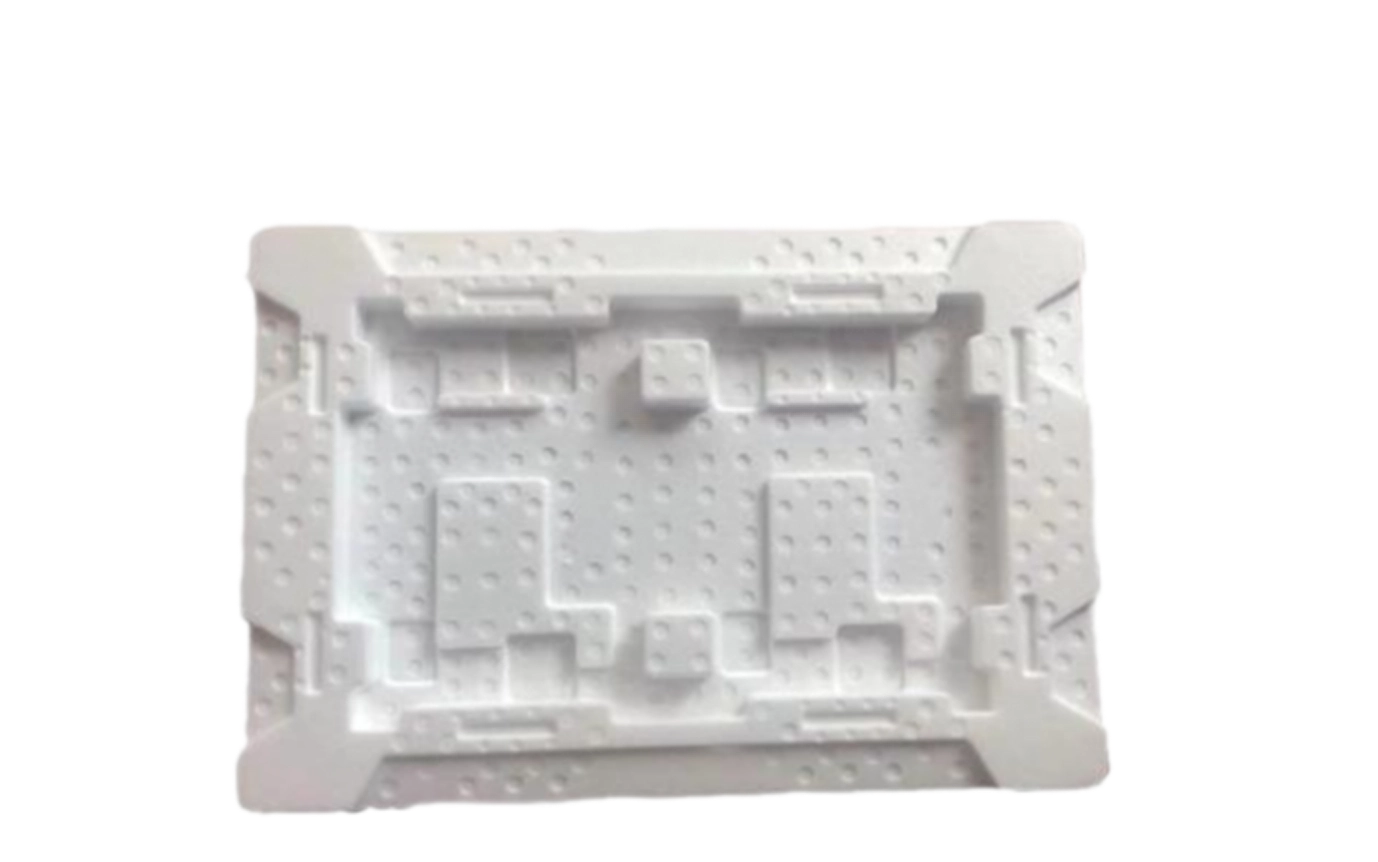
El embalaje de los paneles de visualización ya no se limita a un simple inserto de espuma. Un comprador que maneje módulos MNT, componentes OC-TV o placas de bandeja NB/TPC/OLED debe considerar todo el sistema de bandeja antes de que comience la producción en masa. La espuma debe ajustarse al panel, proteger los bordes frágiles, adaptarse bien al proceso de moldeo y mantener el mismo resultado desde la primera muestra hasta los pedidos posteriores.
Aquí es donde vale la pena hablar de los REPS personalizados por extrusión. Para muchos compradores de envases, el objetivo no es comprar un bloque de espuma genérico. El objetivo es reducir las roturas, mantener la forma de la bandeja estable y evitar cambios repetidos de muestras después de que el molde ya se haya abierto. HUASHENG Extrusión REPS personalizado Ofrece a los compradores una vía práctica para relacionar las especificaciones del material con la consistencia de la bandeja, especialmente cuando la espuma para embalaje electrónico necesita, al mismo tiempo, un valor de contenido reciclado y un comportamiento de producción constante.
¿Por qué el embalaje de paneles de visualización requiere más que espuma estándar?
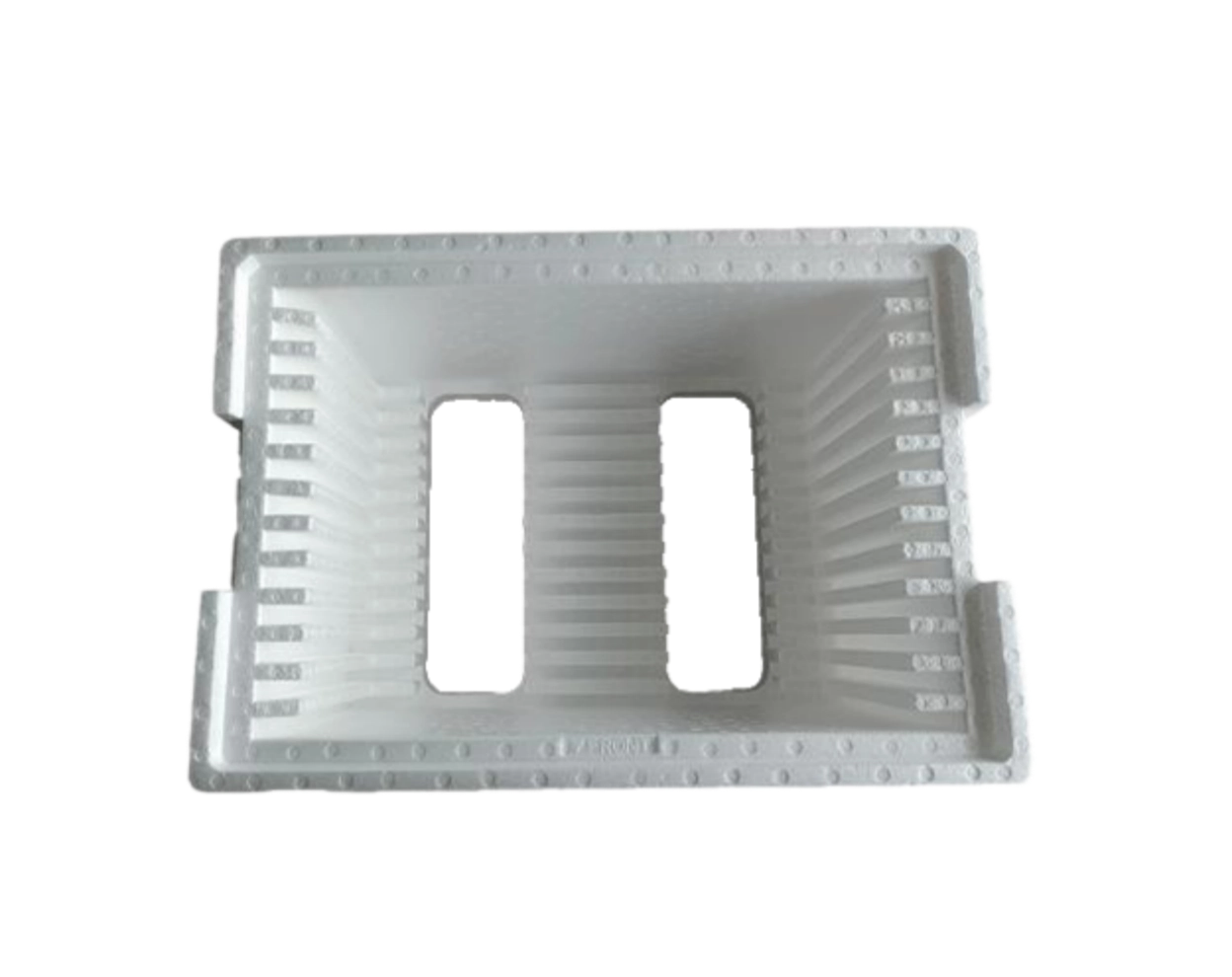
Los paneles de exhibición son delgados, anchos y propensos a dañarse en puntos que no siempre se aprecian como puntos débiles en un dibujo. La espuma estándar puede funcionar para productos de bajo riesgo, pero el embalaje de los paneles de exhibición suele requerir un control más estricto. La bandeja debe sujetar el producto sin ejercer presión en zonas inadecuadas. Además, debe mantener una cavidad estable tras el curado, el almacenamiento y el transporte.
Riesgos de rotura en la logística de módulos y paneles
Los módulos MNT, las piezas OC-TV y las placas de bandeja OLED suelen pasar por varias etapas de manipulación. Pueden trasladarse desde el área de moldeo al ensamblaje, luego al almacén, después al embalaje para exportación y, finalmente, al transporte en contenedor o avión. Cada paso añade vibraciones, presión de apilamiento o impactos laterales accidentales. Si la bandeja de espuma permite el movimiento, el borde o la superficie del panel pueden recibir el impacto en lugar del inserto.
Para este tipo de proyectos, la espuma para embalaje electrónico debe cumplir una función más allá del simple relleno. Debe controlar el movimiento del producto, proteger las esquinas y mantener suficiente espacio libre para las zonas sensibles. Una buena bandeja de EPS también debe facilitar la carga a los operarios, ya que una carga forzada puede provocar los mismos daños que la bandeja pretende evitar.
Ajuste de la bandeja, consistencia del acolchado y estabilidad de los pedidos repetidos.
Una bandeja de muestra puede verse bien una vez, pero a los compradores de paneles de exhibición les importa la estabilidad de los pedidos repetidos. Si el tamaño de las perlas varía demasiado o si el comportamiento de expansión no es estable, la bandeja moldeada puede desplazarse ligeramente entre lotes. Ese pequeño desplazamiento puede afectar el ajuste, el grosor de la pared y la sensación de amortiguación.
Por eso, el embalaje personalizado de espuma EPS para paneles debe comenzar con el comportamiento del material, no solo con el diseño de la bandeja. Los compradores deben preguntar cómo fluye la espuma en las áreas específicas del molde, con qué rapidez se cura y si el proveedor puede mantener la misma densidad y acabado de la bandeja en producciones repetidas. Cuando el proyecto implica grandes cantidades, una producción de bandejas estable puede ser tan importante como el resultado de la primera muestra.
¿Qué especificaciones de material deben confirmar primero los compradores?
Antes de confirmar el utillaje, los compradores deben verificar las especificaciones básicas del material que afectan a la bandeja. Un presupuesto de espuma sin especificar el tamaño de partícula, el rango de expansión, la densidad objetivo ni el campo de uso previsto da lugar a muchos malentendidos. En el caso del embalaje de paneles de visualización, estos detalles determinan si la bandeja moldeada mantendrá la precisión necesaria para un uso prolongado.
Tamaño de partícula y detalles de la bandeja moldeada
El tamaño de las partículas afecta la superficie y el detalle de la pieza moldeada. Si bien las perlas de mayor tamaño pueden ser adecuadas para el embalaje general, las estructuras de bandejas más delgadas o las cavidades con detalles complejos suelen requerir un control más preciso de las perlas. Si la bandeja contiene una pieza de OC-TV o un pequeño módulo electrónico, una estructura de perlas más rugosa puede afectar el área de contacto y la precisión de la cavidad.
La página de productos REPS personalizados de HUASHENG incluye el Reps-302 con un tamaño de partícula de 0,8 a 1,25 mm y el Reps-303 con un tamaño de partícula de 0,6 a 1 mm. Esto proporciona a los compradores un punto de partida para la comparación de muestras. El Reps-303 puede ser una buena opción para probar cuando se requiere un moldeo más preciso, mientras que el Reps-302 puede ser adecuado para necesidades más generales de encapsulados electrónicos o cerámicos. La elección final dependerá del diseño del molde y del tamaño del panel.
Planificación de rango y densidad ampliables por primera vez
La primera vez que se puede ampliar el rango de densidad afecta la planificación, el peso, la amortiguación y el costo de las bandejas. HUASHENG ofrece tanto el Reps-302 como el Reps-303 con un rango de ampliación inicial de 18 a 62. Este rango permite a los ingenieros ajustar la densidad de las bandejas según las diferentes necesidades de empaquetado de los paneles de visualización.
Una bandeja más ligera puede reducir el peso de transporte, pero aun así debe soportar el panel durante el apilamiento y el movimiento. Una bandeja más densa puede mejorar la resistencia, pero puede aumentar el consumo de material. Los compradores deben evaluar la densidad objetivo junto con la caja, el producto y la ruta de envío reales. Considerar únicamente la densidad no es suficiente.
Especificaciones del material
| Especificación para confirmar | Por qué es importante | El comprador debe verificar antes de realizar un pedido al por mayor. |
| Tamaño de partículas | Afecta la superficie de la bandeja, el detalle de la cavidad y el flujo del cordón en áreas delgadas. | Compare las muestras Reps-302 y Reps-303 con piezas reales de paneles de visualización. |
| Gama ampliable por primera vez | Controla la planificación de la densidad, el peso de la bandeja y la sensación de amortiguación. | Pruebe el rango 18-62 contra el peso del producto y el apilamiento de cajas. |
| Flujo de moldeo | Ayuda a que la bandeja rellene las esquinas y las nervaduras estrechas de manera más uniforme. | Revise las bandejas de muestra para detectar esquinas débiles, superficies rugosas o paredes irregulares. |
| Velocidad de curado | Afecta al ciclo de producción y a la estabilidad de la producción repetida. | Confirme el rendimiento de la muestra antes de repetir la producción en masa. |
Cómo la extrusión personalizada de REPS permite obtener bandejas moldeadas uniformes
La extrusión personalizada de REPS resulta útil porque combina poliestireno reciclado con un comportamiento de procesamiento controlado. HUASHENG describe la espuma REPS como un material de poliestireno espumado multifuncional. Durante la producción, las perlas de espuma se expanden uniformemente y se curan rápidamente. Para el embalaje de paneles de visualización, estas dos características son muy prácticas. Una bandeja con expansión irregular o curado lento puede generar una forma inestable, ciclos más largos y más problemas en la revisión de muestras.
Flujo uniforme de perlas para ciclos de producción estables
Un flujo uniforme del cordón de material ayuda a que la placa de bandeja de EPS moldeada llene el molde de manera más homogénea. Esto es importante cuando la bandeja tiene nervaduras estrechas, soportes en las esquinas, espacios para cables o paredes protectoras delgadas alrededor del panel. Si el material no fluye correctamente, algunas partes de la bandeja pueden debilitarse o presentar imperfecciones.
HUASHENG afirma que el REPS personalizado por extrusión presenta un tamaño de partícula uniforme y un buen flujo de partículas espumadas. En la práctica, esto ayuda a reducir la inestabilidad en los resultados del moldeo. Si bien no elimina la necesidad de realizar pruebas de muestras, ofrece al comprador un material base superior para la producción repetible de bandejas moldeadas.
Curado rápido y opciones de rendimiento personalizadas.
Un curado rápido no solo mejora la eficiencia de la fábrica, sino que también influye en la uniformidad de las bandejas al pasar de la producción de muestras a tiradas más grandes. Un menor tiempo de maduración puede ayudar a que la línea de moldeo mantenga un ritmo más constante, especialmente cuando el pedido incluye bandejas repetidas para el embalaje de paneles de exhibición.
Otra ventaja es la personalización. HUASHENG señala que los paneles REPS personalizados por extrusión se pueden fabricar según las necesidades específicas de cada producto, con un rendimiento optimizado, un tamaño de partícula adecuado y diversas opciones de color. Para un comprador de envases, esto significa que el proveedor puede analizar la forma real del panel, el amortiguamiento deseado, el contenido reciclado objetivo y el aspecto de la bandeja antes de la producción en serie. Esto resulta mucho mejor que imponer un estándar único en cada proyecto de panel de exhibición.
Desde la aprobación de la muestra hasta el suministro a granel.
La forma más segura de gestionar el embalaje de los paneles de visualización es considerar la aprobación de la muestra como una prueba de embalaje completa, no solo como una verificación del aspecto de la bandeja. El comprador debe probar el panel, la bandeja de EPS, la caja, la disposición de los accesorios, el plan de paletización y el riesgo de transporte en conjunto. Solo entonces el resultado de la muestra tendrá relevancia para el suministro a granel.
Pruebas de los formularios Reps-302 y Reps-303 para proyectos de empaques electrónicos
Reps-302 y Reps-303 Ambas especificaciones están indicadas para embalaje electrónico, embalaje cerámico y embalaje general. Para proyectos de paneles de visualización, los compradores pueden utilizar estas dos especificaciones como opciones de muestra. La diferencia en el tamaño de partícula puede afectar el detalle de la superficie, el ajuste y el acabado de la bandeja.
Una prueba práctica debe incluir la velocidad de carga, la vibración del producto, la compresión tras el apilamiento, el espacio libre en los bordes, el roce de la superficie y el cierre de la caja. Si el proyecto utiliza varios tamaños de panel, el comprador también debe comprobar si un diseño de bandeja puede soportar más de una referencia sin generar una tolerancia excesiva. Una bandeja que solo supera una prueba perfecta podría fallar en el embalaje diario.
Adaptación del soporte de materiales de HUASHENG a la demanda de embalaje de paneles
La gama de productos REPS personalizados por extrusión de HUASHENG está diseñada para aplicaciones en embalaje eléctrico, embalaje de materiales de construcción, relleno, artesanías, cajas integradas y la industria de pantallas, como componentes OC-TV, módulos MNT y placas de bandeja NB/TPC/OLED. Esta gama satisface las necesidades de los compradores que buscan un único proveedor para sus diversos proyectos de espuma para embalaje electrónico.
Para pedidos al por mayor, los compradores deben confirmar la cantidad mínima de pedido (MOQ), el plazo de entrega de muestras, el plan de embalaje, el empaquetado para exportación y las normas de control de calidad. Si el material reciclado forma parte de los objetivos de sostenibilidad del comprador, esto debe indicarse en la solicitud de cotización. La espuma REPS puede contribuir a alcanzar los objetivos de contenido reciclado, pero la bandeja final debe superar las mismas pruebas de protección y ajuste que cualquier otro material de embalaje.
¿Qué debe incluir la solicitud de cotización para el embalaje final del panel de visualización?
Una solicitud de cotización clara ayuda a evitar errores. Debe incluir planos del producto, tamaño del panel, peso del producto, zonas frágiles, cantidad de bandejas, material objetivo, tamaño de la caja, dirección de carga, requisitos de pruebas de caída o vibración y normas de aprobación. Si el comprador desea REPS personalizados por extrusión, esto debe indicarse claramente, junto con si prefiere muestras Reps-302 o Reps-303.
Convierta la solicitud de bandeja en un informe medible.
Un informe útil sobre el embalaje del panel de visualización no debe limitarse a «necesita una bandeja de espuma». Debe definir el grosor de la bandeja, la tolerancia de la cavidad, las áreas de contacto con la superficie, el espacio libre para la etiqueta, el espacio para accesorios y el movimiento aceptable dentro de la caja. Estos puntos ayudan al proveedor a recomendar el grado de espuma REPS adecuado y a reducir los cambios por pruebas.
Confirme las reglas de aprobación antes de realizar pedidos repetidos.
Antes de realizar pedidos repetidos, los compradores deben acordar qué características debe tener una bandeja aprobada. Esto puede incluir el ajuste, el peso, el color, la calidad de la superficie, los detalles del moldeado, el cierre de la caja y el resultado del apilamiento. Una vez que estas normas estén por escrito, la producción en masa será más fácil de controlar. Además, proporciona a ambas partes una base clara en caso de que un lote futuro requiera revisión.
Conclusión
Los REPS personalizados mediante extrusión pueden mejorar la uniformidad del embalaje de los paneles de visualización cuando los compradores relacionan las especificaciones del material con el diseño de la bandeja, las pruebas de muestras y las normas de aprobación de lotes. Los REPS-302 y REPS-303 ofrecen puntos de partida útiles para proyectos de espuma para embalaje electrónico, especialmente cuando el tamaño de partícula, el rango de expansión, el flujo de moldeo y el valor del contenido reciclado son factores importantes.
Con HUASHENGLos compradores de paneles de visualización pueden revisar primero las muestras, comparar el ajuste de las bandejas y luego realizar pedidos al por mayor con mayor confianza. El material por sí solo no resolverá todos los problemas de embalaje, pero una descripción clara y la opción de espuma REPS adecuada pueden reducir las repeticiones de pruebas y hacer que el embalaje personalizado de espuma EPS sea más predecible.
Preguntas frecuentes
P1: ¿Qué significa la extrusión personalizada REPS para el embalaje de paneles de visualización?
A1: Se refiere a un material de espuma de poliestireno reciclado personalizado que se puede ajustar en cuanto a tamaño de partícula, rendimiento, color y necesidades de aplicación. Para el embalaje de paneles de visualización, puede utilizarse en bandejas moldeadas, embalajes electrónicos y embalajes de espuma EPS personalizados.
P2: ¿Deberían los compradores probar los modelos Reps-302 o Reps-303 antes de realizar pedidos al por mayor?
A2: Sí. Reps-302 tiene un tamaño de partícula de 0,8-1,25 mm, mientras que Reps-303 tiene un tamaño de partícula de 0,6-1 mm. Los compradores deben probar ambos materiales en cuanto a ajuste al producto, superficie de la bandeja, detalles de moldeo y rendimiento del cartón antes de su aprobación para la compra a granel.
P3: ¿Puede la extrusión personalizada de REPS contribuir a los objetivos de envasado sostenible?
A3: Sí, puede incorporar materiales reciclados, ya que REPS utiliza materiales reciclados. Sin embargo, antes de usarlo en proyectos de embalaje de paneles de visualización, los compradores deben confirmar el rendimiento de la muestra, la documentación del proveedor, la cantidad mínima de pedido (MOQ), el plazo de entrega y la estabilidad de los lotes repetidos.
 Spanish
  English
  German
  French
  Arabic