
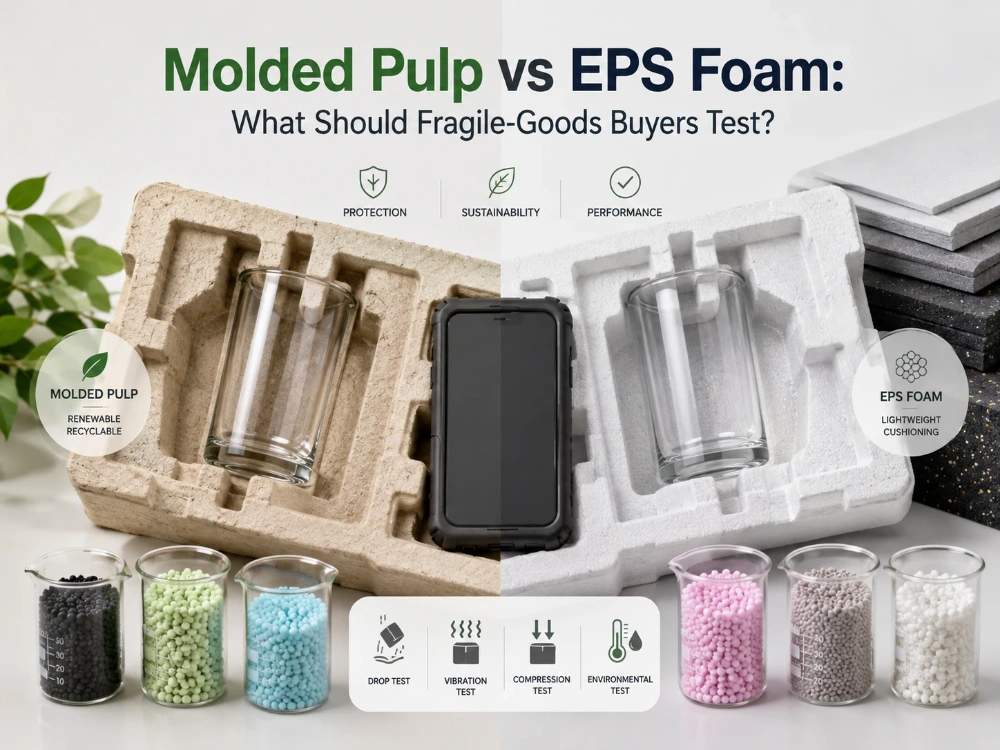
Die Entscheidung zwischen Formfaser- und EPS-Schaumstoff sollte nicht davon abhängen, welches Material umweltfreundlicher aussieht oder den niedrigeren Stückpreis hat. Käufer von zerbrechlichen Produkten sollten das Gesamtpaket unter gleichen Bedingungen hinsichtlich Fallenlassen, Vibration, Stapeln, Luftfeuchtigkeit, Verpackungslinie, Transport und Entsorgung vergleichen.
Formgepresste Zellstoffverpackungen bieten eine stabile Faserstruktur und in vielen Märkten einen bekannten Recyclingweg. EPS-Schaumverpackungen zeichnen sich durch geringes Gewicht, geformte Polsterung, Wärmedämmung und präzise Kontrolle an empfindlichen Kontaktstellen aus. Keiner dieser Vorteile beweist jedoch, dass ein Material jedes Produkt besser schützt.
Die praktische Entscheidung lautet: Formfaser oder EPS unter Berücksichtigung Ihres tatsächlichen Versandprofils.
Wo liegen die Vorteile von EPS-Schaumverpackungen üblicherweise?
EPS ist besonders nützlich, wenn ein Produkt eine leichte, formschlüssige Polsterung um bestimmte empfindliche Bereiche benötigt.
Warum spielt die Geometrie bei zerbrechlichen Gütern eine Rolle?
Bei Schutzverpackungen für empfindliche Produkte geht es oft weniger um „Weichheit“, sondern vielmehr darum, zu kontrollieren, wo eine Ladung in das Produkt eindringt.
Ein Display benötigt möglicherweise Freiraum um den Bildschirmrand. Ein Keramikobjekt benötigt unter Umständen eine breite Stützkonstruktion um einen stabilen Korpus, wobei dekorative Elemente frei bleiben sollen. Ein Instrument kann einen schweren Kern, aber empfindliche Schalter oder Anschlüsse besitzen.
EPS-Schaumverpackungen können um diese Bereiche herum geformt werden, wodurch der Konstrukteur die Kontrolle über Kontaktfläche, Wandstärke, Rippen, Freiraum und Produktausrichtung erhält.
Diese Kontrollmöglichkeit ist wertvoll, wenn Schäden immer wieder an derselben Stelle entstehen.
Reduziert Leichtbauschaum die Frachtkosten?
Das ist möglich, aber die Frachtkosten sollten auf Paketebene gemessen werden.
EPS selbst ist sehr leicht. Das ist von Vorteil, wenn das verpackte Produkt gewichtssensibel ist. Dennoch kann eine schlecht konstruierte EPS-Einlage zu einem Karton führen, der größer als nötig ist.
Für einen aussagekräftigen Vergleich reicht das Gewicht des Schaumstoffs allein nicht aus. Vergleichen Sie auch die endgültigen Kartonabmessungen, die Palettenanzahl, die Einheiten pro Container, das Bruttogewicht der Sendung und die Schadensquote.
Wo kann Formfaserverpackung stabiler sein?
Formgepresste Zellstoffverpackungen bilden eine relativ starre Struktur um das Produkt herum und eignen sich gut, wenn der verpackte Artikel von einer festen Positionierung und Stapelunterstützung profitiert.
Warum ist Formzellstoff für Programme mit hohem Durchsatz attraktiv?
Bei ausreichendem Volumen ermöglicht Formfaserstoff die Herstellung von Produkten mit reproduzierbarer Geometrie. Er eignet sich zudem ideal für papierintensive Verpackungssysteme und lässt sich für manche Kunden leichter in etablierte Altpapier-Recyclingwege integrieren.
Für Produkte, die keine intensive Dämpfung beim Transport benötigen, kann Formzellstoff eine effiziente Lösung sein.
Der Käufer muss jedoch weiterhin die Feuchtigkeitsbeständigkeit, den Oberflächenabrieb, die Fallfestigkeit, die Werkzeugqualität, die Trocknungsqualität und die Maßhaltigkeit prüfen.
„Formfaserstoff“ ist eine Materialkategorie, keine Garantie dafür, dass jedes Design den gleichen Transporttest besteht.
Was bedeutet der Unterschied zwischen Formfaser und EPS in Bezug auf die Feuchtigkeit?
Die Materialien reagieren unterschiedlich.
Formfaser kann je nach Zusammensetzung, Beschichtung, Luftfeuchtigkeit und Witterungseinflüssen Feuchtigkeit aufnehmen. EPS ist als Schaumstoffstruktur deutlich weniger saugfähig, jedoch kann eine schlecht konstruierte EPS-Verpackung dennoch Kondenswasser oder Feuchtigkeit um das verpackte Produkt herum einschließen.
Daher sollte der Vergleich von Formfaser und EPS unter Berücksichtigung des tatsächlichen Umweltrisikos durchgeführt werden.
Wenn ein Produkt feuchte Häfen, Kühltransporte oder große Temperaturschwankungen durchläuft, sollte vor dem abschließenden Verpackungstest eine Umgebungskonditionierung erfolgen.
Welches Material bietet bei einem Falltest besseren Schutz?
Es gibt keine allgemeingültige Antwort, da die Geometrie des Gehäuses das Ergebnis beeinflusst.
Warum sollten beide Designs die gleiche Testschwere verwenden?
Ein Lieferant kann fast jedes Verpackungsmaterial gut aussehen lassen, indem er einen günstigen Test auswählt.
Für einen fairen Vergleich von Formfaserschaum und EPS-Schaumstoff sollten das gleiche Produkt, die gleiche Produktmasse, die gleiche Kartonqualität, die gleiche Ausrichtung, die gleiche Fallhöhe, die gleiche Anzahl an Stürzen, die gleiche Konditionierung und die gleichen Kriterien für Bestehen/Nichtbestehen verwendet werden.
Prüfen Sie mehr als nur offensichtliche Beschädigungen.
Prüfen Sie die Bewegung des Produkts, kosmetische Mängel, Beschädigungen der inneren Komponenten, dauerhafte Kompression der Einlagen, Risse in den Zellstoffrippen, Ablösung der Schaumstoffperlen und Verformungen des Kartons.
Gewinner ist die Verpackung, die das Produkt innerhalb seiner Akzeptanzgrenzen hält, nicht die Verpackung, die lediglich optisch Bestand hat.
Wie sieht es mit wiederholter Handhabung und Vibrationen aus?
Ein einzelner Tropfen repräsentiert nicht die Exportverteilung.
Die Schutzverpackung für empfindliche Produkte sollte auch nach Vibrationen und Stapelung überprüft werden. Ein Material mag einen ersten Stoß überstehen, aber mit der Zeit allmählich seine Form verlieren oder eine Bewegung des Produkts zulassen.
Dies ist besonders wichtig für Elektronik, Präzisionsgeräte, Keramikprodukte und Automobilkomponenten.
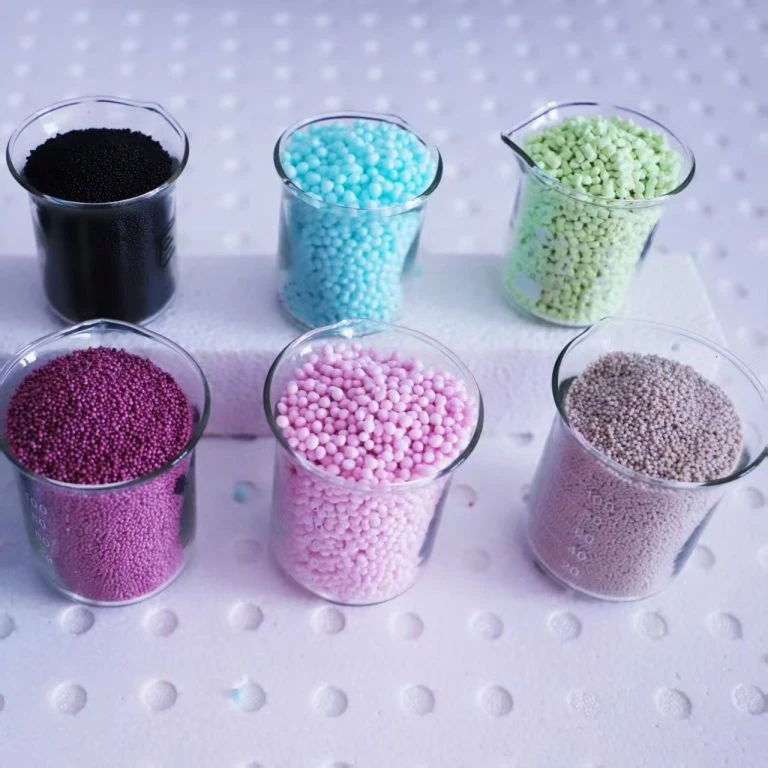
HUASHENGs Extrusion maßgeschneiderte REPS Es ist für Elektronik-, Keramik- und allgemeine Verpackungen konzipiert und besteht aus Reps-302 mit einer Partikelgröße von 0,8–1,25 mm und Reps-303 mit einer Partikelgröße von 0,6–1,0 mm. Seine Eigenschaften können an spezifische Produktanforderungen angepasst werden, anstatt jede Formverpackung als einheitliche Sorte zu behandeln.
Wie sollten Käufer die Kosten für Werkzeuge und Verpackungslinien vergleichen?
Die Werkzeugkosten sind nur ein Teil des Programms.
Welches Material lässt sich schneller verpacken?
Das hängt von der Ausführung des Einsatzes ab.
Eine vorgeformte Zellstoffschale lässt sich vor der Montage platzsparend ineinander stapeln, wodurch das Verpackungsvolumen reduziert werden kann. Ein vorgeformtes EPS-Teil ist zwar möglicherweise sperriger, ermöglicht aber eine passgenaue Montage auch bei komplexen Produkten.
Die Arbeitszeit eines tatsächlichen Verpackungsmitarbeiters wird gemessen.
Messen Sie, wie viele Teile gehandhabt werden müssen, ob der Einleger gefaltet oder montiert werden muss, wie einfach das Produkt verladen werden kann, ob Ausrichtungsfehler möglich sind und wie lange der endgültige Kartonverschluss dauert.
Der Unterschied im Arbeitsaufwand könnte wichtiger sein als ein geringer Unterschied im Stückpreis.
Sollen Werkzeugstandzeit und Produktänderungen berücksichtigt werden?
Ja.
Wenn sich die Geometrie des Produkts häufig ändert, können teure Spezialwerkzeuge ein Risiko für beide Formmaterialien darstellen.
Ein Käufer sollte die zu erwartende Stückzahl über die Lebensdauer der Form abschätzen und sich erkundigen, ob eine Familie von Artikeln eine gemeinsame Außenstruktur aufweisen kann.
Wenn mehrere Modelle die gleiche äußere Grundfläche, aber unterschiedliche empfindliche Bereiche aufweisen, kann eine modulare oder teilweise austauschbare Verpackung die zukünftigen Werkzeugkosten reduzieren.
Wie sollte Nachhaltigkeit verglichen werden?
Vermeiden Sie es, Nachhaltigkeit auf ein einziges Label zu reduzieren.
Ist Formzellstoff automatisch die nachhaltigere Option?
Nicht in jeder Lieferkette.
Faserquelle, Beschichtung, Trocknungsenergie, Transportdichte, Produktbeschädigung, lokaler Recyclingzugang und Entsorgungsweg spielen alle eine Rolle.
Ebenso wenig sollte EPS allein danach bewertet werden, ob in einem Land eine Abholung am Straßenrand existiert. Recyclingfähige Optionen, industrielle Sammlung, Verdichtung, Wiederaufbereitung und lokale Recyclinginfrastruktur verändern das Bild.
Das Verpackungssystem sollte dort beurteilt werden, wo das Produkt verkauft und entsorgt wird.
Welche Rolle spielen REPS im Vergleich?
REPS bietet Käufern eine weitere Schaumstoffoption, wenn sie zwar geformte Polster benötigen, aber Recyclinganteil und besser anpassbare Materialeigenschaften wünschen.
HUASHENG REPS kann in verschiedenen Partikelgrößen hergestellt werden. Die Standardpartikelgröße liegt bei ca. 0,8–1,2 mm, wobei projektspezifische Fertigung auch feinere Strukturen oder eine Gewichtsreduzierung ermöglicht. In einem Beispielprojekt für Schalen wurden Partikel mit einer Größe von 0,65–0,8 mm verwendet.
Das Material wird für Verpackungen von Anzeigetafeln, Medizinprodukten, Automobilen, Produkten für neue Energien, Mobiltelefonen, Tablets und anderen Elektronikgeräten verwendet.
Käufer, die Alternativen vergleichen, können dies überprüfen. HUASHENG REPS Materialentwicklung als mögliche dritte Option, anstatt die Wahl lediglich als Neuware-EPS versus Glasfaser zu betrachten.
Was sollte ein Käufer testen, bevor er das Material wechselt?
Das sicherste Austauschprojekt verwendet einen Vergleichstest.
Welche Prüfungen gehören in den Genehmigungsprozess?
Beginnen Sie mit der Passform und der Verpackungseffizienz. Testen Sie anschließend Fall-, Vibrations-, Stapel-, Kompressions-, Temperatur- oder Feuchtigkeitskonditionierung (sofern relevant) sowie die Auspackbedingungen.
Prüfen Sie im Zielmarkt, ob es Produktschäden, Verpackungsverformungen, kosmetische Markierungen, Kartonabmessungen, Verpackungsgewicht, Einheiten pro Palette, Verpackungsaufwand und Entsorgungsanforderungen gibt.
Es darf nicht zugelassen werden, dass verschiedene Lieferanten unterschiedliche Bestehens-/Nichtbestehenskriterien anwenden.
Wann lohnt sich ein Test eines Hybridpakets?
Manche Produkte benötigen nicht überall das gleiche Material.
Eine starre Zellstoffhülle eignet sich gut für großflächige Unterstützung, während kleine Schaumstoffeinlagen besonders empfindliche Ecken oder Bauteile schützen. Eine Hybridkonstruktion kann den Gesamtschaumstoffverbrauch reduzieren, ohne dass die empfindlichsten Bereiche mit einem dort ungeeigneten Material belastet werden.
Für Export- und stoßempfindliche Anwendungen, HUASHENG seismische Verpackungslösungen kann Käufern dabei helfen, die tatsächlichen Kontaktpunkte und Aufprallrisiken zu definieren, bevor sie sich für ein Vollschaum-, Faser- oder Hybridkonzept entscheiden.
Schlussfolgerung
Die Frage, ob man geformten Zellstoff oder EPS-Schaumstoff verwendet, ist eine Frage der Prüfung, keine Frage der Markenbildung.
Formfaserverpackungen bieten eine stabile Produktpositionierung, Stapelbarkeit und eine gute Kompatibilität mit Faserrecyclingsystemen. EPS-Schaumverpackungen bieten leichte Polsterung, Wärmedämmung und präzisen Schutz empfindlicher Geometrien. Formfaser- und EPS-Verpackungen sollten daher unter gleichen Vertriebsbedingungen getestet werden.
Für Schutzverpackungen für empfindliche Produkte liefern die nützlichsten Entscheidungsdaten die fertige Verpackung: Schadensrate, Vibrationsverhalten, Stapelung, Luftfeuchtigkeit, Verpackungsaufwand, Frachtvolumen, Werkzeugaufwand und der tatsächliche Rückgewinnungsweg nach Gebrauch.
Wenn Käufer diese Faktoren miteinander vergleichen, wird die Materialauswahl zu einer messbaren Verpackungsentscheidung anstatt zu einem Streit darüber, welches Material nachhaltiger klingt.
Häufig gestellte Fragen
Frage 1: Ist Formfaserverpackung für Elektronik immer besser als EPS?
A1: Nein. Elektronikprodukte unterscheiden sich stark hinsichtlich Gewicht, empfindlicher Bereiche, statischer Empfindlichkeit, Oberflächenanforderungen und Fallrisiko. Formgepresster Zellstoff eignet sich für viele Produkte gut, während formgepresstes EPS oder REPS für komplexe oder stoßfeste Anwendungen weiterhin besser geeignet sein dürfte.
Frage 2: Welcher Test ist bei Formfaser im Vergleich zu EPS am wichtigsten?
A2: Es gibt keinen einzelnen Test. Verwenden Sie für Fall-, Vibrations-, Druck- oder Stapeltests, gegebenenfalls Umgebungsbedingungen und die Endproduktprüfung dasselbe Gesamtpaket. Der Vertriebsweg bestimmt den Testplan.
Frage 3: Kann recycelter Schaumstoff anstelle von neuem EPS-Schaumstoff für Verpackungen verwendet werden?
A3: Es kann in Betracht gezogen werden, wenn das Recyclingmaterial die erforderlichen Kriterien hinsichtlich Dichte, Formbarkeit, Verschmelzung, Festigkeit und Schutz erfüllt. Ein Formteil und ein Transporttest sollten die Leistungsfähigkeit bestätigen, bevor der Käufer eine Spezifikation mit Recyclinganteil genehmigt.
 German
  English
  Spanish
  French
  Arabic