
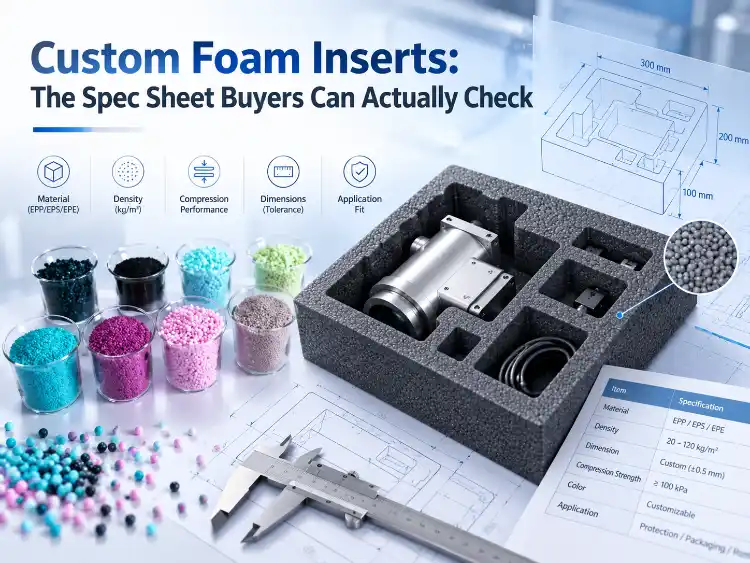
An insert usually gets approved on how it looks with the product in it. That is also how a program ends up with a part that fits beautifully on the bench and fails in the field, because the insert was never asked to state what it protects, where it holds, and how the delivered pieces will be compared with the approved sample.
Custom foam inserts are a specification problem before they are a design problem. Getting the specification right is what makes the difference between an insert that behaves the same way across a production run and one that has to be adjusted on the packing line.
What the Insert Must Do Before It Looks Good
Fit, Retention and Access
The insert has three jobs, and product presentation is the last of them. Fit describes whether the product sits where it was designed to sit. Retention describes whether it stays there when the box is turned, dropped, or handled roughly. Access describes whether a person can remove the product without damaging it or the insert.
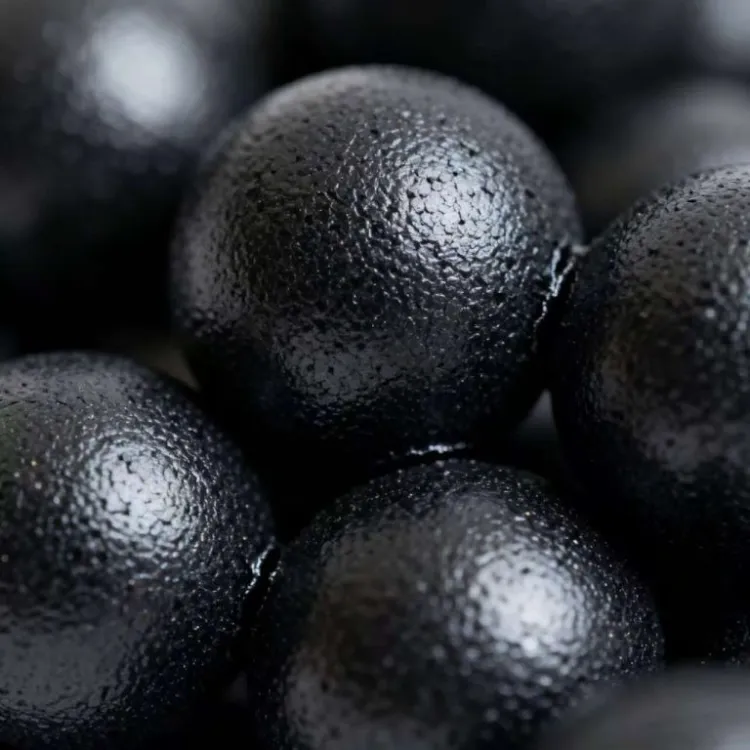
Those three requirements pull in different directions. A cavity that holds the product tightly enough to prevent movement can also make removal awkward; a loose cavity that is easy to load may allow the product to shift during transit. The specification has to state which surfaces carry the restraint and which must stay untouched, because a contact decision made on the packing line is a decision nobody can verify later.
Environment and Handling
Packaging does not only experience transport. It is stored, stacked, opened, re-closed, and sometimes returned. Temperature and humidity change the dimensions of the insert and the box; repeated handling compresses the contact points; and a cavity that is opened daily can wear faster than its load case suggests.
Writing these conditions into the specification turns a vague requirement into something a supplier can design against. It also prevents the most common mismatch in insert projects: a design validated for one journey being used for a different one. A cavity that was proven in a small parcel box, for instance, may sit inside a palletised load where the insert is compressed rather than dropped, and the failure mode changes completely.
Where the product is cleaned or re-packed between uses, the specification should also say how often the insert is expected to survive that cycle. That single line decides whether a low-density form is adequate or whether the cavity needs a different material and thickness.
Choosing Between Cut and Molded Inserts
When Cutting Is Enough
The production route follows the geometry and the volume. Cutting suits rectilinear products, low volumes, and designs that are still changing. A cut insert can be revised in a day, and it lets a buyer test the cavity shape before committing to tooling. The trade-off is in the edges and in the repeatability: the finish depends on the cutting route and on how the material behaves at the surface.
When a Mold Earns Its Cost
A molded insert earns its place when the shape repeats, when the cavity includes curves or tapers that guide the product, or when the same cavity has to be produced identically across a long run. Molded foam can also carry ribs and shoulders that a cut insert would need to assemble from several pieces.
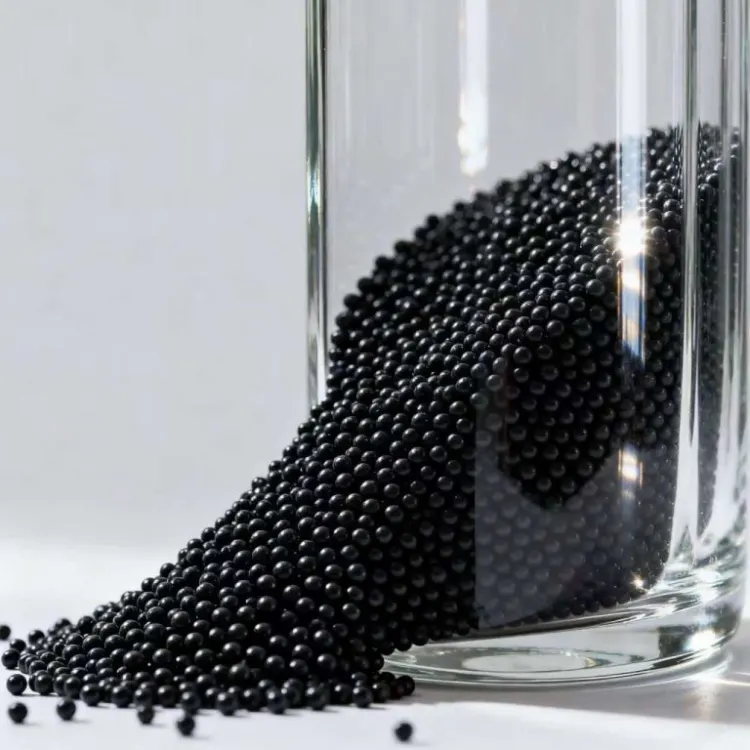
Both routes can use the same material family. Buyers comparing options will find that the foam type, not only the process, changes the answer: selecting packaging foam for precision equipment sets out how density and surface behaviour interact with the product, while EPS compared with EPE shows why one material may suit a rigid housing and another a product with a delicate finish.
Writing an Insert Spec That Can Be Verified
Dimensions, Corners and Wall Thickness
A specification is only useful if the delivery can be checked against it. State the cavity dimensions that matter, name the surfaces the insert has to avoid, and give the wall thickness between the cavity and the outside of the insert. Corners deserve their own note: a sharp internal corner concentrates stress, while a radius spreads it. If the product has a fragile corner, the specification should say how the insert stands off from it.
Also state how the insert is kept in the box. A cavity that fits the product but not the carton will move as a unit, and the resulting failures look like product damage rather than packaging movement. A simple locating feature, or a wall thickness that presses lightly against the carton, is usually enough, but it has to be written down before the tooling is cut.
Where several inserts share a box, say how they meet. Two cavities that are individually correct can still allow movement at the joint between them, which is the kind of defect that only appears once the box is handled at an angle.
Sample and Batch Acceptance
Agree what the sample proves, how it was measured, and what will be checked on bulk deliveries. Fit and retention should be checked with the real product, not a mock-up, and the check should be repeatable by more than one person. If the product is heavy or the cavity is deep, decide how the insert will be removed from the box without tearing.
For buyers who need a shape beyond standard sheet stock, the practical next step is to review custom molded EPS parts and confirm what the supplier needs in order to quote: product weight, contact surfaces, quantity, and the handling the insert will see.
Conclusion
A custom foam insert should be specified around fit, retention, access, and environment before it is judged on appearance: those requirements decide the cavity, the material and the production route. Cutting and molding are then two ways of making the same design, and the sample plus the batch check is what keeps the delivered insert equal to the approved one. HUASHENG documents its EPS grade range and its customization process, so the insert specification can be tied to a material and a sample rather than to a picture.
FAQs
Q1: Which insert route fits a given volume, cut or molded?
A1: Start with the geometry and the volume. Cutting is faster and more flexible for rectilinear products and changing designs; molded inserts earn their cost when the shape repeats, includes guiding curves or ribs, or must be identical across a long run.
Q2: What should the insert specification say about contact?
A2: Name the surfaces that carry the restraint and the surfaces the insert has to leave clear, plus the wall thickness between the cavity and the outside. If the product has a fragile corner or a finished face, state how the insert stands off from it.
Q3: What should a sample prove?
A3: A sample should prove fit and retention with the real product, the loading and removal method, and the way the insert sits in its carton. Agree how the sample is measured so the same checks can be repeated on bulk deliveries.
 English
  German
  Spanish
  French
  Arabic