
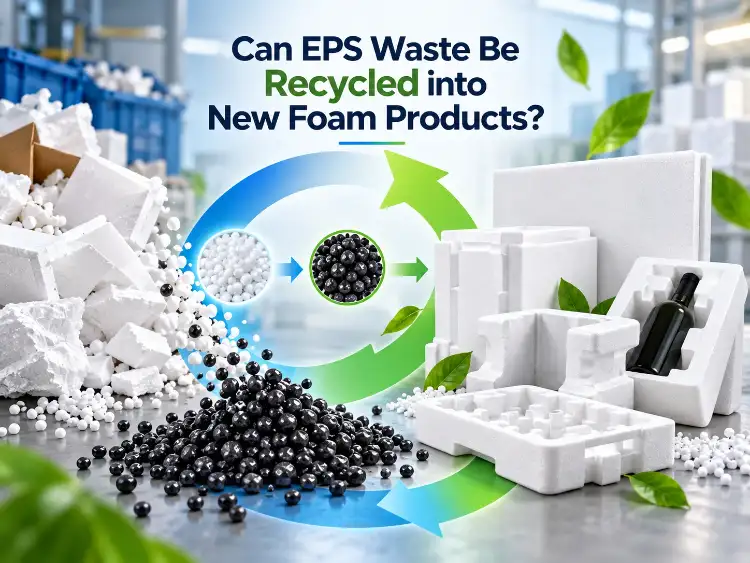
EPS waste can be recycled into new foam products, but the answer depends on the stream, not on the word “recycled.” Clean production scrap from a known grade may return to foam manufacturing. A mixed collection of used packaging may not. The difference lies in polymer identity, contamination, handling, reprocessing, and the evidence used to approve the next product.
That distinction matters because recycled material is not automatically interchangeable with virgin resin. A plant can recover useful polystyrene and still need to adjust formulation, expansion, molding, or testing. The real question is whether a specific EPS waste stream can produce a repeatable input for a defined foam product.
Why “EPS Waste” Is Too Broad for a Recycling Decision
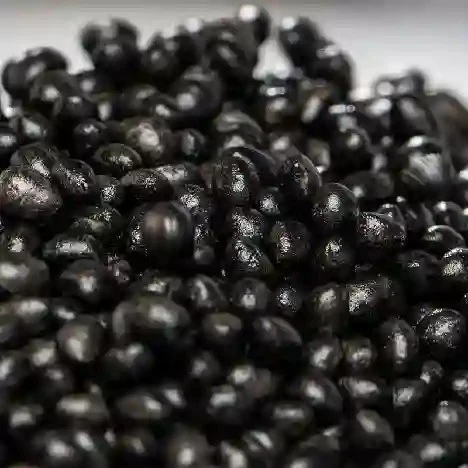
The category can mean clean molding scrap, used food-service containers, protective packaging from several sources, or foam mixed with tape and other plastics. These materials do not share one recycling outcome. Before deciding what to do with EPS waste, a plant should record the source, polymer type, color, density, additive package, and contamination profile.
Two similar pieces of foam can behave differently in reprocessing. One may be white, uncontaminated scrap from a known grade. Another may contain labels, adhesive, food residue, moisture, or traces of another polymer. Those differences affect sorting effort, yield, equipment selection, and the tests needed before reuse.
Collection systems vary as well. Recycling acceptance depends on location, and some foam materials require specialized collection or drop-off programs rather than routine curbside pickup. A local program that accepts one foam product does not necessarily accept every form of EPS waste. For a broader view of how an industrial EPS recycling route is organized, source control comes before processing.
Which EPS Waste Streams Can Become Foam Feedstock?
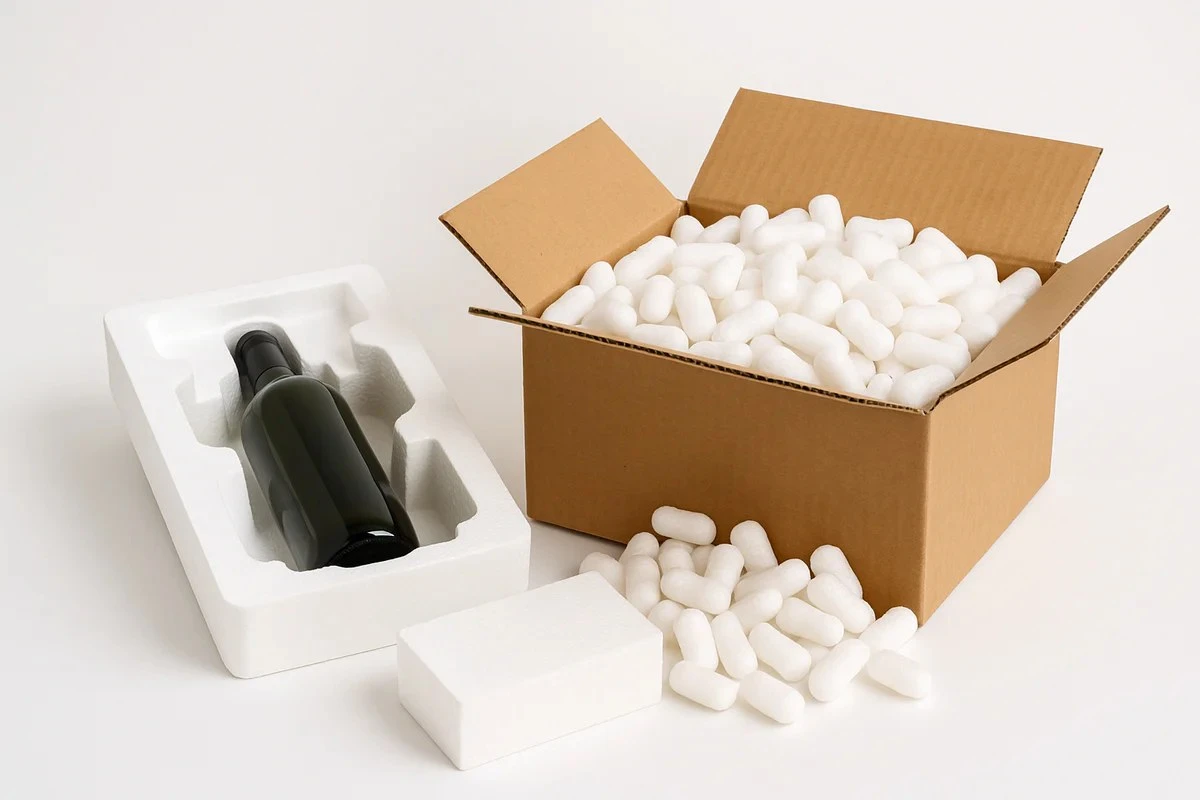
The first screening question is whether a stream can remain consistent enough for reprocessing and then match an approved product. Source type matters because production scrap and post-consumer collections create different levels of control.
Known Production Scrap and Offcuts
Production scrap comes from a controlled manufacturing environment. The plant often knows the resin, color, density target, additives, and time of generation. That information makes it easier to prevent cross-contamination before the material reaches a baler or compactor.
Controlled scrap still needs discipline. Trim can pick up dust, moisture, floor debris, or packaging residue. Colored and white material may need separate handling. A line that mixes grades after generation can lose the traceability that made the scrap attractive.
Industrial Recycling of EPS works best when material identity stays with the batch. A labeled container, a defined generation point, and a clear separation rule matter more than a general instruction to keep scrap clean. The stream becomes a feedstock candidate only after the plant confirms that it can repeat the same handling conditions.
Mixed Consumer Collections and Their Limits
Post-consumer EPS arrives with less control. Packaging may carry labels, tape, ink, food residue, moisture, or fragments of another polymer. Products may also use different densities, colors, and additives. A collection program can improve recovery, but it cannot remove every source of variation.
These limits explain why eps waste management must begin with acceptance criteria. The program should define which EPS forms are collected, which contaminants trigger rejection, how material is inspected, and where questionable loads are sent. Without those rules, collection volume can grow while the usable fraction falls.
Local infrastructure also shapes the result. A region with an established industrial receiver may support a different route than one without that capacity. Where recovery is not available, an appropriate eps waste disposal route may be the responsible alternative.
What Preparation Turns EPS Waste into Processable Feedstock?
Preparation converts an uneven waste stream into something a processor can handle. The work includes sorting, removing unwanted material, reducing size where necessary, and reducing volume for storage and transport. Each step should protect the identity and condition of the material.
Industrial Recycling of EPS also differs by polymer family, so a program should not assume that one method fits every foam. The recyclability of polyethylene foam provides a useful comparison when a facility handles more than one foam type and must keep those routes separate.
Sorting and Contamination Removal
Sorting may use visual inspection, color separation, density checks, or supplier declarations. The method depends on the stream and the intended product. The goal is to remove material that could damage the process, weaken the next product, or make batch results impossible to interpret.
Contamination control should address visible and hidden problems. Tape and paper are visible. Moisture, residual adhesive, and incompatible polymer content may be less obvious. If the plant cannot measure or remove a contaminant, it should define how that risk will be managed before releasing the material to production.
A useful record links each prepared lot to its source and inspection result. That record does not prove product quality by itself, but it gives the next stage a basis for sampling and traceability.
Volume Reduction and Transport Handling
Loose EPS foam contains a large amount of air, so storage and transport can be expensive. Compaction or densification reduces volume and allows more material to move in one trip. This step changes logistics, not material quality; a compacted block is not automatically a cleaner or more uniform feedstock.
HUASHENG documents compactors that reduce EPS foam to approximately 1/90 of its original volume for reuse. That reduction can make collection and internal handling more practical, but it does not remove the need for source separation. A compacted mixed load remains mixed, and a contaminated load remains contaminated.
Equipment should match the material form, throughput, destination process, and safety requirements. Operators also need procedures for start-up, cleaning, and preventing cross-contamination between grades. The value of compaction comes from moving the right material efficiently, not from treating every bale as identical.
Is Recycled EPS the Same as Virgin EPS?
No. Recycled content can be a useful raw material, but it does not automatically reproduce the same density, expansion behavior, cell structure, or mechanical result as virgin resin. Source variability, processing history, and the recycled-content ratio all affect the next product.
Certification and traceability matter alongside technical testing. The Global Recycled Standard uses third-party certification for recycled content and chain of custody, with additional social, environmental, and chemical requirements. The certificate defines a verified supply-chain scope; it does not replace product-specific performance testing.
HUASHENG’s recycled expandable polystyrene documentation records Global Recycled Standard Version 4.0 certification under scope certificate SGC-GRC04511-GRS-2024-09. The coverage applies to the documented R-EPS product scope, not every EPS grade or waste source. Buyers should read the scope alongside the material data and intended application.
The documented REPS material has a density range of 22–50 g/L and a standard particle size around 0.8–1.2 mm. Those values describe the documented grade, but a new product still needs its own qualification. Recycled EPS foam can meet one application and fail another because the requirements are different.
For a product-level view, the circular economy applications for recycled EPS foam show why recovered material must be matched to the intended use rather than treated as a generic substitute.
How Do You Qualify Recycled EPS for a New Foam Product?
Qualification starts with the incoming material. Define the accepted source, recycled-content basis, contamination limits, and how each lot will be identified. Then control the reprocessing conditions, including any blending ratio, drying, grinding, or densification step that could change the material.
The next stage is product testing. Relevant checks depend on the application and may include density, particle size, expansion behavior, fusion, compressive strength, dimensional stability, moisture response, thermal performance, or flame performance. A single laboratory value is rarely enough. Samples should represent the intended production process and expected source range.
Pilot production connects material data to the actual foam product. Record molding or forming conditions, cavity behavior, surface quality, dimensions, and defects. If the recycled blend changes the process window, that finding belongs in the qualification record rather than being handled informally on the line.
The same discipline should continue after approval. Batch checks, retained samples, and a nonconformance procedure help detect drift before it reaches a customer. The question “Can EPS be recycled?” is therefore only the first part of the decision. The second part is whether the recycled EPS can be qualified for a defined product, process, and acceptance level.
A buyer can apply the same logic found in broader EPS foam quality checks when reviewing incoming material and production evidence. The supplier should explain what was measured, how the sample was taken, and what result would trigger rejection or rework.
When Is EPS Waste Disposal the Better Alternative?
Disposal is the better alternative when a stream cannot be sorted, cleaned, or matched to a reliable end use at acceptable risk. Heavily mixed foam, contaminated material, or a collection with no viable receiver may not support a controlled recycling route. Pretending that volume alone creates recyclability can add cost and quality risk.
The decision should follow local rules and available infrastructure. Some foam materials require specialized handling, and acceptance rules vary by location. An eps waste disposal route may include a permitted landfill or another locally approved process. The point is not to prefer disposal by default; it is to avoid an unsupported recycling claim when the material cannot meet the program’s requirements.
A facility can reduce how often disposal is needed by improving source separation, training operators, and reviewing rejected loads. If one stream is consistently contaminated, the answer may be a design or collection change rather than more processing. That review belongs in the eps waste management program.
What Should an EPS Waste Management Program Measure and Record?
A workable EPS waste management program turns broad sustainability goals into operating decisions. It should define accepted sources, separation rules, storage conditions, equipment settings, inspection frequency, and the disposition of rejected material. It should also state how recycled content is calculated or verified when a customer requires a claim.
Records should link the source lot to the prepared lot and the finished product batch. Useful fields include material description, generation point, color, contamination checks, compaction or densification method, processing date, blend ratio, test methods, results, and nonconformance actions. The record should be clear enough for another qualified person to understand what happened.
Supplier evidence should match the claim being made. A recycled-content statement, a chain-of-custody record, a certification scope, and product test results answer different questions. HUASHENG documents a polystyrene production approach that uses recycled raw materials, and its documented recycling process includes volume reduction for reuse. Those facts support the documented route; they do not remove the need to qualify the exact grade and application.
Review performance over time instead of relying on one successful trial. Track usable yield, contamination rejects, batch variance, customer complaints, and the reasons a load moves to disposal. The review should change collection, separation, equipment, or qualification criteria when the data shows a recurring problem.
Conclusion
EPS waste can become a new foam product when the stream is identified, separated, prepared, reprocessed, tested, and matched to an approved application. Production scrap usually offers more control than mixed consumer collections, but neither route should be approved without evidence. Volume reduction can improve handling, and recycled content can support a circular material strategy, yet neither fact makes recycled EPS identical to virgin resin.
The practical next step is to review the actual waste stream against a defined product requirement. Confirm the source, contamination limits, preparation method, recycled-content evidence, and qualification tests before committing the material to production. Contact HUASHENG to discuss the intended foam application and the evidence required for the proposed recycling route.
FAQs
Q1: Can EPS be recycled?
A1: Yes, some EPS waste streams can be recycled into new foam products. The material must be identifiable, sortable, and suitable for the reprocessing route, and the resulting feedstock must pass the qualification tests required for the intended product. It is not automatically equivalent to virgin resin.
Q2: How should EPS waste be separated before processing?
A2: Separate material by polymer type, color, grade, and contamination level. Remove labels, tape, food residue, moisture, and visible debris. Keep questionable loads out of the production feedstock until they have been inspected.
Q3: What records should a buyer request for recycled EPS?
A3: Request the material origin and grade, recycled-content or chain-of-custody evidence, certification scope where applicable, lot identification, processing conditions, test methods and results, and the procedure for handling nonconforming material. These records should connect the incoming stream to the approved product batch.
 English
  German
  Spanish
  French
  Arabic