
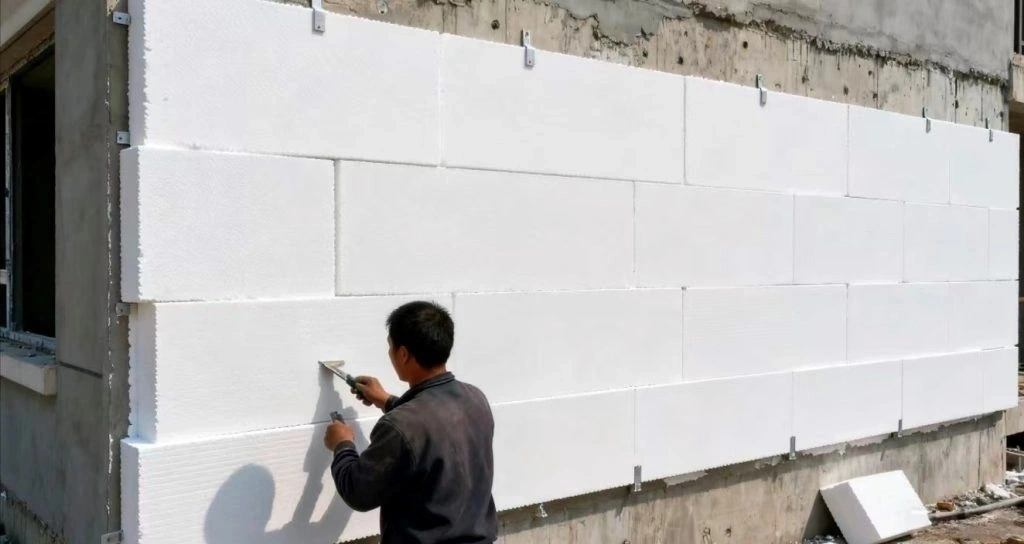
An EPS wall panel is not defined by its name alone. It may be an insulation board within a layered wall, a shaped panel used by a building system, or a finished component supplied with other materials. Buyers should confirm which product is being quoted, how it will be installed and what evidence the project requires. This is especially important when a search for “EPS panels” returns suppliers of both raw materials and finished panels.
هواشنغ‘s product information lists EPS panels and foam products for construction-related applications, while the company primarily supplies expandable EPS materials. A panel manufacturer or processor turns those materials into finished products. Buyers should establish the scope of supply early so that a raw bead quotation is not mistaken for a finished panel offer or system approval.
Planning an EPS material trial? Send HUASHENG your application and specification to discuss grade information, sample requirements and quotation scope.
Identify the panel within the wall assembly
Begin with a section drawing of the proposed wall. Identify the panel’s location, adjacent layers, fixings, joints, surface treatments and any openings or edge details. State whether the EPS is a continuous insulation layer, a cavity component, a core in a composite panel or another defined part. A panel’s role determines which properties and interfaces need review.
Dimensions and interfaces
Record the panel dimensions and tolerances that matter to installation. Include thickness, edge profile, panel size, joint arrangement and any limits on gaps. Ask the installer or designer how the panels will be cut and fixed, and whether site trimming is permitted. If panels are made to order, define how drawing revisions will be controlled and how a delivered batch will be checked.
The rest of the wall matters. Sheathing, membranes, cladding, adhesives, fixings and workmanship can affect moisture management and fire performance. Do not infer assembly performance from the name or appearance of the insulation core. The project’s design professional should identify applicable requirements and determine whether the evidence must apply to the EPS product, the panel assembly or the completed wall system.
Request the material and finished-panel information separately
A useful RFQ distinguishes raw EPS material information from finished-panel information. For expandable resin, request the exact grade identity, available technical information, lot traceability and handling or processing documentation available from the supplier. For finished panels, request controlled dimensions, quality records, manufacturing details and any test evidence applicable to the declared product and market.
Material and panel evidence
HUASHENG lists several EPS product categories, including common, مضاد للشعلة, الجرافيت, environmental-protection and carbon-black grades. These labels are a starting point for a technical discussion, not a substitute for checking the exact grade and its intended use. Ask which product is proposed and which documents accompany it. Do not transfer a value from one category to another or assume that color identifies performance.
If a project specifies a particular thermal, fire, mechanical or moisture criterion, include the required test method, standard edition and acceptance threshold in the inquiry. The responsible engineer or specifier should select these requirements for the market and wall assembly. A supplier can respond to a clear requirement; a vague request for “high-performance panels” leaves too much room for different interpretations.
Evaluate dimensions, fit and production consistency
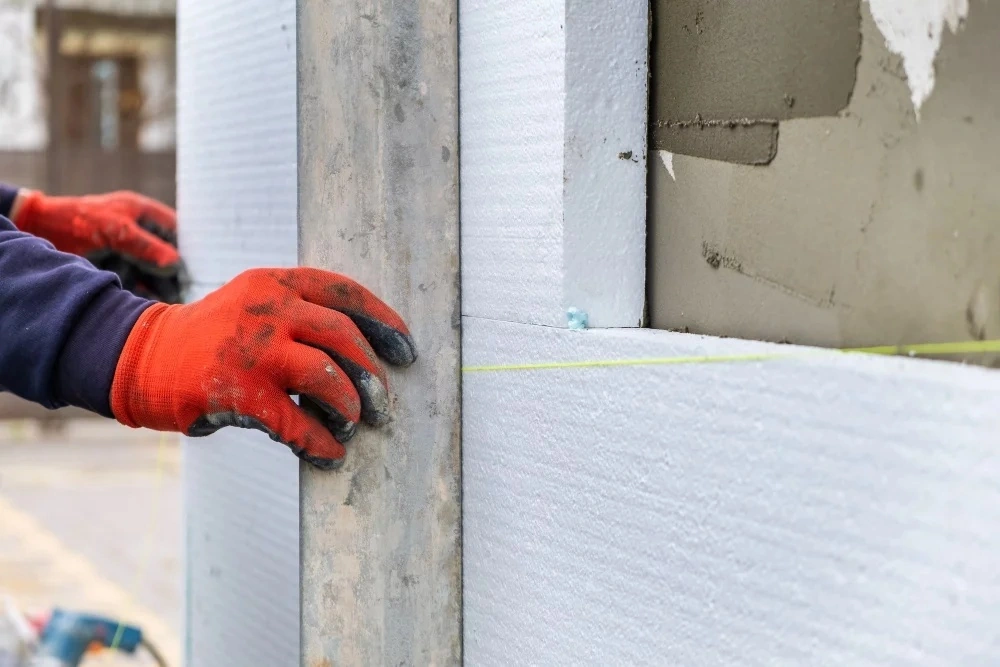
For panels, installation fit is a practical quality issue. Agree how length, width, thickness, squareness and edge condition will be measured. Identify the inspection frequency and sample size for incoming batches. A buyer may also specify a fit-up check using a reference wall section or a joint detail, especially when gaps or uneven edges could disrupt the next installation step.
Trial production should use a documented baseline. Keep the panel design, equipment, process conditions and measurement method stable while evaluating a material change. Record the material lot and any process adjustments. If both the resin and the panel geometry change during the same trial, the results may not explain which change affected the finished unit.
Visual inspection can reveal obvious damage or uneven surfaces, but it cannot establish every performance claim. Identify which measurements need instruments or independent testing. Retain the test report, sample identity and specification revision together. If project acceptance depends on a complete wall build-up, plan the system-level evaluation separately from checks on individual panels.
Review fire and moisture claims in context
Fire requirements are particularly dependent on the complete assembly and local rules. A flame-retardant grade name does not mean that an exposed EPS panel is non-combustible or that a wall system automatically complies with a code. Ask for the exact product identity and applicable evidence, then have the designer verify whether it represents the proposed thickness, facing, joint, fixing and installation configuration.
Moisture performance also depends on exposure and detailing. EPS panels do not make a wall waterproof by themselves. Roof and wall membranes, flashing, drainage paths, sealed joints and installation quality perform their own functions. If panels could be exposed to rain during construction, define temporary protection and storage conditions with the contractor. If the panel will be part of a moisture-sensitive assembly, the designer should specify the relevant evidence.
Avoid broad claims such as “waterproof,” “fireproof” or “suitable outdoors” unless the claim is supported for the exact product and use. A buyer can ask direct questions about water absorption, fire classification, UV exposure or service conditions, but the response should identify the method and product scope behind the answer.
Compare panel suppliers and material suppliers fairly
Before comparing quotes, normalize the scope: raw resin, cut boards, molded panels or a complete panel system. Include dimensions, grade, documentation, packaging, quantity, delivery terms and acceptance conditions. Compare technical completeness alongside price. A lower quote may exclude conversion, testing or installation accessories that another offer includes.
Ask each supplier to flag assumptions. If the buyer has not specified a test method, ask what information is being used for the quotation and whether it is a confirmed product property or a preliminary estimate. Require written confirmation before procurement relies on a claim. For custom requirements, share the drawing and the intended market so the supplier can identify what is available and what remains for the panel producer or designer to verify.
HUASHENG describes a customized REPS process that starts with application requirements and moves through solution review, sampling and production coordination. Buyers considering EPS inputs for wall panels can provide their target use and current specification for discussion. The panel processor and the project designer remain essential participants in qualifying the final product and assembly.
استنتاج
EPS wall-panel purchasing is clearer when buyers separate the insulation material, converted panel and complete wall assembly. Specify the panel’s role, geometry, interfaces and required evidence; then match each request to the party responsible for supplying it. الاتصال HUASHENG with the panel drawing and material requirements to discuss EPS grade information and sample coordination.
الأسئلة الشائعة
Q1: Does HUASHENG’s EPS panel listing mean every offer is a finished panel?
A1: No. Confirm whether the quotation covers expandable EPS resin, an intermediate material or a finished panel. The company scope and any conversion work should be stated clearly.
Q2: Can a flame-retardant EPS grade be called fireproof?
A2: No. A grade label does not establish that the finished panel or wall assembly meets a specific fire requirement. Review the exact product evidence and the applicable assembly rules.
Q3: What should be checked when EPS wall panels arrive?
A3: Use the approved specification to check product identity, dimensions, edge condition, quantity and documentation. Add project-specific inspection or testing where the designer requires it.
 Arabic
 English
 German
 Spanish
 French