
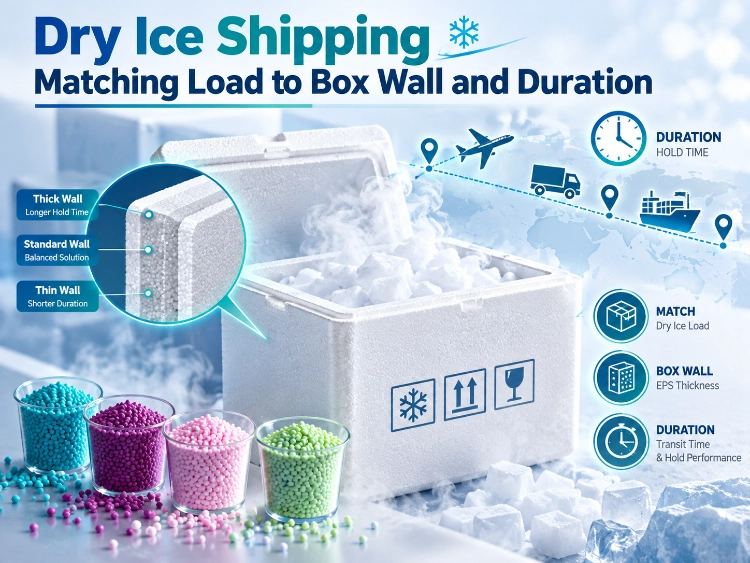
Box 4471 left the plant at 16:20 on Friday with 4 kg of dry ice, 12 kg of frozen samples and a logger taped to the inside of the lid. The lane was quoted at 36 hours. The depot scanned it at 19:05 the same evening.
Nothing moved after that. A Saturday pallet position, then the Monday van at 09:40. The lid came off at 09:55: frost on all four walls, no ice in the base, payload at minus 9 °C from 22:40 Sunday onward.
The packer loaded 4 kg from the figure he uses on every dry ice lane, 2-5 kg per 24 hours, the one carriers print for an insulated box. That number assumes the box keeps moving.
What the Load Was Counted Against
36 hours quoted, 96 hours closed
36 hours was the quote. 96 hours is what the box actually spent sealed. Friday 16:20 to Monday 09:55 is the span the ice has to cover, and the driving time is only part of it.
Depots do this every weekend. Saturday afternoon the gate closed. Monday morning it opened. Sixty hours landed on every box on that floor, and two of the others on the same lane arrived short of ice that Monday.
What the payload carried by itself
Twelve kilograms of frozen meat sat beside the ice and carried its own cold for about ten hours. Two kilograms of freeze-dried powder, in the same 30-litre box, carries none. Every hour of the 96 lands on the ice in that second case.
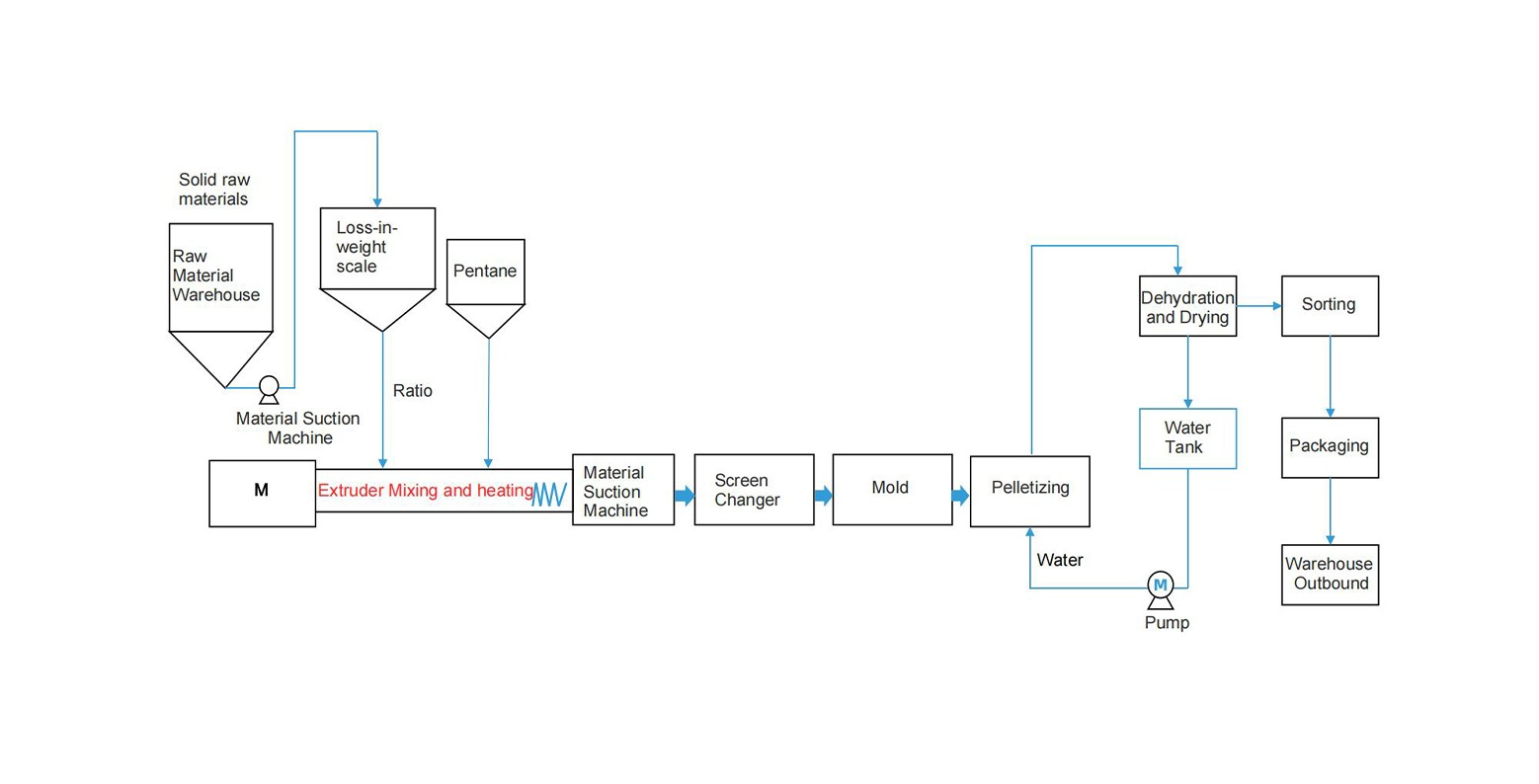
Void works like a second payload. Five litres sat above the moulding in box 4471, and that air was cooled at packout, then cooled again after each transit check. The rerun went out with a fitted liner that closed most of it. Box, liner and payload sets for chilled, frozen and fresh-produce lanes are listed in the cold chain logistics application range.
The Vent Path
2 cubic metres against 30 litres
Dry ice ships as UN1845, and releasing its gas is a condition of moving it. One kilogram of solid makes about 0.5 cubic metres, so box 4471 carried 4 kg and had to pass 2 cubic metres out of a 30-litre container.
Tape over the hole stopped the gas on a box in the same depot. The carton swelled along the lid line, the tape lifted at one corner, and the lid ended up in the van floor sweepings.
Depot staff cause this one by accident. They open the lid, count the payload against the manifest, re-tape across the hole and reload the box. The vent path on the exact box ordered can be checked before the lane is specified, and boxes from the FrostSafe cold chain box product range are specified that way; on a standard container the vent line goes on the packout sheet and gets signed.
A depot check on the same lane ran the same way: lid open at 02:11, payload counted against the manifest, lid closed at 02:14, box loaded onto the second van. Three minutes at 22 °C ambient, and the tape went back over the hole both times.
Two lid lifts, 90 seconds each
Box 4471 was packed payload first, ice second, then a second lid lift to read the sample list back against the manifest. Two lifts, about 90 seconds each, in a 20 °C bay.
Ice goes in last. Lid down inside two minutes. UN1845 mark, marked ice mass, carrier declaration and orientation arrows on before the pallet reaches the van door. Gloves and a ventilated bay sit on the same sheet, and so does the reason: the gas replaces oxygen in a closed van, and the packer closing the box is rarely the one opening it.
The Box at Dry Ice Temperature
A wall that behaves at 2 °C at minus 78
A 30 mm moulded wall with moulded corners went out on that box. On the chilled lanes the same wall flexes at a dock drop and comes back. At dry ice temperature the foam stiffens, and the drop goes into the corner radius instead.
Two density options sat on the drawing for that corner. The softer moulding deformed at the corner on the first dock drop and stayed on the box. The denser one kept its shape and passed the energy into the tray underneath, which is the version the samples felt. Wall thickness, corner radius and density belong on the drawing, because none of the three is visible on a finished box.
Frost arrived by Sunday on the long wall and had started bridging the vent hole. Box 4471 came off a 20 °C bay; the same box packed in a cold room carries less water vapour in with it.
Five numbers off the lane sheet
Starting ice mass. Box and liner part numbers. Payload mass and layout. Ambient temperature with total closed hours. Ice and payload state at arrival.
The five were written on the lane sheet after the Monday arrival, and the freight line moved on the next order: less mass, no depot weekend. Ice left in the base means the load can come down or the wall can thin. Nothing left with the payload on its limit means the opposite. Moulding the same box in recycled content leaves all five numbers where they are, which is what recycled-content foam in cold chain logistics covers.
استنتاج
Box 4471 was decided by 4 kg of ice, 96 hours of closed time against a 36-hour quote, and one vent hole that had to pass 2 cubic metres of gas. The next run on that lane left with 7 kg, a vent line on the packout sheet, and a depot weekend counted inside the closed time instead of inside the samples. Payloads and routes that need a box, liner or moulded part sized this way can be worked through with هواشنغ.
الأسئلة الشائعة
Q1: How much dry ice does a shipment need?
A1: Box 4471: 4 kg in, 96 hours sealed, no ice left on Monday. The rerun left with 7 kg and arrived with 1.1 kg in the base.
Q2: Why does a dry ice box need venting?
A2: Four kilograms of ice becomes about 2 cubic metres of gas inside a 30-litre container. A taped box in that depot split along the lid line before the morning scan.
Q3: Can an EPS box be used for dry ice?
A3: Box 4471 was one, 30 mm wall, moulded corners, no cracks after the dock drop. Density decided it rather than wall thickness.
 Arabic
  English
  German
  Spanish
  French