
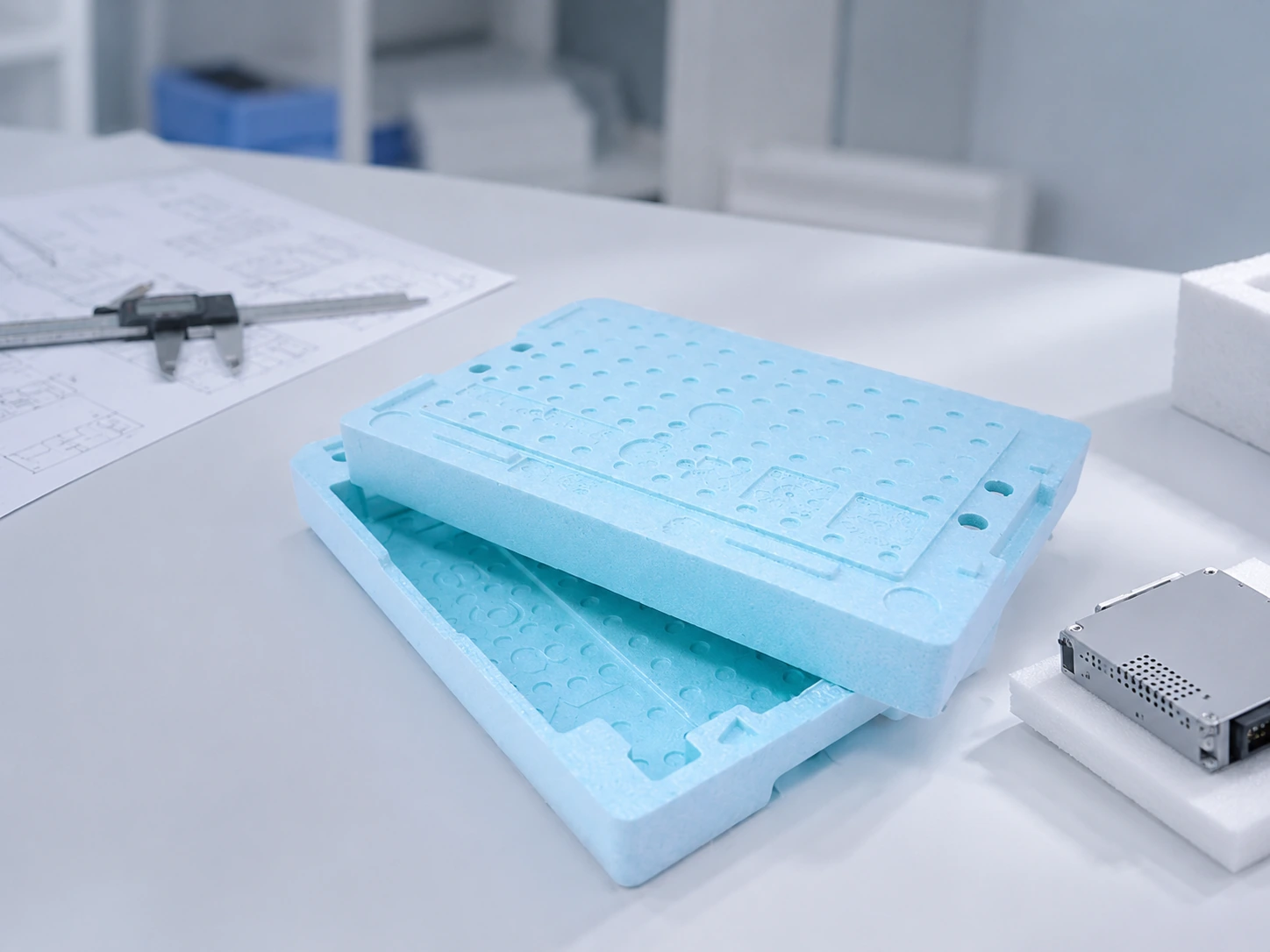
Custom molded foam packaging becomes worthwhile when standard blocks, corner protectors, or loose inserts can no longer control product movement, protect known weak points, or deliver repeatable packing across a large order. The decision should not start with the mold price. It should start with the cost of damage, packing labor, unused carton space, repeated SKUs, and the value of getting the same fit every time.
For many B2B projects, custom foam inserts make sense long before a product becomes extremely fragile. They can also solve dimensional problems, reduce assembly steps, improve carton utilization, and give a packaging team a clearer specification for repeat production.
When Does Standard Foam Packaging Stop Being Enough?
Are Workers Building the Same Insert by Hand Every Day?
If operators repeatedly cut blocks, glue corner pieces, add filler, or reposition loose sections, the company is already paying for customization. It is simply paying through labor rather than tooling.
Hand-built protection also introduces variation. One operator may leave a larger clearance around a control panel. Another may push a foam block closer to a fragile ceramic edge. That difference can become visible only after transport.
Custom foam inserts for boxes remove much of that judgment from daily packing. The cavity, wall thickness, contact points, and orientation are already defined.
Does the Product Have Clear Fragile Zones?
Large flat products may look easy to pack, yet one corner, connector, screen edge, ceramic feature, or projecting control can determine the entire packaging design.
A molded insert can transfer load toward stronger areas and keep clearance around vulnerable ones. This matters for electronics, ceramic products, instruments, display modules, and other products where a seemingly small impact point can create an expensive claim.
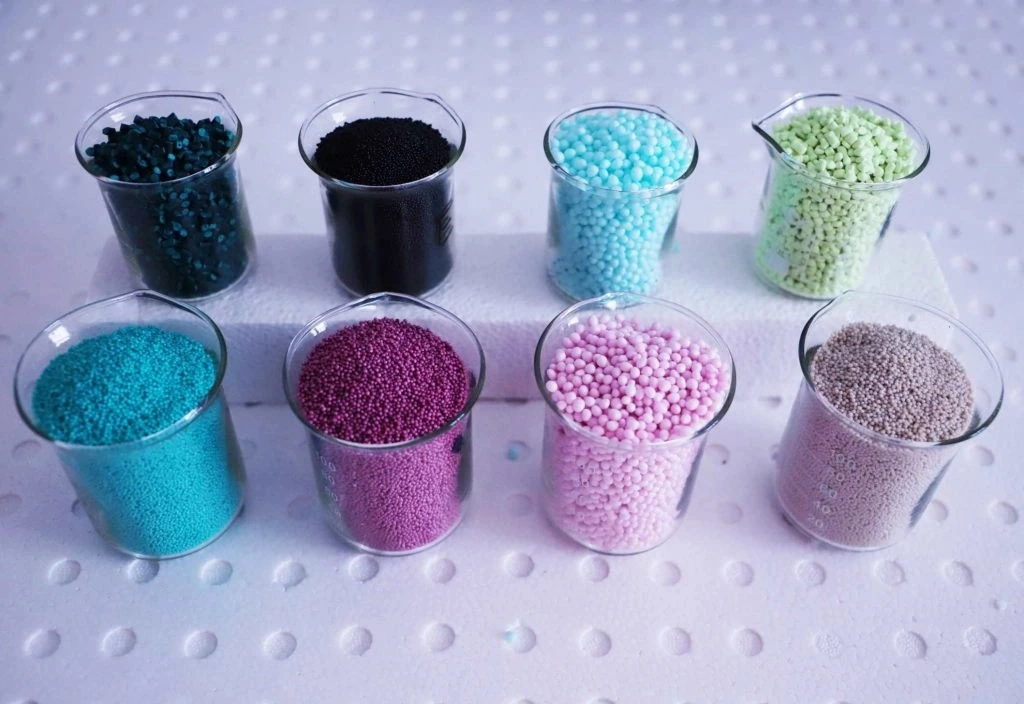
For projects that need material properties and particle size adjusted around the product, Extrusion Customized REPS for engineered packaging supports electronic, ceramic, and general packaging. Reps-302 uses a particle range of 0.8–1.25 mm, while Reps-303 uses 0.6–1.0 mm, giving mold trials more than one starting point for fit and surface detail.
How Should Tooling Cost Be Judged?
The wrong question is, “How much does the mold cost?” A more useful question is, “How much does the mold cost per protected unit over the expected program life?”
When Does Volume Make Custom Foam Packaging Easier to Justify?
A dedicated mold becomes easier to justify when the product has repeat orders and a relatively stable geometry.
Suppose an insert requires repeated hand trimming on every unit. Even a small labor saving becomes meaningful across tens of thousands of packs. Add lower rework, better carton fit, fewer loose components, and reduced packing variation, and the mold can begin paying for itself through operations rather than through material savings alone.
The calculation should include:
- mold and sampling cost
- expected units over the product life
- packaging labor
- foam consumption
- carton size
- damage rate
- rework
- the cost of changing the design later
A low-volume product with frequent design changes may still be better with fabricated inserts. A stable product with predictable annual demand is a much stronger candidate for molded foam.
What Happens When a Product Has Several SKUs?
Customization does not automatically mean one mold for every SKU.
If several products share the same outside dimensions or strong support areas, the packaging designer may be able to create a common outer structure with interchangeable internal sections. That can reduce tooling complexity.
Before opening tooling, buyers should provide drawings for the complete product family. HUASHENG customized EPS solutions start from application, density, performance target, product structure, sample production, manufacturing, and delivery rather than treating the foam shape as an isolated drawing.
What Should a Molded Insert Control Inside the Box?
A custom insert should do more than fit tightly. It should manage how the product moves and where loads enter the product.
How Tight Should Custom Foam Inserts Be?
Too much clearance allows the product to gain speed before hitting the foam. Too little clearance can create assembly problems or continuously load a sensitive surface.
The correct fit depends on tolerance, product weight, surface sensitivity, compression behavior, and the way the carton is packed.
Critical dimensions should be defined on the drawing rather than judged visually from a prototype.
Packaging teams should also consider manufacturing tolerance in both the product and the foam. A prototype built around one perfect sample can create trouble if production products vary slightly.
Why Do Wall Thickness and Contact Area Matter?
A very thin foam rib may look neat but concentrate stress. A broad contact area can spread load, yet it may touch a cosmetic surface that should remain clear.
Good custom foam packaging therefore separates “where the foam can touch” from “where the foam should carry load.”
That distinction is especially useful for monitors, electronics, ceramics, instruments, and assembled products with connectors or external controls.
How Is Recycling Expanded Polystyrene EPS Beneficial Here?
Recycling becomes more useful when it is considered alongside design and repeatability rather than added as a label after the insert is finished.
Can Recycled Material Still Be Engineered Around the Product?
Yes. Recycled content does not remove the need to define density, particle size, molding behavior, and finished-part performance.
HUASHENG REPS uses modified PS and can be produced with different particle sizes. Standard REPS particle size is approximately 0.8–1.2 mm, while project-specific production can be adjusted for finer structures or lightweighting. A tray project, for example, has used a 0.65–0.8 mm particle range.
The material is used in packaging for display panels, medical products, automotive and new-energy products, mobile phones, tablets, and other electronic products.
For buyers considering recycled content as part of the packaging specification, HUASHENG REPS material options provide a route to discuss material performance and circularity in the same project.
Can Custom Design Reduce Waste Before Recycling Starts?
Yes. Recycling is only one part of material efficiency.
A molded insert can reduce unnecessary offcuts and eliminate some of the filler used to correct a poor fit. It may also support a smaller carton if the package can be designed around the real product envelope.
That matters because the cheapest waste is material that never has to be used.
What Should Be Confirmed Before Opening a Mold?
A drawing alone is not enough.
Which Inputs Should Go Into the Packaging Brief?
The supplier should receive the product dimensions, weight, fragile zones, permitted contact areas, carton dimensions, packing orientation, expected stacking, transport route, quantity, target material, and required drop or vibration checks.
For products with delicate surfaces, state whether the foam can touch painted, polished, coated, or display areas.
The buyer should also clarify whether the same mold needs to serve future variants. Changing this after tool approval is much more expensive than planning it before the first sample.
Why Is a Real Mold Trial Necessary?
A CAD model can confirm geometry. It cannot fully predict molding, bead fusion, surface finish, compression, carton interaction, or transport behavior.
The first sample should therefore be packed with the real product and real carton. Check insertion force, removal, clearance, orientation, compression points, and whether the product shifts when the carton is handled.
Then run the relevant transport tests before approving bulk production.
HUASHENG combines requirement analysis, material customization, sample development, manufacturing, logistics, and technical follow-up. Buyers with a stable product but unresolved packaging damage can discuss a molded insert project with HUASHENG before committing to tooling.
Conclusion
Custom molded foam packaging is justified when it removes recurring variability from a packaging operation.
A high-value product, known fragile zones, repeat order volume, excessive hand assembly, poor carton utilization, or frequent shipping damage can all make custom foam inserts commercially sensible. The mold should be evaluated against the complete packaging cost, not simply compared with the price of standard foam blocks.
The most reliable project starts with the real product, the real carton, and the real transport conditions. Once those are clear, material grade, particle size, density, cavity design, recycled content, and tooling can be developed around measurable requirements.
FAQs
Q1: When are custom foam inserts for boxes worth the cost?
A1: They are most useful when a product has repeat volume, consistent geometry, fragile areas, significant packing labor, or recurring transport damage. Low-volume products that change frequently may be more economical with fabricated inserts.
Q2: How is recycling expanded polystyrene EPS beneficial in custom packaging?
A2: Recycled EPS or REPS can reduce dependence on virgin material while still being engineered around particle size, density, molding, and finished-part performance. Custom design can also reduce offcuts and unnecessary filler before recycling is considered.
Q3: What should buyers provide before requesting custom foam packaging?
A3: Provide product drawings, weight, fragile areas, allowed contact surfaces, carton size, packing orientation, order volume, transport route, material requirements, and the drop, vibration, stacking, or compression conditions the package must withstand.
 English
  German
  Spanish
  French
  Arabic