
How EPS Packing Materials Ensure Safety for Fragile Goods Transport
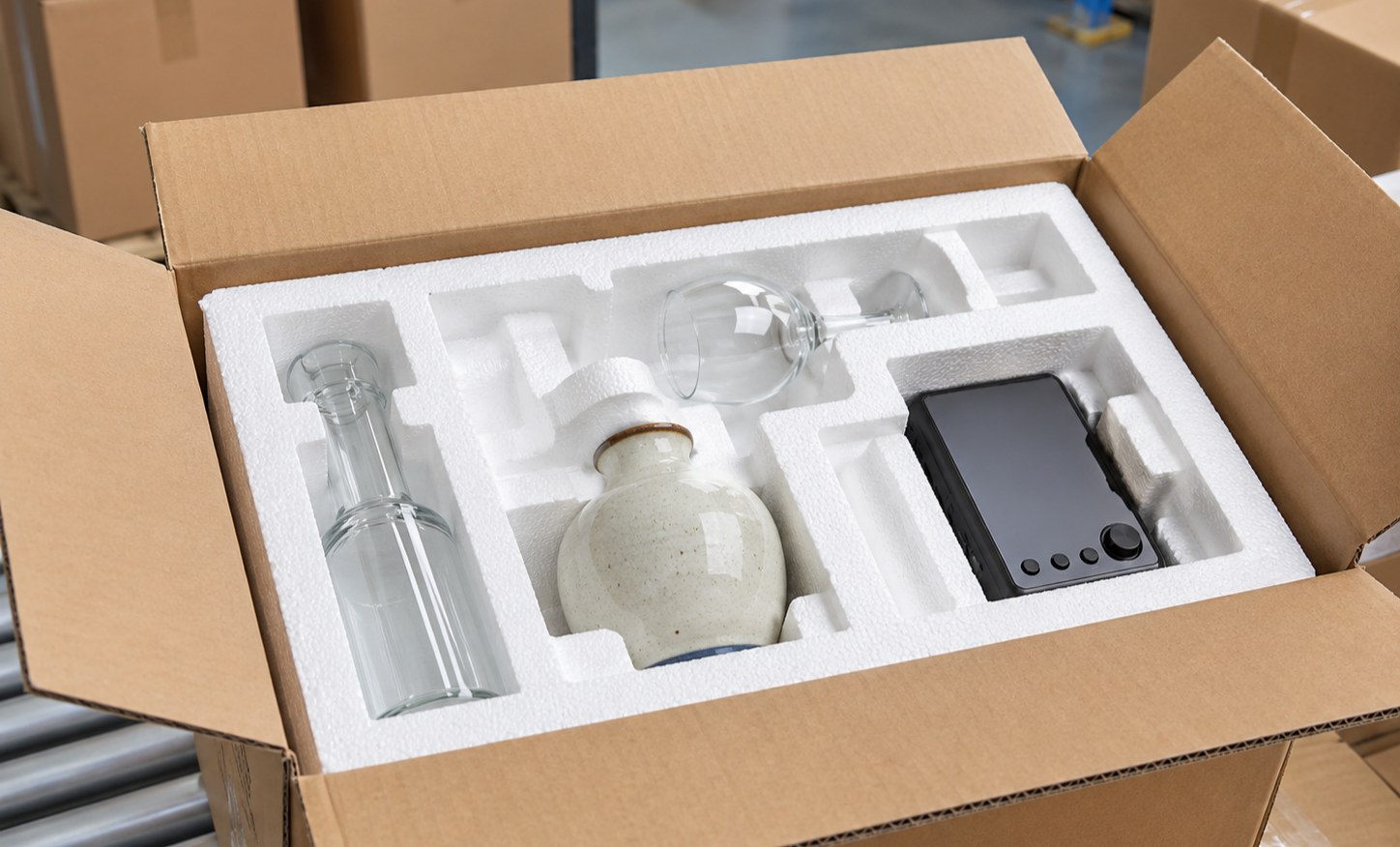
Today’s fragile items pass through longer and more complicated supply chains in 2026. Items such as glassware, ceramics, electronics, precision components, and display items are transported through various modes of transportation, including warehouses, pallets, shipping containers, and last-mile logistics until they arrive at the customer’s end. In the case of business-to-business procurement departments, the primary function of protective packaging is not merely to fill up spaces but also to ensure minimal breakage, lower packaging cost, and stability.
The Growing Importance of Protective Packaging for Fragile Goods
Fragile goods face major risks during shipping and handling. Shocks, vibrations, and compression often cause permanent damage in these conditions. Effective packing materials therefore remain essential. They help products such as electronics, glassware, and medical instruments arrive at their destinations in good condition.
Packaging acts as both a physical barrier and a financial safeguard. It lowers product loss, cuts returns, and improves customer satisfaction. In industries that handle high-value or delicate items, investment in advanced protective solutions like EPS foam supports operational efficiency and strengthens brand reliability.
Exploring EPS Foam as a Core Packaging Material
What is EPS Foam?
Expanded Polystyrene (EPS) foam ranks among the most common packing materials for fragile goods because of its structural advantages. It is a lightweight plastic created from polystyrene beads that are expanded with steam to form a rigid cellular matrix made up of 98% air. This special composition delivers outstanding cushioning properties and still provides strong resistance to compression and impact forces.
E-standard material is a widely used ordinary EPS, which can reach lighter density bubble particles at one time, and is generally more suitable for products with a foaming of 13 g/l or more. This makes it ideal for packaging sensitive products such as electrical components or ceramic items that demand precise protection during transport.
Manufacturing Process of EPS Foam Packaging
The production process starts with pre-expanding EPS beads using steam. Workers then mold them into required shapes or sheets. These molded forms can be customized to match specific product geometries. They may serve as corner blocks, full enclosures, or inserts. This approach ensures maximum stability inside outer cartons. Controlled expansion and molding parameters guarantee consistent density across batches. The consistent density directly improves shock absorption performance and dimensional accuracy.
Advantages of Using EPS Foam for Fragile Goods
EPS foam remains popular because it combines effective protection with real economic value. These qualities matter greatly in large-scale logistics operations.
Superior Shock Absorption and Cushioning Performance
EPS foam effectively dissipates kinetic energy created by impacts or vibrations. Its closed-cell structure resists deformation even after repeated stress cycles. As a result, fragile goods stay safe during rough handling conditions. HUASHENG’s B-Rapid prototyping grade has good fusion, high impact resistance, and the best foaming rate. This characteristic ensures that even precision instruments maintain calibration integrity during shipment.
Lightweight Structure with High Strength-to-Weight Ratio
EPS consists mainly of air, so it adds very little weight to shipments while still delivering strong protection. The outcome is lower freight cost per unit together with reliable stacking stability on pallets. P-extra light material is a high-foaming-rate raw material that can be foamed once to achieve lighter-density bubble particles. Such lightweight yet durable designs prove especially helpful for exporters who need to maximize container volume utilization.
Thermal Insulation Benefits for Sensitive Products
Items sensitive to temperature changes, such as pharmaceuticals or electronic devices, gain clear advantages from EPS foam’s natural insulation capacity. S-33 uses an extrusion process to introduce natural flake graphite into the polystyrene polymer, helping the material absorb infrared radiation. The thermal conductivity of S-33 is less than 0.033 W/M.K. This feature helps maintain stable internal temperatures on long-distance routes and prevents failures caused by condensation.
Design Flexibility and Customization Options with EPS Foam Packaging
EPS provides excellent adaptability when companies design packaging systems for particular product requirements.
It can be molded into inserts that fit precisely around delicate surfaces. It can also be formed into modular blocks suitable for bulk shipments. This level of customization improves both mechanical protection and visual presentation. These factors become especially important in consumer-facing industries such as home appliances or premium electronics.
In addition, manufacturers often combine EPS components with corrugated cardboard or plastic films. The combination creates hybrid packaging systems that offer both rigidity and attractive appearance. These multi-layer systems increase moisture resistance and create opportunities for branding through printed exterior surfaces.
Economic Considerations in Choosing EPS Foam Packaging
The choice to use EPS foam goes well beyond technical performance. It also brings clear economic benefits throughout procurement and logistics activities.
Its low raw material cost compared with alternatives like polyurethane foam or molded pulp makes the material efficient for large volumes. Lower breakage rates lead directly to fewer replacements and warranty claims. In addition, the material’s low mass decreases fuel consumption in shipping. This aspect has grown especially important in supply chains that focus on sustainability.
EPS foam is 100% recyclable using specific recycling methods. Manufacturers are making use of clean production processes that produce little or no waste. Companies such as Lanzhou Huasheng New Materials Co., Ltd have developed production models whereby the rate of recycling of post-industrial wastes exceeds 95%, while reducing carbon emissions by over 85%.
Procurement Advice for EPS Packing Materials in Fragile Goods Transport
When sourcing packing materials for fragile goods, procurement professionals need to balance technical performance with reliable supply and careful cost control.
Match Packaging Design With Product Risk
Teams should evaluate each product’s fragility points, including weight distribution, surface finish, and transport distance. This assessment helps decide whether molded inserts, corner protectors, or full-box supports will be necessary. High-risk categories such as glassware or precision electronics often require custom-molded structures developed through rapid prototyping grades like HUASHENG’s B-Rapid Prototyping Grade. This approach delivers optimal cushioning geometry without unnecessary over-packaging.
Confirm Material Performance Before Bulk Orders
Before placing mass production orders, teams should verify key parameters such as density uniformity, compressive resistance, rebound behavior, and dimensional precision. Sample testing and drop simulations provide useful data for this purpose. These factors help confirm consistency across manufacturing batches and support long-term supplier reliability.
Check Supplier Customization and Batch Stability
Suppliers must have strong tooling capabilities for custom mold development and maintain stable particle size distribution from order to order. Long-term procurement contracts should clearly specify repeat-order dimensional tolerances along with quality control documentation such as SGS physical property test reports.
Confirm MOQ, Lead Time, Export Packing, and Support
Customers have to be sure about MOQs, sampling schedule, mold production time, mass production lead time, and export packing method before reaching a deal. HUASHENG, which is one of the reputable suppliers, offers its customers after-sales technical consultation within 24 hours according to its entire process collaboration service system from design simulation until delivery.
FAQ
Q1: What type of EPS foam grade should I choose for fragile electronic products?
A1: For electronics requiring high impact resistance and precise molding accuracy, B-Rapid Prototyping Grade offers excellent fusion quality and short curing cycles suited for automatic forming machines.
Q2: Can EPS packing materials be recycled after use?
A2: Yes. Modern producers such as HUASHENG implement closed-loop recycling systems where post-industrial waste achieves over 95% recovery rates using advanced compaction technology compliant with ISO 14067:2018 standards.
Q3: How do I ensure consistent quality when ordering customized EPS inserts?
A3: Request sample validation, including drop-test data, before bulk orders and partner with certified manufacturers like HUASHENG, who provide traceable batch reports under their GRS-certified production system, ensuring stable density control across every lot.
 English
  German
  Spanish
  French
  Arabic