
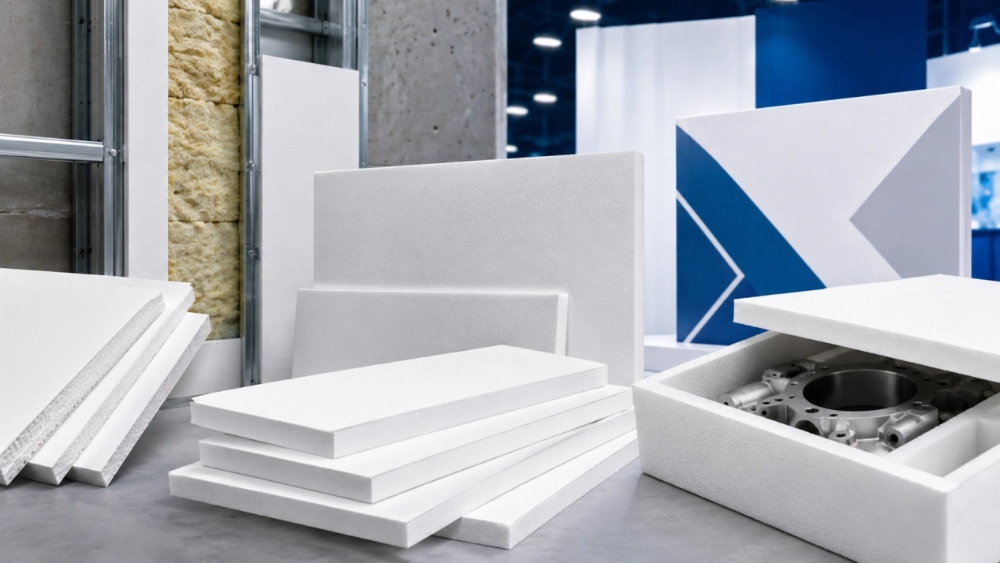
The worldwide production environment in 2026 deals with a major change. As fees on carbon and rules for eco-friendly structures grow tougher, firms focus closely on the basic supplies they use. Being sustainable is not merely a good sales term anymore. Instead, it serves as a basic need. For example, new methods for reusing materials now enable making foam masterbatches with a carbon impact as small as 719.14 kg of CO2 equivalent per ton. Such solid numbers push buying leaders to review their sourcing paths from the ground up. If your work involves getting packaging or construction items, you understand the challenge well. Dealing with the various types of foam board offered these days can seem quite daunting. You require a material that safeguards sensitive items, stops heat flow, and stays within a limited budget. This overview explains the most useful options in the field. We examine true expenses, material traits, and common work uses to guide you toward a wise, money-saving pick for your upcoming task.
The Main Players in the Foam Market
Walking into a busy manufacturing plant or a modern construction site, you will notice a huge variety of plastics. Every specific job demands a different material behavior. Picking the correct board prevents product damage and cuts down heavy shipping fees. Let us look at the top materials competing for your budget and attention.
Extruded Polystyrene (XPS) and EVA
When people talk about rigid panels, XPS often comes up first. Factories make XPS by pushing hot plastic through a die, creating a very dense, closed-cell structure. It keeps water out extremely well. Builders love to put XPS under wet concrete slabs. However, the production method makes it quite expensive. On the other end of the spectrum is EVA (Ethylene-Vinyl Acetate). EVA is soft, rubbery, and highly flexible. You see it inside expensive tool cases or as shoe soles. While it looks great and absorbs shocks well, EVA costs far too much for everyday shipping boxes and is generally too heavy for large-scale construction.
The Clear Advantage of EPS Foam Board
This brings us to the EPS foam board. Expanded polystyrene is actually 98% air. This simple fact makes it incredibly light and cheap to produce. Manufacturers start with tiny solid beads—ranging from 0.3mm to 1.8mm in size—and apply steam. These beads expand up to 95 times their original volume. The result is a highly cost-effective, thick block that factories can cut into thin sheets or mold into shapes. Because it traps so much still air inside its cells, it performs beautifully as a temperature barrier. For standard business applications, it simply offers the best balance of low price and high performance on the market today.
EPS vs EPE: Making the Right Call for Packaging
When a company needs to ship fragile electronics, auto parts, or home appliances, the purchasing team usually looks at two main options. The debate of EPS vs EPE happens in offices every single day. They might look somewhat similar to a normal shopper, but their engineering and costs are totally different.
The Flexibility of EPE
EPE stands for expanded polyethylene. Its main feature is flexibility. You can bend EPE, and it bounces back to its original shape. If a delivery driver drops a box three or four times, EPE will continue to cushion the item. It does not crack or shatter easily. Because of this memory effect, companies use it for highly sensitive military equipment or very expensive electronics. The downside? Making EPE takes more raw plastic material and energy. This drives the unit price up significantly compared to basic alternatives.
Why Standard EPS Wins for Most Products
On the other hand, an EPS foam board is rigid. It handles a big impact by crushing slightly. This crushing action absorbs the kinetic energy, taking the shock away from the television or glass bottle inside the box. For 90% of household appliances, furniture, and food shipments, this single-impact protection is exactly what the manufacturer needs. Why pay a huge premium for multi-impact memory plastic if the cardboard box only drops once during transit? By sticking to standard materials, factories keep their packaging costs extremely low while still passing strict standard drop tests. It is simple math for high-volume production.
Deep Dive into Industrial Foam Insulation
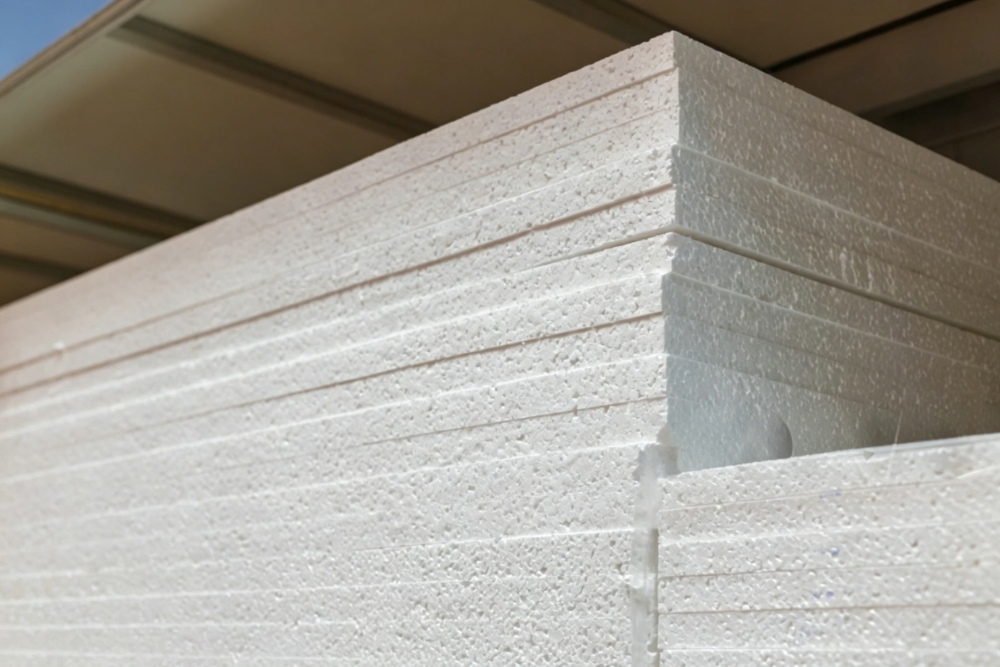
Packaging is only half the story. The global construction sector consumes massive amounts of these expanded materials every year. When contractors buy industrial foam insulation, they want an R-value (thermal resistance) that stays stable for decades. They also need large sheets that a single worker can easily lift and cut on scaffolding.
Choosing the Right Rigid Insulation Board
A dependable rigid insulation board fits into outer walls, tops, and below warm floors. EPS stands out in this area. A top flame-resistant type can reach an oxygen index over 30. This shows it fights fire well, as local rules require. The countless small sealed spaces hold air tightly, stopping chilly winter air from entering spaces and barring hot summer air from getting in. Different from fiberglass, which droops after time and loses its padding, a firm panel remains in its spot precisely.
Cost-Efficiency in Large Building Projects
Think about a massive warehouse or a multi-story apartment project. Using dense XPS or closed-cell spray foam for the entire building exterior will quickly destroy the contractor’s budget. Standard EPS panels give builders similar thermal resistance but at a fraction of the cost. You can also order them cut to exact thicknesses, saving time on the job site. For project managers, this translates to much faster installation times and significantly lower labor bills. Furthermore, many modern EPS materials now pass strict REACH and RoHS chemical safety tests, making them safe for indoor residential use.
Beyond Basics: From Cold Chain to Foam Board Displays
The exact same plastic beads that insulate a brick wall can do highly visible, delicate work. The versatility of these panels is genuinely surprising. From keeping medical vaccines freezing cold to catching a shopper’s eye in a crowded mall, the material easily shifts from heavy industry to the creative arts.
Visual Appeal in Retail and Exhibitions
Have you ever looked at large 3D letters or thick, floating picture boards in a store window? Those are almost always foam board displays. Marketing agencies prefer standard-grade materials because the cut surface is very smooth. It is extremely easy to print bright graphics on it or paint it directly. Since a massive two-meter panel weighs almost nothing, retail workers can hang a big promotional sign from the ceiling using just a simple piece of light wire or double-sided tape. There is no need for heavy metal frames or drilling into walls.
Finding the Right Supplier for Your Needs
Whether you need insulated boxes for fresh seafood, wall panels for a house, or clean white sheets for a trade show, the secret is getting the correct raw material. Companies like HUASHENG engineer specific bead grades for these exact jobs. For example, our Standard Grade-E beads (in sizes like 301, 302, 303, and 401) expand beautifully to create smooth panels with excellent bondability. They run perfectly in traditional machines and modern automatic vacuum molding setups. If you want to cut your manufacturing costs without dropping product quality, talking directly to a specialized supplier makes a massive difference.
Conclusion
Finding the right material for your next project does not need to be a frustrating headache. As we explored the different types of foam board, one clear truth stands out: you do not always need the most expensive plastic to get the job done right. From tough industrial foam insulation that keeps buildings warm to lightweight foam board displays that drive retail sales, standard EPS repeatedly proves its worth. It protects fragile products, lowers heating bills, and keeps your company budget healthy. If your team is struggling with the EPS vs EPE decision or if you need a dependable supplier for a rigid insulation board, expert advice helps. Contact HUASHENG to discuss your specific material needs and request a product sample today.
 English
  German
  Spanish
  French
  Arabic