

Garage doors are one of the most extensive mobile elements in a building’s outer shell. Different from fixed walls, these structures integrate mechanical movement and thermal separation functions, thereby making insulation design considerably more intricate. Heat transfer loss through poorly insulated garage doors often exceeds that of surrounding walls, particularly in areas experiencing huge seasonal temperature fluctuations.
Modern garage door systems need to maintain stable interior temperatures while keeping relatively low weight so as to ensure work in a safe and stable way. Consequently, insulation materials must have great insulation capacity without adding excessive mechanical loads or undermining operational safety.
Polystyrene has gradually been preferred as a core insulation material due to its ability to balance thermal efficiency, structural consistency, ease of production, and expense predictability. Its cellular structures and ease of manufacturing enable it to satisfy both engineering and industrial production requirements.
Why Does Garage Door Insulation Require Specialized Materials?
Before assessing polystyrene specifically, an examination of the distinct insulation difficulties presented by garage doors compared with conventional building components is essential.
How Do Garage Doors Differ From Wall Insulation Systems?
Fixed walls stay immobile once constructed, while garage doors undergo thousands of operational cycles each year. Every activation generates vibrations, flexural stresses, and shifts in thermal exposure. Insulation layers, therefore, need to endure such dynamic conditions without developing fractures, contracting noticeably, or detaching from the surface sheets of panels.
Moreover, sectional configurations incorporate connection points and strengthening areas that disrupt continuous heat flow. Materials selected must offset these interruptions by delivering dependable thermal resistance throughout.
What Thermal Problems Occur in Poorly Insulated Garage Doors?
Inadequate insulation capability leads to multiple adverse consequences:
- swift variations in interior temperature levels
- moisture condensation appearing on metallic components
- elevated requirements for heating plus cooling systems
- substantial energy escape through slender panel constructions
Such outcomes diminish occupant comfort while raising sustained operational expenditures.
Which Material Properties Become Non-Negotiable?
Successful insulation for garage doors demands several indispensable attributes:
- minimal heat conduction rate
- reduced mass construction
- consistent shape retention
- strong resistance to water absorption
- dependable adhesion throughout panel assembly procedures
These essential qualities clarify the reasons dense mineral-based options frequently underperform in dynamic applications.
What Material Characteristics Make Polystyrene Suitable for Garage Doors?
Polystyrene is effective precisely because its microscopic arrangement confronts the previously mentioned difficulties head-on.
How Does Closed-Cell Structure Reduce Heat Transfer?
Expanded polystyrene comprises countless enclosed tiny chambers occupied by stationary air. Given air’s inherently poor heat conduction property, thermal passage diminishes markedly. The sealed cellular design furthermore eliminates convective movement internally, thereby sustaining insulation effectiveness across extended usage durations.
Why Does Low Density Improve Door Mechanics?
Panels in garage doors require sufficient lightness to lessen strain upon springs, drive mechanisms, and pivot points. Polystyrene delivers good insulation even at modest density values, permitting smooth door movement while curtailing component deterioration.
Decreased overall panel mass additionally enhances safety during setup procedures and mitigates cumulative structural wear from frequent usage.
How Does Dimensional Stability Protect Long-Term Performance?
Consistent fusion among beads throughout the molding operation establishes reliable internal cohesion. Such enduring stability resists shape alteration caused by fluctuating temperatures, thereby guaranteeing that insulation elements maintain their intended form and heat-blocking capacity over prolonged periods.
How Do Advanced Polystyrene Grades Improve Thermal Efficiency Further?
Recent advancements in material formulation have advanced past common EPS materials. Specialized modifying agents now augment insulation capability at micro-structural scales.
How Does Carbon Modification Lower Thermal Conductivity?
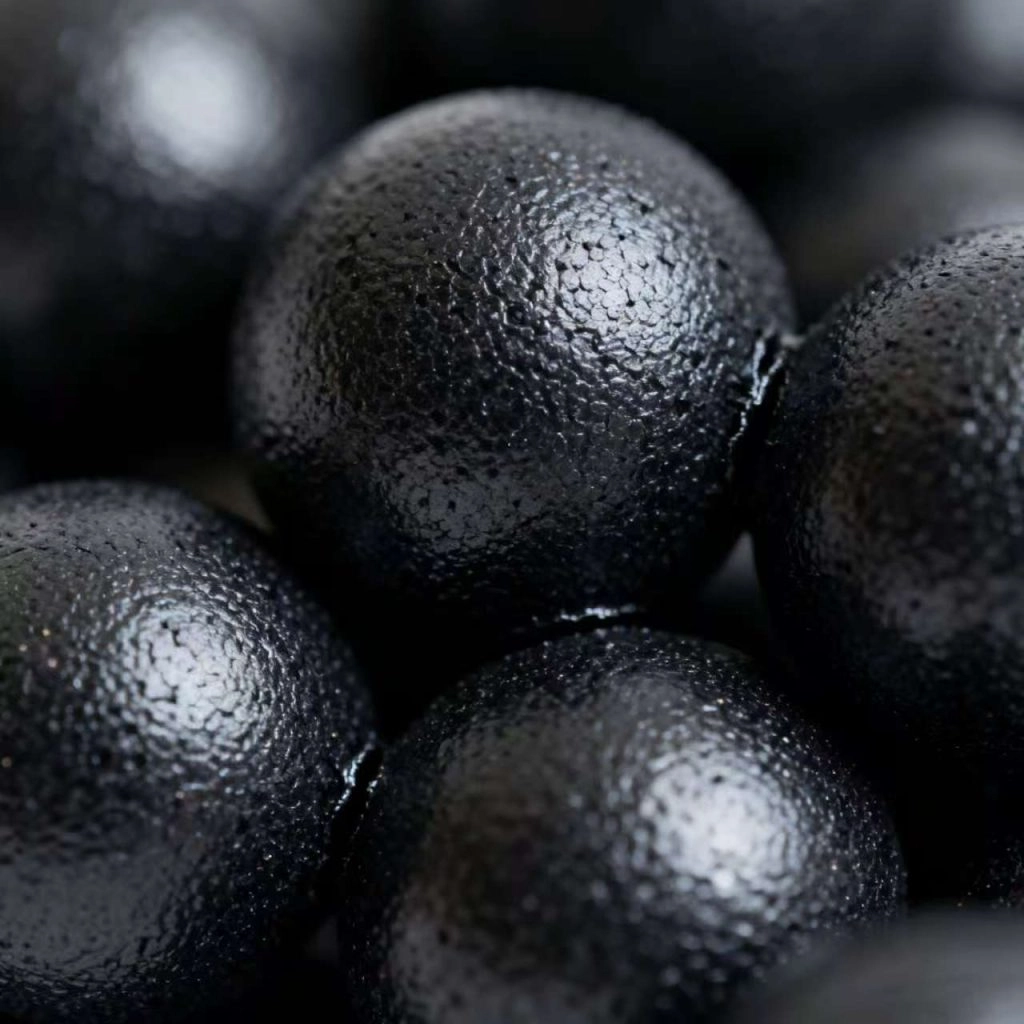
Carbon-enhanced materials can decrease radiant heat transfer in foam cells through absorbing and reflecting infrared energy. One example is low thermal conductivity carbon polystyrene FGE material, in which active carbon particles are integrated during the polymer synthesis.
This modification boosts overall insulation efficiency while maintaining structural strength and anti-static performance. In garage doors exposed to big temperature fluctuations, lowered conductivity allows thinner panels to deliver similar energy performance.
Why Does Graphite or Carbon Enhancement Matter in Real Installations?
Upgraded formulations yield tangible benefits:
- enhanced uniformity of surface temperatures across door faces
- diminished heat flow shortcuts
- steady interior comfort levels amid harsh weather transitions
Such refinements enable producers to develop more compact but highly effective door assemblies.
How Is Fire Safety Addressed in Polystyrene Garage Door Insulation?
Heat resistance characteristics alone fail to establish full material appropriateness. Combustion behavior is a vital consideration, especially in attached garage spaces and commercial environments.
What Fire Risks Must Garage Door Insulation Consider?
Garage areas commonly house automobiles, wiring installations, and various stored items. Insulation layers need to restrict fire propagation while upholding physical coherence under increased heat exposure.
How Do Flame-Retardant Grades Improve Safety Performance?
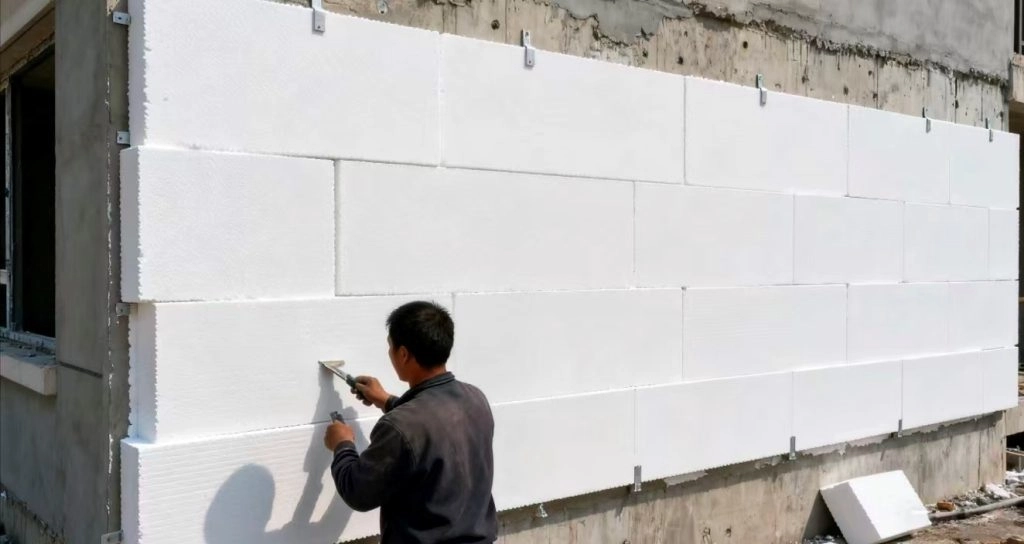
Modern fire-resistant formulations can elevate resistance to fire without undermining thermal insulation. Materials like FSH-european standard flame retardant grade polystyrene provide uniform foaming, faster curing, and compressive strength over 20% compared with the traditional ones.
These qualities contribute to manufacturing stable and reliable panel formation and support insulation systems that satisfy strict construction safety standards without decreasing the production speed.
Why Do Manufacturing Efficiency and Processing Stability Matter for Door Producers?
The selection of insulation substance affects not merely end-use effectiveness but also operational productivity in facilities.
How Does Particle Uniformity Affect Panel Quality?
Consistent granule dimensions promote reliable expansion behavior during shaping operations. Consequently, the process yields:
- more robust cohesion internally
- refined exterior finishes on panels
- decreased incidence of production flaws
Reliable material movement furthermore minimizes differences across successive manufacturing runs.
Why Is Fast Molding Important for Large-Scale Production?
Abbreviated hardening periods lower energy requirements and elevate output capacity. Quicker release from molds enables expanded production volumes without compromising uniformity in product quality.
How Does Customizable Density Support Different Door Designs?
Various usage scenarios demand differing insulation density levels. Household applications emphasize mass minimization, while commercial setups necessitate greater pressure-bearing capacity. Polystyrene formulations permit density modifications with minimal alterations to existing procedures, thereby accommodating diverse design specifications.
What Makes Modern EPS Solutions More Sustainable Than Traditional Insulation?
Ecological attributes now exert growing influence upon material choices.
How Can Polystyrene Support Energy Reduction Goals?
Superior heat-blocking efficiency curtails demands for climate control systems across the entire lifespan of structures. Dependable thermal characteristics ensure continued conservation of energy well beyond initial installation phases.
Why Does Recyclability Influence Material Selection Today?
Contemporary EPS approaches facilitate material recovery and subsequent reuse, thereby lowering emissions over complete product cycles. Upgraded fabrication setups presently attain elevated waste reclamation percentages and decreased energy utilization during manufacturing stages, thus aligning insulation products with principles of circular resource management.
Which Manufacturer Innovations Are Driving the Next Generation of EPS Insulation?
Material innovations continue to reshape the polystyrene performance capabilities.
How Are Advanced Production Technologies Improving EPS Performance?
With continuous developments in expandable polystyrene technologies, enterprises that emphasize technical innovations instead of sole output capacity actively redefine the industry standards.
HUASHENG is an advanced technological enterprise specializing in high-performance EPS solutions for energy efficiency and sustainable manufacturing. Through intelligent manufacturing facilities, digital simulation systems, and patented nano-closed-pore technology, we improve density uniformity, compressive strength, and insulation stability. Our recycling-focused production model achieves waste recovery rates of over 95% while substantially reducing energy consumption in manufacturing.
By combining material customization with environmentally responsible processes, these achievements demonstrate the capacity of modern EPS production to provide reliable performance and reduced environmental impact across building insulation applications.
Is Polystyrene the Most Balanced Solution for Garage Door Insulation Today?
Following a comprehensive review of effectiveness, protective qualities, fabrication ease, and environmental considerations, the strengths emerge distinctly.
How Does It Compare With Heavier Insulation Materials?
Relative to more massive substitute options, polystyrene supplies:
- exceptional balance between mass and heat resistance
- simplified handling plus assembly procedures
- lessened physical loading upon operational mechanisms
When Does Polystyrene Deliver the Greatest Value?
Optimal results occur in:
- sectional-style garage door constructions
- workshops sensitive to temperature variations
- attached residential garage installations
What Should Designers Evaluate Before Selection?
Critical factors merit careful assessment:
- chosen insulation density range
- necessary combustion performance ratings
- intended panel thickness dimensions
- compatibility with available fabrication machinery
Conclusion
Garage doors are quite challenging environments for insulation, where mechanical motion intersects with heat management needs. Polystyrene offers a balanced answer through its integration of lightweight designs, stable insulation performance, adaptable processing, and improved fire performance through modern grade developments. With continued progress in material science, modern EPS insulation converts garage doors from notable energy weak points into efficient components of building thermal systems.
FAQs
Q1: Why is polystyrene widely used in insulated garage doors instead of mineral insulation?
A: It furnishes substantial heat resistance with considerably lower mass, thereby decreasing burden on dynamic elements while upholding effective thermal performance.
Q2: Can advanced polystyrene materials improve energy efficiency significantly?
A: Yes. Versions modified with carbon or graphite compounds lower heat conduction rates, enabling reduced panel thicknesses to deliver enhanced insulation outcomes.
Q3: Is flame-retardant polystyrene suitable for building applications?
A: Appropriately developed fire-resistant formulations satisfy required combustion behavior standards and find routine application in structural insulation systems.






 English
  German
  Spanish
  French
  Arabic