
Have you looked closely at your recent freight bills? If your company ships products globally or handles heavy e-commerce volumes, you already know the pain. Between lingering supply chain bottlenecks, unpredictable fuel surcharges, and stricter carrier rules in early 2026, moving boxes from your warehouse to a customer’s door has never been more expensive. I was speaking with a distribution manager last month who mentioned their primary carrier quietly adjusted their dimensional weight formulas again. For a company shipping 60,000 units a month, a tiny fee increase wipes out a massive chunk of their quarterly profit. You cannot control global freight rates or force shipping companies to lower their prices. However, you completely control what goes inside your box. This brings us to a material that is quietly changing the math for smart warehouse directors: extra light EPS. It is no longer just about basic protection. It is about financial survival.
The Hidden Costs Inside Your Logistics Packaging
Prior to examining the fix, it helps to examine the real issue buried in your routine tasks. Many companies put great effort into the look and mass of the item alone, often overlooking the safeguard layer that surrounds it. Carriers such as FedEx, UPS, and DHL measure more than just the goods. They assess the full container. Each bit of mass from your logistics packaging builds up over time. Common transport supplies turn out quite weighty. When you add a couple of extra ounces across countless deliveries, the money loss becomes huge.
Dimensional Weight Pricing is Brutal
Consider the figures closely. Transport services apply a clear method. It figures out the space your parcel takes and sets a base mass for that space. If the real container weighs less than this “dimensional weight,” then they bill you based on the space anyway. But should your container weigh more? In that case, they charge for the true mass. Either path leads to extra fees. Regular foam pieces and sturdy paper fillers can quickly shift a parcel into a higher mass level. Suppose your goods total 2.5 kilograms. Your current, worn-out foam fillers add 0.6 kilograms. That brings the whole parcel to 3.1 kilograms. Within transport terms, that slight 0.1-kilogram excess means you face charges for a 4-kilogram container. Such a minor mass increase could add $3.80 to each delivery fee. Now, apply that across 50,000 sales, and you lose close to $190,000 due to needless mass.
Why Older Materials Fail the Test
For decades, basic heavy inserts did the job because shipping was cheap. But older materials are incredibly dense. They require a huge amount of raw plastic beads to create a rigid structure that can handle impacts. When you use heavy inserts, you directly hurt your bottom line every time a box leaves the dock. You also pay more for inbound freight just to get those heavy packaging materials delivered to your own factory from your supplier. The ultimate goal is to find a way to keep the exact same box dimensions and impact resistance while dropping the actual weight on the scale. This is where lightweight packaging becomes a financial necessity, not just a nice environmental idea.
The Engineering Behind Low-Density EPS
So, how do we fix this weight problem without risking product damage and upsetting customers? The answer lies in the chemistry and physical structure of the foam itself. You might think all white foam blocks look and perform exactly the same, but the manufacturing process varies wildly from factory to factory. Moving to low-density EPS changes the entire mathematical equation for your supply chain. It gives you the thick, protective volume you need without the heavy mass.

What is High Expansion EPS?
To get technical for a brief moment, expanded polystyrene is made of tiny beads that expand when exposed to steam heat. Standard market grades expand to a certain point and simply stop, remaining dense and hard. High expansion EPS uses an advanced chemical formulation that allows those exact same beads to stretch and expand much further. Think of it like baking a loaf of bread. With the right ingredients, a small amount of dough can rise to fill a huge pan. With this advanced foam, a very small amount of raw material expands to create a massive amount of protective volume. Because the factory uses fewer raw plastic beads to take up the same space, the final product is incredibly light.
Protection Without the Bulk
Now, a very common fear among product managers is that lighter automatically means weaker. If a material is mostly air, will it actually protect a fragile glass bottle or an expensive piece of sensitive medical equipment during transit? The answer is an absolute yes, if it is engineered correctly. Extra light EPS maintains a remarkably strong closed-cell structure. The cell walls are thinner, but they distribute shock waves highly effectively across the entire surface. When a delivery driver drops a box on a concrete floor, the foam absorbs the kinetic energy. It cushions the blow just as well as heavier alternatives, provided it is custom-molded to fit your product snugly. You get the strict shock absorption you need, but you shed the dead weight that carriers love to overcharge for.
Strategies to Reduce Shipping Costs Immediately
Knowing the science behind the material is great, but seeing the financial impact on your monthly spreadsheet is much better. Let’s break down exactly how upgrading your inserts and protective corners translates into real dollars saved. When you switch your entire warehouse operation to this modern foam, the financial benefits ripple through your entire supply chain, from the receiving dock to the customer’s front porch.
- Cheaper Inbound Freight: Before you even pack a product, you have to buy the packaging materials. Because EPS foam packaging is so remarkably light, you can fit a massive volume of it onto a single delivery truck without hitting the vehicle’s highway weight limit. You pay significantly less to bring the material into your facility, lowering your upfront operational costs.
- Lower Outbound Carrier Fees: This is the big one. As we discussed earlier, dropping a package’s total weight by just 10% or 15% can drop you into a much lower pricing tier with major carriers. If you save $2.00 per package on a run of 100,000 units, you just added $200,000 straight to your annual profit margin. Switching materials is the most direct and fastest way to reduce shipping costs today.
- Easier Warehouse Handling: Heavy boxes tire out your warehouse workers and slow down production lines. Lighter boxes mean faster picking, taping, and packing on the assembly line. Your staff can move large pallets of lightweight packaging faster and safer. This cuts down on paid labor hours and reduces the risk of workplace back injuries, which saves your company money on insurance premiums and staff downtime.
- Less Material Waste: Because high expansion EPS fills empty space so efficiently, you often need fewer pieces to get the job done. Instead of wrapping a product in five heavy layers of recycled paper or using thick, heavy foam blocks, two perfectly molded pieces of extra light EPS can lock the item tightly in place. Less material in the box means less weight on the scale.
Finding the Right Extra Light EPS Supplier
Not every plastics manufacturer can produce high-quality, ultra-light foam. It requires precise factory temperature control, deep chemical knowledge, and highly advanced machinery. If the steam pressure in the factory is off by just a tiny bit, the beads will not expand properly, leaving you with weak spots or heavy, dense blocks. Choosing the right material partner makes all the difference in the world.
Meet HUASHENG’s Extra Light Grade P
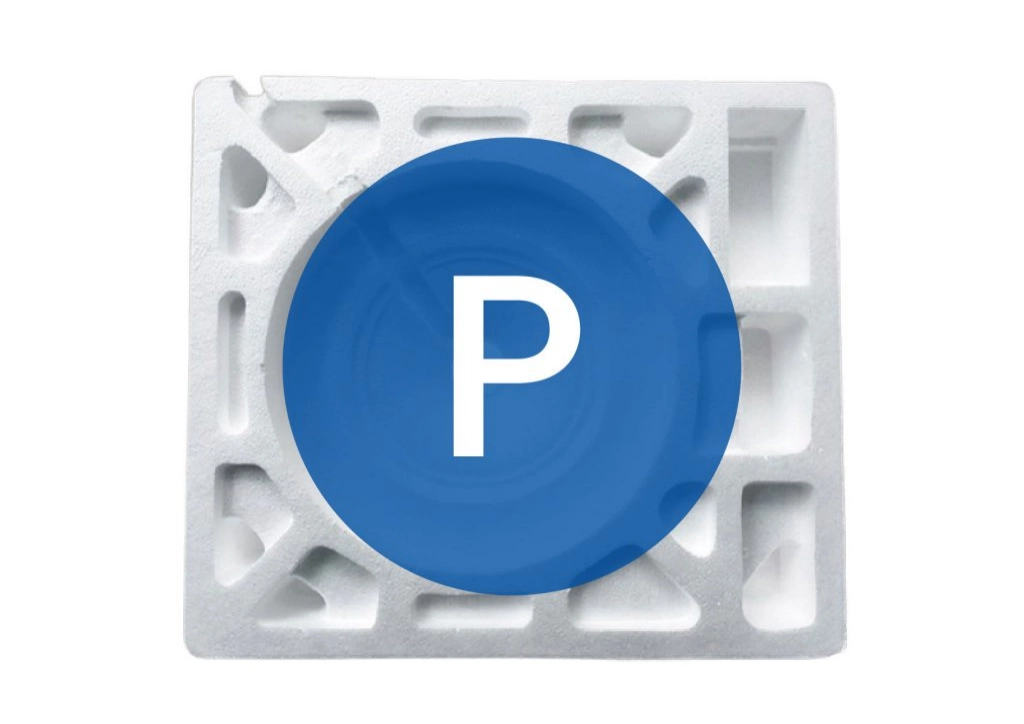
If you are serious about upgrading your logistics packaging, you need to look at materials specifically formulated for maximum expansion and stability. This is exactly what the engineers at HUASHENG created with their Extra Light Grade P. It is formulated specifically for modern companies that need extreme lightweight properties without sacrificing any structural integrity. The foaming efficiency of this specific grade is remarkable compared to standard market options. You can achieve the exact protective volume your product demands with significantly less raw material. This makes the Extra Light Grade P perfectly suited for everything from fragile electronics boxes to cold chain food coolers where weight is critical. It is a stable, highly reliable material that performs consistently across large, multi-month production runs.
Time to Upgrade Your Packaging
The global logistics landscape is certainly not getting any cheaper. Freight companies will continue to find creative new ways to charge you for weight and space. The best defense against rising costs is a proactive offense inside your own warehouse. By making the switch to EPS foam packaging that uses the Grade P formulation, you protect your delicate products and your profit margins at the exact same time. We highly recommend visiting the product page to see the technical specifications and expansion ratios for yourself. If you want to see exactly how much weight you could shave off your current boxes, reach out to the HUASHENG technical team. We can help you calculate the exact financial return on investment of switching your materials.
Conclusion
In 2026, relying on outdated, heavy packaging materials is a costly financial mistake. Carrier fees are ruthless, and every single gram you ship eats directly into your business revenue. Upgrading your materials to extra light EPS is no longer an optional luxury; it is a basic requirement for staying competitive in a tough market. By adopting low-density EPS, you tackle the root cause of high freight bills directly at the source. You get superior shock absorption, faster warehouse handling, and a much lighter box. Stop paying shipping companies for dead weight. Take a hard look at your logistics packaging today, make the switch to high expansion EPS, and watch your monthly shipping costs finally drop. Contact HUASHENG today at info@r-eps.com to start your lightweight transition and protect your bottom line.






 English
  German
  Spanish
  French
  Arabic