
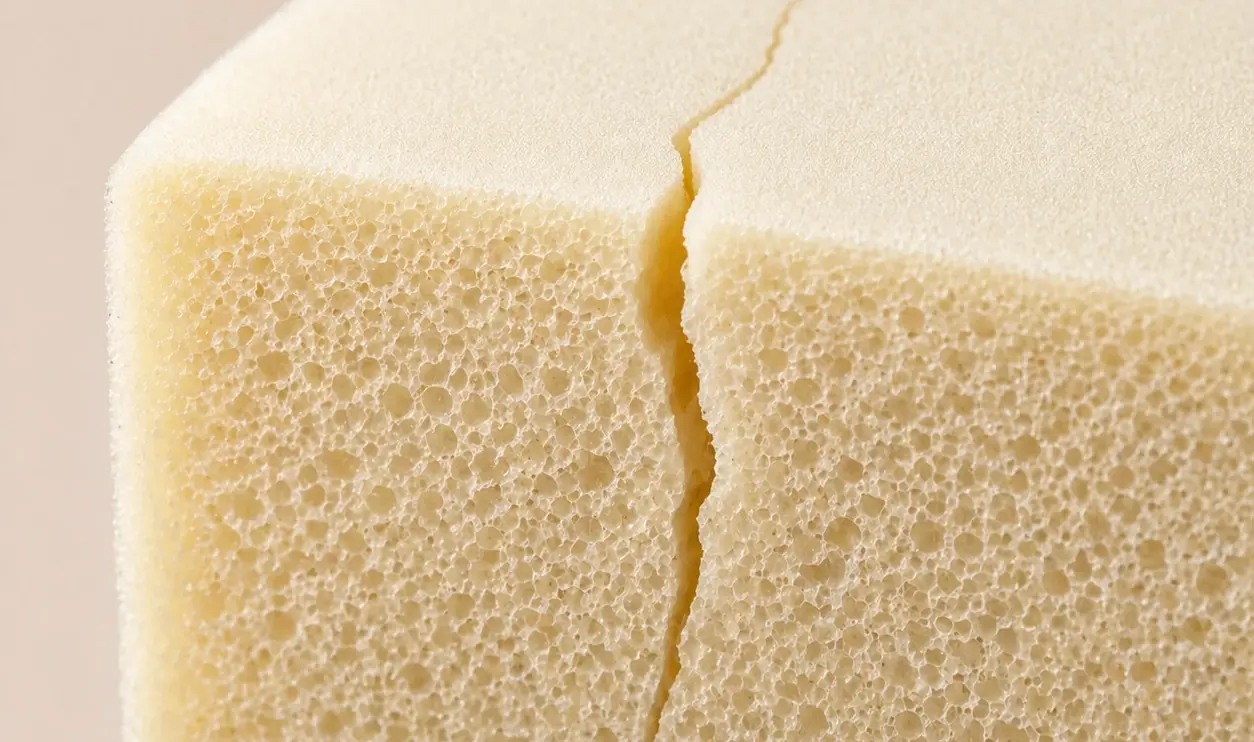
Most EPS foaming defects are not random. Rather, they can occur due to a lack of proper correlation among raw material grades, pre-expansion ratios, aging period, molding, steaming, cooling, and end-use applications.
What Are Common EPS Foam Molding Defects in Bulk Orders?
Loose Beads and Poor Fusion
Poor fusion is one of the most common signs of bad molding quality. The foam may shed beads when cut, rubbed, or compressed. Corners may break too easily. The inside may look loose instead of evenly bonded. This usually means the expanded beads did not bond well during molding. Possible causes include unstable aging, weak steam penetration, poor bead flow, incorrect particle size, or a grade that does not suit the mold.
Shrinkage, Warping, and Size Deviation
The other problem with shrinkage becomes evident as soon as a buyer picks up the package. If the insert shrinks, it won’t fit into the package properly. If the board warps, it will not be possible to stack, cut, or install it. The problem of size deviation causes problems for the brand owner who requires consistent cartons, molded boxes, or construction panels. It can arise due to too much pre-expansion, underaging, premature demolding, etc.
Rough Surface, Broken Edges, and Uneven Density
Surface roughness and chipping can be seen as only cosmetics issues, but they may also indicate problems in the molding process. Uneven density is an indication that there were some problems with filling the mold, the inappropriate size of the bead, or the imbalance of the steam-cooling procedure.
Why Do EPS Foam Molding Defects Happen?
A molded EPS product is the result of several connected steps. The beads are pre-expanded, aged, filled into a mold or board line, heated by steam, fused, cooled, removed, and stored. A weak point in one step can show up later as a product defect.
Pre-Expansion Ratio Is Too High or Too Unstable
Higher pre-expansion can lower density and reduce material use. That is useful for lightweight packaging or low-density products. But pushing expansion too far can make the cell walls thinner. The finished foam may become lighter yet less stable.
This is why buyers should not ask only for “the lightest density.” A foam insert for electronics, a seafood box, and a building board all need different density targets. HUASHENG’s product range separates common grade materials such as Extra Light Grade P, Fast Grade B, and Standard Grade E because different applications need different foaming behavior.
Aging Time Before Molding Is Not Controlled Well
After pre-expansion, EPS beads need aging. During this period, internal pressure, moisture, and blowing agent conditions become more stable. If the beads are molded too early, the product may shrink, fuse poorly, or deform after demolding.
For fast production, some factories try to shorten aging too much. That can work only when the grade and equipment support it. HUASHENG’s Fast Grade B is designed for efficient forming applications such as electrical appliance packaging, ceramic packaging, vegetable boxes, floats, and general packaging parts. Its value is not only speed; it also supports bead flow, shorter aging, and faster demolding in suitable automatic molding conditions.
Steam Penetration and Cooling Are Not Matched with the Mold
Steam is needed to fuse the expanded beads. If steam does not reach the full mold evenly, the product may have weak spots. If heating is too aggressive, the surface may look over-processed while the inside still lacks stable bonding.
Cooling is just as important. Demolding too early can cause shrinkage, bending, or surface dents. Thick parts, deep molds, and board products need enough cooling time to stabilize shape before handling.
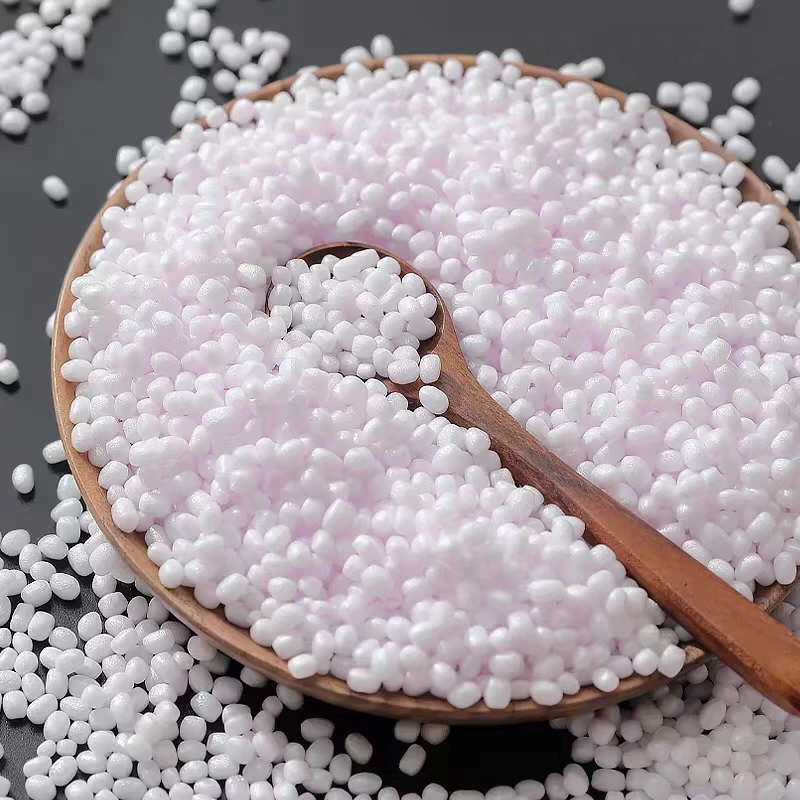
For higher-performance boards, this becomes more sensitive. HUASHENG’s European Standard Flame Retardant Grade FSH is used for building and industrial insulation, including passive house insulation, and is positioned for better compression strength and fusion performance.
The EPS Grade Does Not Match the Final Application
Many defects begin before production starts, at the material selection stage. A low-density grade used for a high-strength board may lead to weak compression. A common grade used in a flame-retardant project may create compliance risk. A graphite EPS grade stored or processed carelessly may lose consistency.
The product should guide the grade, not the reverse. Packaging often needs clean edges, cushioning, and demolding efficiency. Insulation boards need strength, dimensions, thermal performance, and sometimes fire rating. Cold-chain boxes need wall stability, lid fit, insulation, and moisture resistance.
How Do Molding Defects Affect Different EPS Applications?
Packaging Inserts and Protective Parts
For packaging inserts, poor fusion and uneven density affect protection. The insert may not absorb shock evenly. Edges may break during packing. A molded cavity may become too loose after shrinkage.
Fish Boxes, Fruit Boxes, and Cold Chain Packaging
Fish boxes, fruit boxes, and cold-chain packaging face moisture, stacking, temperature change, and rough handling. If wall thickness is uneven or density is unstable, the box may lose strength in transport. Poor lid fit may also affect temperature retention.
Building Insulation Boards and Flame-Retardant Panels
For building insulation boards, molding defects can create installation problems. Shrinkage, warping, thickness deviation, weak edges, or poor compression strength may slow down the project. Fire-rated boards have another risk: the material and process must support the required flame-retardant performance.
Flame-retardant EPS should not be mixed with common EPS during processing. Buyers should also confirm density, aging period, board thickness, flame-retardant grade, and local project requirements. HUASHENG offers flame-retardant grades such as F, FB, FS, and FSH for different insulation and board applications, but buyers still need to match the grade with the project standard.
Graphite EPS and Higher-Performance Insulation Boards
Graphite EPS and carbon black EPS focus more on thermal performance, antistatic behavior, color stability, and higher-density insulation use. These products are more sensitive to storage and processing conditions. Direct sun exposure, high storage temperature, low-density misuse, or poor molding pressure control may affect finished board quality.
What Should Buyers Check Before Placing Bulk EPS Foam Orders?
Confirm Application, Density, and Product Drawing First
Buyers should provide the final application, drawing, dimensions, wall thickness, target density, expected strength, fire rating, thermal requirement, and packing method. “EPS foam price” is too vague.
A supplier can only recommend the right grade when the real use is clear. HUASHENG’s product categories cover common grade, flame-retardant grade, graphite grade, environmental protection grade, carbon black grade, and customized REPS, so the same inquiry can be matched to different material directions.
Ask for Samples, Trial Data, and Molding Conditions
Before bulk orders, buyers should request molded samples or board samples. The sample should be tested for size, density, fusion, surface finish, compression, cutting behavior, and application fit. For packaging, use the real product in trial packing. For boards, check thickness, flatness, edge quality, and compression. For flame-retardant products, confirm testing timing and aging requirements before shipment.
Check Batch Stability, Packaging, and Storage Requirements
Batch stability matters more than a perfect sample. Buyers should ask how the supplier controls grade consistency, packaging, storage, batch traceability, and after-sales support. For special density, non-HBCD flame-retardant needs, graphite performance, custom color, or molded shape needs, discuss MOQ and lead time early. Custom EPS can work well, but it needs trial time.
FAQ
Q1: What EPS foam molding defects should buyers check before bulk orders?
A1: Buyers should check poor fusion, loose beads, shrinkage, warping, uneven density, rough surface, broken edges, size deviation, weak compression strength, and unstable flame-retardant performance. Samples should be tested with the real product or real project requirement before full shipment.
Q2: Can HUASHENG support MOQ, custom grades, and special EPS foam requirements?
A2: MOQ depends on grade, density, formulation, packing, and order volume. HUASHENG offers common grade, flame-retardant grade, graphite grade, environmental protection grade, carbon black grade, and customized REPS, so buyers can discuss particle size, density, graphite performance, non-HBCD needs, color, and molded application requirements before quotation.
Q3: What should buyers consider for installation, maintenance, and after-sales?
A3: Building boards should be stored away from direct sun, fire sources, and long moisture exposure before installation. Molded packaging should avoid heavy compression during storage. For after-sales, buyers should keep batch numbers, samples, photos, test reports, storage records, and installation or molding notes so quality issues can be traced clearly.
 English
  German
  Spanish
  French
  Arabic