

Thermal performance is one of the most misunderstood aspects of expanded polystyrene (EPS). In real projects, whether you work with insulation systems or protective packaging, the problem is not that EPS “cannot insulate,” but that heat exposure was evaluated too loosely or too late. Temperature limits influence dimensional stability, long-term mechanical strength, safety margins, and even compliance outcomes.
This article focuses on how to evaluate heat resistance limits in EPS across insulation and packaging applications, what actually happens to EPS when temperature rises, and how material selection decisions can reduce thermal risk instead of worsening it.
Who Is HUASHENG and Why Does Its EPS Portfolio Matter for Heat Resistance Control?
If you deal with EPS beyond commodity use, you quickly learn that heat resistance is not solved by generic density charts, but by formulation, technology, process control, and grade-level engineering. HUASHENG considers EPS as a thermal-behavior material system, rather than a simple foam product.
With advanced foaming technology, precision particle control, and continuous material testing, we develop EPS grades that balance thermal insulation efficiency, structural stability, and processing safety. Our production lines are designed to maintain consistent bead morphology, uniform gas cell distribution, and stable molecular behavior—factors that directly influence how EPS responds when exposed to rising temperatures during forming, transport, or usage.
More importantly, we do not define heat resistance as a single “high-temperature” claim, but evaluate thermal tolerance across realistic conditions, including pre-foaming heat exposure, molding steam cycles, storage environments, and end-use temperature fluctuations. This approach allows you to select EPS grades that perform predictably instead of relying on oversimplified temperature thresholds.
What Temperature Ranges Can EPS Reliably Withstand in Insulation and Packaging?
EPS is not designed for extreme heat environments, but it performs with high reliability within its operating window. In most cases of insulation and packaging, EPS maintains dimensional stability and mechanical integrity under continuous service temperatures typically below 70 °C.
Below this temperature, the polymer chains remain stable, gas cells retain structure, and thermal conductivity stays consistent. As the temperature rises beyond this point, EPS does not stop working instantly, but gradually softens with reduced compressive strength, even shrinkage if continuously exposed.
For insulation, it means EPS works best where surface temperatures are controlled by building envelopes rather than direct contact with the heat sources. For packaging, it means EPS is suitable for the scenes of cold chain logistics and temporary thermal exposure, but not for high-temperature machinery or hot-fill processes.
How Does Heat Exposure Actually Affect EPS at the Material Level?
EPS behavior under heat is driven by three core factors: polymer softening, gas expansion, and cell wall response.
As the temperature increases, the polystyrene matrix becomes more flexible. At the same time, residual blowing agents and entrapped air expand. If this expansion occurs unevenly or too rapidly, cell walls may deform, leading to dimensional changes.
This is why controlled processing conditions matter. Uniform bead size and stable foaming ratios contribute to reducing internal stress during heating cycles, while poorly controlled EPS may show warping or localized collapse even at moderate temperatures.
Why Do Insulation and Packaging Applications Face Different Thermal Risks?
Although both rely on EPS, insulation and packaging face very different heat challenges.
In insulation, EPS is exposed to long-term, low-intensity heat. Because roof decks, wall cavities, and facade systems have stable thermal gradients, the risk lies in cumulative exposure over years, instead of short temperature spikes. EPS grades in this scene have to take priority over dimensional stability and resistance to slow thermal aging.
In packaging, heat exposure is usually short but unpredictable. Products may be close to warm containers, near engines, or under direct sunlight during transport, when rapid temperature rise matters more than long-term exposure. EPS grades used for packaging require the ability to fast recover, impact resistance, and minimal deformation under transient heat stress.
Recognizing this difference helps you avoid selecting insulation-optimized material for packaging—or vice versa.
How Can Graphite-Modified EPS Improve Thermal Safety Margins?
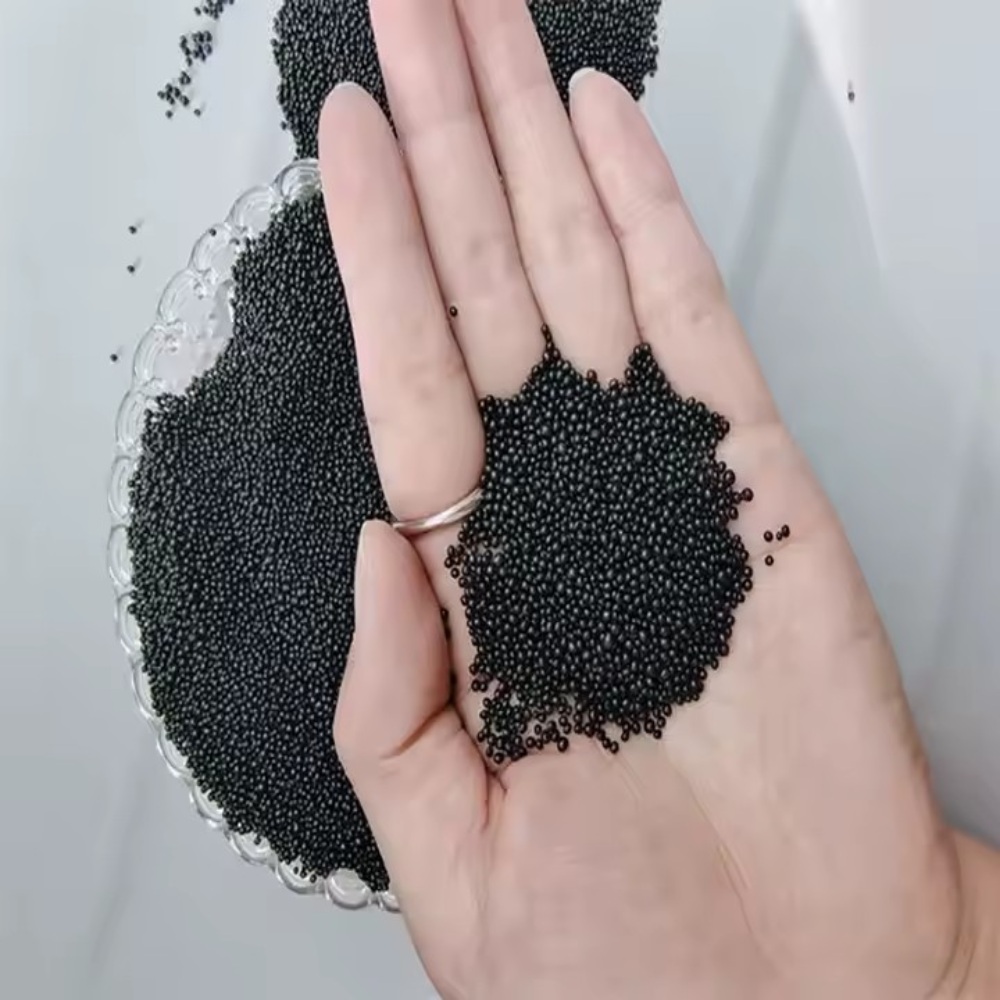
One of the most effective ways to improve thermal performance without changing system design is graphite modification. By integrating infrared-reflective additives into the polymer matrix, graphite EPS reduces radiative heat transfer within the foam structure. This not only lowers thermal conductivity but also moderates internal temperature gradients when EPS is exposed to external heat. In the field of insulation, it helps maintain consistent performance even when surface temperatures fluctuate.
A typical example is graphite grade-S EPS foam, which is designed to deliver lower heat transfer while maintaining a stable structure under controlled temperature exposure, which allows you to improve insulation efficiency without pushing EPS closer to its thermal limits.
What Role Does Processing Temperature Play in EPS Heat Resistance?
Many heat-related EPS failures occur before the product ever reaches its application site. Pre-foaming temperature, steam pressure during molding, and cooling rates all affect internal stress.
If beads are over-heated during processing, internal gas pressure may exceed cell wall strength, creating latent defects. These defects may not be visible immediately, but will surface later as shrinkage or deformation when exposed to moderate heat.
This is why EPS grades optimized for rapid molding and short curing cycles are valuable in packaging operations, which can reduce thermal stress during forming and improve consistency in high-throughput environments.
When Does Lightweight EPS Become a Heat Risk Instead of an Advantage?
Lower-density EPS improves insulation efficiency and reduces material use, but also reduces thermal mass and mechanical margin. At very low densities, EPS becomes more sensitive to temperature fluctuations, especially during storage and transport.
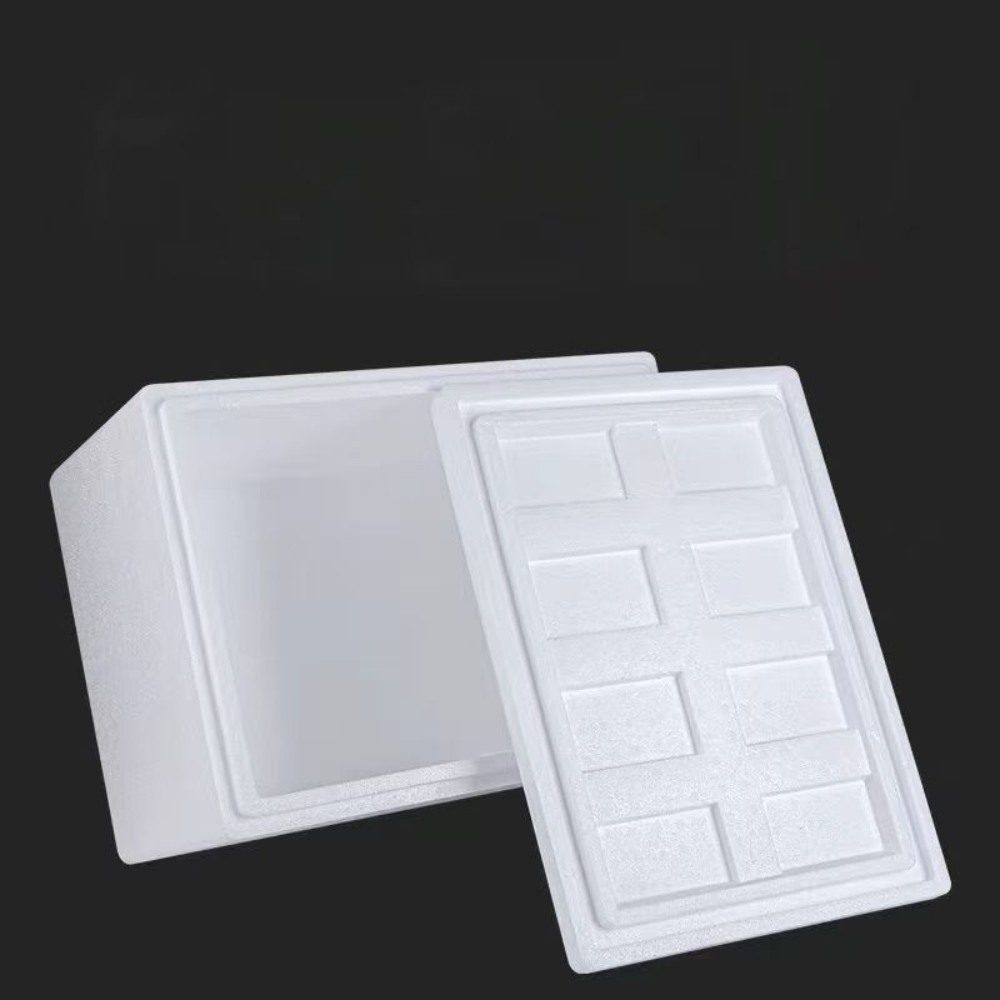
For packaging scenes that involve frequent temperature changes, selecting an EPS grade designed for rapid forming and stable demolding can reduce this risk. B rapid prototyping grade EPS packaging material is designed for fast cycles, uniform bead flow, and strong fusion, helping maintain shape integrity even when exposed to temporary heat during logistics.
How Should You Evaluate EPS Heat Resistance During Material Selection?
Rather than asking whether EPS “can handle heat,” you should evaluate three practical questions:
- What is the maximum continuous service temperature in your application?
- How fast does temperature change during use or transport?
- What level of dimensional tolerance is acceptable?
By aligning these questions with EPS grade characteristics, including density range, bead structure, and foaming behavior, you reduce reliance on safety buffers and avoid over-engineering.
FAQs
Q: Can EPS be used near heat-generating equipment if insulation is required?
A: EPS should not be placed in direct contact with continuous heat sources. In systems where heat generation is present, thermal barriers or alternative insulation layers should be used to keep EPS within its stable temperature range.
Q: Does graphite-modified EPS significantly increase heat resistance limits?
A: Graphite modification mainly improves thermal insulation efficiency and moderates internal heat transfer. It does not turn EPS into a high-temperature material but expands safety margins within normal insulation conditions.
Q: Is EPS suitable for hot-climate packaging environments?
A: EPS performs well in hot climates when exposure is temporary and controlled. Proper grade selection and packaging design are essential to prevent deformation during prolonged high-temperature storage.






 English
  German
  Spanish
  French
  Arabic