
Worldwide shipping fees fluctuate a great deal, and additional fuel charges appear to shift each week. For firms producing fridges, intelligent cookers, and laundry units, transporting a large metal container over the sea or land eats deeply into earnings. The item itself carries significant weight already; thus, you cannot add pointless mass to the load. Each additional bit of weight placed on a vehicle or vessel demands real money. This is precisely why leading appliance companies examine their container plans closely. The aim remains clear and pressing: remove the excess load, safeguard the costly device within, and maintain the production process running smoothly. A broken glass panel or a bent metal side ruins the transaction right away. To address this, the sector relies on improved material science to develop the ideal protective layer.
The Financial Weight of Moving Big Machines
Freight carriers charge you based on two things: how much space the box takes up and how heavy it is on the scale. When you load a 53-foot trailer with washing machines, the weight adds up incredibly fast. You need a buffer material that weighs practically nothing but hits like a heavyweight.
The high price of heavy traditional materials
Previously, sending large industrial items involved employing solid timber boxes or dense, layered paperboard sections. Wood offers durability, but it weighs a lot. Adding a 15-pound timber foundation to a 150-pound laundry unit results in a 10% extra charge on your transport invoice solely for the wrapping. Paperboard weighs less, yet it takes in dampness from the atmosphere during extended sea voyages, which weakens its form and causes it to give way under force. Once the container gives way, the device bears the complete burden of items piled above. Producers discovered they paid high transport rates for substances that often broke down in route.
The math behind extra light EPS
This is where the transition to extra light EPS changes the financial equation for appliance makers. Expanded polystyrene consists mainly of 98% enclosed air. The plastic structure functions as a small, firm enclosure containing that air securely. Since you ship mostly air, the mass drawback falls close to nothing. A large edge section of the material that appears as if it ought to measure ten pounds in fact weighs only a couple of ounces. When you consider those preserved pounds over a group of 500 vehicles departing a plant monthly, the reduction in energy use and mass charges becomes substantial. Consequently, transport coordinators can fit more genuine items into one holder before reaching the permitted road mass boundaries.
Preventing Damage on the Long Road to the Consumer
Getting a brand-new smart refrigerator to a distribution center cheaply means absolutely nothing if the door arrives dented. The modern supply chain is rough. Forklifts drop pallets, trucks hit potholes, and workers rush. The cushioning inside the box must absorb that violent energy perfectly before it reaches the metal.
The mechanics of shock-absorbing packaging
If a lifting device handler unintentionally lets a load of dish cleaners fall from three feet up, a large quantity of motion force rises from the ground. Should the device attach to rigid timber, that force passes directly to the engine supports, frequently breaking them. Effective force-reducing wrapping operates in another manner. The countless small sealed areas within the material behave like small cushions. Upon the collision, the material compresses a bit, which slows the device over a brief moment. This process of slowing dissipates the motion force before it warps the metal structure or damages the inner circuits. The material gives up its form to ensure the device endures.
Using protective foam inserts for fragile parts
Modern appliances are full of fragile components. You have giant glass doors on ovens, sensitive touch screens on smart fridges, and delicate water pumps in washing machines. You cannot just throw a square box over these items and hope for the best. Custom protective foam inserts are molded to perfectly match the exact contours of the appliance. If a refrigerator has a protruding handle, the foam insert is shaped with a cavity to house that handle perfectly. It locks the machine in place so it cannot shift or vibrate inside the cardboard shell. This precise, snug fit is the main reason why major brands have pushed their transit damage rates down to a fraction of a percent.
Speeding Up the Factory Packing Line
Time is money on a busy factory floor. If your packing crew struggles to fold thick cardboard or fit complicated wooden braces together, your entire daily production number drops. A smart packing system needs to be fast, simple, and require zero special tools to put together on the belt.
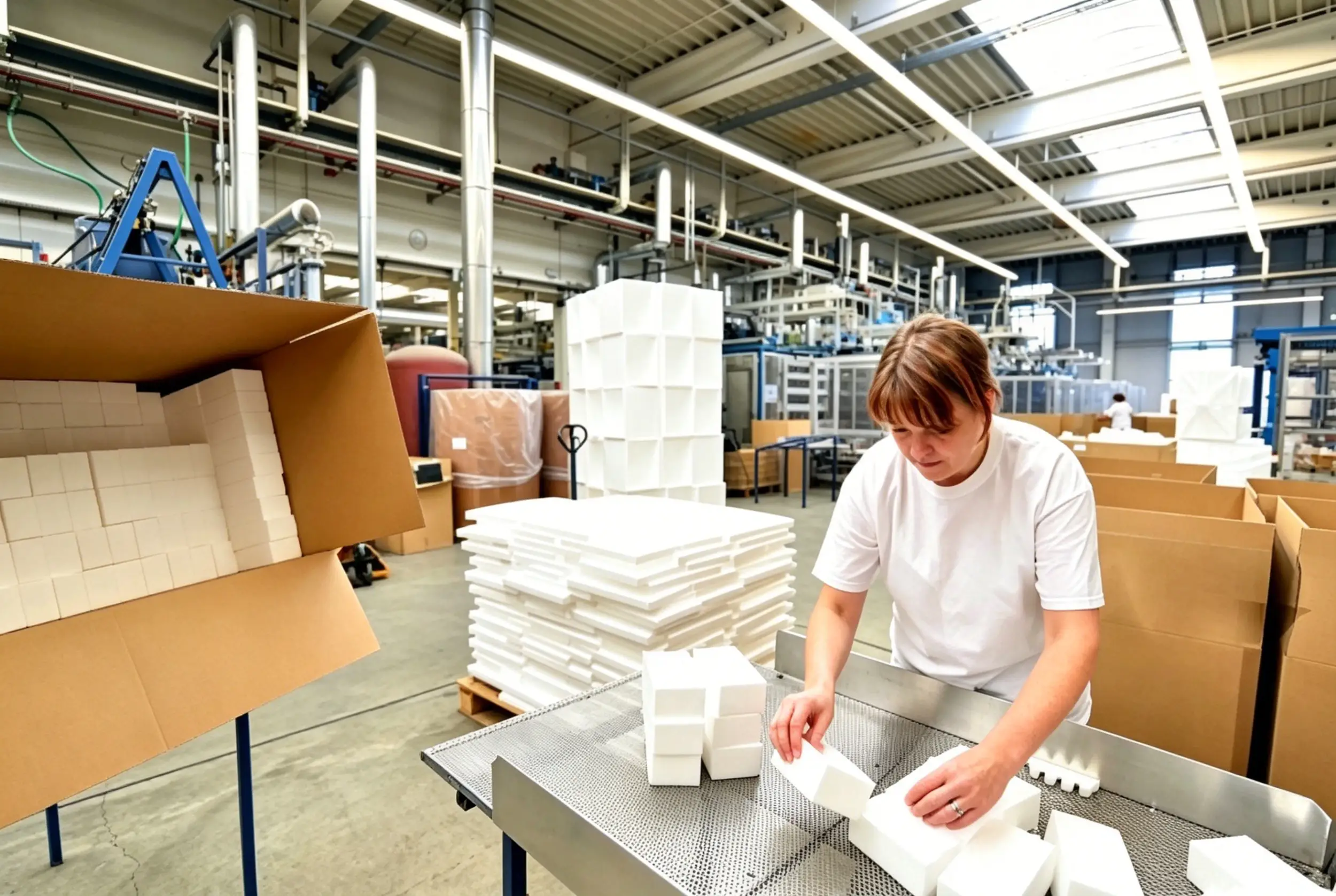
- Streamlined workflow with appliance packaging foam: Workers on the line do not have time to tape together six different pieces of cardboard to make a corner guard. Pre-molded appliance packaging foam arrives at the factory ready to use. A worker simply picks up the lightweight piece, snaps it onto the corner of the washing machine, and drops the outer box over it. It takes three seconds instead of thirty.
- Reducing worker fatigue and injuries: Handling heavy packing materials for an eight-hour shift destroys a worker’s back and shoulders. Because the foam is virtually weightless, the physical strain on the packing crew is drastically reduced. This leads to fewer workplace injury claims and keeps the line moving at top speed all day long.
- Space efficiency in the warehouse: Foam pieces are designed to nest together. You can stack thousands of bottom trays or top caps in a very small corner of your factory floor. This frees up expensive warehouse real estate for actual finished goods rather than wasting space storing bulky packing supplies.
Building a Smarter Supply Chain for Tomorrow
Producers require a steady, quality supply of base substances to operate their forming equipment without expensive pauses. Obtaining the correct chemical particles marks the initial phase in creating a wrapper that shields your valuable devices and your firm’s earnings simultaneously.
The raw material advantage for high-volume factories
The physical strength and extreme lightness of a foam part depend entirely on the quality of the raw beads. If the beads do not expand properly in the steam mold, you get heavy, brittle parts that snap easily. Professional buyers look for highly engineered materials like the HUASHENG Extra Light Grade P. This specific grade is formulated for a massive expansion ratio, often reaching 75 to 95 times its original size. This means the molding factory uses far less raw plastic to produce the same volume of packaging. It also provides a beautifully smooth surface finish, which prevents the foam from scratching the delicate stainless steel doors of premium refrigerators.
Achieving cost-effective logistics globally
When you combine high expansion ratios with incredible impact resistance, you get the ultimate formula for cost-effective logistics. You are paying less for the raw material, less for the shipping weight, and paying out fewer damage claims to angry customers. For buyers looking to upgrade their production lines, exploring a full catalog of products is the best way to find the exact bead size and density needed for different machines. By utilizing the right industrial packaging solutions, a factory can drastically reduce shipping weight while delivering a flawless product to the retail floor. The math is clear: lighter packaging means heavier profits.
Conclusion
The economics of shipping large home appliances leave zero room for heavy, outdated materials. By upgrading to extra light EPS, manufacturers can instantly strip unnecessary weight from their shipping containers, leading to massive savings on fuel and freight costs. More importantly, the superior shock-absorbing qualities of custom foam inserts guarantee that expensive machines survive the brutal realities of the modern supply chain without a scratch. Faster packing times on the factory floor and zero shipping damage create a massive competitive advantage. If you want to cut your freight bills and protect your appliances properly, you need the right raw materials. Contact HUASHENG today to learn how our premium lightweight EPS grades can transform your packaging strategy.
 English
  German
  Spanish
  French
  Arabic