
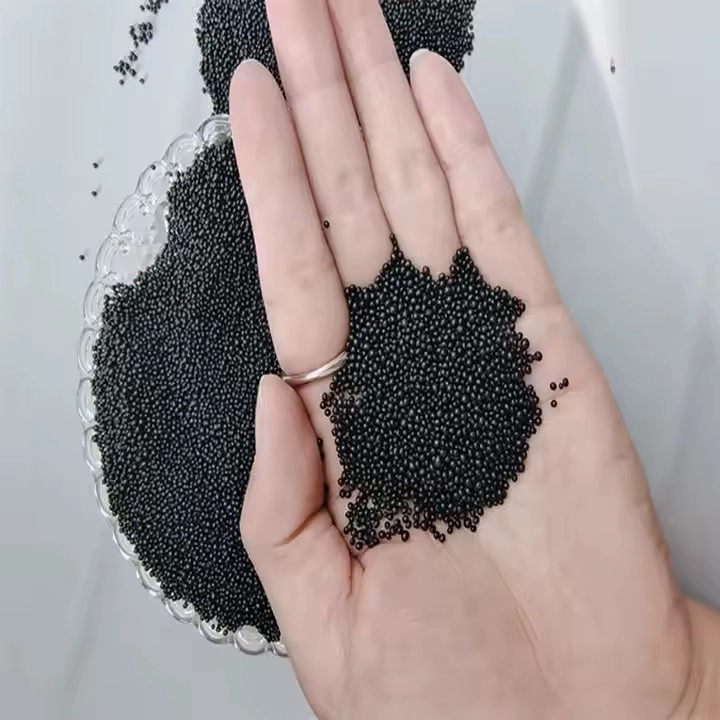
Qu'est-ce que le polystyrène expansé et pourquoi est-il encore largement utilisé?
Le polystyrène expansé, communément abrégé EPS, est constitué d'un plastique cellulaire léger créé par l'expansion thermique de billes de polystyrène à l'aide d'un agent de soufflage. Même si divers produits de mousse alternatifs et des options contenant des fibres sont apparus au fil du temps, l'EPS continue de maintenir une position forte dans de nombreux domaines en raison de sa combinaison rare de poids minimal, de soutien structural stable, de résistance thermique efficace et de processus de fabrication relativement simplifiés.
D'un point de vue fonctionnel, l'EPS est susceptible d'être une plate-forme adaptable plutôt qu'une substance fixe. Les ajustements des dimensions des perles, du degré d'expansion et des conditions de moulage permettent aux producteurs d'appliquer le matériau à divers domaines, tels que l'emballage de protection, l'isolation thermique, le remplissage des vides ou les éléments ornementaux, sur la base de la même base polymère fondamentale.
Comment le polystyrène expansé est-il défini au niveau du matériau?
L'EPS commence sous forme de petites perles de polystyrène expansibles infusées d'un agent de dilatation volatile. Après avoir été chauffé, chaque perle devient une structure de mousse à cellules fermées qui contient environ quatre-vingt-dix-huit pour cent d'air piégé et seulement deux pour cent de polymère solide. Cette structure interne particulière explique la densité exceptionnellement faible du matériau et sa capacité à dissiper l’énergie mécanique.
Pourquoi EPS reste-t-il compétitif dans plusieurs industries ?
L'EPS maintient sa pertinence sur le marché en grande partie parce qu'il s'adapte efficacement à la production à grande échelle. Il prend en charge des opérations de formage automatisées à grande vitesse, offre des niveaux de qualité uniformes et génère très peu de déchets de production, ce qui aide à maintenir des structures de coûts favorables tout en répondant à des critères de performance exigeants dans les environnements industriels lourds et les projets de construction de bâtiments.
Comment se forme la structure interne de l’EPS ?
Les caractéristiques fonctionnelles de l'EPS apparaissent principalement lors des phases de moussage et de moulage plutôt que lors de la création initiale du polymère. Une régulation soigneuse des conditions pendant ces étapes ultérieures détermine si les produits finaux fournissent une isolation fiable, une capacité de charge adéquate ou un contrôle précis de la taille.
Quel rôle jouent les structures à cellules fermées ?
L'arrangement à cellule fermée renferme l'air de manière sûre à l'intérieur de chaque perle expansée, établissant ainsi une barrière constante contre le flux de chaleur tout en résistant fortement à l'entrée d'eau. En outre, cette structure répartit uniformément les forces appliquées sur tout le matériau, permettant à l'EPS de résister à des impacts importants sans changements de forme durables.
Comment la taille de la perle influe-t-elle sur les performances du produit final?
Les variations des tailles des perles affectent directement les plages de densité réalisables, la qualité de la texture de surface et le degré de fusion des perles. Les perles plus grandes conviennent généralement aux applications de très faible poids et de bonne capacité d'isolation, tandis que les perles plus petites contribuent à des finitions extérieures plus lisses et à des tolérances de taille plus strictes, spécialement adaptées aux conteneurs d'emballage et aux tâches de remplissage de précision.
Comment les grades EPS diffèrent-ils en structure et composition?
Les distinctions entre les grades EPS ne sont pas dues à des altérations dans la chimie du noyau du polymère, mais à des ajustements délibérés appliqués à la composition des perles, au comportement d'expansion et aux caractéristiques de fusion. Ces variations structurelles déterminent l'efficacité thermique, la résistance mécanique et l'aptitude à des applications spéciales.
Qu'est-ce qui distingue l'EPS standard de l'EPS modifié au graphite?
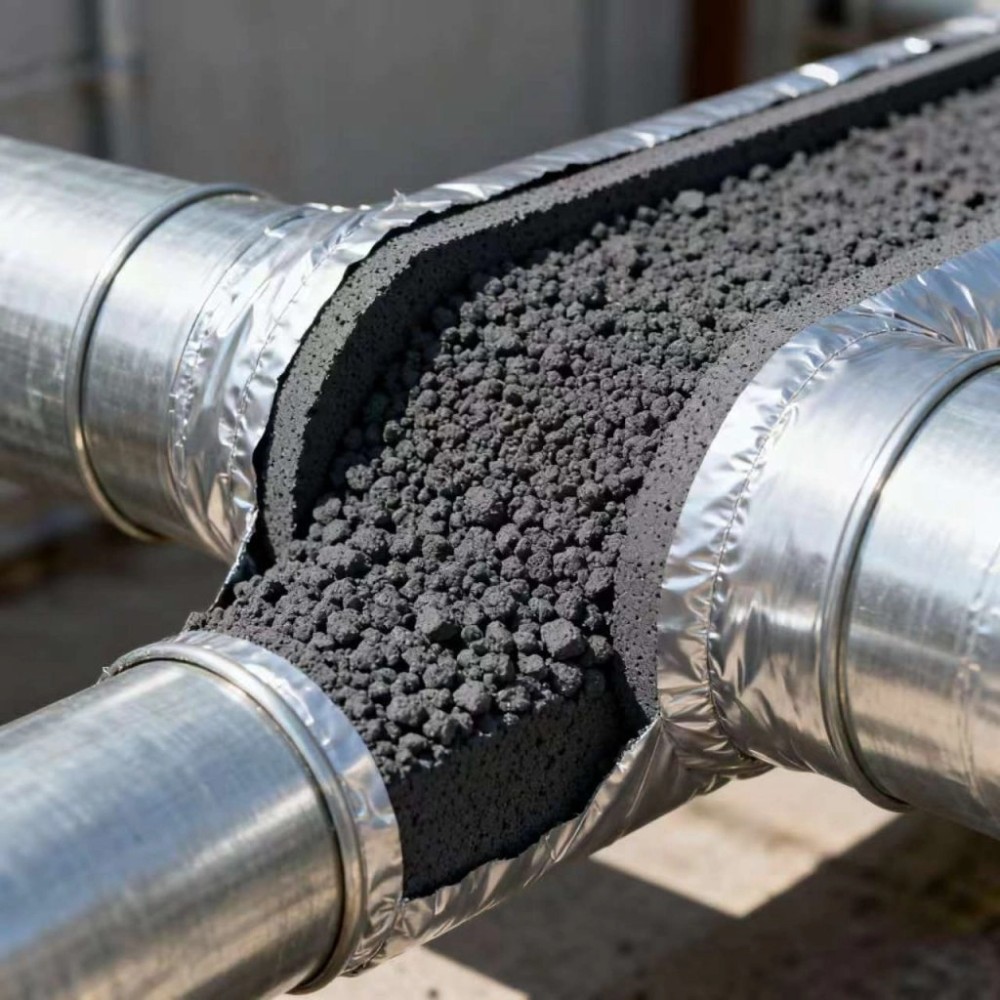
L'EPS modifié au graphite intègre de manière uniforme des particules réfléchissantes infrarouges fines dans tout le cadre de perle, ce qui réduit sensiblement la transmission de chaleur causée par le rayonnement à l'intérieur de la matrice de mousse, diminuant ainsi les chiffres de conductivité thermique globale sans modification des techniques de moulage classiques.
Un produit fréquemment mentionné dans cette catégorie est Matériel de remplissage de grade spécial-G EPSqui associe une capacité de blocage thermique sensiblement améliorée à une structure de perle soigneusement régulée. Par conséquent, le matériau convient aux opérations de remplissage et aux rôles d'isolation où une résistance thermique efficace et une rétention fiable de la forme deviennent essentielles.
Quelles sont les propriétés physiques qui définissent les performances EPS ?
Lors du choix de l'EPS, les ingénieurs ou les spécificateurs accordent moins d'attention à la composition chimique, mais se concentrent sur des attributs physiques mesurables qui influent sur la commodité d'installation, la durabilité au cours des périodes de service et l'économie globale du projet.
Comment la densité et la résistance à la compression interagissent-elles ?
La densité exerce une influence considérable sur la résistance à la compression, bien que la connexion suive un motif non linéaire. En dépassant un seuil particulier, les nouvelles augmentations de densité produisent progressivement de plus petites améliorations de la capacité de charge tout en augmentant les dépenses de matériaux. Par conséquent, correspondre soigneusement les niveaux de densité aux situations de chargement prévues plutôt que d'appliquer des sélections par défaut donne généralement des avantages plus économiques.
Pourquoi la conductivité thermique est-elle un paramètre décisif ?
Les valeurs de conductivité thermique déterminent l'épaisseur d'isolation requise et influencent l'efficacité énergétique à long terme au fil du temps. Parce que l'EPS repose sur une matrice d'air stable à cellule fermée plutôt que sur des gaz migrateurs, ses performances d'isolation sont remarquablement cohérentes tout au long de sa durée de vie.
Où l'EPS standard fonctionne-t-il le mieux dans les applications pratiques?
Bien que les nouvelles qualités spécialisées attirent un intérêt considérable, l'EPS standard continue de servir de choix principal pour de nombreuses applications de grands volumes en raison de ses caractéristiques de traitement fiables et de sa compatibilité étendue.
Pourquoi l'EPS standard est-il largement utilisé dans l'emballage et l'isolation?
Les formes EPS standard sont stables sur divers types d'équipements de moulage. Il offre une fusion fiable de perles, une qualité de surface attrayante et des propriétés mécaniques uniformes, ce qui contribue à réduire les déchets de production et à rationaliser les processus de fabrication.
Un exemple couramment utilisé est qualité standard - matériel EPSqui permet un compromis efficace en termes de comportement d'expansion rapide, de réduction de la consommation d'énergie pendant le traitement et de performances mécaniques satisfaisantes. Ce profil bien équilibré explique sa prévalence continue dans les solutions d'emballage quotidiennes, les panneaux d'isolation et les produits liés à la flottabilité.
Comment les propriétés EPS se traduisent-elles en applications réelles ?
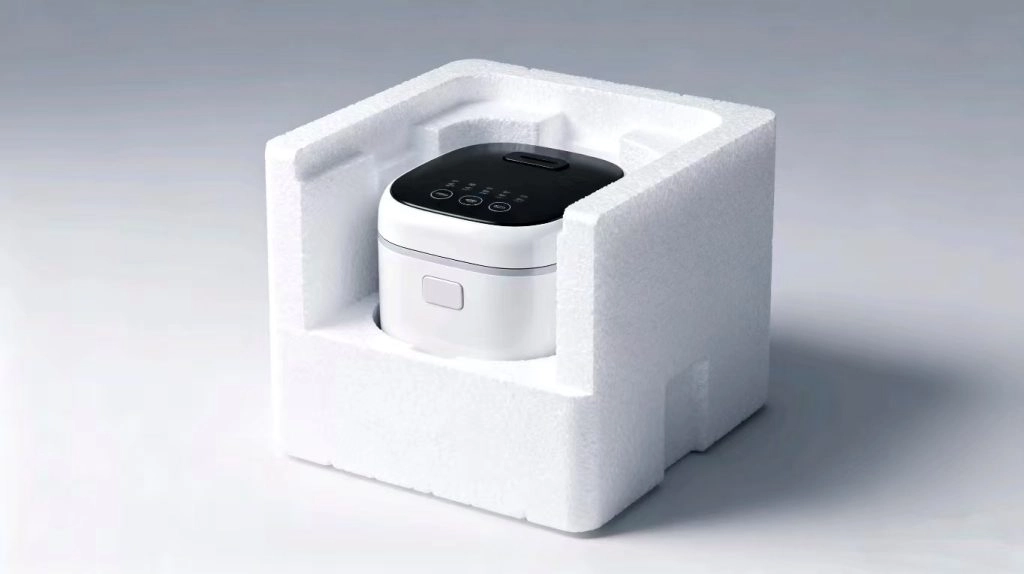
La sélection de l'EPS ne repose sur aucune caractéristique isolée. La vraie valeur du matériau émerge de l'action combinée de résistance à la chaleur, d'absorption d'énergie lors des chocs et de poids minimal dans les systèmes de travail complets.
Pourquoi l'EPS est-il efficace dans les emballages de protection?
L'EPS amortit efficacement l'énergie extérieure par une déformation contrôlée de sa structure de perle, dissipant ainsi les vibrations et les impacts soudains. Des tailles stables assurent un montage précis, ce qui est particulièrement utile pour de grandes quantités d'articles délicats ou de valeur.
Comment EPS prend-il en charge les systèmes d'isolation des bâtiments ?
L'EPS léger facilite le positionnement rapide et la coupe rapide sur les chantiers de construction. Son comportement thermique constant permet aux structures de réaliser des économies d'énergie fiables sans compter sur des assemblages multicouches complexes.
Que devriez-vous considérer lors de la sélection d'un grade EPS?
Le choix d'une variante EPS appropriée constitue une décision globale au niveau du système. L'architecture des matériaux, les techniques de fabrication prévues et les exigences de conformité pertinentes doivent correspondre étroitement aux applications concrètes.
Comment les méthodes de traitement influent-elles sur le choix des matériaux?
Les opérations de moulage entièrement automatisées favorisent généralement les grades présentant des périodes de durcissement plus courtes et des performances de fusion régulières. Les modèles de production semi-manuels ou mixtes, en revanche, peuvent accueillir des distributions plus larges de tailles de perles, bien que généralement suscitant une demande plus élevée pour les opérateurs.
Quand la personnalisation devient-elle nécessaire ?
Les formulations personnalisées deviennent importantes chaque fois que les gammes de densité conventionnelles ou les tailles de perles standard ne répondent pas à des exigences spécifiques liées à la résistance mécanique, à la capacité d'isolation ou à l'apparence visuelle. Les ajustements ciblés de la distribution des tailles des perles résolvent souvent de tels défis de manière plus efficace que d'augmenter simplement la densité globale.
Comment HUASHENG positionne-t-il l'EPS dans plusieurs scénarios d'application?
HUASHENG se distingue parmi les producteurs en traitant l'EPS comme une plate-forme polyvalente de matériaux plutôt qu'une marchandise générique. Notre entreprise concentre ses efforts sur la gestion précise des perles, la distribution uniforme de la densité et la fiabilité robuste du processus couvrant les grades communs, grades de graphite, grades de flamme retardant, et ainsi de suite.
Grâce à l'application de techniques de modélisation des matériaux, à un contrôle précis de la mousse et à des ajustements spécifiques, nous permettons un déploiement efficace de l'EPS dans les emballages de protection, l'isolation thermique et le remplissage sans compter forcément sur une qualité universelle. Cette philosophie donne la priorité à la cohérence stable associée à la flexibilité pratique plutôt que de poursuivre des avantages de spécification autonomes, permettant ainsi aux produits EPS de correspondre plus naturellement aux contraintes réelles de fabrication et aux exigences d'utilisation finale.
Pourquoi l'EPS est-il encore difficile de remplacer complètement?
Même si l'accent est mis de plus en plus sur les considérations environnementales et l'introduction de nouvelles substances, il est difficile de remplacer complètement l'EPS parce que les options de substitution répondent généralement à un problème tout en créant de nouveaux problèmes.
Les matériaux alternatifs sont-ils structuralement équivalents ?
De nombreux matériaux de remplacement augmentent le poids global, exigent une épaisseur plus grande pour obtenir des performances comparables ou nécessitent des méthodes de traitement beaucoup plus élaborées. Ces compromis limitent souvent leur acceptation sur des marchés sensibles aux prix ou dans des environnements de production à haut débit.
EPS offre-t-il encore des avantages au niveau du système ?
EPS s'intègre parfaitement aux chaînes d'approvisionnement existantes, aux installations d'outillage et aux pratiques de construction établies. Cette grande compatibilité dépasse souvent les modestes améliorations apportées par des alternatives concurrentes.
Conclusion: Qu'est-ce qui définit l'EPS comme un système matériel plutôt qu'une marchandise?
Le polystyrène expansé mérite la reconnaissance en tant que système de matériau hautement adaptable. Son arrangement interne, ses attributs de performance et sa gamme d'utilisations pratiques proviennent principalement de l'ingénierie intentionnelle et du traitement des perles plutôt que du polymère lui-même. Correctement spécifié et mis en œuvre, EPS offre des performances fiables en permanence dans le domaine des emballages de protection, de l'isolation des bâtiments et des applications de remplissage.
Questions fréquentes
Q1: L'EPS est-il choisi principalement pour des raisons de coût?
R: Bien que le coût représente un facteur important, l'EPS reçoit souvent la préférence parce qu'il combine avec succès un poids réduit, un comportement fiable à long terme et une fabricabilité à grande échelle prévisible.
Q2: Comment l'EPS modifié au graphite améliore-t-il l'isolation sans changer de traitement?
R: Les particules de graphite dispersées dans la mousse reflètent le rayonnement infrarouge à l'intérieur, diminuant ainsi la transmission de chaleur tout en permettant aux procédures de moulage conventionnelles de rester inchangées.
Q3: Un grade EPS peut-il couvrir plusieurs applications?
R: Certaines qualités parviennent à servir diverses fins adéquatement, mais les résultats supérieurs résultent généralement de l'alignement des valeurs de densité spécifiques et des caractéristiques de perle soigneusement avec chaque application prévue.
 French
  English
  German
  Spanish
  Arabic