
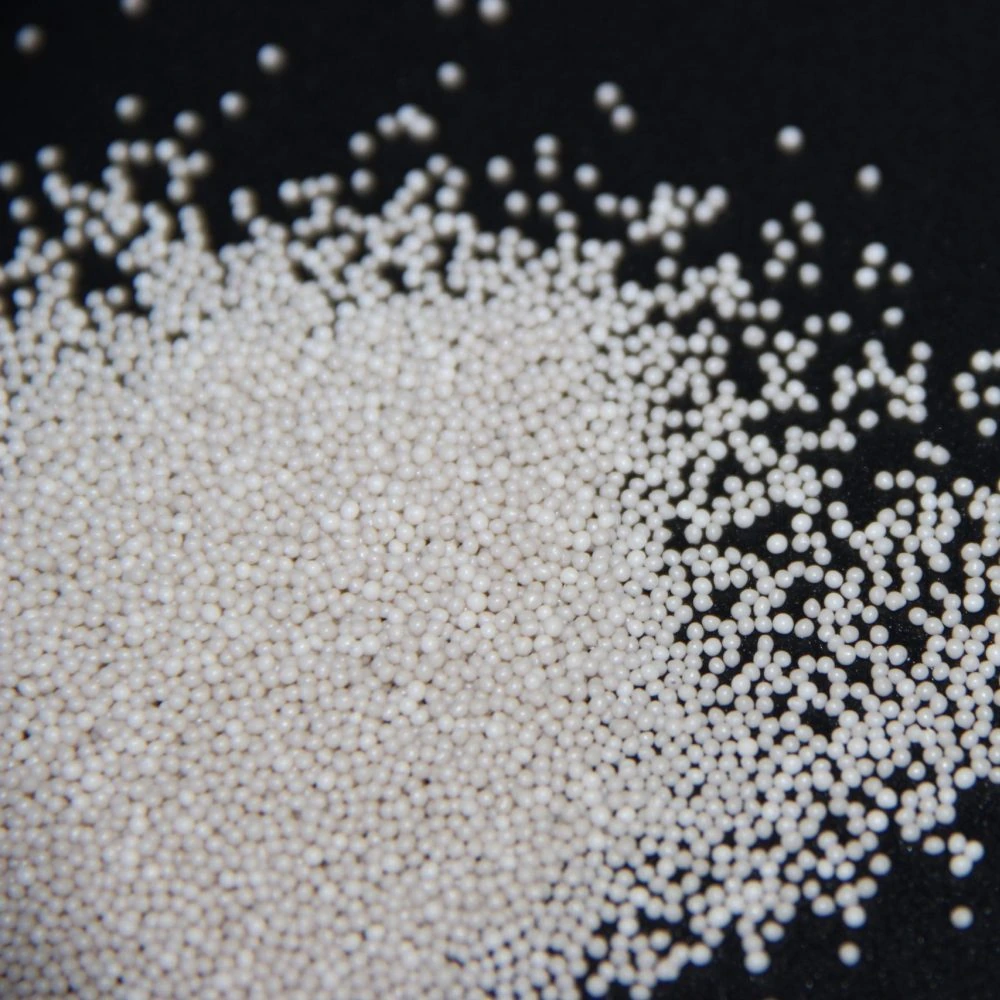
“EPS for packaging” may be enough to open a sales conversation. It is not enough to release a production order. The purchasing team needs to know which material was approved, receiving needs to know what to check, and the molding team needs to know which finished result the material must support.
A practical EPS resin purchase specification connects those jobs. It separates the raw resin requirements from the molded-part requirements and records how the two were qualified together. It also leaves a route for technical questions instead of turning every product-description statement into an unsupported contractual guarantee.
What belongs on the raw-material specification?
Begin with a controlled identification block: supplier, commercial grade, particle-size designation, specification revision, and intended application. Include the drawing or part family used for approval. If the same factory makes insulation panels and protective inserts, one generic purchasing description can easily be carried into the wrong order.
HUASHENG supplies ordinary, flame-retardant, and graphite EPS grades. Its material portfolio therefore provides a starting point for selection, rather than a single specification suitable for every use. The purchase record should identify the selected category and grade, especially where thermal performance or flame behavior is relevant.
Identify particle size without confusing it with expanded bead size
Write the raw particle-size range with its units. HUASHENG’s B-grade listing, for instance, gives 301 as 1.0–1.8 mm, 302 as 0.8–1.3 mm, 303 as 0.6–1.0 mm, and 401 as 0.3–0.8 mm. These designations describe the purchased material. They do not describe the dimensions of beads after pre-expansion.
The supplier and molding team should select the option against filling needs and the intended part geometry. Do not copy a size from a neighboring product just because its outer dimensions look similar. Thin details and restricted filling paths can make the approval conditions materially different.
Also identify shipment quantity, packaging, lot marking, and the agreed storage instructions. Ask what documentation accompanies each lot. Some receiving fields can be checked against labels and paperwork; others require a test or a supplier record. Make that distinction before the first delivery so that receiving does not invent acceptance rules at the loading bay.
How should raw resin and molded-part requirements be separated?
A specification becomes confusing when it puts every number in one list. Raw particle size, an expansion indication, and finished-part density describe different things. Separate them into material identification, process qualification, and finished-part acceptance.
HUASHENG describes Classe standard E as suitable for electrical packaging, panels, handicrafts, and containers, with bonding and surface smoothness among its features. That application coverage can guide selection. It does not establish the acceptable dimensions or protective performance of your particular packaging insert.
Make the finished result measurable
For a molded insert, agree how dimensions, mass, appearance, and fit will be assessed. Where protection is the purpose, define the relevant package-performance test with the actual product or an agreed representative load. Decide when the part is measured and under what conditioning, since comparing parts at different stages can obscure a process problem.
Avoid using “good fusion” or “high strength” as the entire acceptance instruction. Ask the technical team to select a suitable assessment method and record the pass condition. A photograph can help define an appearance limit, but it cannot replace every mechanical or package test. Keep an approved reference part where it is useful, with its identity and approval date.
For an insulation application, HUASHENG’s S graphite grade gives a typical thermal conductivity of 0.033 W/(m·K) and a typical finished-foam density range of 15–35 kg/m³. These product values require context. A building project still needs the applicable finished-board report, test conditions, and any required system evidence; the raw resin description alone does not provide them.
Put typical information in a clearly labeled reference field. Put agreed purchasing limits in a separate acceptance field, together with the method and responsible party. If the supplier has not agreed a limit, it should remain an open technical point rather than quietly becoming a guarantee in the purchase order.
Which trial records should support approval?
The EPS resin purchase specification should point to a qualification record. This need not be a large report. It needs enough detail for another shift to understand what was tried and for a later investigation to distinguish a material change from a process change.
Record the resin lot, machine and mold, pre-expansion conditions, aging arrangements, molding settings, and finished-part results. Include deviations and adjustments. A successful trial without its operating conditions leaves the next operator guessing which part of the result can be repeated.
HUASHENG’ s Prototype rapide Grade B is positioned for fast molding, strength, and surface finish, including precision-instrument packaging on conventional or automatic vacuum machines. If those features support your choice, the trial should check the relevant result in the intended equipment. The grade description cannot stand in for the trial record.
Use a known material as a control where practical. If both the candidate and control perform poorly, investigate the shared process before rejecting the new lot. If the candidate behaves differently, keep the comparison conditions and samples. That evidence is more useful to supplier technical staff than a message saying only that the material “does not work.”
Agree what approval covers. A trial on one mold does not automatically approve every tool, density, or customer package. Record the approved operating scope and the conditions requiring another review. This helps procurement expand supply responsibly without repeating an entire qualification for a minor administrative change.
Who controls changes after the first order?
Assign ownership of the specification. Purchasing can maintain the commercial record, while engineering or quality owns the technical acceptance. A supplier should know who may approve a substitute grade, a changed particle-size option, or a revised acceptance method. Verbal approval from an unidentified contact is difficult to trace when a shipment is disputed.
A workable change process has a short sequence:
- Describe what will change and which orders or parts it affects.
- Review the need for samples, documents, or another production trial.
- Approve the revision before the changed material is released for the affected use.
Keep nonconforming lots identifiable while the issue is investigated. Record observations, photos, retained samples, and the affected production window. Do not mix a questionable lot into other stock merely to clear warehouse space; that makes both the extent of the problem and any later comparison harder to establish.
HUASHENG offers requirement review, grade selection, and sampling for EPS applications. Buyers can request a specification review with their drawing, machine information, and acceptance requirements. This gives both parties a chance to resolve ambiguous terms before they become receiving or production disputes.
Review how receiving will handle incomplete paperwork. Name the person who can place a lot on hold and the person who can resolve the missing information with the supplier. Do not ask warehouse staff to decide whether an undocumented property is acceptable. Their job should be to follow a clear check and escalation route, with the technical decision assigned to someone qualified to make it.
Conclusion
An EPS resin purchase specification should tell each team what it owns: the exact material being bought, the conditions supporting approval, and the finished result that must be achieved. Keep those categories distinct, tie them to a controlled trial, and define who can approve a change. The document then becomes useful at the machine and receiving desk as well as in purchasing.
Questions fréquentes
Q1: Can an EPS resin data sheet replace a purchase specification?
A1: It can support one, but it usually does not identify your part, approval trial, receiving checks, or change process. Agree which values are purchasing limits and which are typical information.
Q2: Should finished density be listed as a raw-material property?
A2: No. Identify it as a finished-foam requirement and link it to the qualified process. Raw particle size, expansion behavior, and finished density are related but different fields.
Q3: When should a buyer request another EPS trial?
A3: Review the need when a material, particle-size option, tool, process, or application changes beyond the existing approval scope. The responsible technical team should decide which checks need repeating.
 French
 English
 German
 Spanish
 Arabic