
Current building setups call for items that aid in solid builds and fire guards. Rules tighten up, and plan rules shift over time. Thus, workers in the field turn more to unique items that manage fire growth and boost heat-holding work. Grasping the role of fire-resistant expanding foam makes clear its rising value in today’s building tasks.

What is Fire Resistant Expanding Foam, and Why is it Crucial for Building Systems?
Fire-resistant expanding foam now serves as a main part in fresh building work. It provides warmth along with a key fire shield. This stuff works like a lively wall that grows when you add it. It closes openings and blocks quick movement of fire and smoke across building pieces. In our present world that puts safety first, this item holds a big spot in meeting rule needs and lasting build toughness.
The Functionality of Fire-Resistant Expanding Foam in Construction
You apply fire-resistant expanding foam to hollow spots, links, or pipe pass-throughs. Then, it builds a no-air seal that cuts fire spread a lot. Such action not just holds back air supply. It also keeps areas split up. That split is a central idea in no-effort fire guard setups. The foam goes further than just stopping fire. Moreover, it boosts heat guard and power saving by cutting air slips. Its two-way work, firefighting and warmth holding, turns it into a needed thing for green building covers. There, guard and power work have to live side by side.
The Importance of Fire Safety in Modern Building Systems
Fireguard rules most parts of building plans these days. World-build rules ask for items that withstand hot levels while keeping build steadiness. Picking smart fire-stand items aids in saving lives, goods, and base strength in crisis times. Cities fill up more as they spread out. For that reason, the call for no-effort fire guards built into walls, tops, and bottoms grows stronger. Fire-resistant expanding foam makes builds hit these tough rules. At the same time, it backs green power aims by lowering power use.
How Does Fire-Resistant Expanding Foam Enhance Building Safety?
Adding fire-resistant expanding foam does overrule just following the rule. It builds up a build’s full guard setup against warmth and build breaks in fire outbreaks.
The Role of Fire-Resistant Foam in Structural Integrity
Fire happenings can weaken build steadiness in mere minutes. This occurs if items lack design to fight warmth push. Fire-resistant foams strengthen soft spots like links or gaps between stone blocks and metal frames. As a result, these ties stay whole in harsh settings. Such strength stops early drops and gives key time for leaving and firefighting work.
HUASHENG is a high-tech enterprise specializing in the research and development, production, and sales of expandable polystyrene (EPS) foam. Their advanced formulations enhance compressive strength by up to 40%, enabling better performance under heat exposure compared with conventional foams. These innovations directly contribute to maintaining the mechanical stability of structures exposed to high temperatures.
The Impact on Occupant Safety and Emergency Response
Holding fires in set areas lets help teams work fast. At the same time, it cuts dangers to folks inside. Fire-resistant expanding foam holds back fire growth via wire holes or wall meets. Those are the main routes for smoke creep. Therefore, it betters sight in leave times. Plus, by easing warmth climb in closed zones, it shapes safer outpaths and lessens bad gas touch.
How Can You Integrate Fire-Resistant Expanding Foam into Your Projects?
To blend this item well, focus on small points at each step. From picking the good to how you place it, all this checks top guard results.
Application Techniques for Optimal Performance
For peak work, faces need to sit clean, dry, and clear of junk before foam goes on. Air warmth must match maker tips to get the right growth speeds. Enough set time, usually 24 to 48 hours, matters big for full stick and growth match over links or hollows. You use special spread tools or guns, right, and the foam shapes even close. Those holds bend well even after long warm shifts.
Choosing the Right Product for Your Needs
Choosing the right kind of fire-resistant expanding foam ties to your job’s reach. Home fixes call for other mixes than plant sites or tall buildings. Things like nearby weather, base item match, and needed fire level should lead your pick.
For example, F Material Flame-Retardant Type REPS gives a fine fire stop with low heat flow. This fits warmth jobs where air feed tops 30%. Its firm build locks in power saving and better guard work over build covers.
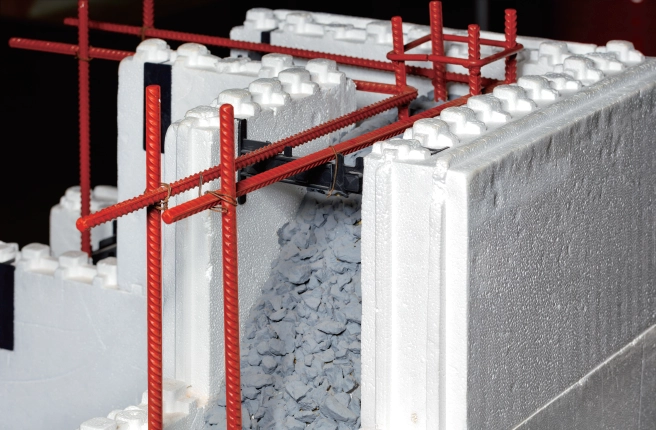
Why Should You Consider HUASHENG’s Fire-Resistant Expanding Foam?
Green ways grow centrally in building fresh things. One firm resets what smart making stands for in safer builds: HUASHENG.
With the mission of “reducing the burden on the earth,” HUASHENG is driving a global material revolution with a single grain of polystyrene. Through cutting-edge EPS technology and ecological responsibility, they’ve positioned themselves as pioneers in green intelligent manufacturing. Their products are designed not only to meet but also to exceed global standards like GB/T10801.1-2002 for thermal insulation foams used in construction systems.
HUASHENG’s smart factory integrates digital twin laboratories with precision testing equipment, ensuring density uniformity, compressive strength, and thermal stability at industry-leading levels. By 2026, it will establish a globally leading carbon-neutral demonstration factory, achieving a carbon emission reduction of over 85% across the entire industrial chain. This commitment reflects their dual focus on innovation and environmental stewardship—a perfect synergy for modern sustainable architecture.
Benefits of HUASHENG’s Innovative Solutions
Their flame-retardant EPS series demonstrates exceptional performance under rigorous conditions while maintaining easy processability during installation. These foams combine lightweight design with superior mechanical resilience—ideal for both new constructions and retrofit projects seeking LEED or BREEAM certification credits related to energy efficiency and material sustainability.
In the domain of building insulation, HUASHENG’s EPS foam products shine brightly. They effectively reduce energy consumption by providing reliable thermal barriers that help maintain consistent indoor temperatures year-round—minimizing reliance on HVAC systems while enhancing occupant comfort.
Customer Testimonials and Proven Results
Clients worldwide recognize these solutions for their reliability in real-world applications—from large-scale commercial towers to residential complexes requiring passive fire protection integration within composite wall systems. Case studies such as GreenBuild Eco-City demonstrate measurable outcomes: energy savings increased by 14% while project timelines shortened by over two weeks compared with conventional insulation methods—all while meeting B1 flame-retardant standards.
FAQs
Q: Can fire-resistant expanding foam be used in residential buildings?
A: Yes. It is suitable for residential use where enhanced compartmentalization improves safety against potential fire spread through service ducts or cavity walls.
Q: How long does it take for the foam to cure completely?
A: Depending on humidity and temperature conditions, complete curing typically occurs within 24–48 hours, ensuring full expansion integrity before exposure to operational loads or coatings.
Q: Is special equipment required to apply this foam?
A: While general-purpose applicators can be used effectively, professional-grade guns ensure even distribution across complex geometries—maximizing adhesion strength at critical junctions between substrates such as concrete or steel panels.






 English
  German
  Spanish
  French
  Arabic