
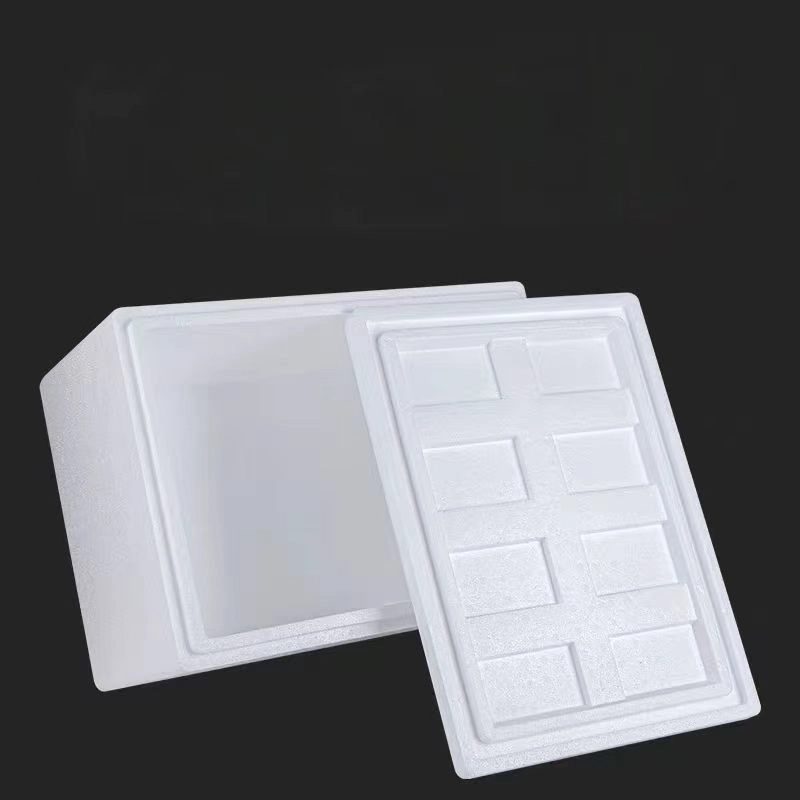
Expanded Polystyrene is often considered an essentially mature and conforming concept for packaging material. This, in fact, is far from the real situation, as its behavior and performance are heavily dependent upon its beads, expansion characteristics, molding speed, and lifecycle limitations. Therefore, before the final decision of specifying Expanded Polystyrene as the material of choice for high-value or high-volume packaging applications, the interactions of this material with real operating conditions are of critical importance and require closer inspection.
What makes expanded polystyrene packaging suitable for engineered protection rather than generic cushioning?
Expanded polystyrene packaging functions as a structural energy-management system, rather than merely serving as a passive filler. Its performance in protection is determined by how the distribution of bead size, quality of fusion, and cell morphology control the path of deformation under shock and vibration events. Appropriately specified, EPS can absorb impact by a predictable elasto-plastic response rather than through brittle fracture, an important determinant of repeatable protection performance through logistics cycles.
EPS in packaging is designed to operate in concert with the product geometry and mold constraints, allowing load paths to dissipate energy efficiently while maintaining dimensional integrity.
How does bead structure affect shock absorption and dimensional stability?
Uniform particle sizes ensure that fusion between beads is consistent, thus reducing the possibility of stress build-up. Finer particles or beads also enhance surface finish and dimensional tolerance, which is important for molded inserts in the packaging of precision equipment.
Why does expansion ratio matter during specification?
Expansion ratio controls density levels, thickness of cell walls, and reaction under compression. Excessive expansion reduces the strength for bearing loads, while inadequate expansion raises material consumption without better protection gains. A well-chosen ratio provides solid structure along with efficient material use.
How should you evaluate EPS grades for lightweight versus precision packaging applications?
Various packaging scenarios offer different performance criteria. Lightweight distribution packaging primarily requires superior expansion efficiencies and material yields, and precision instrument parts require consistent strength, tight tolerances, and stable molding performance.
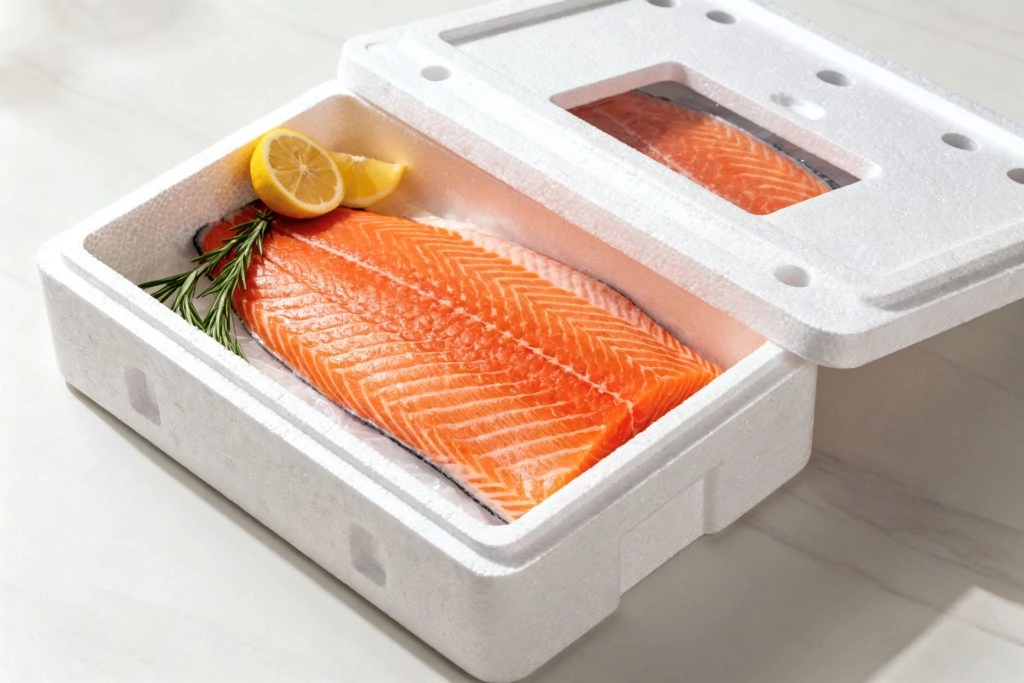
For packages where ultra-light material or multi-stage foaming is required, P-grade expanded polystyrene is commonly selected as a packaging material due to its superior foaming ability, surface finish of molded parts, and stability in fusion characteristics for large-size applications or where material sections are relatively thinner in walls. Because the material of this grade reaches quite low densities and maintains uniformity, it suits weight-sensitive transport and large protective structures.
When does rapid prototyping-grade EPS outperform conventional grades?
During pilot tooling and early validation, grades optimized for fast curing and demolding enable quicker iteration without compromising mechanical performance. This is especially relevant when transitioning designs toward automated forming systems.
How do molding efficiency and cycle time influence total packaging cost?
Shorter molding cycles reduce steam consumption, labor intensity, and scrap rates. Over high production volumes, cycle efficiency often outweighs raw material cost differences in total packaging economics.
Why should EPS packaging be specified based on processing behavior, not just material data sheets?
Material data sheets describe intrinsic properties but do not capture real processing behavior. Steam penetration, vacuum cooling effects, and curing tolerance decide whether consistent large-scale output is possible. Differences between material properties and actual equipment often lead to warpage, weak fusion, or shrinkage after molding.
Processing compatibility becomes critical when moving from prototype tooling to continuous production, where even minor instability can cascade into quality losses.
What risks emerge when EPS grades are mismatched with forming equipment?
Common issues include poor bead fusion, surface defects, unstable dimensions, and elevated rejection rates, typically originating from inappropriate curing windows rather than material defects.
How can EPS grades reduce dependence on secondary protective materials?
When EPS is engineered to carry structural loads directly, additional liners, corrugated reinforcements, or inserts can often be eliminated, simplifying packaging systems and reducing total material usage.
How does rapid prototyping EPS accelerate validation and production alignment?
Rapid prototyping-oriented EPS grades are designed to bridge development and production. They allow fast mold trials while maintaining strength and fusion behavior close to production materials.
B-rapid prototyping grade expanded polystyrene packaging material is commonly applied where short curing time, fast demolding, and high impact resistance are required. Its compatibility with automated forming equipment makes it suitable for both pilot runs and scaled manufacturing, reducing the risk of performance deviation during production ramp-up.
Why is fast demolding critical during packaging iteration?
Rapid demolding reduces internal moisture retention and shortens feedback cycles, allowing quicker refinement of geometry and wall thickness.
How does rapid prototyping EPS reduce redesign risk later?
By using bead behavior aligned with production conditions, early-stage validation results remain relevant during scale-up, minimizing costly requalification.
Where does supplier capability influence EPS packaging outcomes beyond the material itself?
EPS packaging performance depends on system-level coordination between material formulation, processing windows, and application requirements. At this stage of specification, supplier capability directly influences whether EPS behaves as a predictable engineering material or a variable commodity.
HUASHENG operates as a materials-driven EPS manufacturer rather than a volume-only supplier. Our work in expandable polystyrene integrates controlled bead engineering, automated production compatibility, and application-specific customization across density, particle size, and molding response. Supported by precision testing, process simulation, and recycled-material innovation, our EPS systems are applied where repeatability, lightweight performance, and lifecycle efficiency have to be integrated. This approach allows EPS to be specified as a tunable structural solution aligned with real production and sustainability targets.
How does customization capability affect long-term packaging performance?
Tailored bead distribution and expansion behavior reduce overdesign while maintaining impact margins and dimensional stability.
Why does process-level support matter during scaling?
Stable batch-to-batch performance prevents failures caused by density drift, curing inconsistency, or environmental variation.
What sustainability and lifecycle factors should influence EPS packaging specification today?
Modern EPS packaging needs to fit recycling systems, legal standards, and carbon accounting rules. Recyclability, energy used in molding, and compatibility with closed-loop processes are shaping the procurement decisions.
How does recyclable EPS change packaging lifecycle economics?
Recyclable EPS not only decreases the cost of handling waste but also enable reuse of material within operations, thus stabilizing the long-term cost in high-volume packaging programs.
When should recycled-content EPS be considered without compromising performance?
Controlled use of recycled feedstock through careful formulation and processing keeps mechanical strength and shock resistance steady, and reduces the impact on the environmental impact.
Conclusion
Expanded polystyrene packaging should be viewed as a carefully designed system instead of an ordinary commodity material. Bead structure, processing compatibility, molding speed, and full lifecycle performance carry equal weight to density or price. Combined assessment of these elements turns EPS into a reliable packaging choice that provides steady protection, efficient manufacturing, and alignment with sustainable requirements.
FAQs
Q1: Is lower-density EPS always better for packaging applications?
A: No. Lower density reduces weight but may reduce impact resistance if fusion quality and expansion control are not optimized.
Q2: Can one EPS grade support both prototyping and mass production?
A: Only if its curing behavior, demolding speed, and strength profile align with automated production requirements.
Q3: In which stage should the EPS suppliers participate in packaging design?
A: Preferably early in structure design, when the behavior of beads and constraints of molding can still affect geometry and material selection.






 English
  German
  Spanish
  French
  Arabic