
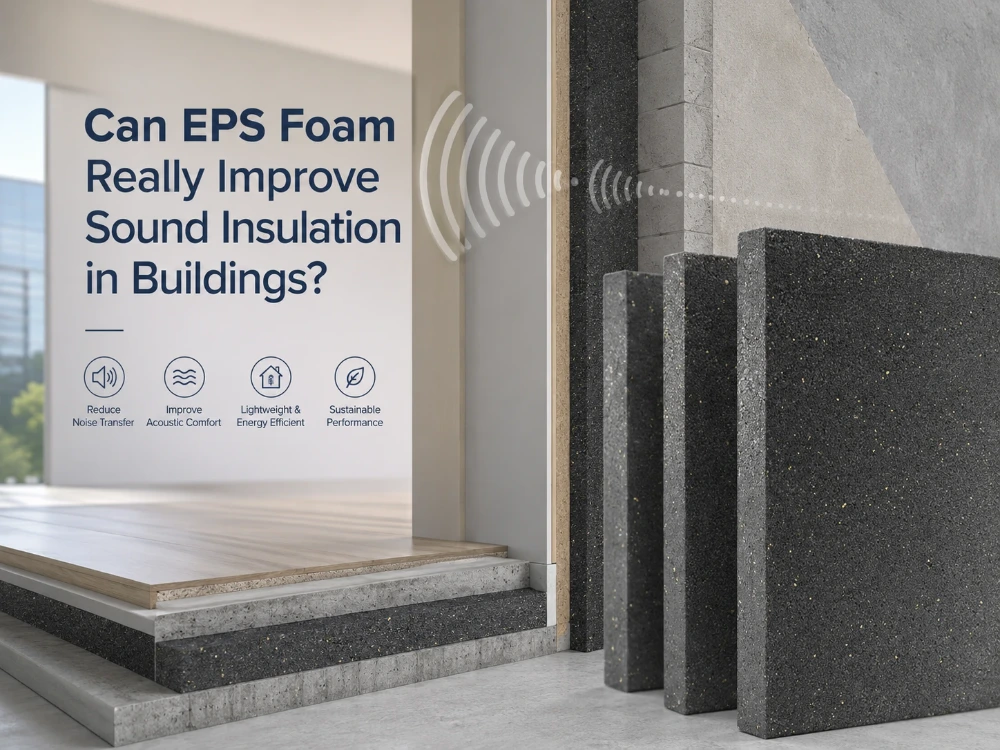
El EPS puede contribuir al aislamiento acústico en edificios, pero la afirmación de que "el EPS es insonorizante" es demasiado general para servir de base a una especificación. El aislamiento acústico del EPS depende de la fuente de ruido, la posición del material en la estructura, la rigidez dinámica, el espesor, la densidad y el diseño de las capas circundantes del suelo o la pared.
El ejemplo más claro en ingeniería suele ser el aislamiento acústico de impacto con EPS en un sistema de piso flotante. Una capa elástica de EPS separa la superficie transitable o la capa de mortero de la losa estructural y reduce la transmisión de vibraciones.
Ese uso es muy diferente a esperar que un panel de EPS común y corriente pegado a la pared bloquee todo el sonido transmitido por el aire.
¿Qué tipo de problema acústico intenta solucionar el edificio?
Antes de seleccionar el aislamiento acústico de EPS, es necesario diferenciar el ruido aéreo del ruido de impacto transmitido por la estructura.
¿Por qué el sonido transmitido por el aire es diferente?
El habla, la televisión, el tráfico y la maquinaria generan sonido en el aire. Su control suele depender de la masa, la hermeticidad, el diseño de la cavidad, la separación de capas y la absorción.
Por sí sola, una capa de espuma ligera no sustituye un diseño completo de pared acústica.
El aislamiento acústico de poliestireno expandido puede aportar una capa, pero el resultado final lo determina la estructura de la pared o del suelo.
¿Qué es el sonido de impacto?
El sonido de impacto se produce cuando un evento físico excita la estructura.
Las pisadas, la caída de objetos, el movimiento de muebles o equipos pueden transmitir vibraciones a la losa del piso. Estas vibraciones pueden propagarse por todo el edificio y convertirse en sonido en otros lugares.
El aislamiento acústico de impacto EPS tiene como objetivo interrumpir esta transmisión mecánica.
Esa vía de transmisión explica la importancia de los suelos flotantes.
¿Cómo funciona el aislamiento de suelo flotante de EPS?
Un suelo flotante separa la capa de rodadura o mortero del suelo estructural mediante una capa elástica.
En lugar de transmitir el impacto directamente a la losa, la masa superior se mueve contra la capa elástica.
¿Por qué es importante la rigidez dinámica?
Una capa elástica demasiado rígida puede transmitir más vibraciones. Una demasiado blanda puede comprimirse excesivamente o no proporcionar el soporte mecánico necesario para el suelo.
Por lo tanto, la rigidez dinámica es un parámetro clave en el diseño acústico.
La densidad o la conductividad térmica por sí solas no son suficientes para seleccionar un aislamiento de suelo flotante de EPS. Los compradores deben solicitar datos acústicos específicos para el tipo de aislamiento y el sistema de suelo en cuestión.
El EPS común para la construcción y el EPS acústico elastomérico no son automáticamente intercambiables.
¿El grosor mejora el aislamiento acústico de impacto del EPS?
El grosor puede modificar la respuesta, pero un mayor grosor no garantiza una mejora acústica proporcional.
El piso flotante se comporta como un sistema que contiene la masa superior, la capa elástica, el piso estructural, las juntas, las tiras perimetrales y los detalles de instalación.
Modificar un grosor altera la relación entre la frecuencia natural y la rigidez del sistema.
Por ese motivo, pruebe el aislamiento acústico de impacto del EPS en un conjunto representativo en lugar de predecirlo basándose únicamente en el grosor del panel.
¿Pueden ayudar el grafito o el EPS modificado con carbono?
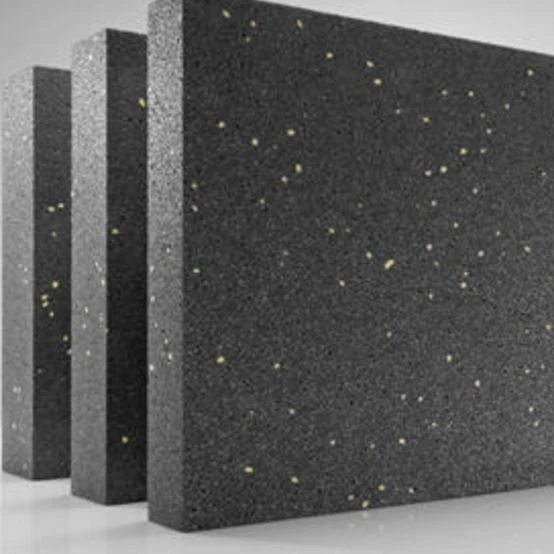
Los grados funcionales de EPS pueden combinar propiedades térmicas y otras propiedades del material, pero las afirmaciones acústicas aún requieren una verificación específica del proyecto.
¿Qué aporta HUASHENG FGE?
Para aislamiento de edificios e industria, CASA Grafito Poliestireno FGE Incorpora grafito durante la polimerización en suspensión. Está diseñado para reducir la conductividad térmica de los productos aislantes de EPS, a la vez que mejora su rendimiento de aislamiento térmico y acústico.
Este material está destinado a productos con una densidad de 18 kg/m³ o superior y puede alcanzar un rendimiento de nivel B1.
Esto lo hace relevante cuando un proyecto necesita un material aislante multifuncional, pero el diseñador aún debe distinguir los datos térmicos de los datos del sistema acústico probado.
¿Por qué deberían especificarse por separado el rendimiento térmico y el acústico?
Un material puede tener un excelente aislamiento térmico y, sin embargo, comportarse acústicamente de forma diferente a otro material.
La conductividad térmica mide la transferencia de calor; el rendimiento acústico depende de la vibración, la masa, la rigidez, la amortiguación, las conexiones, la frecuencia y la geometría del sistema.
Por lo tanto, una especificación B2B debe indicar por separado el objetivo térmico y el objetivo acústico.
Esto evita el error común de considerar el aislamiento acústico de EPS como un resultado automático de una baja conductividad térmica.
¿En qué aspectos el EPS ofrece un mejor o peor rendimiento acústico?
El resultado depende del sistema y del rango de frecuencia que se esté midiendo.
¿Por qué los impactos ligeros y los impactos fuertes pueden comportarse de manera diferente?
Un golpeteo ligero y una pisada fuerte no excitan el suelo de la misma manera.
Las investigaciones sobre sistemas de suelo que contienen EPS demuestran que una capa de EPS resistente puede proporcionar una reducción útil en ciertas condiciones de impacto, mientras que produce una mejora mucho menor en otras condiciones de baja frecuencia o de impacto fuerte.
Por lo tanto, no se debe aplicar un único valor en dB a todos los edificios.
Los compradores necesitan conocer el método de prueba, el rango de frecuencia, la acumulación de residuos en el suelo y la fuente de impacto que explica el resultado.
¿Qué ocurre con el ruido de baja frecuencia?
El impacto de baja frecuencia en el suelo es difícil de medir debido a que las longitudes de onda son largas y el propio sistema estructural adquiere una gran importancia.
Se ha estudiado el EPS con grafito incorporado para aplicaciones vibroacústicas en las que la rigidez dinámica debe ser lo suficientemente baja como para desplazar la frecuencia natural manteniendo al mismo tiempo el soporte estructural.
Esa investigación no convierte a todas las placas de EPS de grafito en un producto acústico de baja frecuencia.
La formulación del material, el estado de compresión, la densidad y el montaje del suelo deben desarrollarse específicamente para ese uso.
¿Puede el EPS de carbono combinar el aislamiento térmico y acústico?
Algunos materiales funcionales modificados con carbono están diseñados teniendo en cuenta ambos objetivos.
HUASHENG Poliestireno de carbono de baja conductividad térmica FGE Utiliza negro de humo de baja conductividad térmica, incorporado durante la polimerización en suspensión. Está diseñado para el aislamiento en la construcción e industria, ofreciendo beneficios de aislamiento térmico y acústico, propiedades antiestáticas, clasificación B1 y puede utilizarse en densidades de 18 kg/m³ o superiores.
Esto puede resultar útil cuando un producto de construcción necesita una combinación de funciones de aislamiento.
El requisito acústico aún requiere una verificación a nivel de ensamblaje.
¿Qué deben preguntar los compradores de edificios antes de especificar EPS?
Una solicitud de cotización acústica necesita más detalles que la frase "panel de EPS insonorizado".
¿Qué datos se deben solicitar?
En primer lugar, indique si el sonido objetivo es aéreo o de impacto.
Para un piso, proporcione la losa estructural, la capa de mortero o de carga, el espesor de la capa resiliente, la carga prevista, el acabado del piso y la métrica acústica requerida.
Solicite información sobre la rigidez dinámica o las pruebas acústicas aplicables cuando la capa de EPS esté destinada a controlar el sonido de impacto.
Para las paredes, proporcione la composición completa de las capas. No le pida al proveedor de EPS que prediga el rendimiento de un sistema de pared desconocido.
¿Por qué importan los detalles del perímetro?
Un suelo flotante puede perder rendimiento acústico si la capa de mortero se une directamente al muro o losa estructural.
Las franjas perimetrales, las penetraciones, las tuberías de servicio, los puntos de fijación y los huecos pueden crear vías de transmisión rígidas.
Incluso un buen material aislante acústico de EPS no puede corregir una instalación de piso flotante con puentes rígidos.
Los equipos de proyecto que utilizan EPS en paredes, pisos u otros ensamblajes de edificios pueden Revisión de las opciones de aislamiento para la construcción de HUASHENG antes de definir las especificaciones acústicas y térmicas finales.
Conclusión
El aislamiento acústico de EPS es una opción de diseño real, pero debe describirse con precisión.
El aislamiento acústico de poliestireno expandido (EPS) resulta más eficaz cuando se utiliza como capa elástica dentro de un sistema como un suelo flotante. El aislamiento de suelo flotante con EPS funciona modificando la transmisión de vibraciones, por lo que la rigidez dinámica cobra mayor importancia que la simple afirmación de que la espuma absorbe el sonido.
Por lo tanto, el aislamiento acústico de EPS debe especificarse de manera diferente para el ruido aéreo y el ruido de impacto. El aislamiento acústico de impacto de EPS también requiere el espesor, la capa de carga, el detalle del perímetro y el método de prueba adecuados.
Para los compradores de edificios, primero definan el problema acústico, luego seleccionen la función EPS y verifiquen el conjunto constructivo completo antes de prometer un resultado en dB.
Preguntas frecuentes
P1: ¿La espuma EPS común es un material insonorizante?
A1: No en el sentido simple. El EPS común puede contribuir al rendimiento acústico, pero el aislamiento acústico efectivo depende de la estructura completa de la pared o el piso. El EPS resistente especializado es más relevante para el control del ruido de impacto en pisos flotantes.
P2: ¿Cuál es la propiedad clave del aislamiento de suelo flotante de EPS?
A2: La rigidez dinámica es uno de los parámetros clave, ya que afecta la forma en que la capa elástica transmite la vibración bajo la masa flotante. El espesor, la carga, la amortiguación y la estructura completa del piso también son importantes.
P3: ¿Puede el EPS de grafito mejorar tanto el aislamiento térmico como el acústico?
A3: El grafito funcional o el EPS de carbono pueden proporcionar beneficios térmicos y contribuir al aislamiento acústico, pero el rendimiento acústico debe verificarse para el conjunto constructivo previsto, en lugar de inferirse únicamente a partir de la conductividad térmica.
 Spanish
  English
  German
  French
  Arabic