
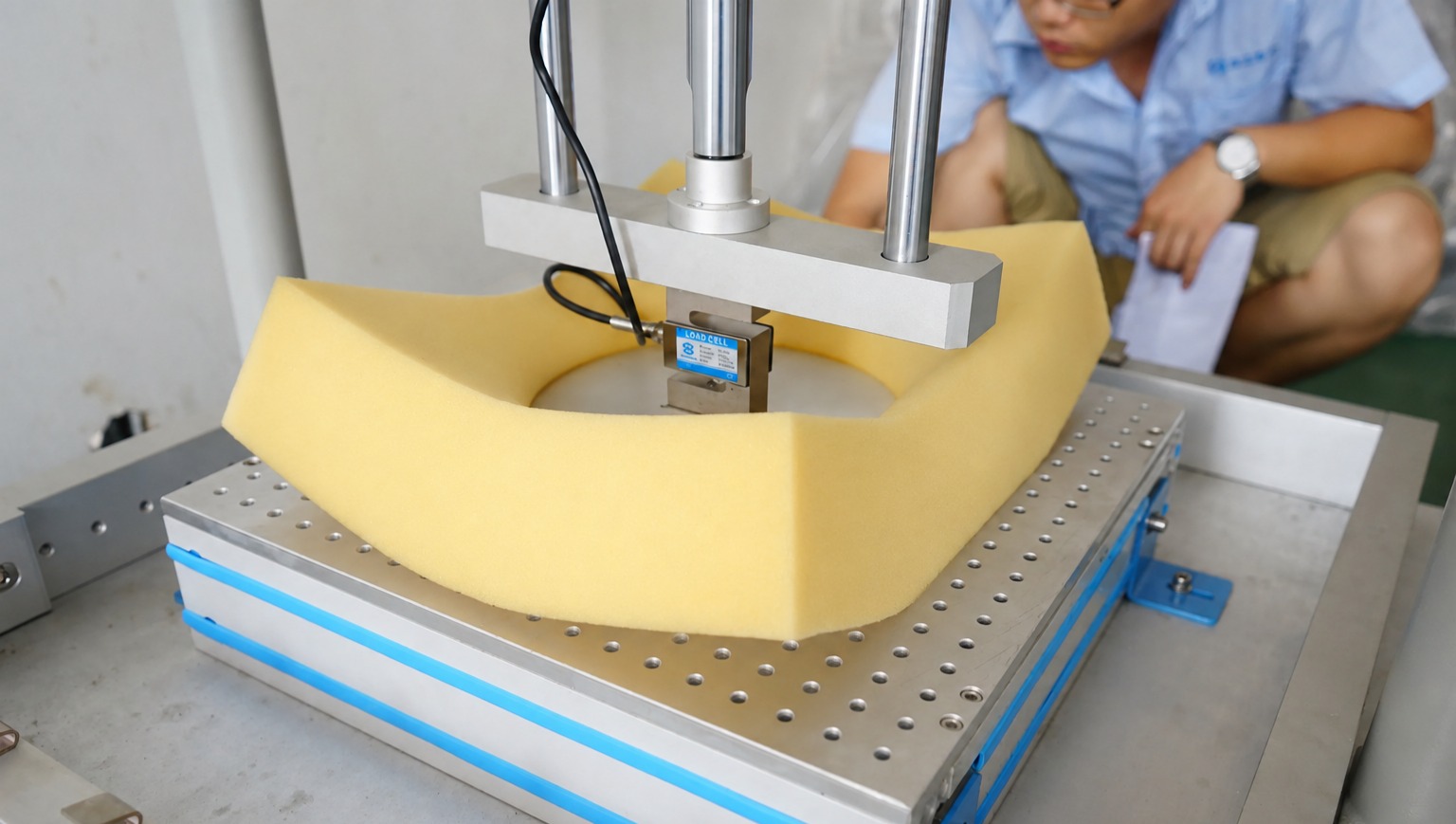
Es fácil olvidarse de la resistencia a la compresión al comprar. Espuma de EPSLos clientes suelen comenzar por las dimensiones, la densidad, el precio de las herramientas necesarias para la producción, la resistencia al fuego y el plazo de entrega. El problema surge solo cuando alguna parte de la caja falla durante la carga, las molduras no encajan o los paneles aislantes se abollan debido a un transporte brusco.
Para la adquisición de materiales para proyectos, la resistencia a la compresión de la espuma EPS debe considerarse un parámetro clave. Esta resistencia está relacionada con la densidad, la fusión de las fibras, la calidad del moldeo y el diseño final de la pieza. La cuestión fundamental no es si el EPS es resistente en general, sino si el grado de EPS o REPS seleccionado puede soportar la carga prevista en el embalaje, el aislamiento o la pieza moldeada.
Por qué la resistencia a la compresión se convierte en un problema de adquisición
Qué significa la resistencia a la compresión de la espuma en el uso real
La resistencia a la compresión de la espuma describe la capacidad de una muestra de espuma para soportar presión hasta un nivel de deformación definido. En la práctica, muestra cómo se comporta el material al recibir peso. Un valor más alto indica que la espuma puede soportar mayor presión antes de alcanzar la misma deformación.
Para el EPS, esto es importante porque la ligereza y la capacidad de carga a menudo deben ir de la mano. Un inserto protector mantiene el producto alejado de la pared de la caja. Una caja de cadena de frío debe conservar su forma durante el apilamiento. Si bien un panel aislante no es un material estructural, también está sometido a presión durante el almacenamiento, la instalación y el embalaje.
Cómo la estructura de perlas de EPS soporta la carga y regresa después de la presión.
El EPS se produce mediante la fusión de perlas de poliestireno expandido en una matriz de espuma. Bajo presión, las paredes de las celdas se curvan hacia adentro, el aire atrapado en su interior se comprime y la carga se distribuye entre las perlas. La densidad es un factor importante, pero también lo son el tamaño de las perlas, la edad, la temperatura y el proceso de fusión.
Cómo las condiciones de la prueba modifican el número de resistencia.
Por qué importan los niveles de deformación como el 10%, el 25%, el 50% y el 75%.
La resistencia a la compresión se informa a un porcentaje de deformación definido. Con una deformación del 10 %, la prueba muestra resistencia inicial, lo cual es importante cuando los artículos frágiles no pueden moverse profundamente dentro de una caja. Los datos al 25 %, 50 % o 75 % muestran un comportamiento de aplastamiento más profundo para apilamiento, pruebas de caída, piezas moldeadas pesadas o embalajes reutilizables.
Por qué la densidad y la tasa de formación de espuma deben leerse conjuntamente.
La densidad es uno de los indicadores más importantes de la resistencia a la compresión del EPS. Un EPS de mayor densidad suele tener más material por volumen, paredes celulares más gruesas y mejor resistencia a la carga. El grado de espumado proporciona otra pista: un mayor grado de espumado generalmente implica una espuma más ligera, mientras que un menor grado de espumado puede proporcionar un soporte más resistente.
Lo que los datos REPS disponibles revelan a los compradores
Medición de la resistencia a la compresión mediante la densidad y la tasa de formación de espuma.
Los datos de rendimiento físico disponibles para Material de espuma REPS Este ejemplo ilustra de forma útil cómo interpretar conjuntamente la densidad y la deformación. El ensayo de resistencia a la compresión se realiza según el método A de la norma GB/T 8813-2020, y los valores se muestran en kPa.
| Tasa de formación de espuma | Densidad | 10% de deformación | 25% de deformación | Módulo de compresión |
| 20 veces | 50 g/L | 258 kPa | 301 kPa | 9880 kPa |
| 25 veces | 40 g/L | 213 kPa | 252 kPa | 9216 kPa |
| 30 veces | 33 g/L | 159 kPa | 194 kPa | 6200 kPa |
| 40 veces | 25 g/L | 105 kPa | 130 kPa | 3135 kPa |
El patrón es claro. A medida que la densidad disminuye de 50 g/L a 25 g/L, los valores de compresión también disminuyen. Con una deformación del 10 %, el valor indicado pasa de 258 kPa a 105 kPa. Con una deformación del 25 %, pasa de 301 kPa a 130 kPa. Esto no significa que la opción más ligera sea deficiente, sino que pertenece a un rango de carga diferente.
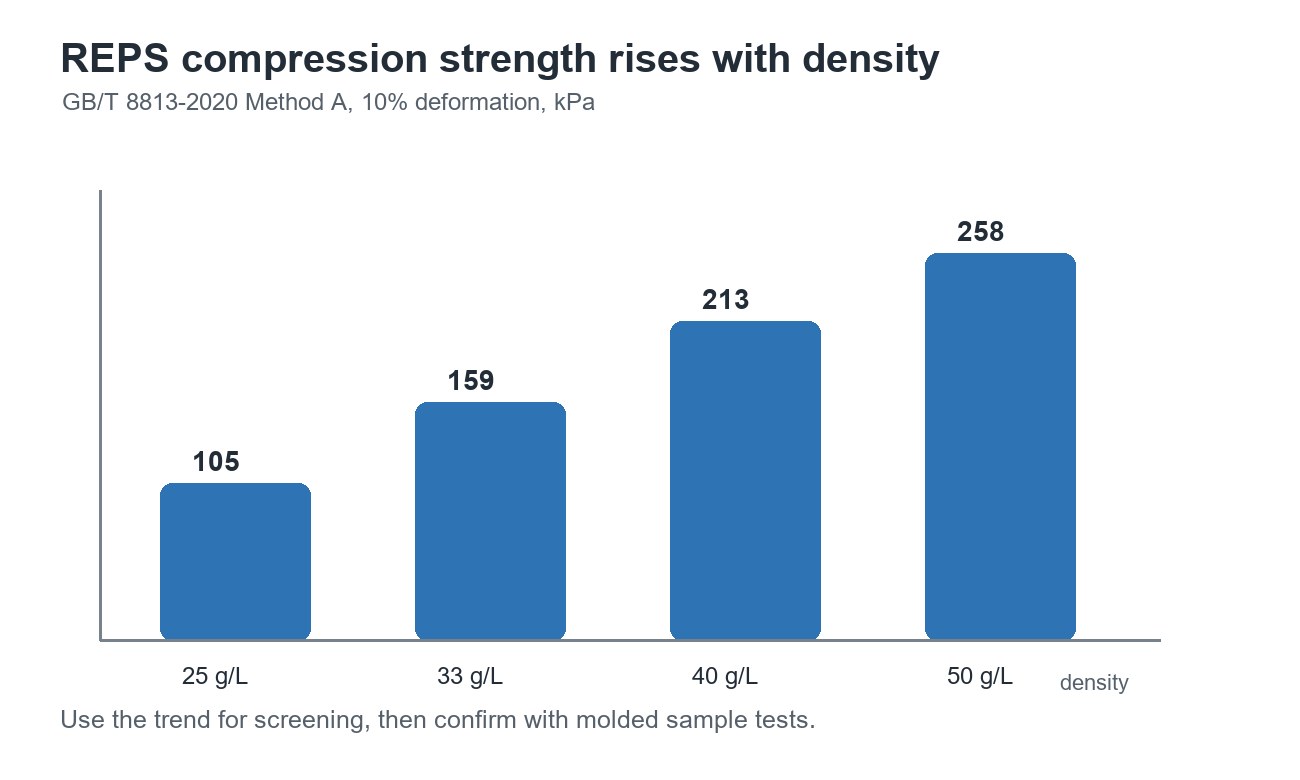
Este tipo de datos ayuda a los compradores a evitar considerar el EPS como un material fijo. Una opción de baja densidad puede ser adecuada para amortiguación ligera o relleno de huecos con poca carga. Una opción más densa es más segura cuando las cajas se apilan a gran altura, los productos son pesados o las esquinas moldeadas soportan la mayor parte de la carga.
Por qué la espuma de menor densidad requiere una aplicación más cuidadosa
El EPS de menor densidad puede funcionar bien cuando el diseño distribuye la carga sobre una amplia superficie de contacto. Los problemas surgen cuando un producto pesado descansa sobre nervaduras estrechas, bordes afilados o puntos de apoyo pequeños. Para envases moldeados, verifique el espesor de la pared, la disposición de las nervaduras, el peso del producto, la altura de apilamiento y la dirección de la prueba de caída.
Cómo afecta la resistencia a la compresión a las aplicaciones de los proyectos
Embalaje protector para componentes electrónicos, pantallas e instrumentos.
En los embalajes de protección, la resistencia a la compresión influye en la eficacia con la que el EPS mantiene el producto alejado de las zonas de peligro. Si la espuma es demasiado blanda, el producto puede hundirse hacia la pared de la caja durante el apilamiento. Electrónica, Las pantallas, los instrumentos y las piezas de los electrodomésticos necesitan tanto amortiguación como soporte, por lo que las pruebas de muestra deben incluir el peso real del producto, la estructura de la caja, las condiciones de apilamiento y la dirección de la caída.
Paneles aislantes, piezas moldeadas y zonas de contacto con la carga.
En el aislamiento de edificios, la resistencia a la compresión está relacionada con la manipulación, la instalación y la presión superficial. Los paneles de pared aún requieren bordes estables, buena adherencia y resistencia a las abolladuras en obra. HUASHENGLa gama de EPS de [8216] incluye material de grado E para productos moldeados estándar, grados ignífugos para uso en la construcción y opciones de EPS de grafito como S-32 y S-33 para proyectos de aislamiento que ahorran energía.
Cajas para cadena de frío y embalajes de transporte reutilizables
Las cajas de la cadena de frío pueden apilarse en almacenes, cargarse en camiones, ser manipuladas por diferentes trabajadores y estar expuestas a cambios de temperatura. La resistencia a la compresión ayuda a que la caja mantenga su forma, pero la calidad de la fusión y la estabilidad dimensional son igualmente importantes.
Es necesario un control más exhaustivo de los envases reutilizables. Para envases de transporte de mayor valor, se pueden considerar envases reutilizables personalizados cuando el proyecto requiere una estructura de partículas ajustada, soporte de diseño moldeado y una mejor correspondencia entre resistencia, peso y comportamiento bajo carga.
Cómo deben los compradores comprobar las muestras antes de realizar pedidos al por mayor
Compare los datos de laboratorio con el diseño real del producto.
Un valor de laboratorio solo es útil cuando se relaciona con la pieza solicitada. Antes de realizar una compra a granel, los compradores deben solicitar muestras con la densidad, el tamaño de las perlas, el proceso de moldeo y las condiciones de fabricación previstas. Para el embalaje, coloque el producto real dentro de la muestra, apílela, déjela caer en direcciones de riesgo y compruebe si la espuma recupera su forma o se deforma.
Compruebe la consistencia del lote, la calidad del moldeo y la deformación después del apilamiento.
Los pedidos a granel suelen fallar cuando la muestra aprobada y el lote de producción no se comportan de la misma manera. La densidad puede variar, la fusión de las perlas puede cambiar y la superficie puede parecer correcta, pero la unión interna puede ser más débil de lo esperado. Una especificación práctica debe incluir la densidad objetivo, la tolerancia, el método de prueba, el nivel de deformación, la retención de la muestra y la prueba de apilamiento.
Cuando los sistemas EPS o REPS personalizados tienen más sentido
Relación entre resistencia, densidad, peso, coste y riesgo de uso final.
El EPS estándar puede ser la opción ideal para muchos pedidos. Es ligero, moldeable, económico y se utiliza ampliamente en embalajes protectores, aislamiento, bidones flotantes, decoración y moldeo por inyección de espuma perdida. La decisión cambia cuando el valor del producto es alto, la trayectoria de carga es concentrada o el riesgo posventa es elevado.
Utilizando las opciones HUASHENG EPS y REPS como ejemplos prácticos de selección.
La gama de materiales de HUASHENG ofrece a los compradores diversas opciones en lugar de una única solución. El EPS de grado E es ideal para productos moldeados estándar que requieren estabilidad dimensional, buena fusión y resistencia. El material P-extra ligero es adecuado para productos ligeros y aplicaciones de espumado múltiple. El FSH ofrece una mayor resistencia a la compresión que otros grados ignífugos, lo que lo hace idóneo para proyectos de aislamiento de alta densidad.
Para EPS de grafito, S-32 y S-33 se conectan mejor con edificios de ahorro de energía y aislamiento de paredes exteriores. Para embalajes que necesitan resistencia y soporte moldeado, REPS ofrece otra opción. Si el proyecto necesita tolerancia estrecha o una estructura moldeada a medida, es mejor contacto HUASHENG antes de que se definan las herramientas y el diseño de la caja.
Preguntas frecuentes
P1: ¿En qué valor de resistencia a la compresión deberían centrarse primero los compradores?
A1: El valor de deformación del 10 % suele ser un buen punto de partida, ya que refleja la resistencia inicial bajo presión. Para apilamiento, embalaje pesado o cargas severas, los compradores también deben verificar niveles de deformación más altos y el comportamiento completo de la muestra.
P2: ¿Una mayor densidad de EPS siempre implica una mejor resistencia a la compresión?
A2: Si bien una mayor densidad tiende a mejorar la resistencia a la compresión, también afecta el precio, el peso, la sensación de amortiguación y las características térmicas. La densidad óptima depende de la carga, el valor de la mercancía, la distancia a recorrer y la deformación admisible.
P3: ¿Se puede utilizar REPS cuando el embalaje necesita mayor resistencia y durabilidad?
A3: Sí, REPS puede considerarse para envases que requieren mayor resistencia, soporte moldeado o una estructura de partículas ajustada. Sin embargo, los compradores deben confirmar la densidad, el método de prueba, el rendimiento de la muestra moldeada y la consistencia del lote antes de realizar un pedido al por mayor.
 Spanish
  English
  German
  French
  Arabic