
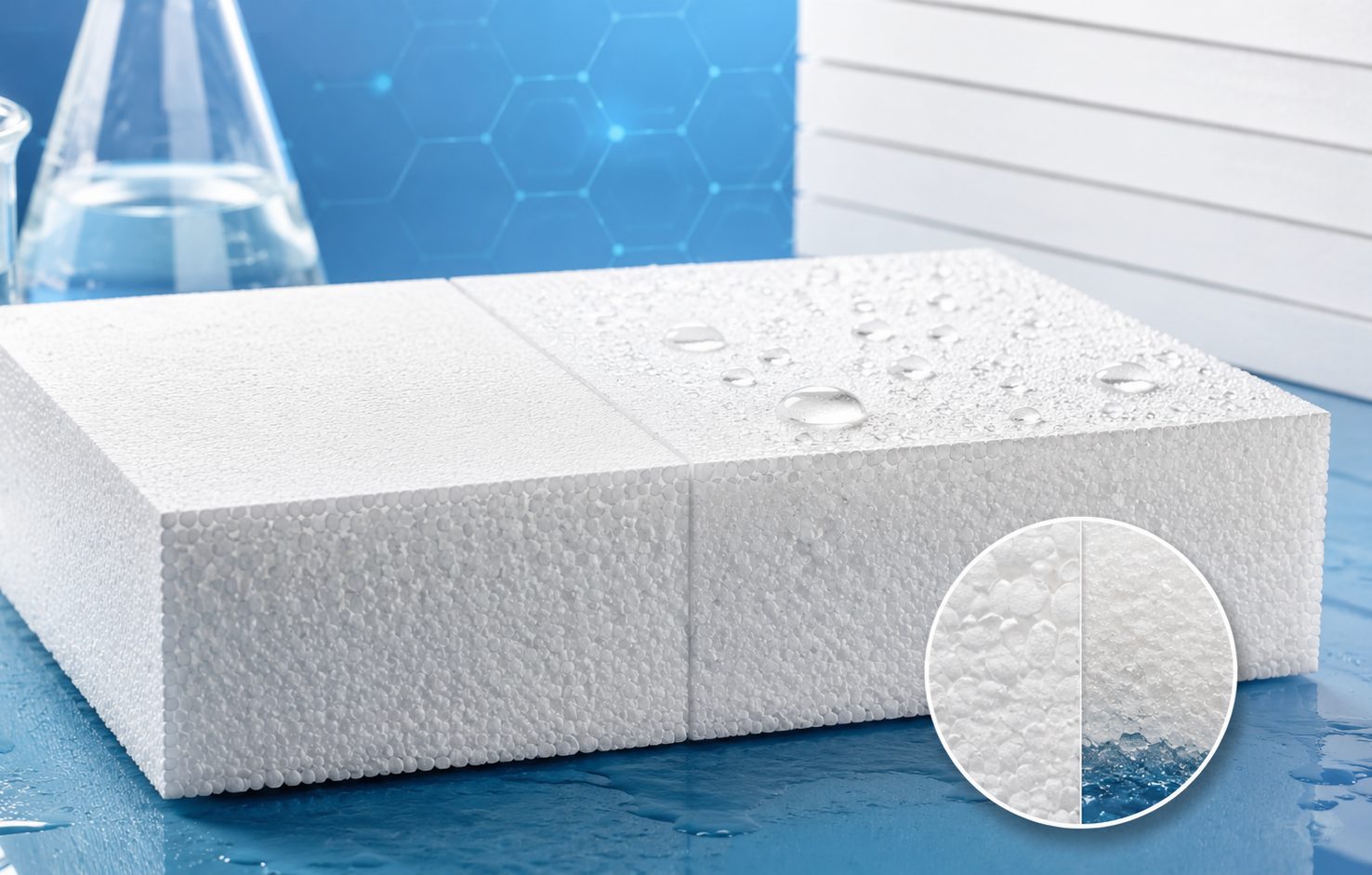
Los compradores deben comprobar EPSAntes de realizar pedidos al por mayor de paneles de espuma de poliestireno expandido (EPS), es fundamental evaluar su absorción de agua. Este paso es especialmente importante en proyectos de aislamiento, embalaje, cadena de frío y construcción. El EPS presenta una estructura de celda cerrada, pero su resistencia a largo plazo se ve afectada por la exposición a la humedad, la densidad, la fusión de las perlas y la protección de la superficie. Comprender cómo se comporta el agua en los paneles de espuma ayuda a los compradores a determinar si el material es adecuado para almacenamiento, transporte o ambientes húmedos.
Comprender la absorción de agua en paneles de espuma
La absorción de agua describe la capacidad de los materiales aislantes para retener la humedad en ambientes húmedos o mojados. Los equipos de construcción y embalaje deben gestionar esta característica para mantener un rendimiento constante del material a lo largo de su vida útil.
Los distintos tipos de espuma absorben diferentes cantidades de agua según su composición y proceso de fabricación. REPS es una opción para el embalaje de espuma. Ofrece una resistencia y dureza moderadas, y funciona bien en proyectos que requieren un alto rendimiento. El exceso de humedad puede reducir el valor aislante y debilitar la estructura, por lo que su baja absorción de agua garantiza una mayor vida útil en exteriores o bajo tierra, expuestos a la lluvia.
Un conocimiento claro de esta característica guía a los profesionales hacia el material adecuado para determinadas condiciones. En la espuma de poliestireno utilizada para la construcción, una buena repelencia al agua detiene el crecimiento de moho y mantiene el valor R constante. Elegir un tablero de calidad como HUASHENGEl material ignífugo F de [nombre de la marca] proporciona a los compradores una capa térmica fiable que se mantiene en condiciones de humedad sin una pérdida importante de rendimiento.
Composición y estructura del material EPS
El rendimiento de los EPS depende de su composición tanto a nivel molecular como estructural.
El proceso de fabricación del EPS
El proceso de fabricación del EPS sigue una secuencia detallada que determina la densidad final y la resistencia a la humedad. El EPS se forma cuando las perlas de poliestireno se expanden bajo la acción del vapor y un agente espumante. Estas perlas aumentan considerablemente de tamaño y crean una estructura que retiene aproximadamente el 98 % del aire. Esta estructura de celda cerrada proporciona un aislamiento ligero y resistente.
A continuación, se procede al proceso de moldeo de EPS, donde las perlas entran en un molde y se fusionan formando un bloque o una forma personalizada mediante vapor. La eficacia de la fusión de las perlas y la densidad resultante influyen en la absorción de agua, ya que una fusión más compacta reduce los espacios donde se puede acumular el agua.
Características estructurales que afectan la resistencia al agua
La estructura interna de la espuma constituye la principal barrera contra la entrada de líquidos. Su alto contenido de celdas cerradas impide que el agua se mueva por capilaridad. Cada celda permanece sellada y separada, lo que dificulta el paso del agua a través del material. Sin embargo, las uniones débiles entre las perlas o las zonas de baja densidad pueden permitir la entrada de humedad a través de los pequeños espacios entre las perlas fusionadas. Los recubrimientos o laminaciones superficiales ofrecen protección adicional contra el contacto con el agua. Los métodos más recientes, como la tecnología de nanoestructuras de poros cerrados que crea una red microporosa tipo panal mediante el tejido direccional de cadenas moleculares, han mejorado el rendimiento de barrera en los grados actuales de EPS.
Evaluación del rendimiento de absorción de agua del EPS en 2026
En 2026, las pruebas de absorción de agua en paneles de espuma se volvieron más precisas. Normas como ASTM C272 y EN 12087 establecen métodos claros para que los compradores puedan comparar productos de manera justa. Las pruebas de inmersión y difusión revelan el comportamiento a corto y largo plazo, y los resultados se muestran como un porcentaje en volumen o peso.
Los avances recientes en materiales EPS incluyen una mejor expansión de las perlas que reduce los huecos y lleva las tasas de absorción a nuevos mínimos. HUASHENG dirige un laboratorio de gemelos digitales que abarca bancos de genes de materiales y simulación de procesos para refinar estos resultados. Los tratamientos superficiales actualizados ahora aumentan la hidrofobicidad manteniendo intactos los valores térmicos. Los fabricantes también utilizan aditivos sostenibles que mantienen una baja permeabilidad a la humedad y aumentan la reciclabilidad. Un ejemplo es el Módulo de control de inundaciones AquaGuard, que utiliza módulos de emergencia de EPS hidrofóbicos con una absorción de agua inferior al 0,5 por ciento y muestra la alta resistencia que ahora es posible en grados especiales.
Análisis comparativo: EPS frente a otros aislamientos de espuma
Para elegir el aislamiento adecuado, es necesario tener una idea clara de cómo se comporta el EPS en comparación con otras opciones en condiciones de humedad.
Comparación entre EPS y XPS (poliestireno extruido)
El XPS suele presentar una menor absorción de agua debido a que su estructura uniforme de celda cerrada se obtiene mediante un proceso de extrusión continua en lugar de la fusión de perlas. Los modernos grados de EPS de alta densidad han reducido considerablemente esta diferencia gracias a un procesamiento mejorado. El ahorro de costes suele favorecer al EPS cuando la exposición es moderada, ya que este material ofrece beneficios térmicos similares a un precio inferior. La producción local también reduce los costes de transporte, lo que beneficia a muchos proyectos regionales que requieren grandes volúmenes.
Espumas de EPS frente a espumas de poliuretano y poliisocianurato
Las espumas de poliuretano (PU) y poliimida (PIR) pueden presentar una fuerte resistencia inicial, pero pueden perderla tras una exposición prolongada a la humedad si las capas exteriores se dañan. El poliestireno expandido (EPS) mantiene un tamaño constante incluso después de repetidos ciclos de humedad y sequedad cuando se instala correctamente. Este material muestra buena fusión, dimensiones estables, alta resistencia y amplia aplicabilidad, sin contracción ni deformación fáciles. Los datos de campo a lo largo del tiempo indican que la calidad de la instalación es un factor clave para todos los tipos de espuma, si bien la composición química del EPS le confiere una resistencia natural a la putrefacción y al crecimiento de hongos.
Consideraciones prácticas para la selección de paneles de espuma EPS
La planificación del proyecto comienza con una evaluación de las condiciones de exposición. El contacto con el suelo o la alta humedad requieren índices de absorción de agua bajos para evitar el encharcamiento. Los proyectos de techos y paredes se benefician de membranas protectoras o capas de drenaje que alejan el líquido de la espuma. Las características climáticas locales, como los ciclos de congelación y descongelación, ayudan a determinar la densidad y las opciones de revestimiento adecuadas.
Los pasos de instalación también son cruciales para limitar la entrada de humedad. Un sellado adecuado de las juntas con selladores compatibles impide el movimiento capilar entre los paneles. Los planes de drenaje y ventilación deben incluir espacios y barreras de vapor para controlar la condensación. El equipo técnico experto de HUASHENG analiza las necesidades de cada cliente en cuanto a aislamiento para edificios, embalaje y aplicaciones decorativas. Las revisiones y el mantenimiento periódicos garantizan un alto rendimiento del aislamiento al detectar los primeros signos de humedad antes de que se conviertan en problemas mayores.
Tendencias futuras en la investigación y el desarrollo de la resistencia al agua del EPS.
El progreso de la industria ahora combina la ciencia de los materiales con los objetivos de sostenibilidad.
Innovaciones que impulsan propiedades hidrofóbicas mejoradas
Los nanorevestimientos y las mezclas de polímeros se someten a pruebas para mejorar su repelencia al agua con un coste adicional mínimo. Estas superficies inteligentes repelen el agua activamente, por lo que el panel de espuma permanece seco incluso bajo fuertes lluvias. La integración con sensores inteligentes también permite el seguimiento de la humedad en tiempo real dentro de las envolventes de los edificios. Los datos ayudan a los gestores a detectar fugas o problemas de vapor de inmediato y a proteger la espuma de poliestireno en la construcción de daños permanentes.
Consideraciones de sostenibilidad en los productos EPS de próxima generación
La investigación busca mantener una baja absorción de agua, a la vez que mejora la reciclabilidad y reduce las emisiones de carbono durante la producción. HUASHENG ha invertido cientos de millones de yuanes en la primera línea inteligente del mundo que procesa materias primas de poliestireno 100 % reciclado. Los modelos circulares recuperan los paneles usados para reprocesarlos y convertirlos en nuevo material aislante, por lo que los objetivos medioambientales no comprometen el rendimiento.
Preguntas frecuentes
Q1¿La absorción de agua del EPS afecta a su clasificación de resistencia al fuego o a su rendimiento en materia de seguridad?
A1: La absorción de agua influye principalmente en la eficiencia térmica; sin embargo, los paneles de alta calidad, como los de grado FS ignífugo, priorizan la seguridad. Una buena resistencia al fuego requiere un período de envejecimiento después del moldeo para que el agente espumante residual se disuelva en la espuma.
Q2¿Cómo se relaciona la densidad de un panel de EPS con su capacidad para resistir el agua?
A2: El EPS de mayor densidad suele crear una estructura de perlas más compacta que deja menos espacio para que entre el agua. Los paneles con una clasificación de 18 kg/m³ o superior suelen mostrar una mayor resistencia.
Q3¿Pueden los materiales de EPS reciclado (REPS) ofrecer la misma resistencia a la humedad que el EPS virgen?
A3: Sí. El reciclaje físico avanzado mantiene REPS Resistencia al impacto y tenacidad intactas. La ruta física también reduce las emisiones de residuos contaminantes, al tiempo que preserva la estructura necesaria para la resistencia al agua.
 Spanish
  English
  German
  French
  Arabic