
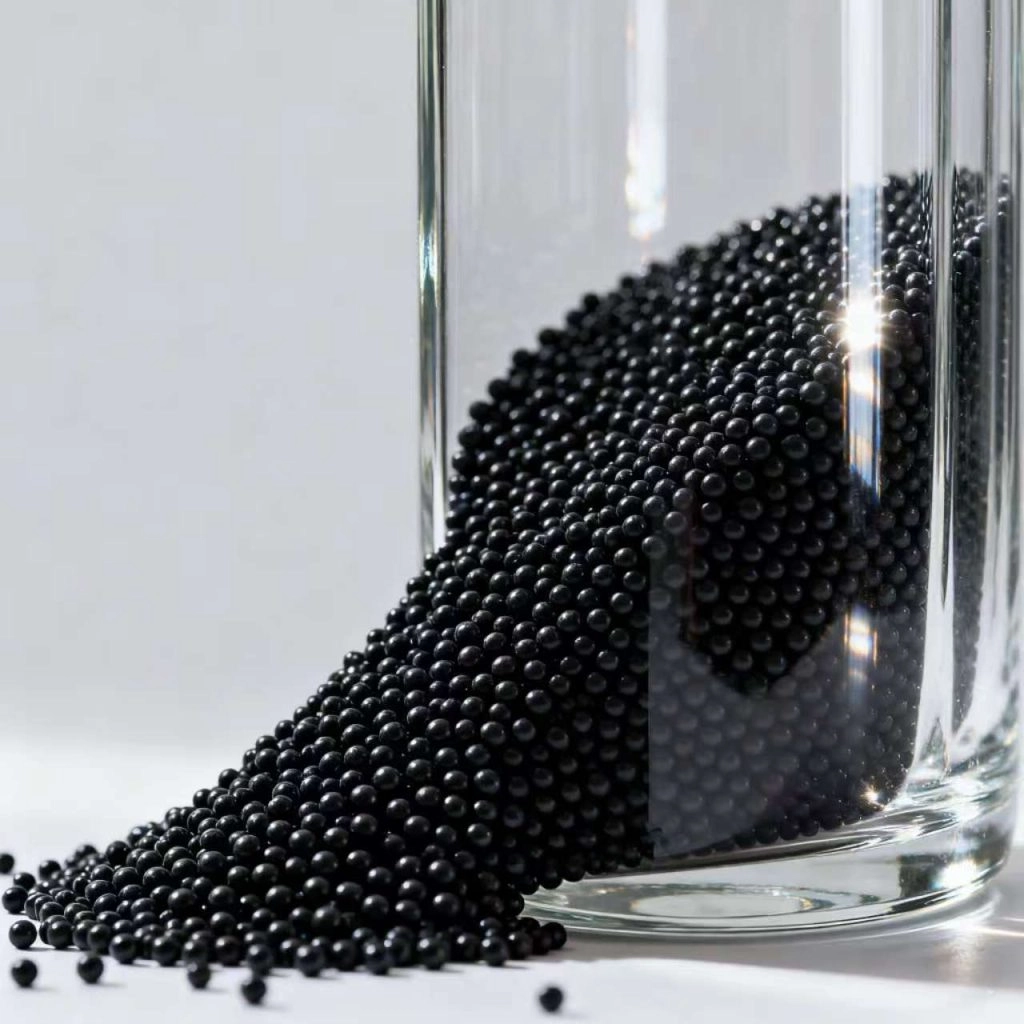
La espuma de poliestireno ya no se ve como una carga de envasado o un bloque de aislamiento básico para un solo propósito. En los sistemas modernos de fabricación y construcción, funciona como un material de ingeniería sintonizable cuyo rendimiento depende de la estructura de perlas, el método de expansión, el control de densidad y la formulación de grado, y se ha utilizado en varios campos, como sistemas de aislamiento de fachadas, recipientes de cadena de frío, envasado de equipos de precisión, etc.
Esta guía explicará, desde una perspectiva técnica práctica, cómo se forma la estructura celular de la espuma de poliestireno, qué propiedades físicas gobiernan el rendimiento, por qué existen diferentes grados y cómo la lógica de aplicación moldea la selección de materiales, con el objetivo de mapear el comportamiento del material a un uso industrial real.
¿Qué es la espuma de poliestireno en términos prácticos de material?
La espuma de poliestireno se refiere a un grupo de espumas de polímero de células cerradas que se hacen mediante la expansión de perlas de poliestireno o fusiones de polímero. Aunque químicamente similares, la ruta de producción y la morfología de las perlas tienen grandes diferencias en el rendimiento.
¿Cómo se forma la estructura celular?
Las perlas expandibles contienen un agente soplador que se activa bajo calor. Durante la preespumación, cada perla se expande en una esfera microcelular llena principalmente de aire, a continuación, después del curado, se fusiona en moldes con presión de vapor. El proceso de fusión solda las superficies de las perlas entre sí, creando una matriz continua de células cerradas.
El tamaño de la célula, el grosor de la pared y la calidad de la fusión tienen un impacto directo en las propiedades de resistencia a la compresión, resistencia al impacto y estabilidad térmica. Por lo tanto, un estricto control sobre la temperatura de preespuma, el tiempo de envejecimiento y las presiones de moldeo es tan crítico como la propia química.
¿Por qué el tamaño de la perla influye en el rendimiento?
Las perlas más pequeñas crean más puntos de fusión por unidad de volumen, lo que mejora la estabilidad dimensional y la calidad de la superficie, mientras que las perlas más grandes aumentan la eficiencia de salida pero reducen la precisión geométrica. En los envases para dispositivos electrónicos o médicos, las perlas finas uniformes limitan la concentración de estrés. En las tablas de construcción, los tamaños de perlas de gama media controlados equilibran la resistencia, el costo y la transferencia de calor.
¿Qué propiedades básicas definen el rendimiento?
La espuma de poliestireno se evalúa a través de una combinación de factores, incluyendo la densidad, la conductividad térmica, la resistencia a la compresión, la absorción del impacto y la respuesta a la humedad.
¿Cómo afecta la densidad a la fuerza y el peso?
La densidad controla la relación entre el polímero sólido y el espacio vacío. Una mayor densidad significa una mayor resistencia a la compresión y resistencia al deslizamiento a costa del precio y el peso. Por el contrario, la menor densidad mejora la eficiencia del material en la logística y las estructuras flotantes, pero limita el uso estructural.
Por lo tanto, los productores industriales clasifican los materiales en múltiples ventanas de densidad y grados funcionales en lugar de usar una sola categoría "EPS estándar".
¿Qué tan estable es el aislamiento térmico con el tiempo?
A diferencia de las espumas sopladas por gas, la espuma de poliestireno se basa principalmente en aire atrapado. Una vez finalizado el proceso de curado, la conductividad térmica permanece estable durante décadas. Para el grado avanzado con partículas absorbentes de infrarrojos, el rendimiento de aislamiento aumenta en más del 20% sobre la espuma ordinaria a densidades similares.
¿Por qué la espuma de poliestireno proporciona un alto valor en todas las industrias?
La aplicación en los campos de la construcción, la electrónica, la logística alimentaria y la automoción proviene de las mismas ventajas estructurales.
¿Por qué la resistencia al impacto es tan fiable?
La absorción de energía se produce a través del colapso celular progresivo. En lugar de agrietarse como plásticos rígidos, la espuma difunde el impacto sobre una zona de deformación. Este comportamiento protege componentes sensibles como paneles LCD, dispositivos médicos y módulos de batería de automóviles.
En sistemas avanzados modificados como REPS Los materiales, la resistencia a la compresión se puede aumentar en aproximadamente un 40% a través de la ingeniería de estructuras de poros cerrados a nanoescala, extendiendo esta resistencia al impacto en aplicaciones semiestructurales.
¿Por qué importa la eficiencia del procesamiento?
La espuma de poliestireno es compatible con líneas de moldeo automatizadas, máquinas de formación al vacío y prensas de accionamiento eléctrico. Los ciclos de curado cortos y el bajo consumo de vapor reducen la entrada de energía por unidad de volumen, lo que reduce directamente el costo de producción en la fabricación de envases y cartones de alto volumen.
¿Cómo soportan diferentes grados diferentes casos de uso?
Las categorías de materiales genéricos ya no satisfacen las demandas industriales. Los productores separan los grados por la distribución del tamaño de las perlas, la relación de expansión, el sistema retardante de llama y los modificadores térmicos.
¿Cuándo es la eficiencia de moldeo rápido la prioridad?
Las líneas de envasado de alto rendimiento requieren un flujo estable de perlas, un desmoldeo rápido y una fuerte fusión. Espuma EPS de grado de prototipo rápido B presenta un tamaño uniforme de partículas, un corto tiempo de curado, una alta eficiencia de enfriamiento al vacío y una fuerte resistencia a la fusión, y se puede usar en sistemas de moldeo automáticos utilizados en el envasado de electrodomésticos, la protección de cerámica, los flotadores y las cajas agrícolas.
¿Cuándo el rendimiento contra incendios define la elegibilidad del material?
Los proyectos de construcción e instalaciones públicas especifican cada vez más grados retardantes de llama que cumplen con los códigos nacionales e internacionales de construcción. Espuma EPS de grado retardante de llama F tiene las características de tamaño uniforme de perla y comportamiento de moldeo estable y se espera que alcance el rendimiento de combustión B2 o superior después del envejecimiento controlado, lo que lo convierte en una opción ideal para placas de aislamiento y componentes de construcción.
¿Dónde es la espuma de poliestireno más ampliamente aplicada hoy en día?
La versatilidad del material aparece más claramente en las áreas de construcción y envasado.
¿Por qué la construcción se basa en gran medida en el aislamiento de espuma?
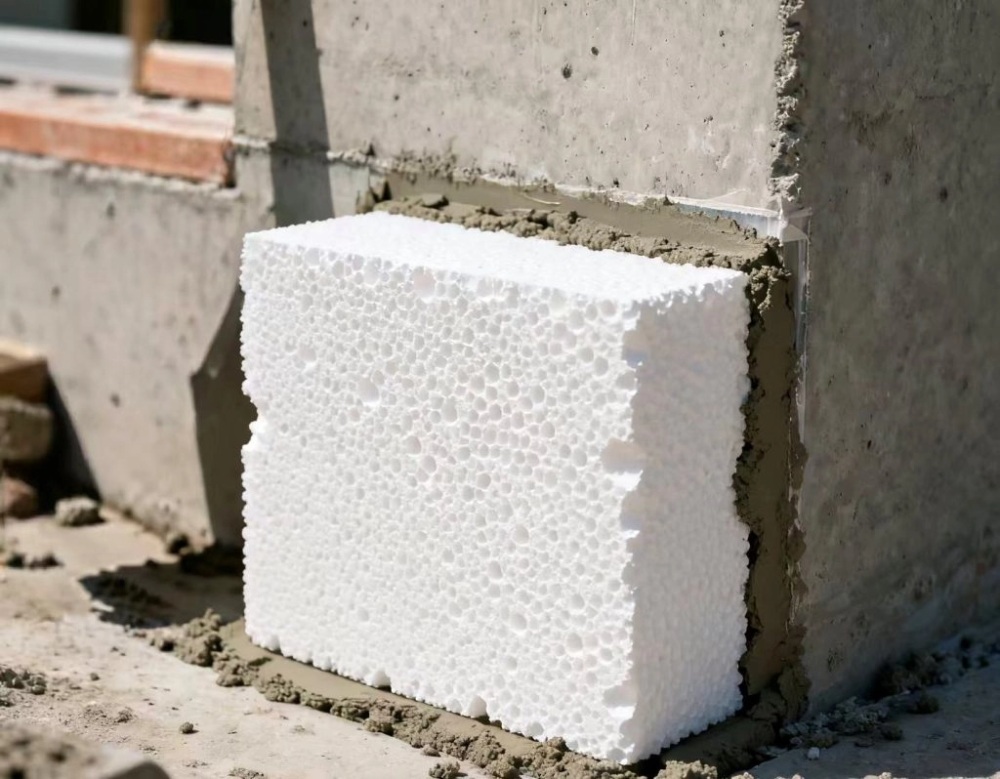
Los sistemas de aislamiento de paredes externas, paneles sándwich, componentes de aislamiento de techos y módulos prefabricados dependen de la resistencia térmica combinada con propiedades de bajo peso. Los materiales de espuma de celdas cerradas reducen la convección y minimizan la ingesta de humedad, y la densidad también controla las propiedades mecánicas bajo cargas de fachada.
Los productos de extrusión modificados con grafito proporcionan un valor de conductividad térmica que varía de 0,032 W/m·K a 0,033 W/m·K, al tiempo que conservan buenas propiedades para una alta resistencia a la compresión y un rendimiento B1 en la combustión, lo que los convierte en adecuados para edificios de ahorro de energía y envolturas de casas pasivas, una opción ideal para edificios de eficiencia energética y envolturas de mangueras pasivas.
¿Por qué el embalaje sigue siendo un caso de uso dominante?
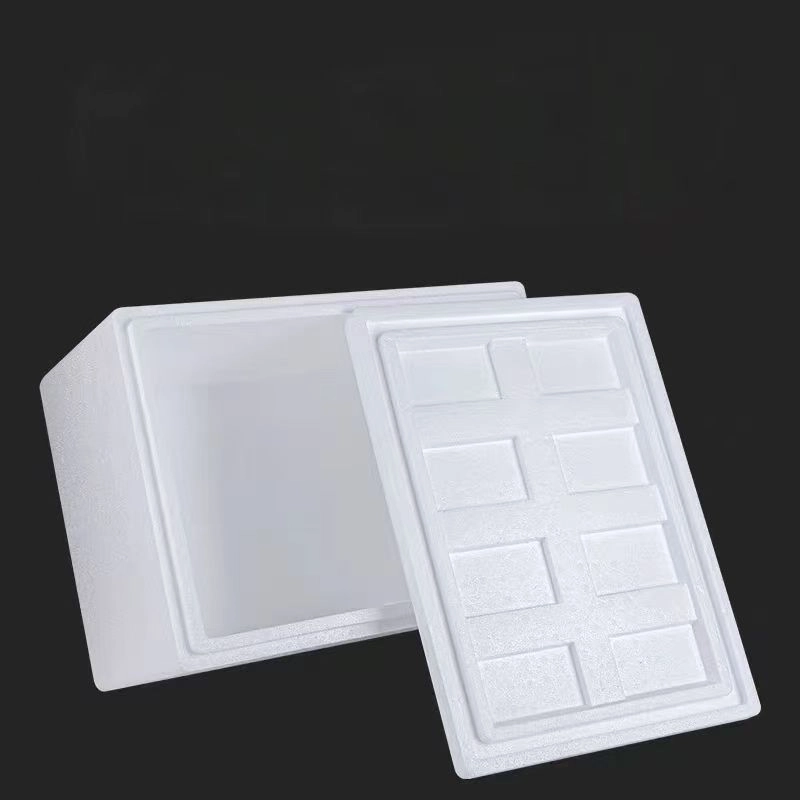
Los contenedores logísticos de la cadena de frío, las cajas de transporte farmacéutico, la absorción de choques electrónica, el envasado de alimentos, etc., todos dependen de las características de baja conductividad térmica, absorción de choques y baja masa. Los fabricantes avanzados, como HUASHENG, han logrado contenedores de espuma de conductividad ultra baja que permiten el control de la temperatura hasta 96 horas mientras reducen las tasas de daño por debajo del 1% en aplicaciones de transporte farmacéutico.
¿Quién está avanzando la tecnología de espuma de poliestireno más allá de los niveles de materias primas?
El foco de la innovación de materiales ha pasado del solo ajuste de la densidad a los elementos estructurales, el control digital del proceso de fabricación y la integración de la sostenibilidad.
HUASHENG es un fabricante de alta tecnología especializado en materiales de poliestireno expandibles para sistemas de aislamiento, envasado y edificios decorativos. Nuestra empresa opera líneas de producción inteligentes equipadas con equipos de prueba de precisión para controlar la uniformidad de la densidad, el comportamiento de compresión y el rendimiento térmico en series ordinarias, retardantes de llama y modificadas con grafito. Estos materiales se utilizan ampliamente en logística de cadena de frío, edificios prefabricados y aplicaciones de envasado resistentes al sismo.
Además, hemos establecido laboratorios gemelos digitales que integran bases de datos de genes materiales con sistemas de simulación de procesos, apoyando un rendimiento predecible a largo plazo y un diseño de grado personalizado. En virtud de nuestra tecnología de estructura de nanoporos cerrados, las nanoespumas modificadas poseen una mayor resistencia y eficiencia de aislamiento. Además, las líneas de producción de materiales reciclados recuperan más de 300.000 toneladas de espuma residual al año, ahorrando un 30% de consumo energético en el proceso de producción.
¿Cómo deben los ingenieros seleccionar el grado correcto de espuma?
La selección correcta del grado determina si un sistema funciona durante décadas o falla en años.
¿Qué preguntas deben guiar la especificación?
Cuando se trata de elegir el grado de materiales, es mejor considerar las siguientes cinco variables:
- Resistencia a la compresión requerida y deslizamiento permitido
- Conductividad térmica objetivo y rango de temperatura de servicio
- Clasificación de incendios y marco normativo
- Exposición a humedad, productos químicos o radiación UV
- Método de procesamiento: moldeo, corte, laminación o unión compuesta
¿Por qué la sobreespecificación desperdicia recursos?
La densidad excesiva es innecesaria ya que puede llevar a un alto costo en los costos de materiales, las emisiones relacionadas con el transporte y el carbono incorporado, con poca mejora compensatoria en el rendimiento estructural, mientras que una especificación inadecuada puede conducir a la deformación, el puente térmico o la falla del código de incendio. Por lo tanto, la combinación de la arquitectura de grado con cargas reales y escenarios térmicos optimiza la fiabilidad y la sostenibilidad de la ingeniería.
Conclusión
En primer lugar, la espuma de poliestireno no debe considerarse realmente en forma de productos terminados, sino como un sistema de materiales configurables. El rendimiento del poliestireno se basa principalmente en la estructura celular, niveles de densidad, morfología de perlas y aditivos funcionales, incluyendo sistemas retardantes de llama o modificadores de grafito. Estas variables permiten que la misma familia de polímeros sirva para envases electrónicos de precisión, cadenas de frío farmacéuticas, aislamiento de fachadas y componentes estructurales ligeros.
Preguntas frecuentes
P: ¿La espuma de poliestireno está limitada al uso en el envasado de objetos ligeros?
R: No. Estos materiales tienen un buen soporte para sistemas de aislamiento de fachadas, paneles sándwich y rellenos semiestructurales utilizados en equipos de transporte y edificios.
P: ¿La espuma retardante de llama tiene una resistencia menor que la de la espuma de calidad estándar?
R: No, siempre y cuando se siga el proceso adecuado. Las formulaciones actuales tienen propiedades de fusión y compresión estables mientras cumplen sus criterios de prueba para la resistencia a la llama con el envejecimiento correcto.
P: ¿Cómo aumenta el rendimiento de un aislamiento sin un aumento en el grosor?
R: Empleando grados modificados con grafito que inhiben la radiación en lugar de confiar en la estructura y la distribución de la densidad, en lugar de agregar volúmenes de perlas.
 Spanish
  English
  German
  French
  Arabic