
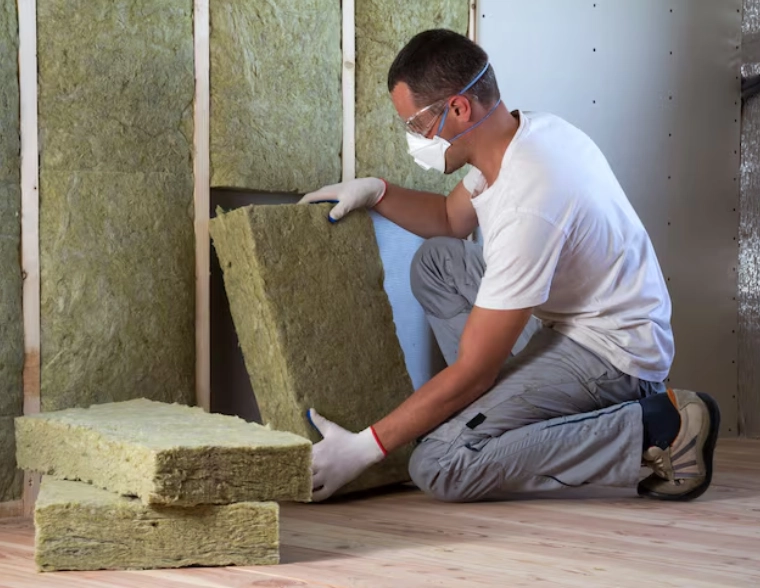
When you compare EPS and XPS insulation in real projects, the price gap often looks obvious at first glance. XPS typically comes with a higher unit price, while EPS is positioned as the more economical option. However, if you work deeply in material selection, system design, or cost control, you already know that surface pricing rarely tells the full story.
What actually drives the cost difference is not a single variable, but a combination of processing routes, density strategy, thermal targets, fire performance requirements, and increasingly, sustainability constraints. This article does not revisit basic definitions. Instead, it focuses on where costs are created, amplified, or reduced when EPS and XPS are evaluated in insulation systems—and which of those factors you can realistically control.
Who Is HUASHENG and Why Does Its EPS Portfolio Matter in Cost Discussions?
HUASHENG approaches EPS not as a commodity, but as an engineered material system. Our EPS product ranges span standard grades, flame-retardant grades, graphite-modified grades, and environmental protection grades, allowing insulation performance to be tuned rather than overdesigned.
From a production standpoint, we operate modern intelligent EPS lines supported by precision foaming control, density uniformity management, and process simulation systems, which allow EPS to be adapted for different thermal, mechanical, and regulatory targets without defaulting to higher-cost extrusion routes. In practice, this means you are not forced into a single performance–cost tradeoff. Density, bead size, foaming rate, and curing cycles can be aligned with project-specific requirements instead of conservative assumptions.
Equally important is HUASHENG’s work in recycled EPS and closed-loop material systems. By localizing raw material supply and integrating high-purity recycled polystyrene streams, we reduce exposure to volatile petrochemical pricing. For projects that must balance insulation performance with long-term cost stability, this approach reframes EPS from a low-cost baseline material into a controllable cost platform that can challenge XPS in many applications without compromising reliability.
Why Is XPS Almost Always Priced Higher Than EPS at First Glance?
The initial price gap between XPS and EPS largely comes from how the materials are made. XPS relies on continuous extrusion, higher processing pressures, and more complex additive systems to achieve uniform closed-cell structures. These factors increase capital expenditure, energy consumption, and operational rigidity.
How Do Raw Material and Process Choices Push XPS Costs Up?
Extrusion demands stable, uninterrupted production runs. Any deviation in formulation or output scale directly affects yield and scrap rates. EPS, in contrast, is produced as expandable beads that are later foamed and molded. This separation between polymer production and final shaping introduces flexibility. Batch-based foaming allows density, expansion ratio, and bead fusion to be adjusted without resetting an entire extrusion line.
As a result, XPS pricing reflects process inflexibility as much as material performance. You pay not only for insulation value, but also for the cost of maintaining continuous, energy-intensive production systems.
Is Density Really a Fair Basis for Comparing EPS and XPS Costs?
Density is often treated as a shortcut for cost and performance comparison. In practice, it is a misleading proxy.
How Does Density Optimization in EPS Change the Cost Equation?
The EPS density is not fixed, but a design variable. By adjusting foaming rate and bead structure, EPS can meet compressive strength and thermal targets at densities that are lower than commonly assumed. Many cost comparisons fail because EPS is specified conservatively, while XPS is evaluated near its optimized performance window.
When density is engineered rather than standardized, EPS often reaches the required system performance with less raw material input. This shifts the cost conversation away from “price per cubic meter” toward “performance delivered per unit cost,” where EPS gains a measurable advantage.
How Do Thermal Performance Targets Distort Cost Comparisons?
Declared thermal conductivity values are frequently used as headline metrics, but they rarely represent installed performance.
Why Is System-Level Performance More Important Than Declared λ Values?
XPS may exhibit lower initial λ values under controlled conditions, but system-level performance depends on joint treatment, installation accuracy, and aging behavior. EPS systems benefit from better adaptability in thickness selection and panel configuration, which reduces thermal bridging risks.
In many building envelopes, increasing EPS thickness slightly achieves equivalent thermal resistance without proportionally increasing cost. This flexibility allows you to optimize total insulation cost instead of chasing marginal λ improvements that carry a premium price.
Does Fire Performance Add Hidden Costs to EPS or XPS?
Fire performance is not just a checkbox, but directly affects processing cost, construction timelines, and compliance risk.
How Do Flame-Retardant Formulations Influence Total Project Cost?
Flame retardancy in EPS is integrated at the raw bead level. For example, F-flame retardant grade EPS is designed to meet building material fire classifications while maintaining stable foaming behavior and predictable aging cycles, which reduces secondary processing steps and minimizes delays caused by extended curing or rework.
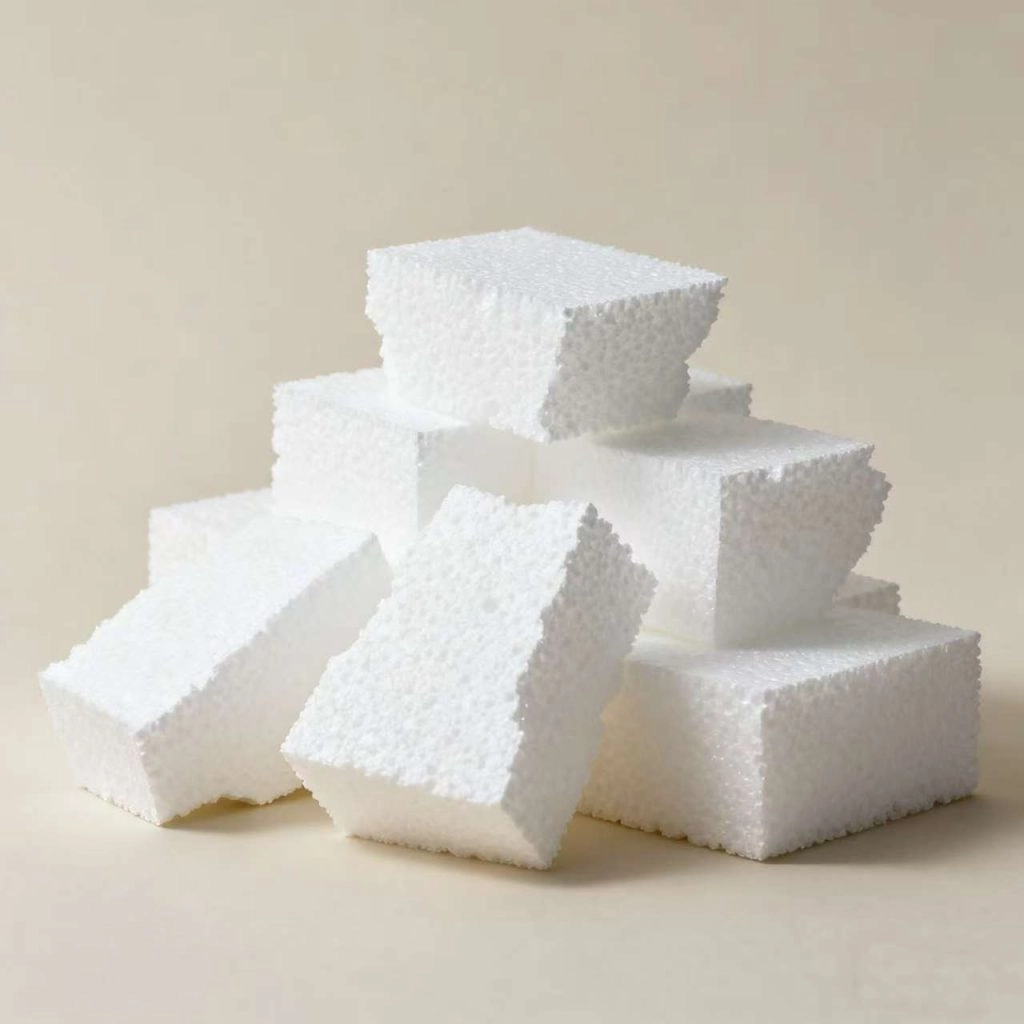
XPS often achieves fire performance through surface treatments or higher additive loads, which can increase material cost and limit recyclability. When you account for processing efficiency and compliance management, flame-retardant EPS can deliver a lower total cost even when fire standards are stringent.
Why Does Sustainability Now Directly Affect Material Pricing?
Environmental performance is no longer an external consideration. It is embedded in procurement, certification, and lifecycle cost models.
How Do Recycled EPS Streams Reshape Long-Term Cost Predictability?
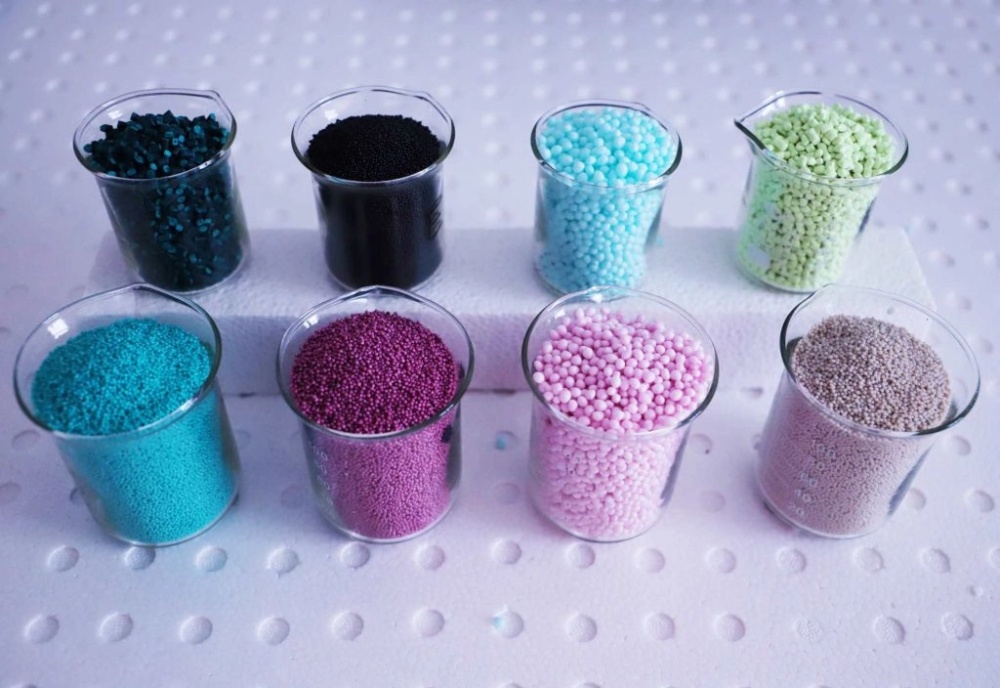
Recycled-content EPS changes the cost structure fundamentally. With REPS recycled polystyrene material, recycled feedstock replaces part of the virgin polymer input while maintaining controlled mechanical and thermal performance.
This localization of raw materials reduces exposure to global oil price swings and lowers embodied carbon. For projects tied to ESG reporting, export compliance, or long-term framework agreements, recycled EPS improves cost predictability rather than simply lowering headline price.
Can EPS Be Engineered to Replace XPS Without Sacrificing Performance?
What Conditions Must Be Met for EPS to Compete on Equal Footing?
EPS performs best when density, thickness, and formulation are aligned with real load and thermal requirements. It is well-suited for building envelopes, cold-chain systems, and applications where insulation thickness can be adjusted. XPS remains appropriate where extreme moisture exposure or severe dimensional constraints dominate.
When EPS is engineered rather than standardized, performance parity becomes achievable without inheriting XPS’s cost structure.
How Should You Actually Decide Between EPS and XPS for Cost Control?
The final decision should separate controllable factors from fixed constraints.
Which Cost Drivers Can You Control—and Which Ones You Cannot?
You can control density strategy, thickness optimization, fire-retardant integration, and material sourcing, but cannot easily control extrusion energy intensity, global petrochemical volatility, or rigid production economics embedded in XPS.
When you evaluate insulation materials through this lens, EPS becomes less about being “cheaper” and more about being adjustable. That adjustability is what ultimately drives cost efficiency across the full lifecycle.
FAQs
Q: Is EPS always cheaper than XPS over the full lifecycle?
A: Not always. Initial pricing favors EPS, but lifecycle cost depends on density design, fire performance integration, and whether recycled material streams are used.
Q: Does choosing flame-retardant EPS automatically increase project cost?
A: No. When flame retardancy is built into the raw material stage, processing efficiency and construction timelines often offset the material premium.
Q: When is XPS still the safer option despite the higher cost?
A: In applications with extreme moisture exposure, tight thickness limits, or where system flexibility is restricted, XPS may still justify its higher price.






 English
  German
  Spanish
  French
  Arabic