
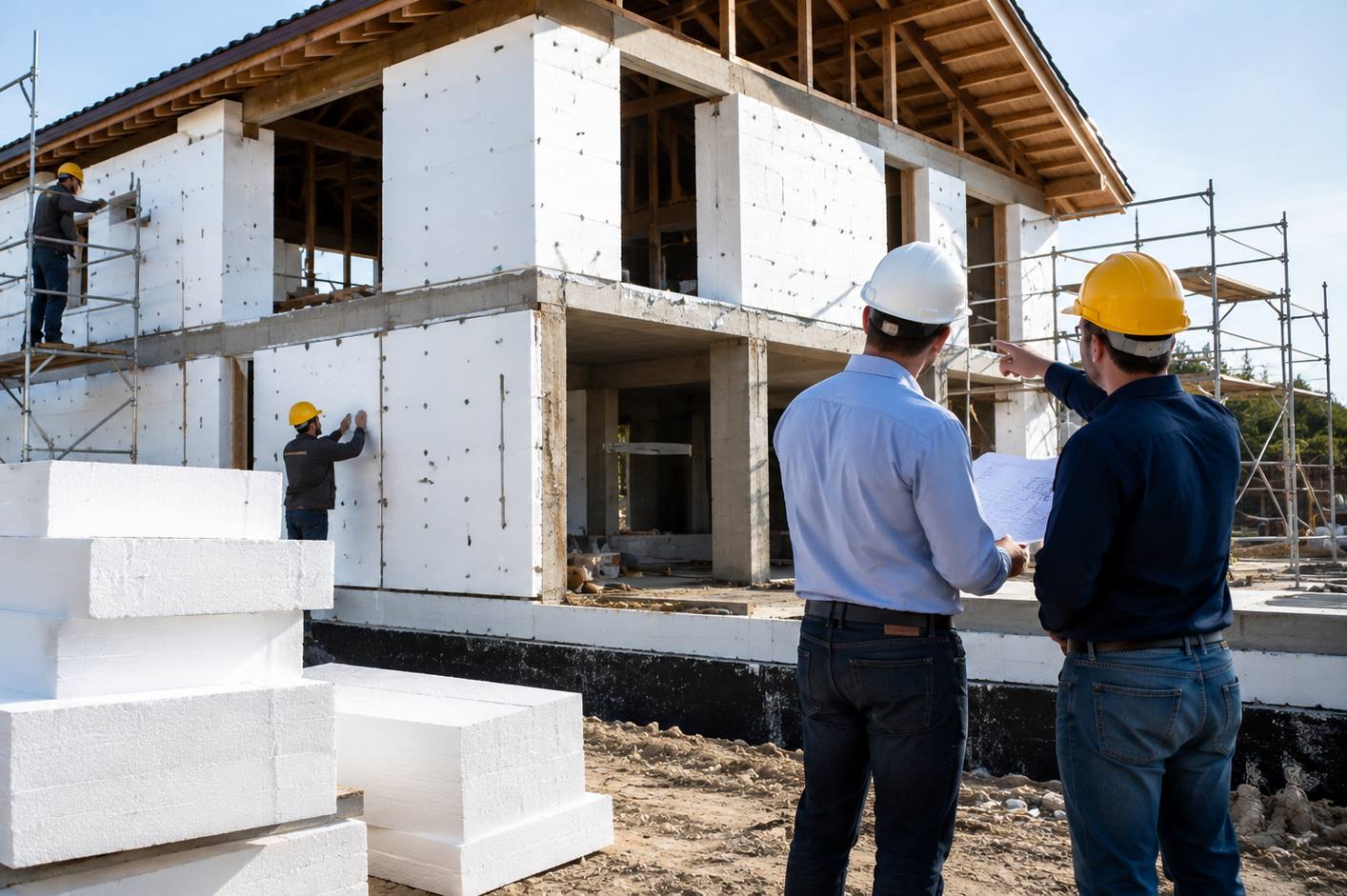
In 2026, many residential projects are looking for materials that can improve insulation, reduce building weight, and make installation easier. EPS fits these needs because it is lightweight, easy to handle, and suitable for wall insulation, prefab panels, roof layers, and floor systems.
What EPS Means in Home Construction
EPS is an abbreviation for “expanded polystyrene.” Expanded polystyrene is a lightweight, rigid foam made of expanded polystyrene beads. Within the material there are a lot of air cells. These air cells slow down the heat transfer. Because of this property, EPS is applied for wall insulation, roof insulation, floor systems, prefab panels, and light filling material.
EPS is typically supplied in the form of boards, blocks, molded shapes, or cut-to-size panels. With construction of single homes being so physically demanding, builders are always looking for ways to ease the strain. With EPS being so lightweight and easy to cut and transport, it is often used on large-scale housing projects as it puts less pressure on site staff and reduces the weight of materials to be transported.
Common Uses of EPS in Residential Projects
Wall Insulation Systems
EPS boards are generally used in exterior wall insulation systems and cavity wall insulation. The main function of such wall components is to reduce heat loss and create more comfort for the inhabitants. For residential developers, EPS boards can fulfill their energy-saving requirements without adding too much weight to the wall system.
Roof and Floor Insulation
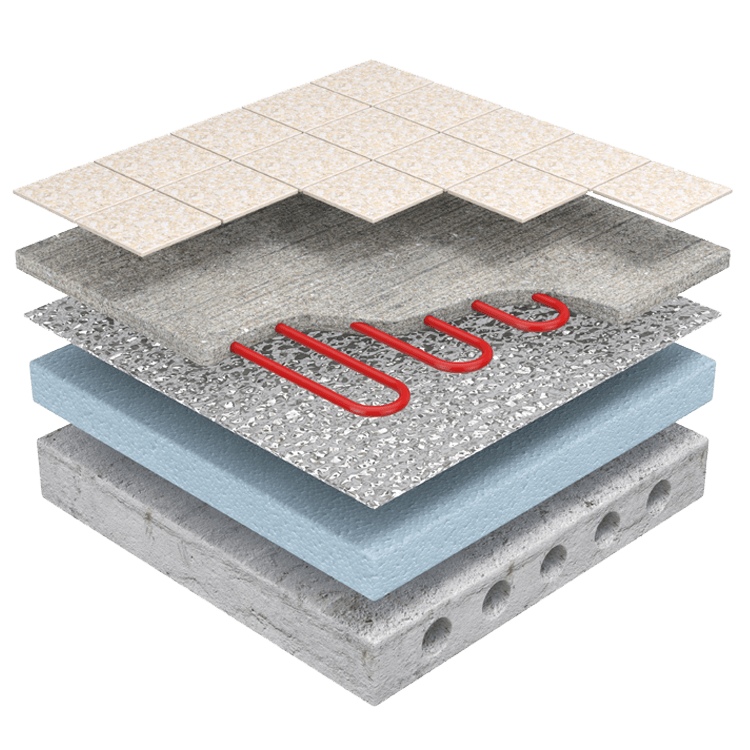
EPS can be used underneath roof layers, slabs, or floor screeds. When purchasing for use in load-bearing areas, it is wise to check the compressive strength of the EPS board. A low-density board is fine for lightweight insulation but may not be suitable for bearing loads.
For roofing, drainage and waterproofing layers need to be provided. Although EPS is suitable for normal exposure to moisture, it is not a 100% waterproof covering material and will be better protected with suitable outer layers and detailing.
Prefab and Modular Housing
The main materials used in prefab housing projects are light, easy to transport, and easy to process. EPS blocks and panels are ideal for use in prefab housing. They can be cut into required sizes, such as standard sizes, can be molded into required shapes for panel systems, or can be used as cores for insulation panels.
Lightweight Fill and Civil Use Around Homes
EPS blocks can be used as lightweight fill in certain residential ground works, such as landscape features, road approaches, and poor soils. The main advantage of EPS blocks as fill is that they are light, thus exerting less pressure in the fill than conventional fill materials. This use requires engineering review. Find out the compressive strength, creep characteristics, and how to install instead of treating these EPS blocks as simple packaging foam.
Why Builders Use EPS Foam Blocks
Lower Weight on Site
One of the obvious advantages of EPS foam is that it is light. This means that there is less weight to carry around. This in turn reduces the amount of labor required to move the EPS foam around and install it. On a large number of houses or a lot of repeated wall sections, this can save a lot of time.
Lower weight also affects transport. More material can be shipped with less total load, depending on packing design and order volume. For export buyers, this can be useful when comparing landed cost, not just factory price.
Good Thermal Performance
EPS works well as insulation because the closed-cell structure traps air. Air is a weak heat conductor, so the material slows heat movement through walls, roofs, and floors. In housing projects, this supports more stable indoor temperatures. HUASHENG supplies EPS insulation panels as well as different types of boards for building purposes. Different boards have different purposes and thus can be chosen by builders to meet different objectives of insulation, building code requirements, etc.
Easy Cutting and Custom Sizing
EPS is relatively easy to cut or shape compared with hard boards. Therefore, EPS is perfectly suitable for custom wall parts, roof details, insulation parts, or as finished panels for buildings in a prefabricated version. For business customers of EPS, even non-standard sizes can be produced and sent directly to the construction site in order to avoid waste.
What Buyers Should Check Before Bulk Orders
Density and Compressive Strength
Density is one of the key figures in purchasing engineered wood. High-density grades are also strong; however, they are more expensive than low-density material. It is important not to make the false economy of buying the cheapest grade, as a soft board will not only fail under load but can also split during fixing.
For wall insulation, a moderate density is usually sufficient. For applications like floors, roofs, or fills, however, the compressive strength will be more important. So always ask the supplier for the recommended density range for the particular application and also ask for test data if you order the material for a formal building project.
Thermal Conductivity
Thermal conductivity is a measure of how well a material slows heat transfer. In general lower values are better for insulation. This parameter is used to design building components and to choose the right materials and thicknesses for walls and roofs in order to achieve the right energy performance.
When specifying insulation, thermal conductivity should be compared with panel thickness. A thin, poor-quality thermal insulator may not meet specifications, whereas a better-quality thermal insulator may enable reduced thickness to achieve the same specifications, which is particularly important for certain residential energy performance regulations.
Water Absorption and Moisture Control
EPS has a closed-cell structure, but that does not mean it is fully waterproof. Water can still enter through gaps, damaged edges, poor installation, or long exposure. For foundations, roof layers, or damp climates, this detail matters.
Request for water absorption data. Surface treatment, vapor barrier, drainage layer, or protective membrane required. EPS can be used in damp-related building systems but designed appropriately.
Flame-Retardant Grade
Builders must check whether, in their market area, use of flame-retardant EPS is required. In many housing projects, EPS is used as core material inside approved wall or roof systems. These systems are covered with protective layers like plaster, dry lining boards, or cladding. Flame Retardant Polystyrene Board is one of the building products offered by HUASHENG as a type of board for B2B buyers who need building products and have fire code requirements in their projects.
Sustainability and Recycling
Sustainability is becoming a key criterion when selecting building materials. This affects not only manufacturers of building materials, but also developers, prefab home manufacturers, and importers of construction materials. The recyclability of EPS has improved in recent years; however, this only works if a proper system for collection and processing is in place.
The HUASHENG REPS material is offered as a recyclable EPS foam material for use in making foam packaging materials as well as for construction EPS materials. The waste recycling rate is greater than 95% and is therefore a product line that lower-waste material buyers can consider reviewing.
EPS Foam Blocks vs. Traditional Home Construction Materials
EPS insulation boards and concrete blocks should not be treated as direct substitutes because they serve different roles. Concrete blocks provide structural load-bearing support, while EPS is mainly used for insulation, lightweight filling, and non-load-bearing shape support. In many home construction projects, the two materials work together rather than replace each other.
Compared to mineral wool, which is often used as fire protection material in construction, EPS is light and easy to cut. Mineral wool has very good fire-resisting properties, but due to high density and bad workability, it is not always the best solution. In comparison to XPS foam boards, EPS is more price aware, and more densities are available on the market. However, XPS performs better in long-lasting wet conditions. The better material for thermal insulation depends on the location where the material is used.
FAQ
Q1: Can EPS foam blocks be used for wall insulation?
A1: Yes. In wall insulation systems, EPS is often supplied in board and block form. This means the buyer must also check the thermal performance, the size tolerance, the fire performance, and the finishing system performance.
Q2: Are EPS foam blocks waterproof?
A2: EPS is moisture resistant but not fully waterproof, and long-term exposure to water, lack of closed joints, edge damage, etc., can affect performance. Membranes, drainage, and proper sealing will enhance the performance of EPS.
Q3: What should B2B buyers check before ordering EPS in bulk?
A3: When purchasing insulation materials, customers should check for the following: density, compressive strength, thermal conductivity, water absorption, fire resistance, possibility of producing custom sizes, test reports, methods of packaging insulation materials, and experience of suppliers in construction projects. If you have any questions, please contact us.
 English
  German
  Spanish
  French
  Arabic