
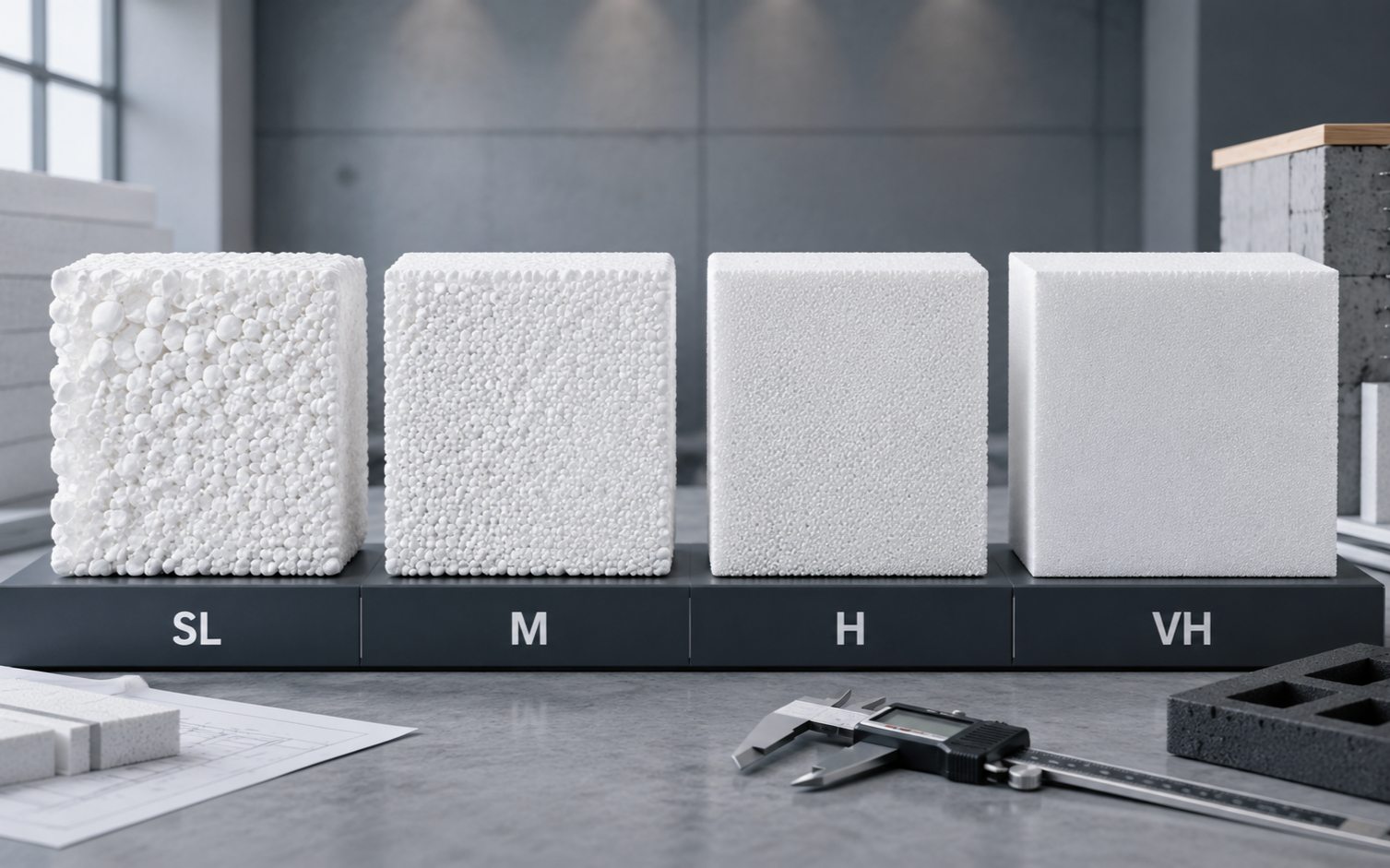
EPS Schaumstoff Schaumstoff ist in verschiedenen Dichteklassen erhältlich: SL, M, H und VH. Diese Bezeichnungen mögen einfach erscheinen, beeinflussen aber die Eigenschaften des fertigen Schaumstoffs in realen Projekten. Für Geschäftskunden ist die Dichte nicht nur eine Zahl im Datenblatt. Sie wirkt sich auf Gewicht, Festigkeit, Wärmedämmung, Formbarkeit, Versandkosten und sogar die Produktstabilität bei Nachbestellungen aus.
EPS-Schaumdichte und ihre Bedeutung
Das Konzept der EPS-Schaumdichte
Die Dichte von EPS-Schaum (expandiertem Polystyrol) gibt an, wie viel Masse der Schaum in einem bestimmten Volumen enthält. Sie wird üblicherweise in Kilogramm pro Kubikmeter (kg/m³) gemessen. Dieser Wert steht in engem Zusammenhang mit Druckfestigkeit, Wärmedämmung und Formstabilität.
Warum die Dichte in Ingenieur- und Bauanwendungen wichtig ist
EPS-Schaumstoff genießt hohes Ansehen hinsichtlich Druckbeständigkeit, Temperaturbeständigkeit, Feuchtigkeitsbeständigkeit und Langlebigkeit. Hochdichter EPS-Schaumstoff bietet eine effektivere Druckfestigkeit und Formstabilität. Er eignet sich ideal für die Dämmung von Fundamenten, den Bau von Straßenböschungen und Stützmauern sowie für weitere Anwendungen, die eine hohe Tragfähigkeit des Schaumstoffs erfordern.
EPS-Schaum mit niedriger Dichte ist leichter und in der Regel ein effektiver Dämmstoff, der mit weniger Material auskommt. Dieser Schaumtyp wird üblicherweise für leichte Verpackungen, nichttragende Dämmungen und große Platten verwendet, bei denen die Belastbarkeit eine wichtige Rolle spielt. EPS-Schaum mit hoher Dichte ist deutlich fester als sein Pendant mit niedriger Dichte.
Klassifizierung der EPS-Schaumstoffdichten: SL, M, H und VH
EPS-Materialien werden häufig nach ihrer Dichteklasse eingeteilt. Die vier gängigen Klassen sind Standard Light (SL), Medium (M), High (H) und Very High (VH).
EPS-Schaumstoff mit Standard-Leichtdichte (SL).
EPS-Schaum der SL-Klasse hat üblicherweise ein Gewicht von etwa 10–15 kg/m³. Er wird eingesetzt, wenn das Projekt ein geringes Gewicht, einfache Handhabung und gute Wärmedämmung erfordert, aber keine hohe Tragfähigkeit.. HUASHENGDie P-Extra-Leichtmaterialserie von [Markenname] entspricht dieser Richtung. Sie ist für leichte Verpackungen und Dämmplatten konzipiert.
Dieser Schaumstoff kann ein hohes Expansionsverhältnis erreichen, in manchen Fällen bis zum 100-Fachen des ursprünglichen Volumens. Dadurch eignet er sich für Schutzverpackungen, Keramikverpackungen, den Schutz elektronischer Produkte und die Herstellung großer Platten, bei denen ein geringes Gewicht wichtiger ist als eine hohe Festigkeit.
EPS-Schaumstoff mittlerer (M) Dichte
EPS-Schaum der Güteklasse M hat üblicherweise ein Gewicht von 16–20 kg/m³. Dies ist ein gängiger Mittelwert für viele Anwendungen im Bauwesen und in der Verpackungsindustrie. Er bietet eine höhere Festigkeit als SL-Schaum bei gleichzeitig geringem Gewicht und niedrigen Kosten.
HUASHENGs E-Standard-Material und FS-flammhemmende Güteklassen Sie eignen sich für diese Art der Verwendung. Sie werden häufig für Wanddämmplatten, Zierleisten und standardmäßige EPS-Formteile ausgewählt, bei denen eine mittlere Festigkeit ausreicht.
Für viele B2B-Käufer ist EPS der Dichte M ein praktischer Ausgangspunkt. Es bietet eine stabile Wärmedämmung, gute Formbarkeit und ausreichende Festigkeit für viele Anwendungen mit geringer Beanspruchung. Wenn ein Projekt ein ausgewogenes Verhältnis zwischen Preis und Leistung erfordert, ist EPS der Dichte M oft die erste Wahl.
EPS-Schaumstoff hoher Dichte (H)
EPS-Schaum der Güteklasse H hat üblicherweise eine Dichte von etwa 21–25 kg/m³. Er wird eingesetzt, wenn für das Projekt eine höhere Druckfestigkeit, eine bessere Dimensionsstabilität oder eine zuverlässigere Leistung unter Druck erforderlich ist.
Die nach europäischem Standard FSH zertifizierte Flammschutzklasse von HUASHENG ist ein gutes Beispiel. Sie bietet eine um über 20 % höhere Druckfestigkeit als herkömmliche Klassen und erfüllt gleichzeitig die Brandschutzklasse B1. Dadurch eignet sie sich ideal für Gebäudedämmprojekte mit hohen Anforderungen an Brandschutz und Festigkeit.
Die Dichte H ist zwar teurer als SL oder M, kann aber das Risiko bei Projekten verringern, bei denen der Schaum formstabil bleiben und einem höheren Druck standhalten muss.
EPS-Schaumstoff mit sehr hoher Dichte (VH).
EPS-Schaum der Güteklasse VH hat üblicherweise ein Gewicht von über 26 kg/m³, abhängig von den Herstellervorgaben. Diese Güteklasse wird für anspruchsvollere Anwendungen eingesetzt, wie z. B. hochbelastbare Strukturfüllungen, Aufprallschutzmodule, Fundamente im Tiefbau und spezielle Industrieteile.
HUASHENGs maßgeschneiderte REPS-Lösungeneinschließlich der Sonderqualität (Füllmaterial) – G und der Rußqualität – FGE, können diese hochfeste Richtung einschlagen, wenn Projekte eine stärkere Druckfestigkeit, antistatische Eigenschaften oder besondere Leistung erfordern.
Praktische Anwendungen unterschiedlicher EPS-Dichten in modernen Bauprojekten
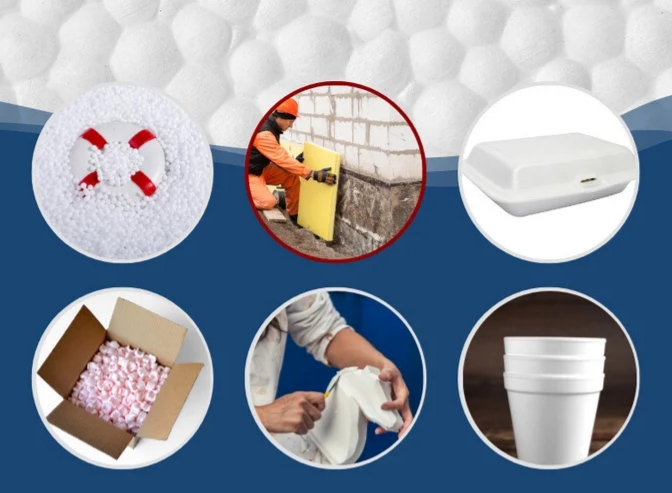
Für Wohn-, Gewerbe-, Infrastruktur- und Verpackungsprojekte werden EPS-Schaumstoffe mit unterschiedlichen Dichten verwendet. Entscheidend ist die Wahl der Dichte, die den tatsächlichen Einsatzbedingungen entspricht.
Dämmsysteme in Wohn- und Gewerbegebäuden
Schaumstoffe der Güteklassen SL oder M werden häufig für Wände, Dächer, Decken und Fassadenpaneele verwendet. Diese Bereiche benötigen eine stabile Wärmedämmung, jedoch nicht immer eine hohe Druckfestigkeit. Die EPS-Schaumstoffprodukte von HUASHENG bieten in der Gebäudedämmung eine zuverlässige Wärmebarriere, die zur Reduzierung des Heiz- und Kühlbedarfs beiträgt.
Infrastrukturentwicklung und Tiefbau
Schaumstoffe der Güteklasse H oder VH werden verwendet in Straßenböschungen, Brückenzufahrten, Stützmauern und Fundamenthohlraumfüllungen. Ihr geringes Gewicht trägt zur Reduzierung des Bodendrucks bei, während die höhere Dichte eine bessere Stabilität unter wiederholter Belastung gewährleistet.
Für diese Projekte sollten Käufer Angaben zur Druckfestigkeit, zum Kriechverhalten, zur Dichtetoleranz, zur Wasseraufnahme und zu Montagehinweisen einholen. EPS-Schaumstoffe für den Tiefbau sollten sorgfältiger ausgewählt werden als herkömmliche Verpackungsschaumstoffe.
Industriedesign- und Verpackungslösungen
Leichte SL-Verpackungsoptionen wie die B-Qualität für Rapid Prototyping schützen empfindliche Instrumente beim Transport und halten gleichzeitig das Verpackungsgewicht gering. Dies ist vorteilhaft für Elektronik, Keramik, Präzisionswerkzeuge und Exportverpackungen.
Für teurere oder empfindlichere Güter kann eine Dichte von M oder H besser geeignet sein. Die richtige Dichte hängt vom Produktgewicht, dem Fallrisiko, der Kartonaufteilung und dem geplanten Transportweg ab.
Beschaffungshinweise: So wählen Sie EPS-Schaumstoffqualitäten für Projekte im Jahr 2026 aus
Einkaufsteams sollten die Dichte mit dem tatsächlichen Einsatz, der Lieferantenstärke, Prüfdokumenten und der Lieferstabilität verknüpfen. Eine Dichteklasse ist nur dann sinnvoll, wenn der Lieferant diese auch bei Großbestellungen stabil halten kann.
Dichte an Anwendungs- und Leistungsanforderungen anpassen
Für jedes Projekt ist eine individuelle Dichteentscheidung erforderlich. Leichte Verpackungen können mit SL-Qualität gefertigt werden. Mittelschwere Bauplatten eignen sich für M-Qualität. Hochbelastete Bauprojekte erfordern H- oder VH-Qualitäten, beispielsweise Graphit-Polystyrol (Extrusionsverfahren) – S-33.
Durch die Verwendung gemischter Sorten lässt sich die Produktpalette und die Projektabdeckung optimieren.
Manche Projekte erzielen mit gemischten Güteklassen bessere Ergebnisse. So können beispielsweise M-Güteklassen-Paneele im Inneren eines Systems eingesetzt werden, während H-Güteklassen-Schichten den äußeren Druck oder Bereiche mit höheren Leistungsanforderungen aufnehmen. Dadurch lassen sich die Kosten kontrollieren, während gleichzeitig die Festigkeit dort gewährleistet wird, wo sie benötigt wird.
Lieferantenkapazitäten, Anpassungsmöglichkeiten und Chargenstabilität prüfen
HUASHENG bietet Komplettlösungen inklusive Lösungsentwicklung, Mustererstellung, Fertigung und Logistik. Der Käufer muss sicherstellen, dass der Lieferant kundenspezifische Rezepturen, eine stabile Dichte und gleichbleibende Produktqualität auch bei Großserien gewährleisten kann.
Bestätigen Sie Muster, Mindestbestellmenge, Lieferzeit, Exportverpackung und Kundendienst.
Vor Großbestellungen sollten Käufer Muster, Mindestbestellmenge, Lieferzeit, Verpackungsmethode, Exportdokumente und Kundendienst bestätigen. Die Musterprüfung sollte der realen Anwendung entsprechen und nicht nur Laborwerte liefern. Bei internationalen Projekten trägt ein reaktionsschneller Kundendienst dazu bei, Verzögerungen bei Installation oder Produktion zu vermeiden.
FAQ (häufig gestellte Fragen)
Frage 1: Wovon hängt ab, welche EPS-Schaumdichte für ein bestimmtes Projekt ausgewählt werden sollte?
A1: Letztendlich kommt es darauf an, was wichtig ist – Wärmedämmung, Tragfähigkeit, Budget oder langfristige Stabilität. Die Klassen SL und M eignen sich gut für Anwendungen, bei denen es um Wärmedämmung oder Verpackung geht, während die Klassen H und VH für Konstruktionen und Fundamente sowie andere anspruchsvolle Anwendungen wie Formgebung geeignet sind.
Frage 2: Sind die EPS-Schaumprodukte von HUASHENG nach internationalen Umweltstandards zertifiziert?
A2: Ja. Die Anforderungen an den CO₂-Fußabdruck gemäß ISO 14067:2018 für die Regeneration des expandierten Polystyrol-Masterbatches von HUASHENG betragen 719 kg CO₂.2 pro Tonne. Das gleiche Produkt erfüllt auch die EU-REACH- und RoHS-Anforderungen, wie durch Prüfzertifikate von SGS vom September 2024 bestätigt wurde.
Frage 3: Wie können Käufer die Spezifikationen des EPS-Schaums vor einer Großbestellung anpassen?
A3: HUASHENG bietet maßgeschneiderte Lösungen durch sein digitales Zwillingslabor, Materialgenbanken und Prozesssimulationssysteme. Käufer können Partikelgrößenbereiche, Zieldichten, Brandschutzklasse, Festigkeitsanforderungen, Mindestbestellmengen, Lieferzeiten, Exportverpackungen und weitere Details besprechen. Kundendienst vor Bestätigung der Produktion.
 German
  English
  Spanish
  French
  Arabic