
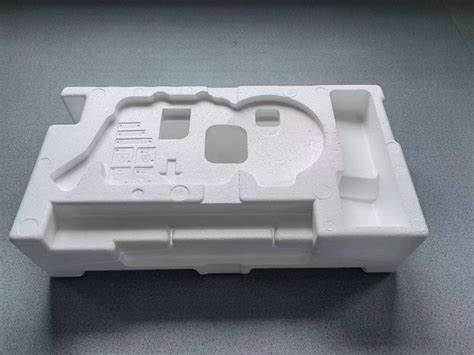
EPS insert design has to account for the moment the product leaves the tray. Can the user reach a suitable lifting point while the remaining foam still supports the load? If removal means pulling a fragile projection or breaking an obstructing rib, a good fit in transit has left a handling problem unanswered.
Take an illustrative instrument with an exposed connector and no convenient grip opening. It could arrive undamaged, then have that connector bent by someone using it as a handle. There is no shipping failure in this example. The missed step is removal, which belongs in the same review as loading and transport.
What Should EPS Insert Design Achieve During Removal?
A technician unpacking at a clear bench and a customer opening a box on the floor won’t approach the tray in the same way. Decide who the design is for before approving its removal method. The access has to work in those conditions, with the instructions that person will receive.
Identify safe grips and vulnerable features
On the drawing, distinguish the handles or surfaces approved for lifting from the connectors, cosmetic panels and projections that mustn’t take the weight. The product designer needs to identify them. Packaging removal access can then lead towards the approved grip, with enough foam left to perform the supporting job.
A finger pocket doesn’t establish that a heavy or awkward product is safe to lift by hand. The responsible team must determine the handling method, equipment and number of people for its weight and shape. Put that method into the instructions used for the trial.
Follow the product all the way out of the cavity. A part that sits comfortably may have to tilt past a wall on removal, bringing another surface into contact with foam. Check for rubbing and trapping along that path, including vulnerable features that never touch the tray when seated.
Bring an annotated product drawing when you explore HUASHENG’s EPS solutions. Mark where the load can be lifted and how the intended user is expected to remove it; cavity dimensions alone won’t convey that sequence.
Which Material Details Support EPS Insert Design?
Material selection affects the molded part, but no grade name proves that a removal feature will work. Discuss the intended shape and use with the material family, then evaluate a production-intent sample. Small access features deserve the same attention as the main product cavity.
HUASHENG’s B quick grade is intended for electrical packaging, panels and precision instrument packaging using traditional machines or automatic vacuum molding machines. Its listed features include fast molding, high strength, a smooth surface and good overall performance. These are relevant starting characteristics when a tray must hold its shape during normal handling, while the access feature still needs evaluation in the finished part.
HUASHENG’s P ultra-light grade is intended for large panels, electrical packaging and ceramic lamp packaging produced on automatic vacuum forming machines. Its listed features include high foaming efficiency, storage stability, smoothness, toughness and multiple pre-foaming capability. Specifications 301 and 302 list particle-size ranges of 1.0–1.8 and 0.8–1.3 mm with single-time expandable ratios of 80–100 and 70–90 respectively.
HUASHENG customizes REPS performance, particle size and colors for individual products. Its stated standard particle range is approximately 0.8–1.2 mm; a representative tray project uses 0.65–0.8 mm. Liquid crystal panels, phones, tablets, medical products and automotive products are among the stated applications. Those examples give a tray inquiry context, without qualifying a common grip or support geometry for every application.
Review customized REPS options with the removal sequence marked beside the proposed grip opening, relief or support. A picture of the empty tray leaves out the user’s part of the design.
B specification 303 lists 0.6–1.0 mm particles and a single-time expandable ratio of 40–60. B specification 401 lists 0.3–0.8 mm and 30–50. The same quick-grade family is listed for precision instrument packaging as well as electrical packaging and panels.
How Can Packaging Removal Access Preserve Protection?
Cutting an access pocket also cuts away foam. Before accepting its position, check what that material was doing: carrying a load, maintaining impact clearance or keeping an edge protected. A more convenient grip may leave a rib too weak if those functions are overlooked.
Separate the lifting route from the load-bearing seat
Custom foam inserts may support a strong frame while providing a different opening for fingers or an approved lifting aid. The remaining section and clearances still need checking. Enlarging an opening isn’t automatically helpful when the foam beside it has a structural job.
For a lamp, for example, access beside a stable base may be worth comparing with access around its neck. That is a question for the actual product and handling method, not a ready-made lifting instruction. Approve the geometry only after it has been evaluated in that context.
With a two-piece insert, watch what happens as the upper piece comes off. The lower piece must continue to support the product, and the lid mustn’t unexpectedly carry it upwards before the user has a secure grip. Staged removal needs a stable intermediate position too.
Put the cables, brackets and instruction pack into the trial box. They may obstruct a hand opening or fall towards a vulnerable surface as the top piece is removed. Unpacking damage prevention concerns the contents as packed, rather than the main product in an otherwise empty tray.
Read HUASHENG’s REPS material information while comparing the proposed support and access geometry. Keep the actual product and packing sequence central to the discussion.
How Should Buyers Test Unpacking Damage Prevention?
Use representative users with production-intent packaging and the required safety instructions. Record hesitation, mistaken grips and unexpected force as the removal proceeds. The designer already knows the intended route; someone seeing the package for the first time can reveal where that route is unclear.
- Confirm the packed condition after the agreed transport simulation.
- Record the sequence of opening and removing each component.
- Observe grip choice, clearance and product stability.
- Inspect the product and insert after removal.
- Repeat the evaluation after any access or support revision.
Use defined acceptance criteria. These might include no contact with a specified cosmetic surface, no damage to an identified projection and successful removal using the approved method. If handling effort needs measurement, have the responsible team specify the procedure rather than relying on the word “easy.”
Custom foam inserts should be checked at relevant product and package tolerances. An opening that works on a nominal sample may be difficult with a larger product or a tighter cavity. Agree which configurations the trial needs to represent and keep their identities in the record.
HUASHENG begins customization by collecting application scenarios and project features. Its services extend through requirement analysis, solution design, samples, manufacturing and logistics delivery. Bring removal into that initial discussion, while access and support can still be considered before the shape is fixed.
After approval, connect the unpacking instructions to the same insert revision. A later cavity change can invalidate an old illustration or sequence. Make the packing line aware of the required orientation so the customer encounters the package as tested.
Check the first moment when the product leaves its supports. The package may remain stable while seated and become awkward only when one side rises.
Conclusion
Keep the approved removal sequence with the EPS insert design and its revision. A useful grip, stable intermediate support and enough access need to survive the move from sample to production. Send HUASHENG your product and unpacking requirements with the complete contents identified, so the proposed sample can be assessed through loading, transit and removal.
FAQs
Q1: Does a tight fit prove good EPS insert design?
A1: No. Check loading, transport protection and removal. A product can be well restrained yet difficult to lift without contacting a vulnerable feature.
Q2: Can custom foam inserts include grip openings?
A2: They can be proposed as part of the design. Check the finished sample with the supplier to establish whether the grip opening leaves the required support and protective clearances intact.
Q3: What should an unpacking damage prevention trial observe?
A3: Observe the complete removal sequence, safe grip use, clearance, stability and product condition afterward. Include accessories and the intended handling instructions.
 English
 German
 Spanish
 French
 Arabic