
An EPS carbon footprint only provides real value when you understand exactly what it covers. You need clear details to make sense of the data. These details include the exact product name and the declared quantity. You also need to know the specific assessment boundary and the exact reporting date. A single numerical figure for one metric ton of raw material does not describe a fully finished molded package. It simply tells you about the raw stuff delivered to a customer. Buyers must figure out what a number actually includes. They need to do this step before comparing different suppliers. They also need to check this before making any kind of sustainability claim to the public.
Let us imagine a hypothetical sourcing team working at a company. They are looking at two different price quotations. The first quote gives them a factory-gate raw-material result. The second quote includes the energy required for molding the part. It also includes the fuel used for outbound transport to the warehouse. If the first number is lower, it does not mean that the first supplier is better. The assessment boundaries are totally different. You cannot compare them directly. This article explains how to properly look at HUASHENG’s stated product result. It shows how to keep the original scope intact without twisting the facts. We will also cover how to ask for the extra details required for your specific packaging needs.
What Does the EPS Carbon Footprint Actually Describe?
You should start by looking at the exact product name. After that, look closely at the quantity. Raw beads, a masterbatch mix, a molded foam insert, and a complete shipping box are not the same thing. They are entirely different assessment objects. You must keep the unit of measurement visible right next to every single number. This rule is especially important when you create internal purchasing summaries for your team.
Keep the declared quantity attached to the result
Let us look at HUASHENG’s official carbon footprint verification statement. This document clearly identifies the studied product as one metric ton of regenerated expandable polystyrene masterbatch. We often call this material R-EPS. The final result given in the document is 719.14 kilograms of CO₂ equivalent. That specific number applies to exactly one ton of that specific product. The life-cycle boundary applied here is cradle to gate. The official verification statement carries the tracking number CN24/00005737. It was officially dated on 10 September 2024. This document uses the ISO 14067:2018 standard as its verification basis.
This verification statement explicitly names Lanzhou Huasheng New Materials Co., Ltd. as the company. It lists the applicant’s location inside Qinchuan Park. That industrial park sits in the Lanzhou New Area of Gansu Province, China. You should always check the named organization on the document. You must check the listed product against your actual sales quotation. Sometimes a statement is attached to a completely different legal entity. Sometimes it covers a different material entirely. If that happens, the supplier needs to explain how it applies to your order before you can use the data.
All of these specific details must appear together whenever you discuss the numerical result. If you just quote the number by itself, you lose the context. Stripping away the product name and the boundary completely changes its practical meaning. The stated figure is not a blanket claim. It does not suggest every finished EPS package shares that exact footprint. It also does not prove a specific reduction percentage when compared against an unspecified alternative option.
You can certainly do a simple unit conversion on your own. This math gives you 0.71914 kg CO₂e for every single kilogram of the stated masterbatch. Keep in mind, this is just basic arithmetic. You are simply applying math to the exact same reported quantity. It is absolutely not a brand-new environmental assessment. Doing this math does not add the energy used for molding the foam. It does not include shipping distances across the country. It leaves out other packaging components. It also ignores the end-of-life waste treatment process.
You should take the time to explore HUASHENG‘s various EPS and REPS materials online. Identify the exact product being quoted to you. Do this homework before you request any supporting carbon information from the sales representative.
Where Does the EPS Carbon Footprint Boundary Stop?
A cradle to gate result ends right at the stated production boundary. It literally stops there. When your business decision involves a fully finished package, later operations will likely matter a lot. You need to identify your actual supply route from start to finish. Ask the supplier which specific stages are already included in their math. Doing this ensures nothing is accidentally left out. It also ensures no emissions are mistakenly counted twice.
Separate raw material from the molded packaging system
Think about your final package design. It might include the actual molding process. It might involve trimming away excess foam. There are always rejected parts to consider on the factory floor. You probably use an outer cardboard carton. You might use protective plastic bags and printed labels. You also have to transport these goods between different factories. These extra steps do not magically become part of the raw-material result. They are completely separate. This remains true even if the raw material sits inside the final insert. A fair product carbon footprint comparison requires the exact same assessment object on both sides of the table.
HUASHENG operates deeply in expandable polystyrene materials. They make materials for building insulation. They produce materials for packaging and safe transportation. They also make decorative building materials. Their product families cover several distinct types. These include ordinary options, flame-retardant versions, and graphite-modified types. The company also gives customers customized solution designs. They handle physical sample production. They do the heavy manufacturing and logistics delivery. All of these different applications and service stages explain a key point. One single raw-material result must stay connected to its originally defined product. You cannot just blindly assign that raw number to every single finished application on the market.
You should review the specific REPS product information when you define your assessment object. Always request the current, applicable statement for the exact material being quoted. Confirm if its boundary actually matches the specific details your own customer expects to see.
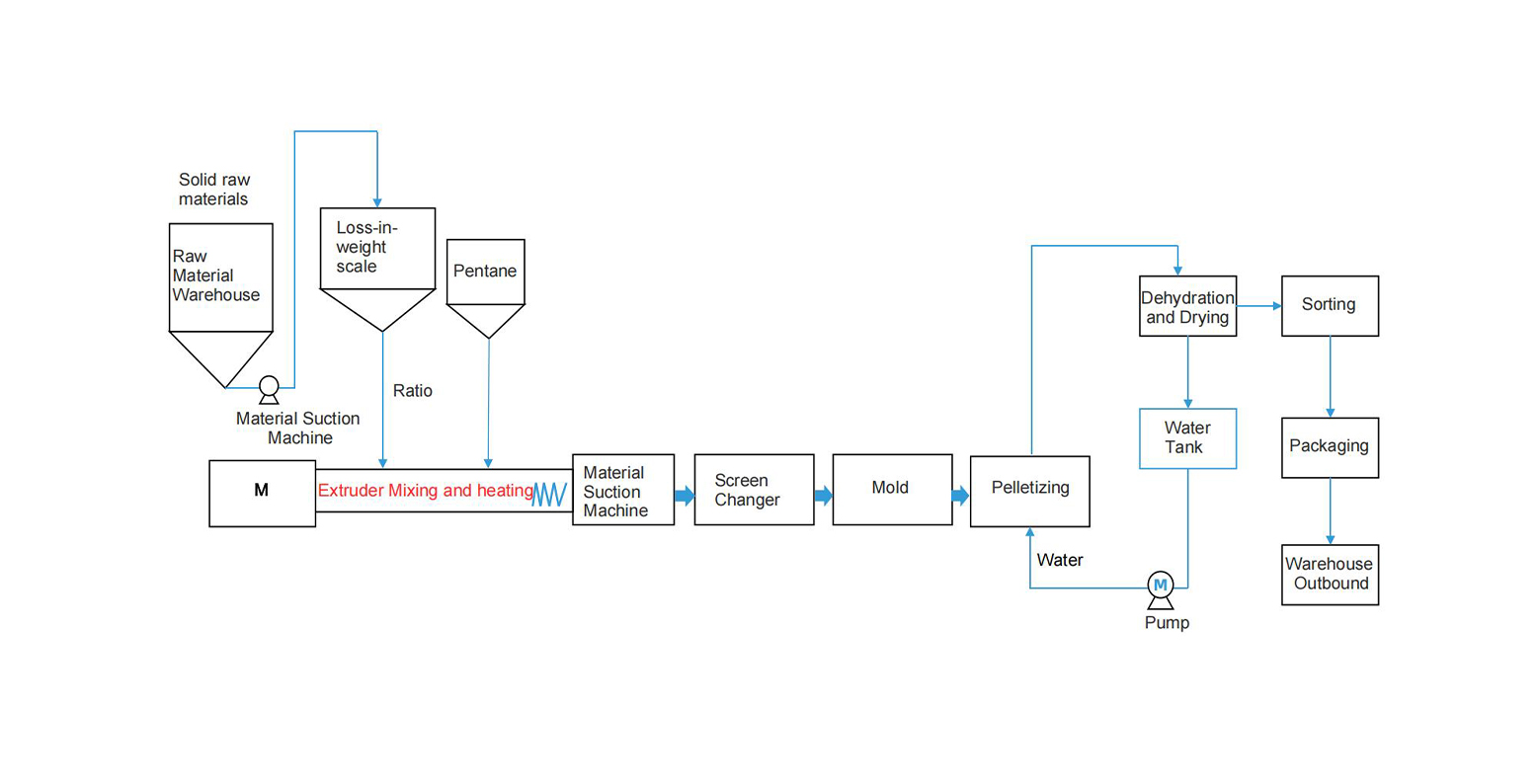
HUASHENG identifies REPS as a modified-polystyrene material. It is created through processes like pre-foaming and molding. The named applications for this material include protective packaging for liquid crystal panels. It is used heavily for mobile phones and tablet devices. It protects automotive products in transit. It is also used heavily for new energy products.
How Can Buyers Compare a Product Carbon Footprint Fairly?
You need to compare like with like. Do this before you even try to rank the numbers on a spreadsheet. Having the same unit of measurement is necessary, of course. But it is not sufficient on its own. Boundaries matter. Chosen methods matter. Reporting periods are highly critical. Material definitions and calculation assumptions can swing the final results. All of these factors affect whether two different results actually support a fair, honest comparison.
Ask for the basis before the headline reduction
You should always use a short assessment checklist. Ask yourself these five specific questions:
- What exact product and specific manufacturing scope does the provided result actually cover?
- What exact declared quantity or functional unit was used for the math?
- Which specific life-cycle stages and transport legs are included in the final number?
- What is the reporting period? What method was used? What verification evidence applies here?
- Does the proposed comparison provide truly equivalent protective performance?
That very last question matters a great deal. Imagine a much lighter foam insert. If it fails to actually protect its fragile contents, it is not an equivalent packaging solution. If your package comparison relies on a functional basis, the core function must be made clear. The exact acceptance criteria should be explicit from day one. Do not turn a simple per-kilogram raw-material comparison into a sweeping, generalized conclusion about your full shipping system.
Exploring recycled EPS procurement also involves many complex questions. A single carbon number cannot answer them all alone. Material identity is absolutely crucial. Supply chain traceability is vital for compliance. Specific application requirements need their own separate evidence. One piece of paper should never be treated as absolute proof of every single sustainability or compliance claim on your marketing materials.
HUASHENG’s company profile identifies a specific Global Recycled Standard certificate. It is version 4.0. The scope certificate number is SGC-GRC04511-GRS-2024-09. The Textile Exchange ID is listed directly as TE-00125108. The company separately lists the ISO 14067:2018 carbon footprint verification statement. Please note that these are distinct, totally separate records. They serve completely different purposes. For any actual, real-world order, you must request their current scope. Request their current applicability. Do not just assume that a historic identifier automatically establishes present certification coverage. Do not assume it proves an order-specific recycled-content claim without checking first.
What Should a Responsible Supplier Request Include?
You should clearly ask for the specific evidence your intended claim actually requires. State openly whether the result will support an internal team comparison. State if it is for a strict customer questionnaire. Mention if it will be used for public product information on a website. The wording you use should match the exact scope of the document. Any missing supply chain stages should remain clearly visible to everyone reading the report.
For recycled EPS procurement, you must provide the proposed grade upfront. Share the exact quantity needed. Mention the final geographical destination. Outline the intended molding route and the package’s ultimate physical function. You need to explain whether you require basic raw-material data or a highly detailed finished-product assessment. A supplier can answer a heavily focused question much more usefully. This works far better than a vague, general request asking them for the “greenest foam available.”
You must discuss customized REPS requirements openly with the supplier. This is important when material performance and environmental information must be evaluated side by side. Keep the physical sample approval totally separate from the carbon assessment process. Afterward, connect both of these official records to the exact same product revision number.
Never describe the material as completely carbon neutral without solid proof. Never claim a massive percentage reduction without applicable, third-party verified evidence. Along those same lines, the ISO 14067 reference does not mean every single environmental impact has been carefully assessed. A product carbon footprint specifically concerns greenhouse-gas accounting. It only matters within its own strictly defined scope.
Conclusion
An EPS carbon footprint should be a tool to guide a highly specific business decision. It should never serve as a detached, out-of-context marketing number for an ad campaign. HUASHENG’s stated masterbatch result provides a clearly defined starting point. That point is 719.14 kg CO₂e per metric ton. It is measured strictly cradle to gate. It falls under the identified 2024 verification statement. You must keep that scope entirely intact. Always request current applicability for your specific order. Only add further production stages through an appropriate, formal assessment. Make sure to contact HUASHENG directly about your material needs. Discuss your specific data requirements with them before making a supplier comparison. Always verify the data before making any customer-facing claim.
FAQs
Q1: Does the stated EPS carbon footprint cover a fully delivered insert?
A1: No, it absolutely does not. The identified result strictly concerns one single metric ton of R-EPS masterbatch. It uses a cradle to gate boundary. A delivered insert requires its own fully defined scope.
Q2: Can product carbon footprint figures be easily compared per kilogram?
A2: You can only do this when the products are compatible. The boundaries, methods, and base assumptions must also align perfectly. A shared unit of measurement does not by itself establish a fair or accurate comparison.
Q3: Does recycled EPS procurement automatically prove lower overall emissions?
A3: No, it does not. You must request applicable product data for your order. You need a highly compatible comparison to know for sure. Recycled-content evidence and carbon accounting essentially answer two completely different questions.
 English
 German
 Spanish
 French
 Arabic