
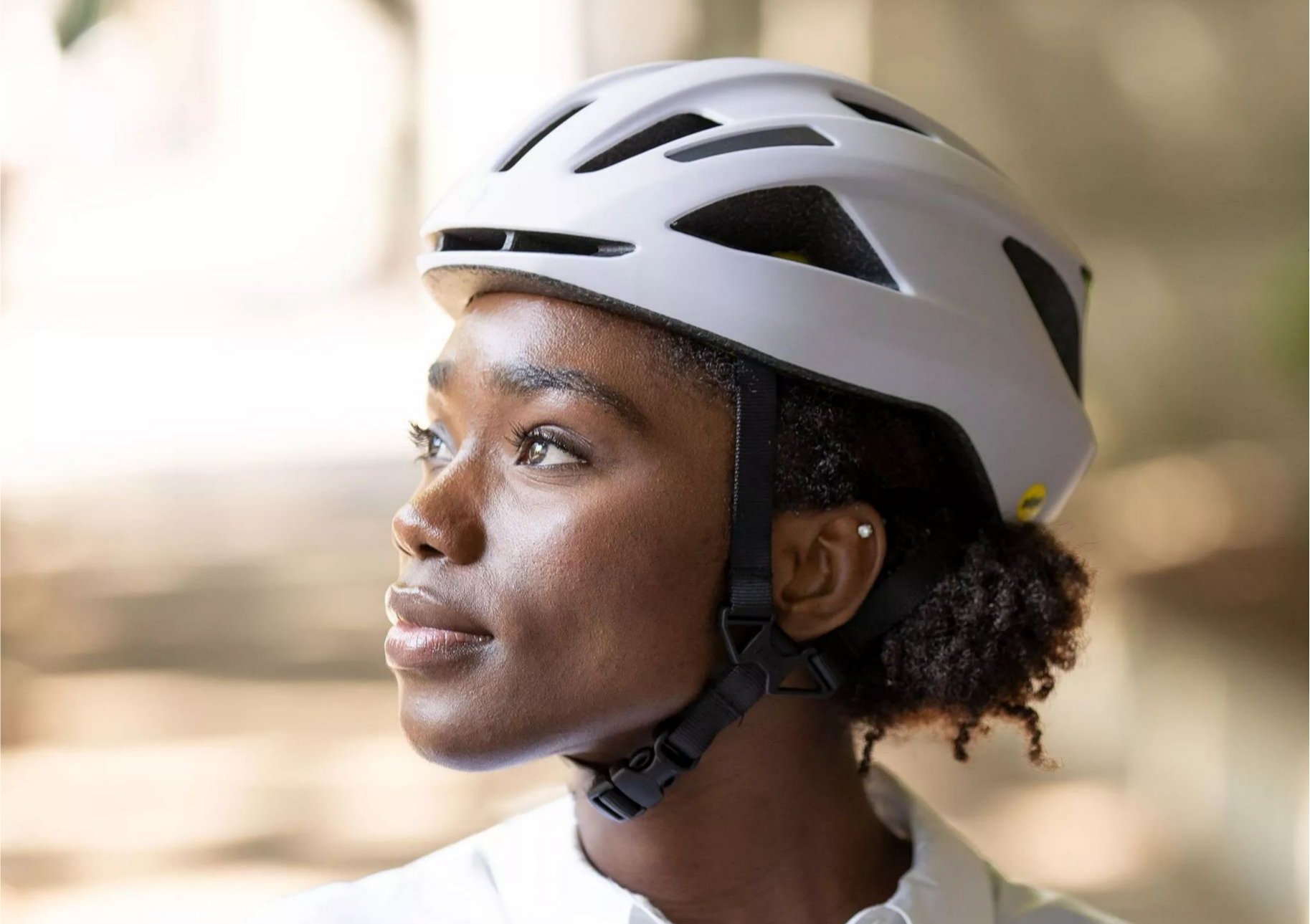
EPS(expanded polystyrene) helmet materials stay popular in many fields. They absorb strong impacts without adding much weight. This mix keeps helmets protective and comfortable for daily use.
Understanding EPS Helmet Technology
EPS has grown into a key part of modern helmet safety systems. It pairs light weight with strong impact protection. Its flexible nature and good performance make it a top choice for sports helmets, industrial gear, and automotive applications.
What EPS Is and How It Functions in Helmet Design
Expanded polystyrene forms a closed-cell foam. It takes in impact energy through controlled compression. This structure spreads out kinetic energy in an efficient way. The result reduces the force that reaches the skull in a crash. Helmet makers shape EPS into liners. These liners offer both comfort and protection. They also deliver steady energy absorption in every impact area.
Evolution of EPS in Helmet Manufacturing
Older helmet designs relied on heavy materials like leather or rigid plastics. Those options gave limited energy absorption and added extra weight. EPS changed the field by creating a better balance of light construction and impact resistance. Later improvements in molding methods let makers build multi-density liners. These liners focus on specific impact zones while keeping good airflow and comfort levels intact.
The Science Behind EPS Protection
The safety performance of an EPS helmet depends on its ability to handle both linear and rotational forces during an impact. This part looks at the physics that supports its protective action.
Energy Absorption and Impact Distribution
EPS works as a shock absorber through deformation on impact. When a helmet meets sudden deceleration, the foam’s tiny air cells collapse in a steady way. This spreads energy across a wider zone. Layer thickness and density decide how well the material handles different impact types.
Modern helmets often use multi-density EPS liners. Softer layers manage low-speed impacts while denser parts deal with high-energy collisions. The design supplies adaptive protection. HUASHENG’s nano-closed pore structure technology raises compressive strength by 40 percent. This example shows how careful molecular control can improve both durability and safety consistency in helmet applications.
Thermal Stability and Structural Integrity
EPS keeps stable mechanical properties across wide temperature ranges. This stability proves important for riders who face extreme weather. The foam holds its shape even after small impacts. Still, experts recommend replacement after major collisions because compressed cells suffer permanent deformation.
Comparing EPS with Emerging Helmet Technologies
Alternative materials keep appearing, yet EPS stays dominant because of its proven reliability and cost-effectiveness. Still, knowing about new options helps assess future directions for protective design.
New Foam Alternatives: EPP, Koroyd, and MIPS Integration
Expanded polypropylene shares many traits with EPS. It recovers better after repeated impacts, though it adds some weight. Koroyd uses tubular structures that boost airflow but reduce shaping flexibility. MIPS works alongside EPS rather than replacing it. The system lowers rotational acceleration by permitting slight movement between the head and shell in oblique impacts.
Evaluating Performance Trade-offs in 2026 Materials Research
In 2026, hybrid designs that combine EPS with other foams or carbon composites should lead premium helmet lines. These builds aim to improve both linear absorption and rotational mitigation while keeping weight under control. Even with these new ideas, years of real-world safety data continue to place EPS as the standard material for helmet certification worldwide.
Design Innovations Enhancing EPS Helmet Efficiency
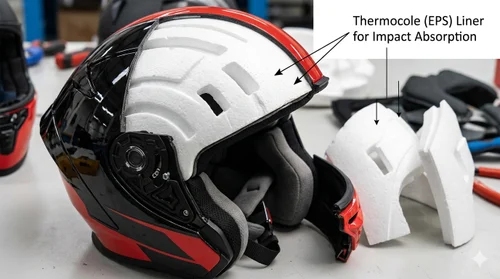
Continuous technical progress has let manufacturers improve every part of helmet design. Weight control and ventilation advance while protection quality stays high.
Weight Optimization Through Advanced Molding Techniques
Variable-density molding cuts unnecessary bulk while protecting key safety zones around high-risk areas such as temples and the back of the head. CNC shaping maintains consistent liner thickness and supports predictable crash behavior. When teams pair this approach with composite shells like carbon fiber or fiberglass, the result creates strong structural synergy between inner liner compression and outer shell rigidity.
A clear example appears in advanced formulations such as F Material Flame-Retardant Type. These options combine high foaming efficiency with excellent bonding properties. The traits suit lightweight yet durable helmet interiors where thermal stability remains essential.
Ventilation and Comfort Improvements in Modern Helmets
Channel systems built into the EPS liner improve airflow while preserving rigidity against side compression forces. Moisture-wicking fabrics increase comfort during long wear by handling sweat effectively. Ergonomic contouring matches human head shape closely. This fit keeps stability high even at fast speeds, which matters for motorcyclists and athletes who need secure positioning.
The Future of EPS Helmet Safety Beyond 2026
Sustainability now forms a core part of product development. Future helmets must protect users while also lowering environmental impact across the full product life.
Sustainability Challenges and Recycling Efforts in EPS Production
Eco-friendly coatings now extend material life without harming mechanical strength. This quality matters when teams design long-lasting helmets for large markets or institutional buying programs.
Traditional polystyrene creates recycling difficulties because it does not break down naturally. Innovation has shifted this situation in important ways. HUASHENG recycles 300,000 tons of EPS each year. This effort saves 1,500,000 tons of crude oil and 1,200,000 tons of carbon dioxide. These steps prove that circular economy ideas can work well with high-performance manufacturing standards used in safety gear.
Predicting the Role of EPS in Next-generation Helmet Standards
Regulatory groups now pay more attention to rotational acceleration measures along with traditional linear tests. Smart sensors placed inside future liners could allow real-time crash monitoring. They could also support post-incident checks through electronics molded straight into expanded polystyrene matrices.
FAQ
Q1: Why do most premium safety helmets still rely on EPS helmet liners instead of newer materials?
A1: Expanded polystyrene delivers unmatched energy absorption per gram. It also stays cost-effective for large-scale production. Decades of testing through global standards confirm predictable crash performance under many conditions. Newer materials have not yet matched this level of reliability.
Q2: How does modern manufacturing improve EPS durability?
A2: Intelligent molding systems now apply digital twin simulations. These tools refine bead fusion consistency at very small scales. Some producers use nano-closed pore technology that raises compressive strength by up to 40 percent. The outcome is longer structural integrity even after many stress cycles.
Q3: Are eco-friendly EPS options available for sustainable projects?
A3: Yes. HUASHENG has put hundreds of millions of yuan into the world’s first smart production line for polystyrene made from 100 percent recycled raw materials. Their recyclable REPS series supports circular manufacturing goals and keeps international safety compliance. This combination makes the company a strong partner for large procurement programs that target sustainability.
Q4: What should buyers prioritize when selecting EPS-based helmets?
A4: Buyers should check verified density control, flame retardancy compliance at B1/B2 levels, and post-impact deformation rates. They should look beyond outer shell appearance alone. Choosing certified materials from established suppliers ensures consistent protection quality in bulk orders and helps reduce long-term maintenance costs.
 English
  German
  Spanish
  French
  Arabic