
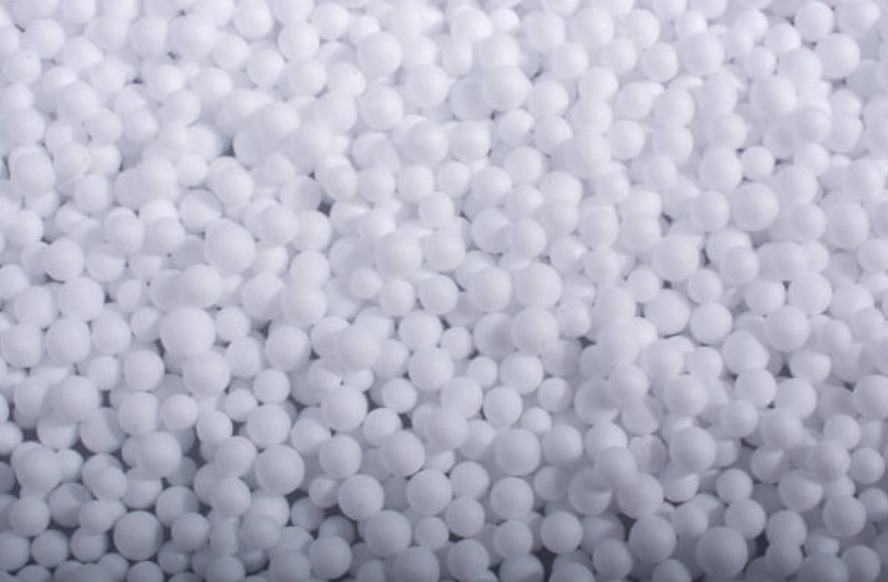
When handling thermal insulation systems, expanded polystyrene (EPS) beads are not simply common goods. Their true value is determined long after purchase during pre-expansion, molding, curing, and many years of service within a building envelope. Differences that seem small on the datasheet frequently turn into large gaps in thermal stability, dimensional reliability, and compliance performance once insulation panels are installed.
This article focuses on what actually matters when EPS beads are used for thermal insulation. Instead of revisiting basic definitions, it looks at how bead structure, processing behavior, and grade selection shape long-term insulation outcomes. Besides, how one manufacturer’s material logic offers a practical reference point for these decisions will also be discussed.
Who Is HUASHENG and Why Does Its EPS Bead Portfolio Matter to Your Insulation Projects?
HUASHENG approaches EPS beads as engineered materials rather than interchangeable raw inputs. Our production focuses on density consistency, controlled particle size distribution, and predictable expansion windows, all directly influencing insulation performance in the field.
From common grades to flame-retardant and graphite-modified materials, our EPS portfolio is designed around application boundaries rather than generic categories. This is particularly relevant in insulation projects where bead behavior during pre-foaming and molding determines whether boards maintain thermal resistance or degrade in an unbalanced way over time.
What makes this approach practical is not marketing language but process control. Intelligent production lines, precision testing of compressive strength and density uniformity, and strict separation of flame-retardant and non-flame-retardant materials reduce variability that often shows up as shrinkage months after installation.
How does large-scale EPS bead manufacturing influence consistency in thermal insulation results across different projects?
When bead size distribution and expansion ratios remain stable from batch to batch, the result can be predictable. Stable beads reduce local density fluctuations, improve bead fusion, and help insulation panels maintain uniform thermal resistance across large wall areas.
How Do Expanded Polystyrene Beads Control Heat Transfer in Insulation Systems?
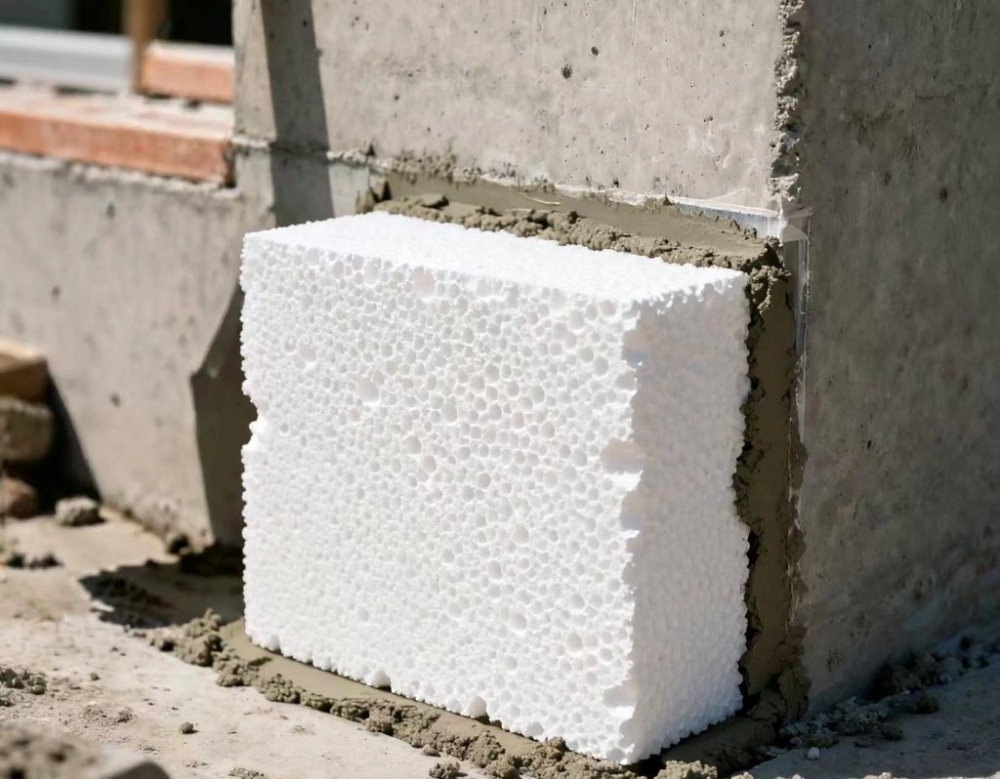
Heat transfer through EPS insulation is determined not by polymer chemistry but by microstructure. EPS beads form a closed-cell network where trapped gas becomes the primary thermal barrier, whose quality depends on how evenly cells form and how well beads fuse during molding.
Poor fusion creates micro-gaps that allow convection and gas exchange, leading to measurable increases in thermal conductivity over time. By contrast, beads with uniform cell size and controlled expansion retain internal gas longer, thus stabilizing thermal performance.
Why do closed-cell structure, bead fusion quality, and gas retention determine real insulation efficiency rather than nominal λ values?
A single λ value does not describe aging behavior. Beads with fine, uniform cells slow gas diffusion and reduce thermal drift, which explains why bead shape and curing technology are more important than seeking the initial conductivity number.
What Should You Pay Attention to When Selecting EPS Beads for Thermal Insulation Applications?
Mistakes in material selection usually appear after installation, instead of during the process of production. Beads that expand too fast or cure too quickly can cause internal stress, leading to panel warping or surface cracking.
Key parameters you should evaluate include particle size range, recommended expansion ratios, and curing requirements. These factors determine how boards behave during steam molding and how they stabilize afterward.
How do bead size range, expansion ratio, and curing behavior affect insulation board density stability and deformation risk?
Smaller beads typically improve surface finish and fusion but demand tighter process control. Excessive expansion ratios reduce density margins and increase shrinkage risk. Proper curing period makes residual blowing agents leave, preventing the changes of later size after installation.
When Do Flame-Retardant EPS Beads Become a Structural Requirement Rather Than a Regulatory Checkbox?
In many regions, flame-retardant EPS is no longer optional. However, choosing the wrong formulation can destroy insulation performance or processing efficiency. Flame-retardant beads require strict material segregation and adequate aging time to achieve stable fire performance without sacrificing mechanical strength.
How does flame-retardant bead formulation influence thermal insulation performance, aging behavior, and processing tolerance?
Properly designed flame-retardant beads balance fire performance with bead fusion and dimensional stability. For example, F-flame retardant grade EPS is engineered to maintain uniform cell structure while meeting B2 fire requirements, provided curing time and density recommendations are respected, thus reducing the common exchange between safety and insulation efficiency.
Can Standard-Grade EPS Beads Still Deliver Reliable Thermal Insulation in Cost-Sensitive Projects?
Not every project requires advanced materials. In controlled environments with moderate fire requirements, standard-grade EPS beads can still deliver stable insulation performance when applied within defined limits.
Under what insulation scenarios does standard-grade EPS still provide predictable thermal performance without over-engineering?
Standard-grade materials perform well in projects where density targets are moderate and processing conditions are stable. Standard grade-E EPS, for example, provides expansion conduct, low power consumption during molding, and good fusion, making it suitable for insulation panels where cost efficiency and reliability are more significant than extreme specifications.
How Does Processing Quality of EPS Beads Impact Long-Term Thermal Insulation Performance After Installation?
Even the best beads fail under poor processing. Inconsistent pre-expansion, incorrect molding pressure, or insufficient curing lead to internal stress and uneven density distribution.
Why do improper pre-expansion, molding pressure, and post-curing practices undermine insulation systems even with high-quality beads?
Thermal insulation systems behave as a whole. Processing shortcuts accelerate production but shorten service life. Adequate aging allows residual gases to escape, stabilizing dimensions and thermal resistance before installation.
What Role Do Expanded Polystyrene Beads Play in Sustainable Thermal Insulation Strategies Today?
Sustainability now influences insulation material selection as much as thermal measures. EPS beads that support recycling, reduce energy consumption during production, and maintain performance over the years comply better with long-term carbon reduction goals.
How do recyclability, energy consumption during processing, and material efficiency influence insulation material selection under carbon pressure?
Modern EPS systems stress closed-cycle recycling, lower steam consumption, and greater durability. Beads designed for continuing growth and fusion reduce waste during molding and extend insulation lifespan, lowering the total environmental footprint of buildings.
Conclusion
If you are responsible for insulation system performance, EPS beads should never be treated as interchangeable inputs. Their structure, processing behavior, and grade boundaries define whether thermal resistance remains stable or erodes quietly over time. By focusing on bead shape, curing technology, and application-specific selection, control over control dangers grows rather than reacting to breakdowns after installation.
FAQs
Q: Are expanded polystyrene beads suitable for long-term thermal insulation in demanding building environments?
A: Yes. When bead structure, expansion ratios, and curing practices are properly controlled, EPS beads provide stable thermal performance over long service periods.
Q: Does flame-retardant EPS always reduce thermal insulation efficiency compared with standard grades?
A: Not necessarily. Well-designed flame-retardant beads can maintain comparable thermal performance while improving fire safety when processed correctly.
Q: How to reduce insulation performance degradation over time when using EPS beads?
A: Focus on consistent bead quality, correct expansion ratios, sufficient aging time, and disciplined molding parameters rather than relying on nominal conductivity values alone.
 English
  German
  Spanish
  French
  Arabic