
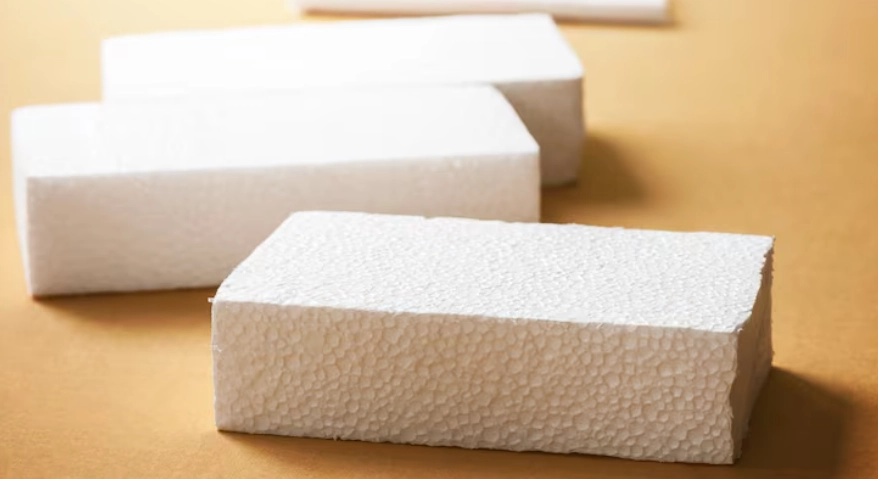
If you are involved in foam board production, you already know that panel performance is not determined at the cutting table. It is shaped much earlier when expandable polystyrene is selected, pre-expanded, molded, and allowed to stabilize. Foam boards that look identical on delivery can behave very differently after installation, and those differences usually trace back to how the EPS core was designed and processed.
This article looks at the real role expanded polystyrene plays in foam board production. Instead of repeating basic definitions, it focuses on how EPS material behavior controls board structure, manufacturing efficiency, and long-term stability. Throughout the discussion, you will see how a system-oriented EPS producer provides a practical reference for making these decisions with fewer downstream risks.
Who Is HUASHENG and Why Does Its EPS System Matter in Foam Board Manufacturing?
Before you evaluate any foam board formulation, it helps to look at how EPS materials are designed at the source. HUASHENG is a high-tech manufacturer focused on expandable polystyrene for insulation boards, packaging, and structural foam applications. Our production thinking is built around material behavior in real processing conditions rather than abstract resin categories.
Instead of treating EPS as a single interchangeable input, we structure our portfolio around bead size control, expansion stability, and fusion performance. This is quite important because foam board quality depends on repeatability. If bead expansion varies from batch to batch, density gradients appear inside the board, leading to warping, internal stress, or uneven thermal performance over time.
HUASHENG aligns material design with molding equipment behavior, steam penetration, and curing requirements. That alignment allows foam board manufacturers to scale production while maintaining predictable panel strength, flatness, and insulation efficiency. When EPS behaves consistently, downstream process control becomes simpler, and performance risks shift from reactive troubleshooting to proactive material selection.
How does a system-level EPS material strategy influence foam board consistency, yield, and long-term dimensional stability?
When EPS beads are designed as a part of a system, you gain control over more than density. Even bead size improves fusion, controlled expansion reduces residual stress, and stable curing behavior weakens post-molding shrinkage. Together, these factors increase usable board yield and reduce rejection caused by deformation or surface defects.
How Does Expanded Polystyrene Actually Shape the Core Structure of a Foam Board?
At the core of every foam board is a network of closed cells created by expanded polystyrene beads that is responsible for both mechanical integrity and thermal resistance. What matters is not only how much air is trapped, but how evenly it is distributed and how well beads bond during molding.
Why do bead fusion quality, closed-cell uniformity, and internal stress distribution define foam board strength beyond nominal density values?
Two boards with the same density can perform very differently. Poor bead fusion creates weak interfaces that reduce compressive strength and increase crack propagation, uneven cell size allows localized heat transfer paths, and internal stress, caused by aggressive expansion or insufficient aging, leads to delayed warping. EPS that forms fine, uniform cells and fuses cleanly creates a foam board that remains stable under load and thermal cycling.
What EPS Material Characteristics Directly Affect Foam Board Production Efficiency?
Production efficiency is often discussed in terms of machine speed, but EPS material behavior plays a larger role than many realize. Expansion ratio, bead flowability, and curing time all influence cycle length and defect rates.
How do expansion ratio, bead fluidity, and curing time influence molding speed, scrap rate, and board surface quality?
High expansion ratios reduce material usage but narrow the processing window. Beads with good fluidity fill molds evenly, improving surface finish and reducing voids. Short and predictable curing times allow faster demolding without introducing internal stress. When these factors are balanced, you can increase throughput without losing board quality.
When Does Graphite-Grade EPS Become a Functional Requirement in Foam Board Design?
As thermal regulations tighten, common EPS sometimes reaches its practical limit. Graphite-grade EPS addresses this problem by reducing radiant heat transfer within the foam board.
How does graphite-grade EPS reduce radiant heat transfer while reshaping foam board density and processing tolerance?
Graphite particles absorb and reflect infrared radiation inside the foam structure, lowering thermal conductivity without extreme density reduction, which makes special grade (filling material)-G materials suitable for high-performance insulation boards where thickness is constrained. However, graphite EPS raises higher requirements on processing—uniform dispersion, controlled molding pressure, and sufficient curing time are critical to maintain surface quality and mechanical strength.
Can Lightweight EPS Still Deliver Structural Reliability in Foam Board Applications?
Reducing board weight lowers transport cost and eases installation, but excessive lightening often compromises strength.
Under what foam board conditions does ultra-light EPS balance weight reduction with fusion strength and dimensional control?
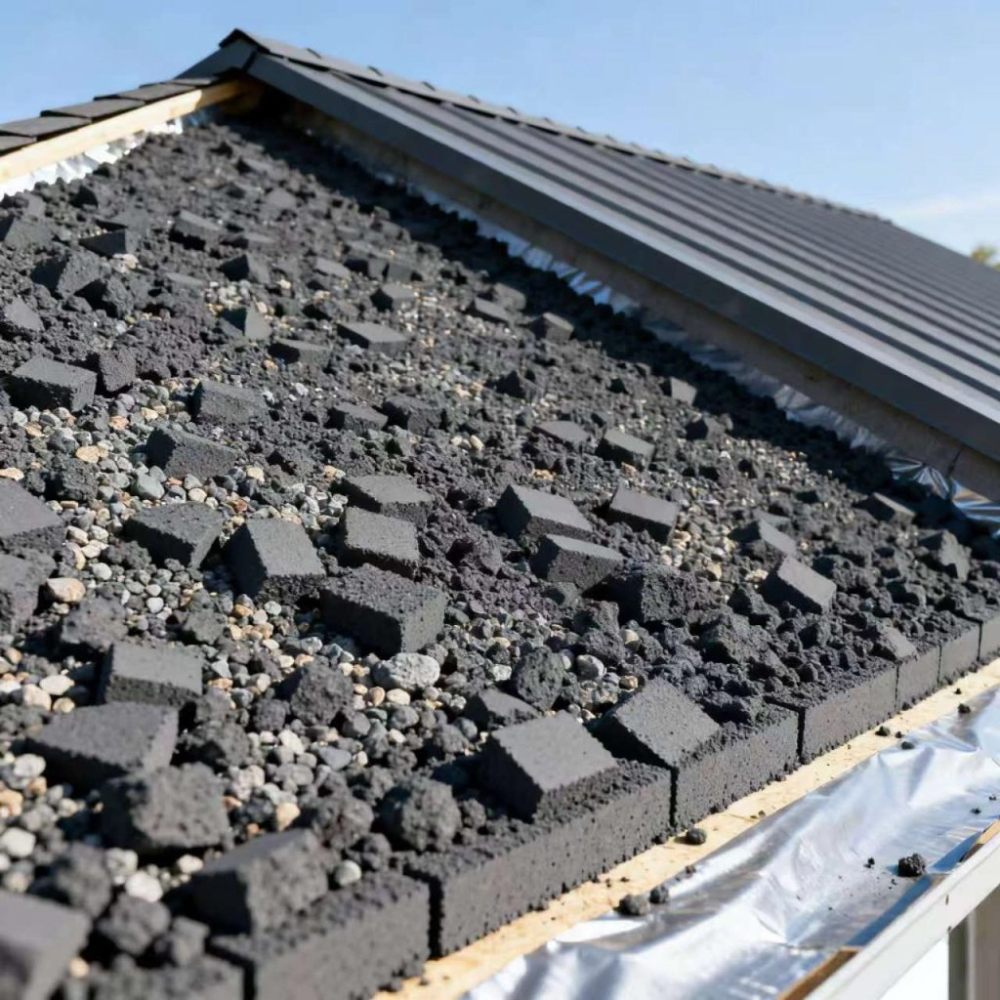
Lightweight EPS works best when boards are designed for moderate loads and controlled environments. P-grade expanded polystyrene material supports multiple foaming cycles to achieve low density while maintaining acceptable fusion. When molding parameters are tuned correctly, it delivers stable, lightweight boards without excessive shrinkage or brittleness.

How Do EPS Processing Decisions Determine Foam Board Performance After Installation?
Many foam board failures originate not from material selection, but from processing shortcuts. Insufficient aging, uneven steam penetration, or aggressive demolding all introduce latent defects.
Why do pre-expansion technology, molding pressure control, and post-curing time decide whether foam boards remain stable years after installation?
Pre-expansion sets the foundation for cell structure, molding pressure governs fusion quality, and post-curing allows residual blowing agents to escape and stresses to relax. Skipping or compressing these steps may speed production today, but it increases the risks of deformation, thermal drift, and joint failure later.
What Role Does Expanded Polystyrene Play in the Sustainability Profile of Modern Foam Boards?
EPS foam boards are evaluated not only on energy efficiency but also on recyclability and service life.
How do recyclability, energy efficiency in molding, and material utilization efficiency influence foam board lifecycle impact?
EPS supports closed-loop recycling, low molding energy consumption, and long service life. Boards that remain dimensionally stable reduce replacement frequency, lowering total material use. When EPS is selected and processed correctly, it aligns insulation performance with broader environmental goals rather than conflicting with them.
Conclusion
Foam board performance is not defined by thickness or density alone. It is the result of how expanded polystyrene behaves from pre-expansion through years of service. By focusing on bead structure, expansion technology, and application-specific EPS selection, you move from reactive quality control to predictable, scalable production. In foam board manufacturing, EPS is not just the core material—it is the system that holds performance together.
FAQs
Q: Why is expanded polystyrene still the dominant core material in foam board production?
A: Because its closed-cell structure, processing flexibility, and predictable behavior allow precise control over thermal and mechanical properties at an industrial scale.
Q: Does graphite-grade EPS always outperform standard EPS in foam boards?
A: Only when thermal efficiency is the main constraint and processing technology is maintained. In other cases, standard EPS may offer a better cost-performance balance.
Q: How can you reduce long-term deformation risks in EPS foam boards?
A: By selecting EPS with stable expansion behavior, enforcing sufficient curing time, and maintaining consistent molding pressure, rather than focusing only on target density.
 English
  German
  Spanish
  French
  Arabic