
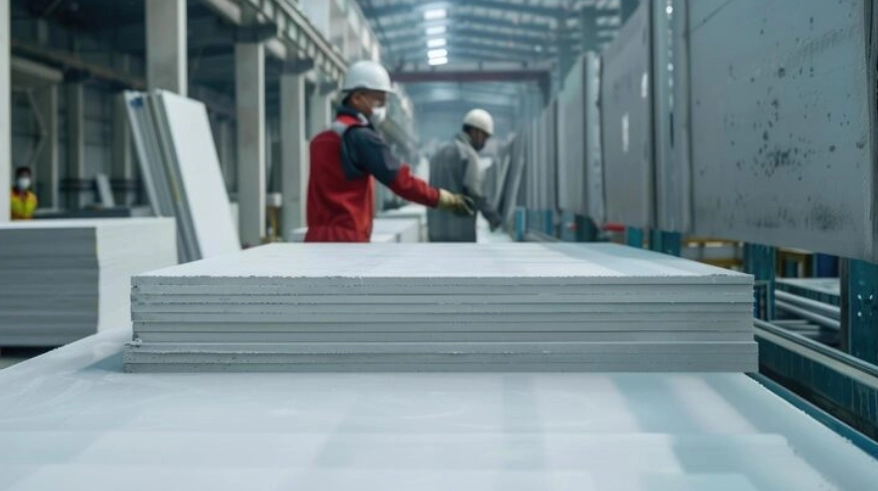
EPS panels, which are lightweight, uniform, and easy to handle, appear simple once they leave the factory. However, what is less visible is how many manufacturing decisions determine whether those panels remain dimensionally stable, thermally efficient, and consistent over time.
In modern factories, EPS panel production is no longer a linear “foam and mold” operation, but a tightly controlled sequence that starts at polymer design and continues through pre-expansion, aging, molding, and quality verification, which means that if one stage is rushed or poorly tuned, downstream performance suffers—even when density and thickness appear correct.
This article explains how EPS panels are manufactured today and places emphasis on process logic rather than basic definitions, aimed at showing where performance is actually built and how manufacturing discipline translates into reliable panels in real applications.
Who Is HUASHENG and Why Does Its Manufacturing Logic Matter Today?
In the current EPS industry, manufacturing strength is defined not just by capacity but by control. HUASHENG operates with this philosophy, treating EPS panels as engineered outcomes rather than generic foam products. Instead of improving only for throughput, our production system is built around bead-level consistency, process simulation, and performance traceability throughout the process.
At the polymer stage, the company integrates multiple EPS routes, including common, flame-retardant, and graphite-modified, and so on, into a single manufacturing philosophy so as to allow thermal performance, mechanical strength, and fire behavior to be balanced without relying on excessive density or conservative safety margins. Advanced foaming lines, precision particle-size control, and digitally assisted molding parameters reduce variability that traditionally shows up as warping, weak fusion, or inconsistent insulation values. It is quite significant for clients because panel reliability is not determined at the molding press alone, but the performance of how polymer chemistry, expansion behavior, and curing logic are aligned upstream.
How Does the EPS Panel Manufacturing Process Begin at the Polymer Stage?
Before any foaming occurs, EPS performance is already being shaped. Polymer formulation defines bead strength, molecular weight distribution, and compatibility with additives such as flame retardants or graphite. These factors influence how beads expand, fuse, and stabilize later in the process.
In modern production, polymer design is no longer fixed. It is adjusted based on target density ranges, thermal conductivity goals, and molding equipment characteristics. It is the upstream flexibility that allows EPS panels to meet different insulation or structural requirements without excessive material use.
Why Does the Polymerization Method Define Downstream Panel Quality?
The polymerization route determines how uniformly additives are distributed inside each bead. Suspension-based methods favor uniform internal structures for higher-density panels, while extrusion-based approaches enable tighter control over graphite distribution for low-λ insulation products. These early decisions directly affect panel consistency, even if final dimensions look identical.
What Happens During Pre-Expansion and Why Is It Not Just About Density?
Pre-expansion is where raw beads transform into foam particles, but density is only one outcome. Expansion ratio, bead elasticity, and internal pressure balance all influence how well particles fuse later. Steam temperature, residence time, and venting control determine whether beads expand evenly or develop internal stress. Modern factories treat pre-expansion as a precision operation rather than a throughput challenge.
How Does Controlled Pre-Expansion Affect Fusion and Panel Stability?
When pre-expansion is controlled correctly, beads retain enough elasticity to fuse fully during molding. Poorly expanded beads may reach target density but fail to bond internally, leading to weak panels or surface cracking, which explains why advanced lines monitor expansion behavior continuously instead of relying on fixed recipes.
Why Is Aging a Critical but Often Rushed Step in EPS Production?
After pre-expansion, the beads are not ready for molding. Aging allows internal gases to equilibrate with ambient air, stabilizing pressure inside each particle.
Skipping or shortening this step may increase output in the short term, but it introduces long-term dimensional instability. Besides, panels molded from insufficiently aged beads are more likely to shrink or warp after installation.
How Does Proper Aging Improve Dimensional Stability and Fire Performance?
Adequate aging reduces internal stress and ensures consistent steam penetration during molding. For flame-retardant panels, it also allows residual blowing agents to dissipate, which supports predictable fire behavior. Therefore, aging time is a performance variable, not just a scheduling issue.
How Are EPS Panels Actually Formed Inside Modern Molding Lines?
Molding is where pre-expanded beads become panels, but the final results vary widely depending on process discipline. Steam pressure profiles, mold venting, and cooling rates all influence fusion quality.
Modern molding systems use data-driven cycle control rather than fixed timings, which allows adjustments based on bead type, density target, and panel thickness.
What Determines Fusion Quality During Steam Molding?
Good fusion depends on uniform steam penetration and controlled cooling. If steam reaches beads unevenly, internal bonding weakens, and if cooling is rushed, residual stress remains locked into the panel. Both issues may pass initial inspection but appear later as performance failures.
Why Do Graphite-Enhanced EPS Panels Require Different Manufacturing Control?
Graphite-modified EPS panels deliver lower thermal conductivity, but only when graphite is evenly dispersed and properly integrated into the polymer matrix, which raises new control requirements during both polymer production and molding.
How Does Extrusion-Based Graphite EPS Change Panel Manufacturing?
S-32 graphite polystyrene (extrusion method) introduces infrared-absorbing graphite through a twin-screw extrusion process. This approach improves thermal performance by reflecting radiant heat within the foam structure, but it requires precise temperature and shear control to prevent graphite agglomeration.

How Does Suspension-Method Graphite EPS Alter Processing Behavior?
Not all graphite EPS behaves the same during molding. Suspension-based systems integrate graphite at the polymer synthesis stage, producing beads with more uniform internal properties.
Why Does Suspension-Based Graphite EPS Favor High-Density Insulation Panels?
FGE-graphite polystyrene (suspension method) is designed for applications where higher density and stable thermal performance are required. Uniform graphite distribution supports consistent λ values and reliable fusion, especially in thicker or load-bearing insulation panels.
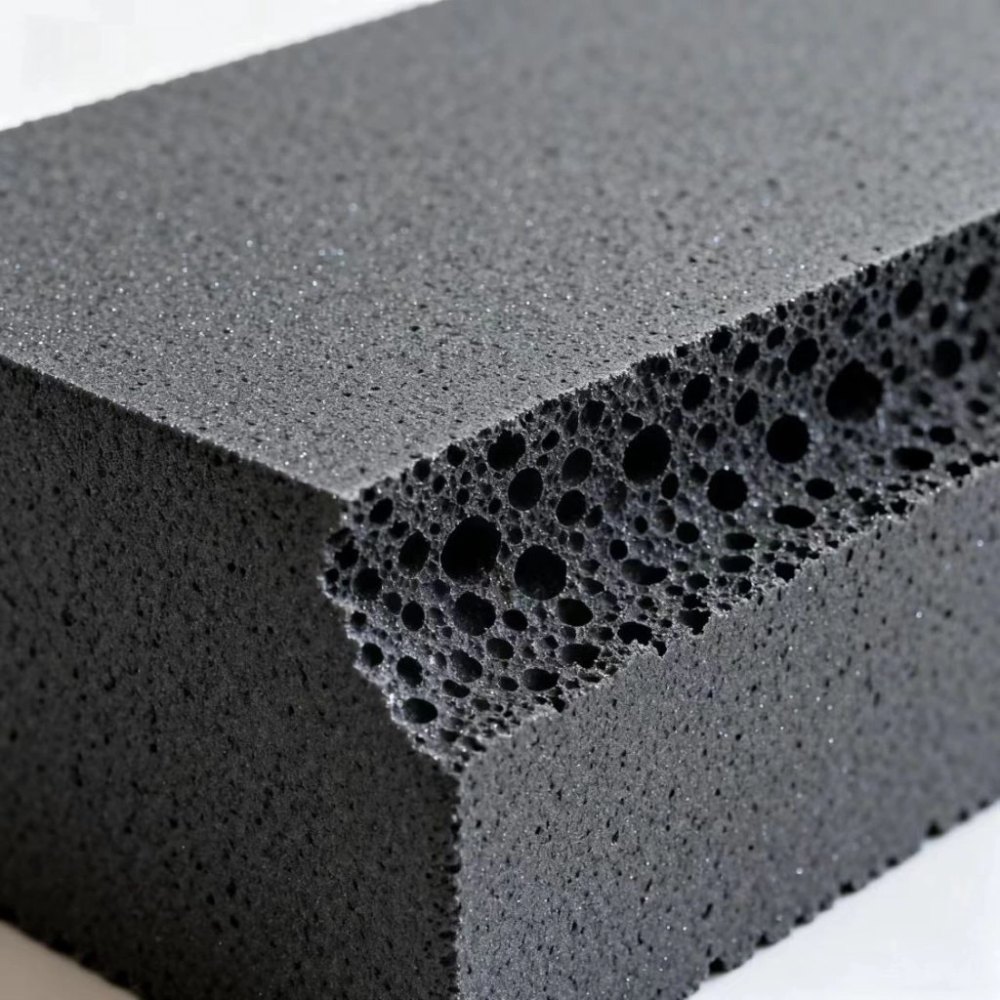
What Quality Control Measures Separate Modern EPS Factories from Traditional Ones?
Quality control today focuses on process verification rather than end-product inspection alone. Inline density checks, fusion strength testing, and batch traceability link panel performance back to specific production parameters. This approach allows deviations to be corrected upstream instead of being discovered after panels reach the site.
How Do Density Uniformity and Compressive Tests Reflect Process Discipline?
Consistent density across a panel indicates stable pre-expansion and molding conditions, and compressive strength trends reveal whether fusion quality is maintained batch to batch. These metrics together reflect how well the manufacturing process is controlled, not just how strict final inspection appears.
How Should You Evaluate an EPS Panel Factory Based on Its Process Logic?
Which Manufacturing Signals Indicate Long-Term Panel Reliability?
Choosing an EPS supplier is ultimately a process evaluation exercise. Output volume matters less than how variables are managed across production stages. You should pay attention to clear aging protocols, adjustable pre-expansion control, data-driven molding cycles, and transparent quality metrics.
FAQs
Q: Why do EPS panels with the same density perform differently in practice?
A: Differences usually come from pre-expansion control, aging time, and fusion quality rather than density alone.
Q: Does graphite EPS always require new molding equipment?
A: Not always, but it requires tighter temperature and cycle control to maintain uniform thermal performance.
Q: How can you reduce long-term warping risk in EPS panels?
A: Ensure adequate bead aging and controlled cooling during molding, even if this slightly extends production cycles.
 English
  German
  Spanish
  French
  Arabic